
Written In The Stars – Sebastian Hutch – When it rains, sell umbrellas
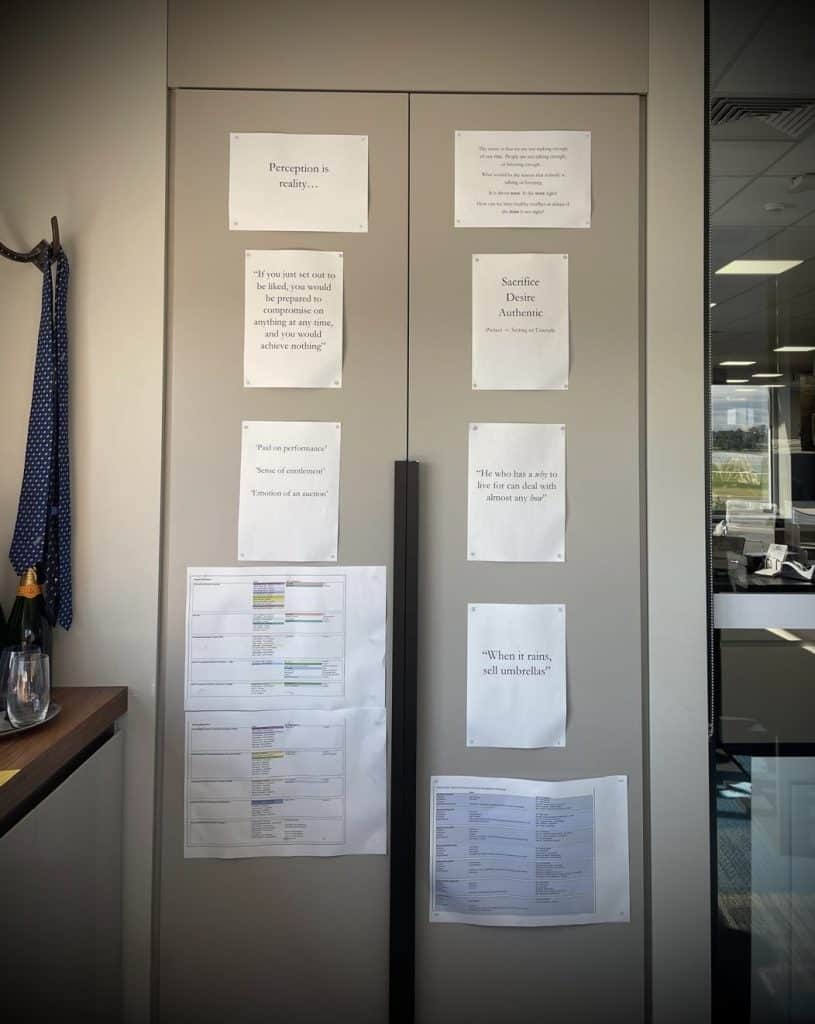
Stuck on the wall of Sebastian Hutch’s office at Inglis are a host of sayings that remind the Inglis Bloodstock CEO of the things that matter most in his job. He talks to Jessica Owers about staying on message and the philosophy which has underpinned his success.
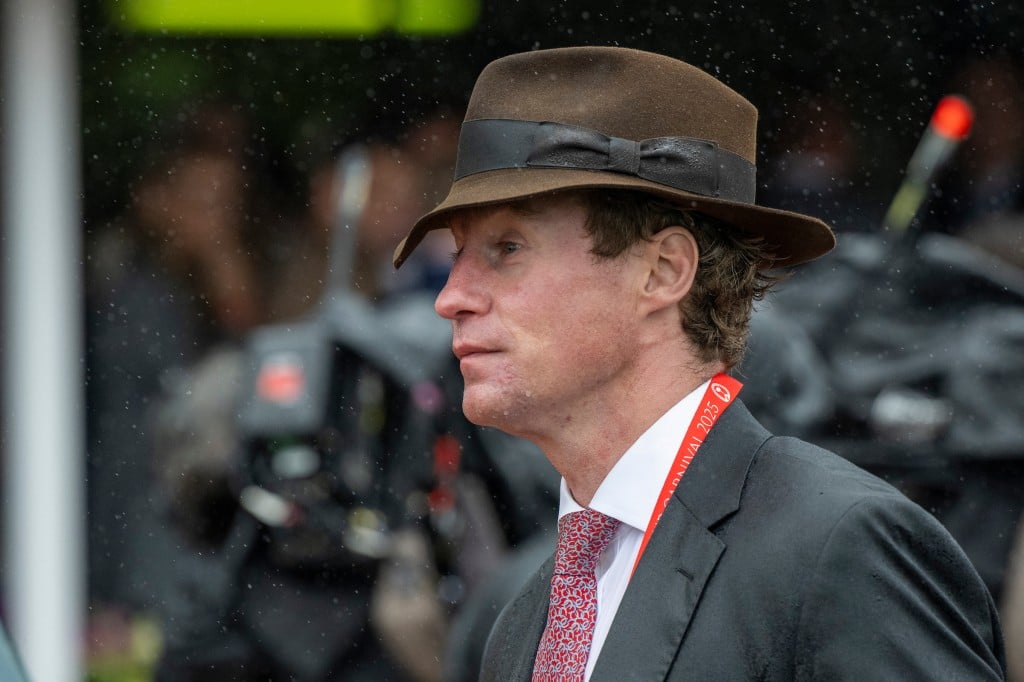
It’s an artful stroke of policy at Inglis that its people are either liked or respected, preferably both but certainly one, and if they are neither they are in all sorts of strife.
Not even its boss of bloodstock, Sebastian Hutch, is exempt.
“At various junctures, I have found that I haven’t always been someone that people like,” he tells The Straight. “There are instances where I can be a bit abrasive, maybe too forthright with opinions or too comfortable to have a disagreement. I see disagreement as a healthy thing, but it doesn’t always endear you to people.”
Hutch has just sailed past seven years at Inglis, a job that two weeks in felt like a well-bred mixture of promotion and self-destruction. Up to that point he had been with Coolmore a decade and “never without a sense of purpose”.
“I remember sitting at my desk after about two weeks and thinking, ‘what have I done?’ Two weeks into a new job you’re just feeling your way through it, and I got the hang of it. But it took me a while.”
Hutch started in 2018 as Inglis’s general manager of bloodstock sales and marketing, and in 2021 was promoted to CEO of bloodstock. Mark Webster was stepping away from the day-to-day management of the company and described Hutch as the perfect candidate, a staff member of the highest possible quality and a man made for senior management.
Colleagues knew him as a driven Irishman, young and ethically sound. A horseman.
“People have made the observation that I take myself too seriously, and I take some offence to that,” he says.
“Gai Waterhouse, who I respect enormously, says to me that I don’t smile enough, that I look too serious. But when I’m concentrating, that’s what I look like, and I have to concentrate to do my job. I don’t feel like I can do it as well if I’m relaxed and skipping around the place.”
Hutch, now, is the face of Inglis bloodstock, and it’s a boyish face, more Bondi than Kanturk, Ireland. He’s not sulky or brooding, but he is self-aware. In his office he has any number of quotes typed, printed and blue-tacked to his walls reminding him to sell umbrellas when it rains, or to be better, or that emotions are contagious.
“One of my favourite ones says ‘the emotion of an auction’, which I tend to go back to a lot,” he says. “I think we can be guilty of not recognising the emotive significance of an auction, so that’s something we’ve been very conscious at Inglis of trying to develop, the last number of years in particular, and I feel we’ve been quite effective in doing that.”
Hutch’s leadership of Inglis has coincided with some of the most challenging years in Australian bloodstock. They were the COVID years initially, which saw the challenge of conducting auctions remotely and the rise and rise of the Inglis Digital platform, then a return to traditional selling and last year’s eye-watering, record-ripping sale of the Pierro-Winx yearling filly.
Hutch interviewed often and easily during that episode. He has a way with words, as the Irish often do. He is careful with them and slightly melodic.
He admits that when at Coolmore, he was growing with a team that included Jim Carey, Tom Magnier and Paddy Power, but at Inglis he suddenly wasn’t expected to be learning any more.
“I was in a senior role so the expectation was that I’d be able to contribute straight away,” he says. “I like to think that I’ve tried pretty hard at making a success of every relationship at work, but that investment in people is hugely time-consuming.
“I was shocked every day, and still am, how you can spend maybe 80 to 85 per cent of your time thinking about and managing colleagues and peers, and just 10 to 15 per cent of your time doing what you think your job actually is.”
Fellow Coolmore alumni and now general manager of Segenhoe Stud, Peter O’Brien, credits Hutch as one of the most astute choices in bloodstock leadership. The pair worked together at Coolmore for many years.
“I was on-hand one day at Warwick Farm when Sebastian was talking to the bid spotters before a sale, and it was nothing short of inspiring. I think back on it a lot. His passion is absolute and it rubs off on people around him,” O’Brien tells The Straight.
“I knew Sebastian when he was coming up through Coolmore. Back then he was the marketing and racing manager, but you’d find him out on the farm walking the yearlings every morning, and he never stopped. He was like the Duracell bunny, and from day dot he was an obvious talent. He’s got a proper understanding of the business, and a proper understanding of the animal.”
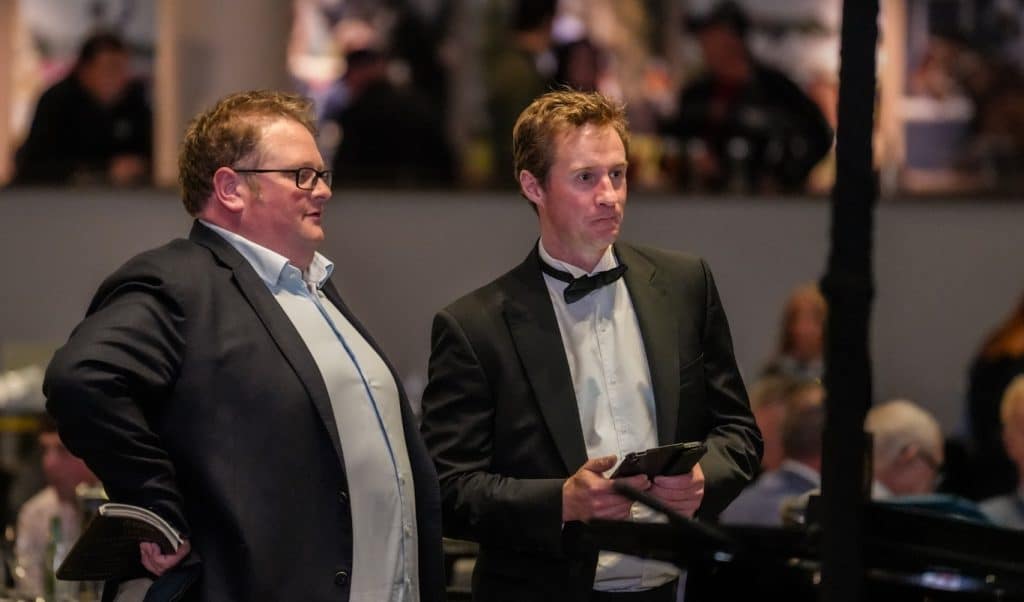
It might be the Irish that brings these characters together. It might be the school of Coolmore. Hutch, like many, arrived at Jerrys Plains from Tipperary with a three-month visa that turned into permanent residency.
Back home, he came from Kanturk horse country in Cork. His father Dan was, still is, a practicing vet who exposed young Sebastian, who shares his actual first name with his father, to the local point-to-point hub, Dromahane, and any level of horses and ponies going around. Hutch wishes he had embraced the exposure more.
“As I’ve gotten older, I’ve come to realise what a privilege it was to be able to be around horses as much as I was,” he says.
“Now I live in Sydney and my son is eight, and he enjoys horses but the opportunity for him to spend any time with them is so limited.”
Horses to the Irish are like swimming pools to the suburban Sydney home – they’re everywhere.
“I was shocked every day, and still am, how you can spend maybe 80 to 85 per cent of your time thinking about and managing colleagues and peers, and just 10 to 15 per cent of your time doing what you think your job actually is.” – Sebastian Hutch
Hutch’s family wasn’t just a veterinary one; his mother Vanessa bred and owned the Group 3-winning, Group 1-placed Missunited. Vanessa’s father had the 1968 Irish 2000 Guineas winner Mistigo, while Dan Hutch’s parents bred the 1987 dual 2000 Guineas winner Don’t Forget Me.
This week, the Hutchs will sell a Bayside Boy grandson of Missunited on day four of the Tattersalls December Foal Sale, for which Hutch will be ringside.
“I get to go home a lot, once or twice a year,” he says. “I spend a lot of time in Ireland, but I consider myself very lucky to have ended up in Australia.”
As a boy, Hutch went to the famed Glenstal Abbey School, run by Benedictine monks in Limerick. It’s a place of privilege, and among his classmates were trainer James ‘Fozzy’ Stack and MV Magnier. They snuck copies of the Racing Post and Bloodhorse into their required reading.
O’Brien says: “He could have sat on his laurels with that MV relationship, but he didn’t. He’s come from some degree of privilege, but you’d never know it. He certainly didn’t bring it with him to Coolmore.”
Hutch incorrectly assumed he didn’t have the smarts to be a veterinarian, and though he wanted to be a racehorse trainer, he trudged through an undergraduate degree in commerce law at University College Dublin (UCD).

During summer breaks he hooked up with Coolmore, spent time in the yards of John Oxx and went to Neil Drysdale at the now defunct Hollywood Park in California.
“I didn’t want to be an accountant or a solicitor, and what I really wanted when I finished at UCD was to go back to America,” he says. “That didn’t come about for one reason or another, and then through Coolmore I ended up in Australia.”
Arguably, it was a golden age for the Coolmore outfit. The stallion lineup bragged Encosta de Lago, Tale Of The Cat, Rock Of Gibraltar, Fusaichi Pegasus and Danehill Dancer, among others. Hutch shared the office building with James Harron and Henry Field.
“I worked for Coolmore for 10 years and I made great friends who are still great friends,” Hutch says, and he is reminded of the segway into Inglis. Coolmore Australia is the only arm of the Irish operation that presents its own draft of yearlings for commercial auction.
“That gave me a great platform, ultimately, to get a job at Inglis,” he says.
Hutch’s humour is subtle. He remembers a time when Arrowfield’s Jon Freyer told him to spend some time with “JM”, and up to that point “there were any number of JMs in my life”.
He also remembers a vivid conversation with Bob Peters.
“He told me to remember that this is a service industry and a service business, and if I give people good service I’ll do good business.”
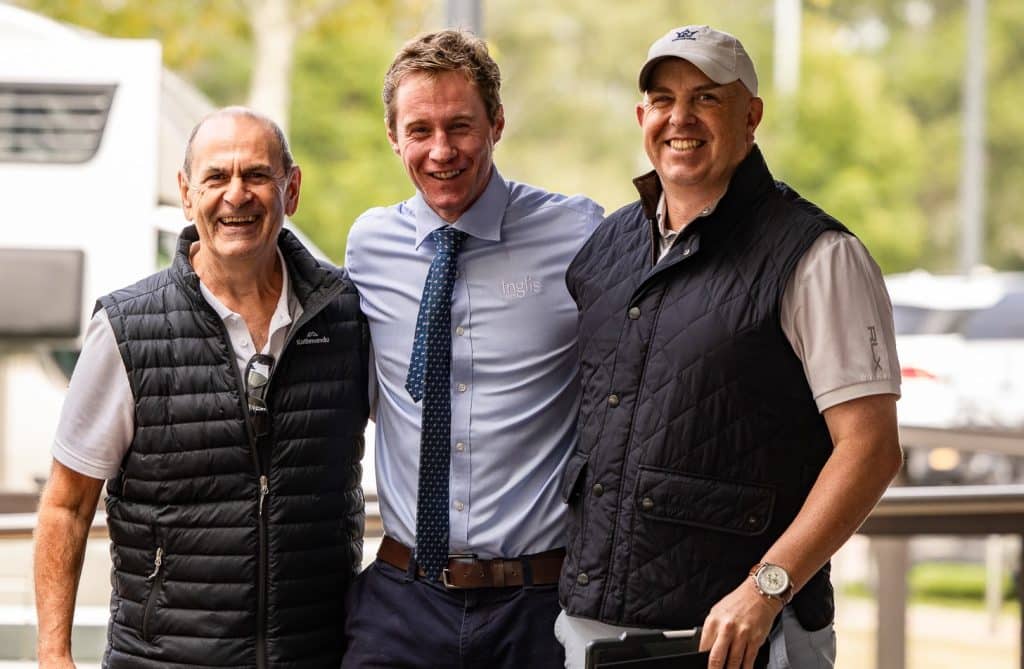
O’Brien says Hutch has made use of that well.
“Look at the Chairman’s Sale. It was teetering a bit, but Sebastian has been instrumental in getting back that market share. That drive he has, that determination, has turned it around. He is always on. He’s on the phone, he’s talking to people. If you were in the trenches, you’d want him beside you.”
Hutch is barely 40 years old but advertises the wisdom of a man much older. His wall of inspiration is having some effect because he says the outcomes at Inglis are getting better and better every year, and the hunger in the office to keep chasing success is insatiable.
“As I’ve gotten older, I’ve come to realise what a privilege it was to be able to be around horses as much as I was.” – Sebastian Hutch
Inevitably, the Inglis rivalry with Magic Millions is an everyday element of the job. It has been public at times, but Hutch sees it another way.
“There is no other bloodstock jurisdiction in the world where competition between auction houses is as ferocious as what it is in Australia,” he says. “And we compete on every level, across every facet of a sale.
“If you look at Europe, they have Goffs and Arqana and Tattersalls which are all kind of competing, but each has an element of control over their domestic market. Even in America, Keeneland is very much the dominant participant.
“Here, our clients want to see us do well, and they want to see Magic Millions do well, so you have this healthy, competitive duopoly, if that’s the right word, between the two companies, and that’s been great for the market.”
There is a lot of character behind Sebastian Hutch. Those who know him know it, and the industry has learned it the last seven years. He is selling umbrellas.
“You’ve got to give the market what it wants, right? It’s not rocket science but we can overthink what we do sometimes,” he says.
“That’s why, every now and again, I hear something or see something that I think is a powerful message, and I wonder how it could be useful to me. That’s when it goes up on the wall.”
Related Articles

Written In The Stars – A decade on – How Adrian Bott found his way in the shadow of Tulloch Lodge legends
Soft-spoken and studiously modest, Adrian Bott has spent a decade alongside Gai Waterhouse shaping Tulloch Lodge’s modern chapter. He talks to Jessica Owers about balancing pressure and expectation, all the while proving the quietest voices in racing can still command the highest respect.
Written In the Stars – ‘A very blessed life’ – Walden, WinStar and winning
As a kid, Elliott Walden thought his farm life in Kentucky was boring, but after a detour via the training ranks, he became, through his association with WinStar farm, one of the most successful and revered figures in American breeding and bloodstock. He reflects on his journey with Jessica Owers in Written In the Stars.
Written In the Stars – Gray Williamson, master of Mungrup, still
Amid the ups and downs of the thoroughbred breeding game, the coming, and going, of two champion stallions and personal upheaval, Gray Williamson remains content on the same Western Australian farm where he grew up. He tells Jessica Owers, there is much to be positive about.