
‘You can’t cut your way to future sustainability’ – Morrison’s Racing Victoria challenge
Chief executive Aaron Morrison fronted Racing Victoria’s annual general meeting on Wednesday with a challenge of returning Victorian racing to growth, having helped right its perception among the broader racing industry.
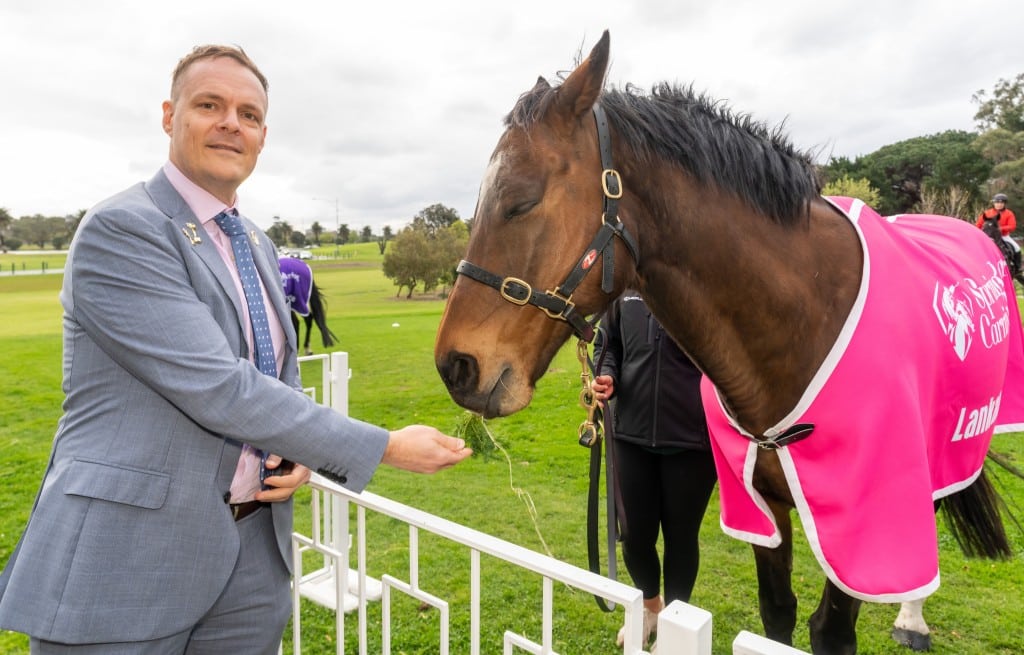
Green shoots and blue skies may have been the theme of the recently completed Victorian spring carnival, but in the second full year in his role as Racing Victoria chief executive, Aaron Morrison knows that treading water won’t cut it in an industry of spiralling costs and stakeholder demands.
Morrison took to LinkedIn this week to extoll the increasing sense of optimism around the Victorian racing industry – ‘Racing is back in a big way’ he kicked off with before listing the burst in attendances at a host of spring race meetings as an example of a surge in engagement.
Wagering turnover numbers are on the rebound for the first time in three years, with record Melbourne Cup betting. While that doesn’t necessarily strengthen RV’s balance sheet, it is a positive sign of engagement.
Accentuating the positives has been a clear strategy for Morrison, who took the chief executive’s role at a time when perceptions of both Victorian racing and its governing body were on the wane after the era of previous boss Andrew Jones came unstuck in April 2024
While the balance sheet still remains in the red, RV has now recorded a total net deficit of $20 million across the past two years, including $8.8 million in 2024/25. Morrison points to the growing level of optimism, having worked to rebuild the relationships with key aspects of the industry.
“I think we’ve done all the things that we should be doing and can be doing,” he told The Straight. “There may well be some more efficiencies for us to still find.
“I think the participants in the industry appreciate that our focus is firmly on them. We’re not trying to run a normal business that makes profit for profit’s sake. It’s all about trying to maximise how much we can invest in any given year back into the industry.”
“But obviously, there are a lot of competing priorities for the limited income that we can generate each year.”
The vibe may be good, but the trend is still in the negative for now.
RV revenue for the 2024/25 year was $526.5 million, $10 million less than last year in a period where it has undergone a major change in its funding model. RV revenue peaked at $572.5 million in 2021/22. With $50 million less to go around, splitting the pie is harder than it was a few years ago.
Morrison has been forced to cut his cloth, with RV losing 15 per cent of its workforce last financial year, something which hasn’t helped the new CEO’s mission for goodwill in an industry where everybody seems to know everybody.
While prize money has been sustained, the relatively positive figures out of the spring will only increase pressure from trainers and owners’ groups to increase their returns as their business models become increasingly impacted by spiralling costs.
But as Morrison points out, those costs are also impacting Racing Victoria itself, which is being forced to do more with less.
“Before you sort of turn the page on a new year, you’re already up for wage inflation, CPI on all your major contracts. So, every year, there’s several millions of dollars in our business,” he said.
“We’ve got a large amount of fixed contracted expenditure, particularly in the media business. So, you start in the negative every year and you have to find savings or growth to offset that just to be standing still.”
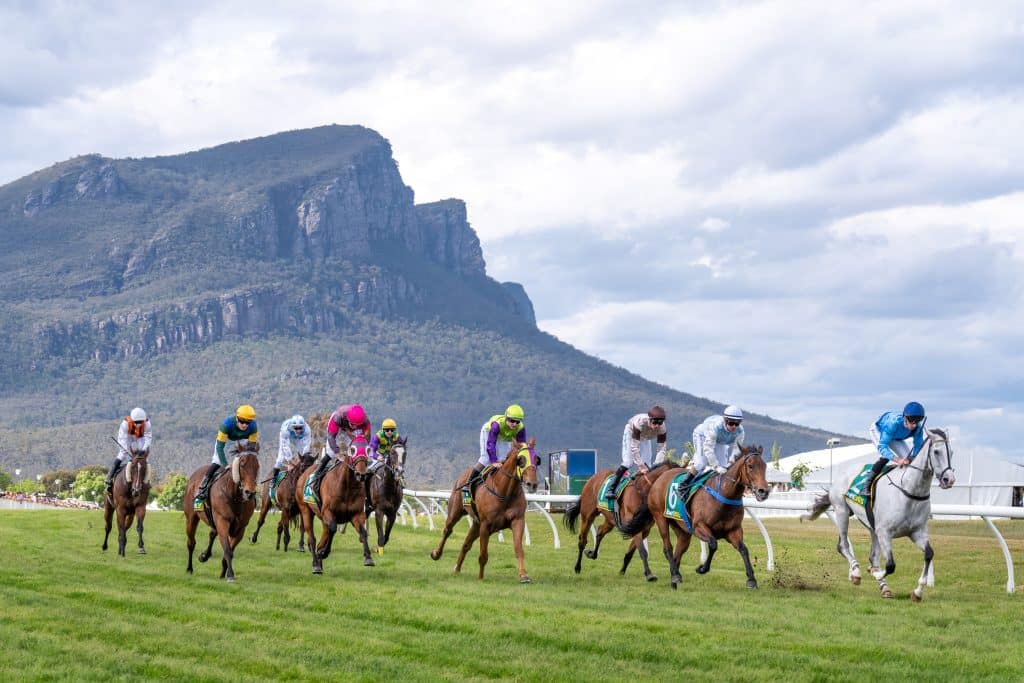
But standing still in a competitive wagering landscape where sports betting is increasingly taking market share is not a viable option, says Morrison.
“We’ve got to be focused on growth. You can’t cut your way to future sustainability alone. You have to try and continue to grow your business,” he said.
“I think we are. Certainly, if I sort of look at the media metrics, you would expect that the engagement that we’ve seen in the last six months in particular, that ought to be able to be translated into commercial success eventually.”
The reliance on the growth in revenue from media is not exactly straightforward. RV’s annual report showed it cut over $2 million out of its media business during the last financial year, but it also lost $1.3 million in revenue from this source.
What has also changed is the nature of Morrison’s role. Previously the chief operating officer and chief financial officer under Jones, he became a jack-of-all-trades CEO when he took over in August 2024, as he sought to build a new executive team around him.
We’re not trying to run a normal business that makes profit for profit’s sake. It’s all about trying to maximise how much we can invest in any given year back into the industry” – Racing Victoria chief executive Aaron Morrison
Since then, Vaughn Lynch (Chief Operating Officer), Peter Betson (Executive General Manager, Strategy & Corporate Services) and Andy Hoad (Executive General Manager, Media, Content & Marketing) joined the RV executive, while Janelle Helleur was promoted from within.
“I’m really happy with the team that we’ve got. The people that we put into key positions bring really specific experience, understanding of the industry, respect from the key participants and stakeholders that they engage with,” Morrison said.
“And it helps me focus on other things. My role’s pivoted very dramatically personally, even in the last sort of six months.”
“I’m spending a lot more time on the industry, outward promotion, and the team are doing a great job running and operating the business. So that’s the confidence I have in them.”
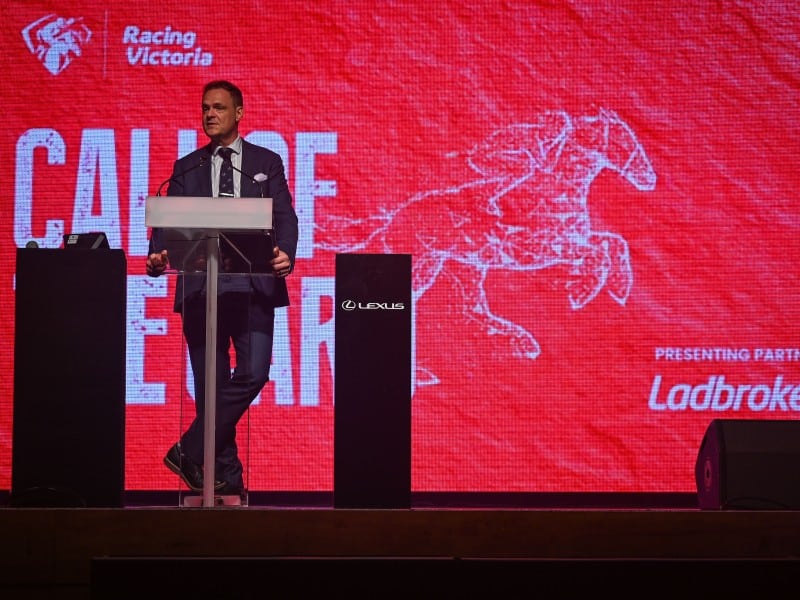
Morrison, previously seen as a reserved management and finance type, has now become the outward face of RV, both to stakeholders and the media. At a time when the Victorian industry needed leadership, he has been willing to put himself out there and push the message.
But the racing industry’s message is rarely straightforward, and RV doesn’t have a monopoly on its control. There were a host of headlines it would have rather not seen during the spring, including Morrison’s own central involvement in a fair work dispute with RV’s general manager of veterinary services Dr Grace Forbes.
Morrison is well aware that leadership can change perceptions, but perception can also change leadership. His challenge now is to show that the strength of the Victorian racing industry exists beyond a perception of better times ahead and to begin delivering on that promise.
Author

Related Articles
Supreme consequence – Court to rule on ATC’s bid to stay out of administration
A Supreme Court ruling defining the likely path forward for the Australian Turf Club promises to be a crucial moment for the NSW racing industry when it is handed down on Wednesday.
Run The Numbers – Kings of the road – Australia’s most travelled trainers
In a nation of 354 racetracks, there is no shortage of options for where to take your horse for a race if you are willing to do the miles. But which trainers do more miles than any other? Run The Numbers investigates.
The ‘agitators’ strike back – Racing NSW chair criticised for prize money-focused boast
A powerful thoroughbred industry group has criticised a recent notice sent to NSW racing participants, saying the missive authored by Racing NSW chair Dr Saranne Cooke left several key questions around board governance unanswered.