
Racing’s data and demographic challenge
One of the key arguments made by the Australian Turf Club in its pitch to members to sell Rosehill is that racing’s popularity is on the decline. But the varying data on this crucial point reveals a much broader challenge for the racing industry.

A survey of 10,000 people, conducted and released by the NSW government last year, revealed that the percentage of people who bet on racing has slumped from 12.9 per cent in 2019 to 9.9 per cent last year.
Even more concerning for the racing industry, was the fact in 2011, that figure stood at 24 per cent.
The NSW Gambling Survey 2024 is conducted every five years by the NSW Responsible Gambling Fund and was cited in the Australian Turf Club’s extensive missive to members sent this week, as evidence of racing’s decline in popularity.
“Participation (by percentage of the population) in race betting in NSW has declined by 23.3% over the last five years (from 12.9% in 2019 to 9.9% in 2024). This represented the largest decline among major gaming and wagering activities,” the ATC document read.
“Online betting has provided greater access to other sports, which appear to be gaining market share.”
Leaving aside that the NSW survey also said that percentage betting on sport was actually down from 8 per cent to 7.6 per cent on when the survey was first conducted in 2006 – something which seem incongruous given the change in the sports betting landscape in that time – the data on racing also conflicts with broader racing turnover figures.
National turnover figures – Racing NSW doesn’t publish state-based turnover – show at least a 10 per cent growth from 2019 to 2023, albeit with a massive peak over the pandemic which has since declined.
Curiously, a survey conducted by the Australian Gambling Research Centre (AGCR) in 2022, with a sample size of 1765, showed that 38.1 per cent of adults gambled on horse racing in the previous 12 months.
That survey indicated 72.8 per cent of Australians had spent money on gambling in the past 12 months, where the NSW study conducted in 2024 had that figure at 53.2 per cent.
Now there is a possibility that NSW may be much more conservative in its gambling than the rest of the country, but gambling expenditure trends indicate 41 per cent of money spent on gambling in Australia is wagered in that state, which has 31 per cent of Australia’s population.
The NSW survey may be a correct measure of the true role of racing in the broader gambling landscape, or the AGCR research may be right, but one thing is for sure, they can not both be right.
There is seemingly no end of government departments, state and federal, who put out data on gambling in Australia, usually through the prism of minimising gambling harm.
These reports are important to measure the broader implications of gambling harm in our community, but given the results vary wildly when it comes to specifics, they would not seem a suitable platform on which to make broader assumptions about the direction of the racing industry.

Racing is notoriously terrible at understanding its customers. There are myriad reasons for this, including the divided nature of the states, the club versus regulator model and the fragmented wagering environment.
The chief cause of this is a lack of data.
The most recent edition of Racing Australia’s Fact Book failed to feature wagering turnover, arguably one of the most important raw metrics given the industry’s reliance on betting.
 Bren O’Brien
The Straight understands that at least two states raised concerns over the accuracy of wagering data, so they refused to participate. Anecdotally, we have been told that the most recent annual turnover figures of $26.3 billion in 2022/23 may actually be significantly less than the true number.
How can racing bodies make strategic decisions when they do not have authoritative numbers on even the most fundamental of data points?
Well, they rely on third-party data, of course.

But when you consider that the Rosehill sale shapes as the biggest transaction in Australian racing history, how reliable is that data? And can you afford to cherry-pick it?
While looking at the NSW Gambling Survey 2024, the ATC may have come across a couple of other concerning figures.
The first is the role of women. The NSW data indicated just 5.7 per cent of women had bet on racing in the past 12 months. The AGRC’s figures in 2022 were much higher at 28.8 per cent.
The other demographic aspect which stands out in the NSW report is the participation of people who speak a language other than English at home. Essentially, a measure of those from migrant backgrounds, this was stark.
While the survey reported that 11.3 per cent of people who spoke English at home had bet on racing within the past 12 months, it was just 1.8 per cent of those who spoke a language other than English. That’s a six-fold difference.

When you consider that 22.3 per cent of people in Australia speak a language other than English at home, it tells you that racing has a huge challenge appealing to what can be characterised as its “non-traditional” audience.
How the ATC plans to attract the heartland of western Sydney, something it admits it has struggled to do at Rosehill, is a crucial plank of making the grand plans for Warwick Farm work.
It is also surely a factor that when you are considering spending $800 million rebuilding a racecourse in a local government area such as Liverpool where 53.8 per cent of people speak a language other than English at home.
 Bren O’Brien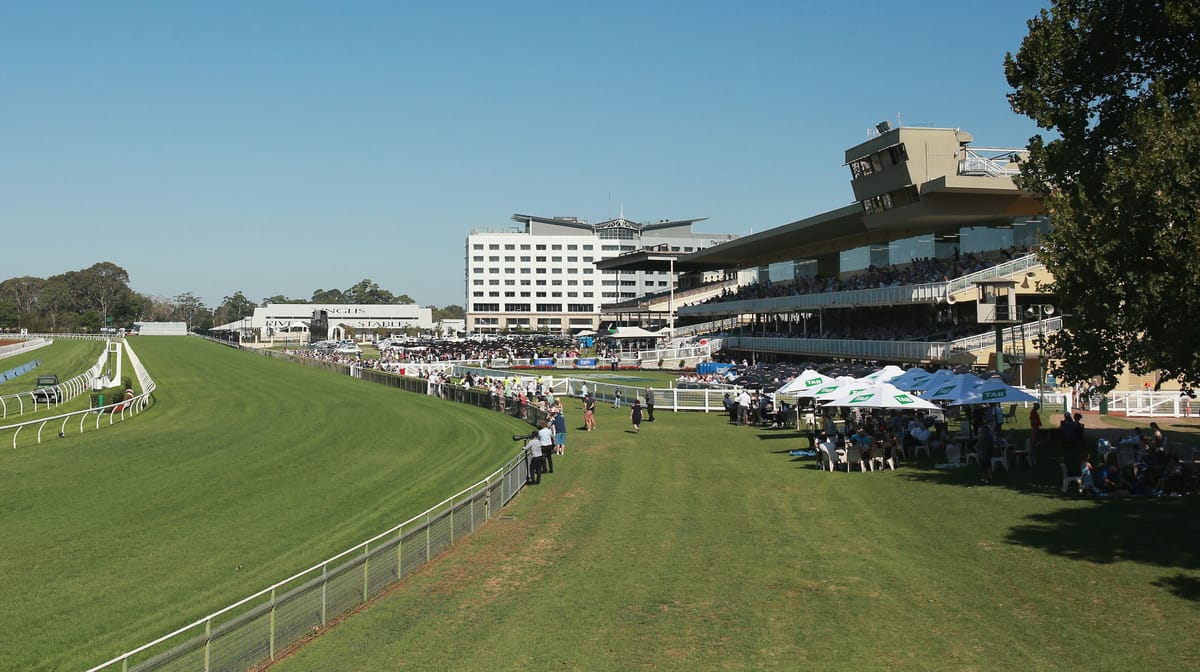
Author

Related Articles

Kelly compromise: Funding deal impasse ends as Racing NSW, ATC agree on key role for proposed administrator
The man who was set to be appointed administrator of the Australian Turf Club, Morgan Kelly, will now conduct an independent review of the club’s hospitality operations as part of an interim agreement which secured the ATC funding from Racing NSW until a key legal dispute is settled.

Digital dilemmas – Government grapples with gambling ad, sponsorship rules for online content
Australia’s gambling advertising shake-up is exposing regulatory blind spots across digital media, with podcast and streaming sponsorships emerging as unresolved legislative flashpoints.
Run The Numbers – The filly and mare advantage
The victories of Joliestar and Sheza Alibi at Randwick on Saturday mean that 14 times this season, a filly or mare has upstaged the colts and geldings in an open-age Group 1 in Australia. Is this dominance becoming more common? Run The Numbers investigates.