
French disconnection – The similarities and differences in the challenges facing racing in France and Australia
The connection between French and Australian racing has arguably never been as strong, and while both confront a decline in wagering, the causes, as well as the racing culture, are different, writes Matt Stewart.
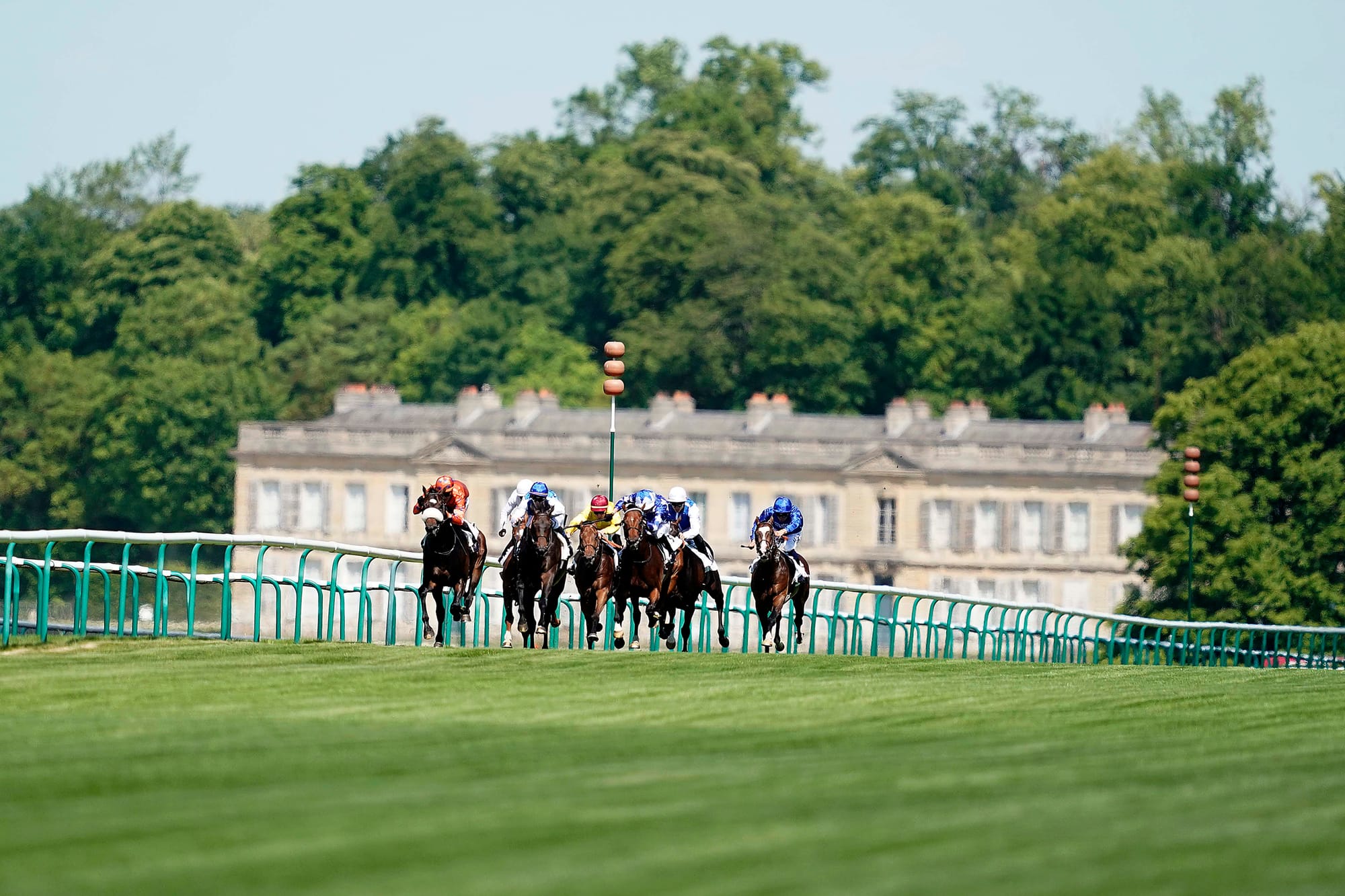
It would be easy to characterise Australian and French racing as international twins, but while there are a host of similarities, they are far from identical.
Australian racing had a rich gambling culture from the get-go. The Endeavour had barely anchored at Botany Bay before Two-Up erupted on the beach.
In France there was always cultural caution towards gambling. As a French-based trainer said this week: “The French are funny with money. They’re suspicious.”
The betting culture in France racing is shaped by the ubiquitous PMU, which holds a near monopoly similar to what the TAB did in Australia until about 20 years ago. Given the French origin of the word, it is not surprising that pari-mutuel is still king in French racing.
But while the PMU logo might be everywhere, on cafes, bars, bistros and even on ice-cream shops, the French turnover on racing is less than half of Australia despite boasting well over twice the population.
Almost every racing jurisdiction in the world had a halcyon era of horse racing. In the US and Australia, it was probably post-World War II right up until the 1980s. Even when the TAB was in its pomp, Australia had vibrant betting rings, the US massive tote queues.
Similarly, in post-war France, even an average Sunday at Longchamp attracted crowds upwards of 80,000. In modern times, two meetings in two days over the Arc weekend total no more than 60,000.
In Australia, crowds are now attracted only to mega-majors or inventive newcomers. The Everest popped up out of nowhere and crams in 40,000, mostly under 30s. Likewise, the youngsters are now drawn to Longchamp on a Thursday night. Like Randwick on Everest day, there’s a band after the last.
The similarities don’t end there. French racing does look a lot like ours. Flat, oval tracks, with a more sit and sprint style than the endurance tests of elsewhere in Europe.
OTI has imported over 200 horses from Europe and over 120 of them have been from France where the racetracks and race-shapes are identifiable.
“It makes more sense for us to buy from France,” says OTI’s Terry Henderson. “They might not be the best horses but they are the best fit, far easier for us to assess than those racing over those hills and dales in the UK.
“It’s no fluke that most of the European Melbourne Cup winners have been from France.”

Even the French Classic season is a climatic twin to Melbourne in spring; warm, but not uncomfortable.
The wagering challenges, despite Australia’s betting landscape now being dominated by a swathe of corporate bookmakers offering fixed odds, bonus bets and money back, are also similar.
Punters are either dying out or moving on to other sports in both countries. It is in fact a global phenomenon, accentuated by the expected but still alarming decline since the COVID sugar hit.
Racing Victoria revealed this week that wagering turnover was down 5 percent off the back of a 10 per cent decline the previous year. As reported in The Straight, other states have witnessed similar declines.
Such devastating loss of revenue – which parlays into sharp drops in overall industry wealth – lead to dramatic scenarios, such as the Australian Turf Club’s determination to sell Rosehill racecourse.
France Galop announced this week that it will slash prize money by $A34.2 million per year until 2029, a reaction to a dramatic decline in betting. The slashing begins on July 1.
Group 1 races will not be touched with the major cuts to impact the middle bracket of participants.
The cuts follow a historic prize money peak in 2024 where $A516 million in prize money was distributed throughout France’s racetracks.
Australia, too, has clawed back or is facing a reduction of stake offerings from post-pandemic peaks, which saw returns to owners double in the space of a decade.
France Galop’s president Guillaume de Saint-Seine said reversing horse racing’s economic fortunes was “imperative”, a sentiment shared across the world. The plan is to balance the books by 2029.

But while the solution is long-term, so too is the problem.
In true French style, when the government proposed additional taxation on betting, French racing went on strike last November. Jockeys, trainers and breeders marched alongside 26,000 others through the streets of Paris. While Australia faces similar challenges, it’s hard to imagine a mass protest happening in Sydney or Melbourne.
French dissatisfaction was also sewn with the neglect regarding racing’s missed opportunity to invest in a slice of sports betting wagering, which a senior French journalist says cost French racing about $3 billion in revenue.
It fuelled an era of angst and wagering concerns that in part culminated in the resignation last week of Emmanuelle Malecaze-Doublet, head of the PMU, the French tote, for the past three years.
 Bren O’Brien
Chantilly-based journalist Adrien Cugnasse of Jour De Galop says France is facing the same dilemma as most jurisdictions: finding new people to bet on racing.
“And it is not massive here like it is in Australia, Ireland or England,” he said.
French betting turnover on horse racing (all types) was around $A11.8 billion for a population of 68 million in 2023. In Australia at the same time, it was $26.4 billion (thoroughbred only) for a population of 27 million.
Other sports, such as football, have syphoned away those who may have bet on the horses. Turnover on football in France in 2023 was over $A7.8 billion, around two-thirds that of racing, and growing..
“It is weak in younger generations and old people are dying. That’s the first reason for the collapse of betting turnover,” Cugnasse said.
Cugnasse said that a decision to ignore sports betting as an income stream in 2010 was a “massive mistake”.
“It let go of the biggest expanding market,” he said.
Had the PMU signed off for 10 per cent share of sports betting it would have raised $A3 billion. “And would have financed the prize money in France,” he said.
“There is a worldwide wagering crisis and it’s critical for France to find new bettors. It is a crossroad for French racing.”
A significant chunk of the sports betting market is now held by privately owned La Francaise des Jeux (FDJ), which operates retail sports betting as well as several brands in the online market.
The Hong Kong Jockey Club, often seen as the world standard in many regards, has embraced football betting and it now makes up more than half of its turnover. It is currently considering whether it will allow betting on basketball, particularly the NBA, which is the biggest sports betting market in Australia, and the third highest in France.
In another parallel with Australia, a further challenge to the wagering market in France is the growth of unregulated overseas-based operators.

The slashing of French prize money will hit middle-bracket trainers hard.
“In France, a good third of the horses are owned by the trainer, with or without partners,” Cugnese said. “This category of horses are relying heavily on prize money levels and will be severely affected by cuts … it will hit hard on countryside racing.”
Breeders would also be impacted.
“France is a nation of small breeders and France Galop gives them premiums that represent 10 to 20 per cent of the earnings of the horses that are bred. If prize money goes down, the premiums automatically decrease,” the journalist said.
In another scenario that mirrors the Australian experience, Cugnasse said authorities had believed the only remedy for declining wagering was to simply put on more races.
Henderson said the dramatic devaluation of French races, and potentially French racing, would not impact buyers such as OTI.
Henderson said most of OTI’s French imports used France as a platform to be imported to Australia, where prize money has hit a ceiling but remains relatively high.
“Only one or two are at a level where they race there long term,” he said.
Henderson said the slump in the Australian dollar against the euro was of greater concern. The horses have suddenly become more expensive, up about 13 per cent on 2024.

For French owners and trainers there will be some buffer to the prize money cuts. A French breeding scheme means two and three-year-olds receive an extra 75 per cent of the stake offerings if they are French-bought.
“But I guess 75 per cent of a lower stake figure would be harmful to a degree,” Henderson said.
A leading French trainer was blunt about the cuts and the future.
“The average punter is getting older and dying and the younger ones just aren’t interested. It’s that simple,” he said.
“Those Thursday nights at Longchamp with 10,000 young people is great but it should have been done 15 years ago.
“They close the gate before the last race so the youngsters have to watch at least one race, so it’s not just a disco, so maybe it will catch on and a few of them might decide to have a bet.
“In England, it’s still a popular sport. The young still go racing; lots of girls even. In France, the culture has been different.”
Additional reporting by Bren O’Brien
Related Articles
Rowe On Monday – A bidding cat and mouse, Messara’s statistical argument and a family formula pays off for Field
In this week’s Rowe On Monday, sales companies’ bidding strategies under the spotlight, John Messara ponders a fairer distribution of prize money and Henry Field’s formula for sire success.

Written In The Stars – Emma Cully and the heartbeat of syndication success
Over 14 years, Emma Cully has become an indispensable and important part of the success of Star Thoroughbreds – the quiet constant beside Denise Martin. So how did this Irish-born daughter of a national hunt trainer end up in the heartbeat of one of Australia’s leading syndication companies? Jessica Owers finds out.
Racing’s burning questions as PM moves on wagering advertising reform
Racing has long expected a carve out from any federal gambling advertising restrictions, but even with an exemption, a significant shift in how bookmakers market to customers will have a commercial impact on the thoroughbred industry, writes Bren O’Brien.