
Everyone gets a prize – How the Melbourne Cup grew to be a $10 million race
The headlines surrounding the Melbourne Cup’s elevation to an eight-figure race are somewhat different to when it reached the seven-figure milestone in 1985, writes Bren O’Brien.
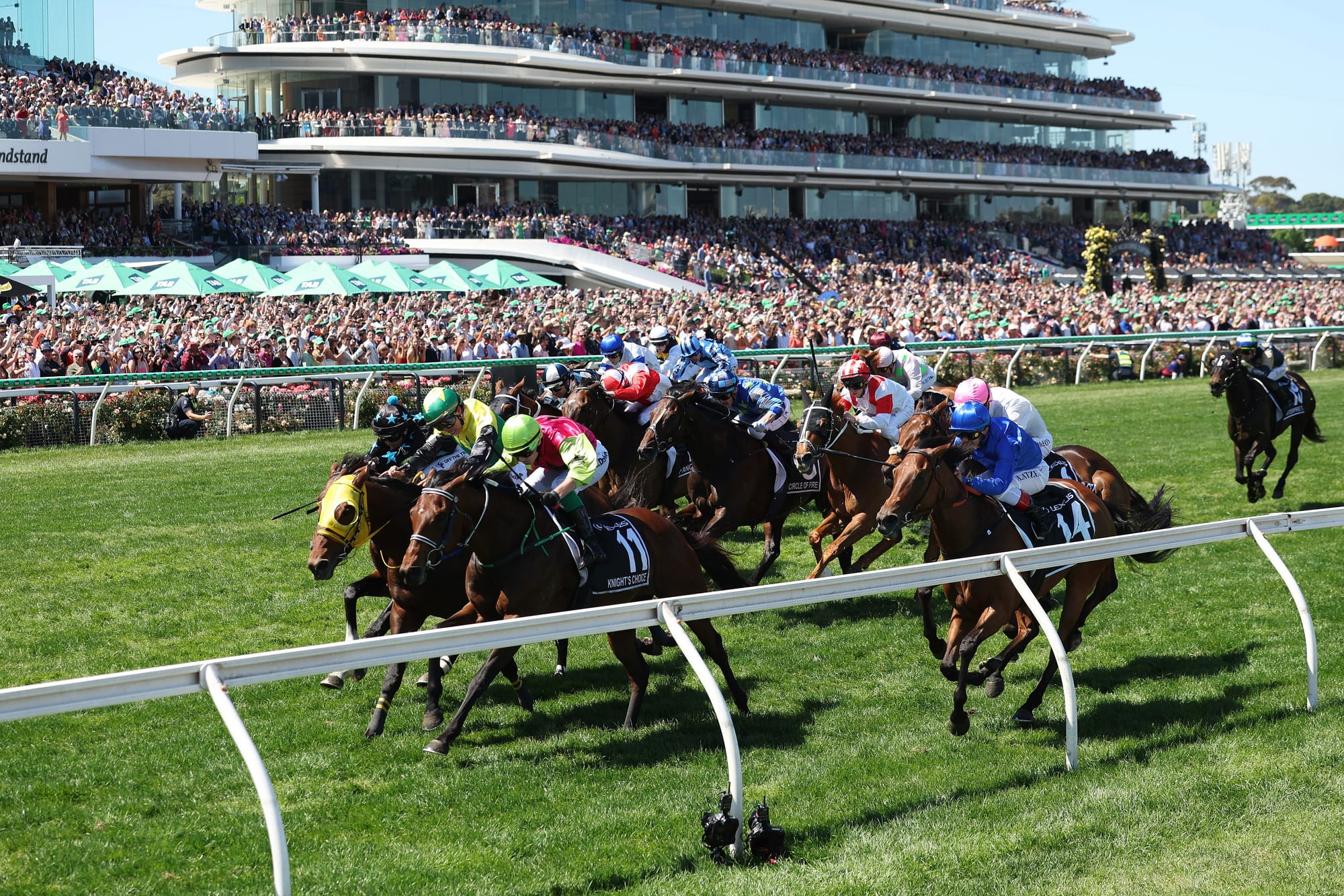
When the Melbourne Cup became the first Australian race to break $1 million in prize money forty years ago, it made national headlines. In 2025, as it reaches eight figures for the first time, the coverage is less spectacular.
The Melbourne Cup still breaks ground in many areas, including being the most watched and most bet-on race in the country by some margin. However, the battle to become the richest race in Australia was lost when The Everest and then the Golden Eagle vaulted over it in the past eight years.
Given the enormous value it drives for the racing industry – it is the highest turnover race by at least three to four times any other race according to The Straight’s own research, six times according Racing Victoria – it is well worthy of its status of having $10 million in prize money, equal to that of the Golden Eagle, run three days earlier at Rosehill.
The Victoria Racing Club announced in February that research indicates a $1 billion uplift in Australian economic activity related to Melbourne Cup raceday alone
However, it is noteworthy that Cup turnover has dipped slightly to $214 million in recent years and a legitimate question is what value does another $2 million in prize money add to a race of such lustre.
The VRC and Racing Victoria have sought to answer this by adding the money not to the top end of the race, ie, those who actually perform the best, but by paying each runner a minimum of $100,000, including those who finish 12th to 24th.
“The Lexus Melbourne Cup is unrivalled for its history, status and reach and the VRC is proud to be able to now reward every local and international participant in the great race,” VRC Chief executive Kylie Rogers said.
“It reflects the significant effort required to prepare and qualify for the Lexus Melbourne Cup and goes hand-in-hand with a decision to add additional qualifying opportunities through the Geelong Cup and Moonee Valley Gold Cup.”
The addition of two more “win-and-you’re-in” races is significant in itself. By now paying down to 24th, the VRC has effectively added $100,000 in minimum extra winners’ prize money to these lead-in qualifying races.
The “everybody-gets-a-prize” offering will create plenty of discussion, including why Australia’s greatest race now effectively has an incentive scheme for participation. It will also likely drive a resurgence in international participation, which has flagged in recent years in light of the tighter veterinary protocols on the race.
Overall prize money for the Melbourne Cup carnival has jumped from $32.5 million from $30.6 million with prize money levels lifted for all Group and Listed races to a minimum of $200,000.
“Cup Week adds more value to the economy and the racing eco-system than any other racing carnival in the country, contributing around 10 per cent of the annual wagering turnover across the state,” Rogers said.
“We thank Racing Victoria for its support to lift minimum prize money across the week, which will continue to attract the best horses, jockeys and trainers from Australia and across the world.”
Offering more prize money is a remarkable position for the VRC to be in, given its much-publicised financial challenges, which included a $24 million loss in the 2023-24 financial year, taking the overall red ink to $70 million since the pandemic.
But Rogers, who took the VRC role on the eve of last year’s spring carnival, is pointing to bluer skies for Australia’s largest race club.
“In line with the club’s significant improvement in its financial position this year together with a forecast to increase again in season 2025-2026, the VRC has made a considered decision to increase its returns to participants,” she said.
“Planning for the 2025 Melbourne Cup Carnival is in full swing, and this is just one of a number of exciting announcements that build momentum towards the world’s greatest racing event.”
In a further boost for the VRC, the Newmarket Handicap, run in March, will be worth $2 million, a $500,000 jump. However, this has come at the expense of two other Melbourne features. The All-Star Mile and the Australian Cup have been reduced by $500,000 apiece to $2 million.
Author

Related Articles
A summer of Cups and stars in the making
As Tasmania’s summer comes into its own in January, so too does the quality of thoroughbred racing, with the Devonport Cup setting the scene for the Tasmanian Summer Racing Festival to peak over the next two months.

What will be the five biggest stories in wagering in 2026?
As the calendar turns into another year, it’s time to turn our focus to the crystal ball to see what might shape the wagering industry headlines of 2026, and there is a certain familiarity to our predictions.
The Top Five Australian-bred stars of 2025
A look at the top five most impactful Australian-bred thoroughbreds of 2025.