
‘You hang on too long and you go crazy’ – Brian Smith’s colourful training journey nears its end
Colour theory, papal visits and that Arc near-miss are all part of the legend of Brian Smith, who retires from training at age 84 this month. Matt Stewart caught up with the legendary horseman, who said he’s done with “thinking too much”.
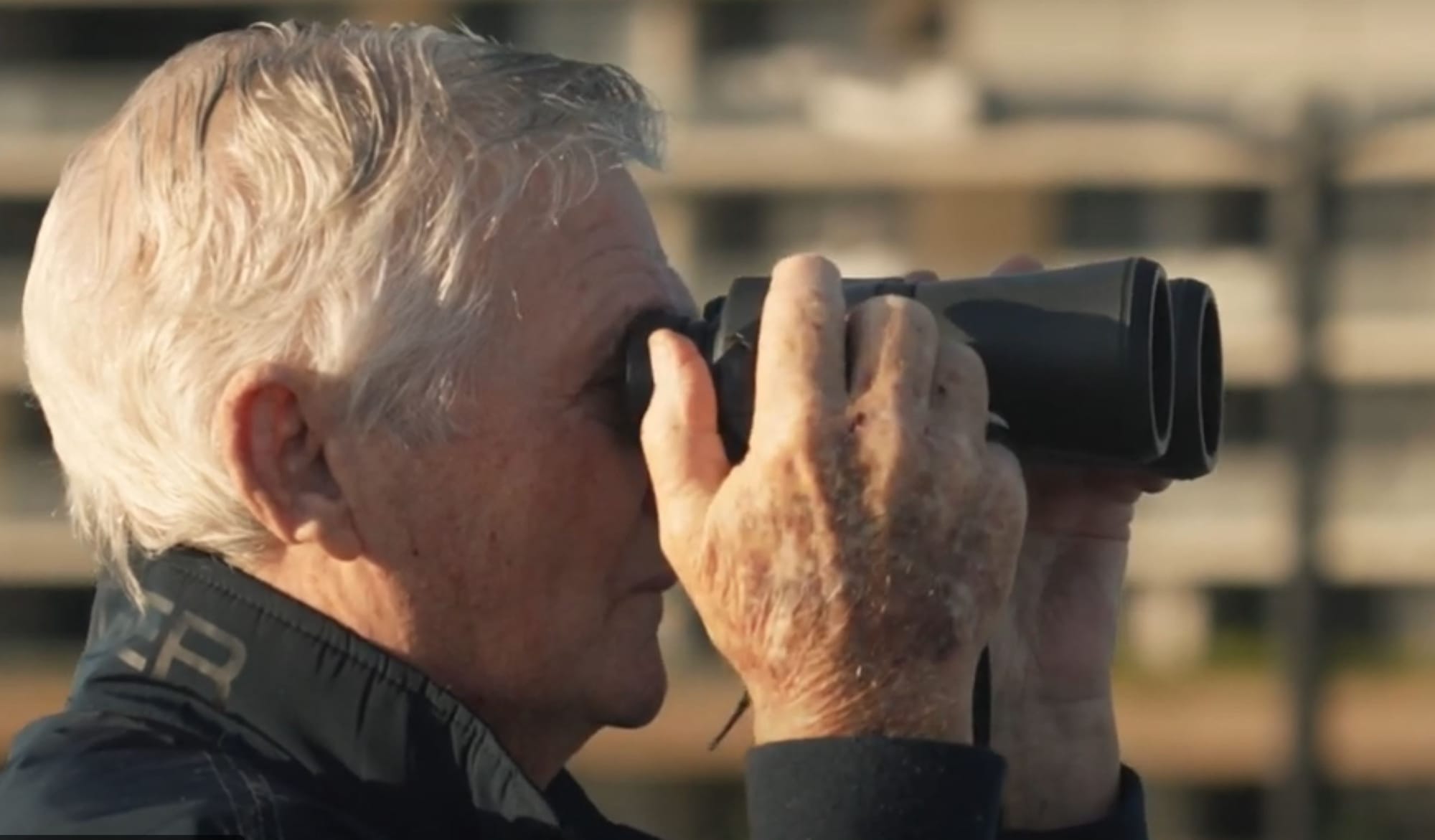
In the legend of Brian “BJ” Smith there is no logical place to start, no family backstory to explain a character so unique, a training brain wired unlike any other.
The “sparrow story” is as good a place as any to capture the essence of the almost-84-year-old, soon to be retired, who is probably best known as the trainer of the New Zealand horse who almost won the Arc.
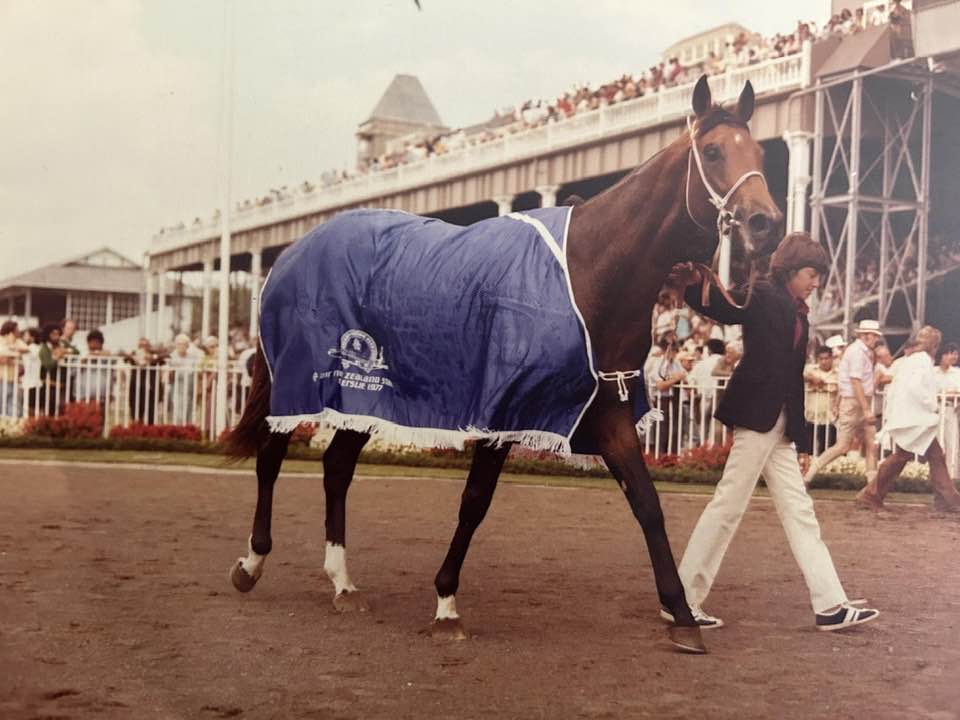
Balmerino’s fast-closing second to Alleged in the 1977 Prix de L’Arc de Triomphe when under the care of English trainer John Dunlop still irks Smith, who’d always believed in fate but is adamant fate had nothing to do with that Arc defeat. Forty-eight years on, he still maintains other things were at play.
More than a decade after Balmerino copped all that bad luck at Longchamp, Smith was training Balmerino’s son Kessem for the Cups. Kessem was an up-and-coming Sydney stayer bought as a yearling by Smith because “he looked like Balmerino and they both had one missing rib”.
Smith and Kessem would blaze a trail in Hong Kong by winning the 1990 HK Cup.
The Smith and the Alderson families had been long-time friends and Kessem was being housed at the old Alderson stables, on Craig Road near Cranbourne racecourse.
Colin’s daughter Cindy wandered into the barn to witness Smith clambering up the roof cavity in desperate pursuit of a sparrow.
“He was climbing the rafters and he wasn’t a young man, even back then,” Alderson said.
“I yelled out ‘BJ what the hell are you doing’?
“He was chasing the sparrow that stole his embroidery string.”
The string was part of a device Smith learned about when “an old farmer came down from the hills” in New Zealand with a special remedy for Smith and his horses, delivered via coloured vibrating strings.
“It was fate, my whole life in fact, everything has been fate,” Smith said of his introduction to a therapy tool, colour therapy, that Alderson admits she initially dismissed as “gobbledegook”.
Also known as chromotherapy, it is now recognised as a treatment of a myriad of ailments in humans, and in Smith’s case, horses.
In the 1980s, in the structured world of horse training, it was more akin to witchcraft; well within the rules, in fact so exotic that no rule could be applied to it. It was simply a messaging system, the genius of Smith at work.
In a nutshell, strings act as conduits to 69 million frequencies, transmitted through the body. The programs are colour-coded and emitted by pocket-sized devices.
Smith treats himself regularly and boasts he has a heart rate variability of someone half his age.
Smith introduced this therapy to Balmerino “and he won every month of the year, 12 months straight, as a three-year-old so it didn’t do any harm”.
It was also part of the training regimen of Elvstroem and Haradasun’s dam Circles Of Gold, who won an AJC Oaks for Smith, then claimed a Coongy Handicap before running second in the 1996 Caulfield Cup three days later.
Bikkie Tin Blues won six races straight, including a Newcastle Cup, and then there was a multiple stakes winner and international globetrotter in Kessem.
Cindy Alderson said she was at first confused by Smith and some of his methods, then enthralled.
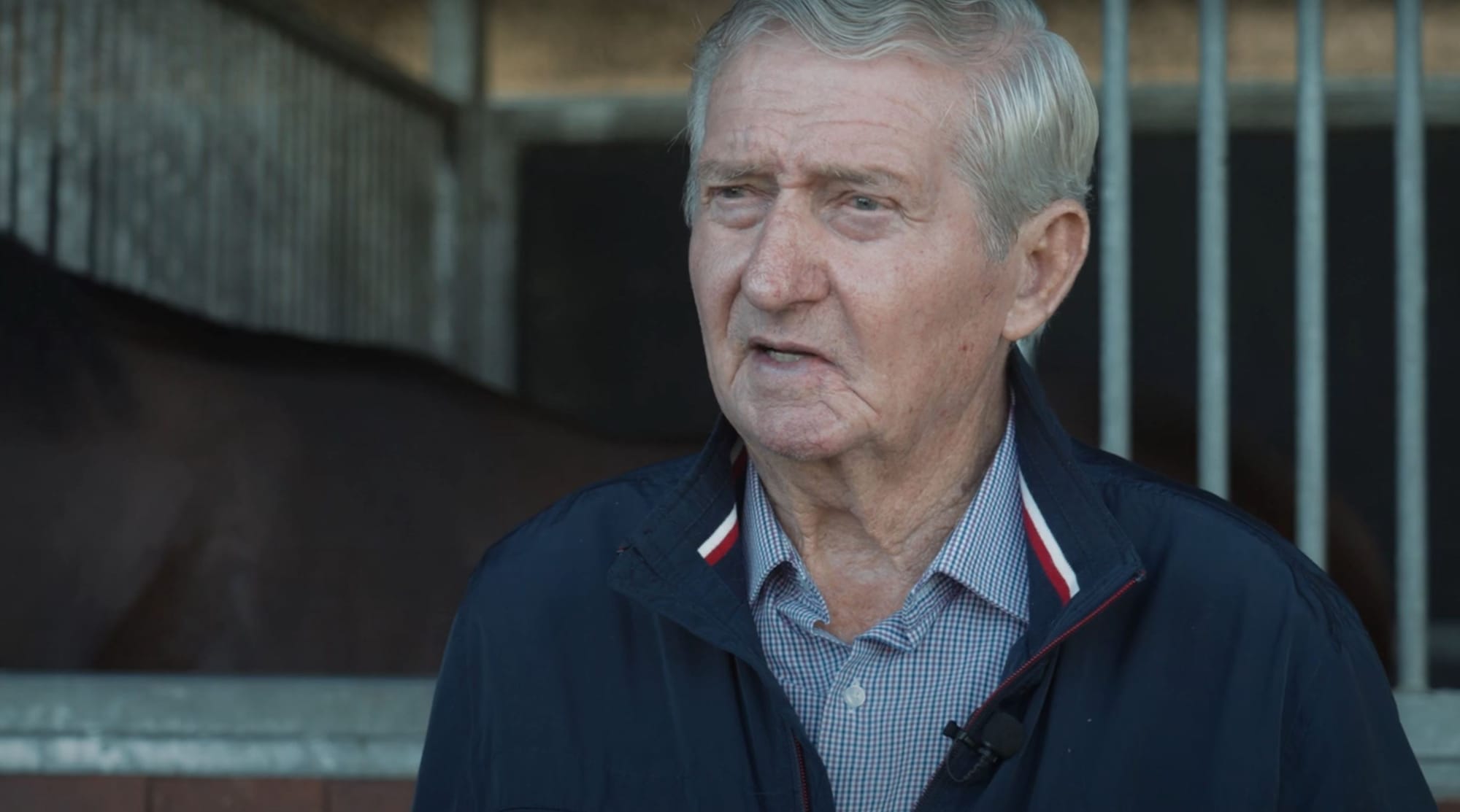
“As you could imagine, a lot of people thought Brian was a crackpot. You could write a million books on him. But he’s the greatest trainer I’ve ever seen in my lifetime. What he could do with horses … Circles of Gold, Kessem, they were essentially crocks,” she said.
“He had his own ways but I’ve never known a trainer who could read a horse like BJ.”
The timing of the “clearing of the lungs” meant something to BJ Smith, whose wizardry is now applied just to the two remaining horses he has stabled with Barry Lockwood at Eagle Farm.
He will hand in his licence at the end of the season, looking forward to “my two dogs, my Fox News and a few holes at Nudgee”.
In the 1960s, Smith was working at Cheveley Park Stud in England and a vet named Peter Rossdale gave Smith a book explaining the message a horse sends when it clears its lungs after a gallop. The earlier the big exhale, the better.
It became part of Smith’s magic kitbag of training tools.
“It was fate again, meeting this vet with his book. You work two horses together, one clears its lungs coming off the track, the other later in the tie-ups. The one coming off the track; beautiful. The earlier the better. You know it’s spot on,” he said.
To Smith, signature events and quirky messengers – even the Pope – have determined his journey through horse training and life.
In the 1980s he became so ill while training at Wyong that he returned to New Zealand “thinking I was going to die”.
Enter a mystery character known as “Mr Brooker” who got out the colour machine “and within three weeks I was good as gold”.
Australasian racing history features two legendary international near-misses; Crisp in the 1973 Aintree Grand National and Balmerino in the 1977 Prix de l’Arc de Triomphe.
Both horses ran second, Crisp to Red Rum and Balmerino to Alleged.
Dick Pitman blamed himself for Crisp, saying the Aussie champ threw in the towel when he attempted to steer him around The Elbow, instead of nursing. With Balmerino at Longchamp, Smith believes factors beyond fate were in play.
The Arc story began with another Mr Brooker-type character who guided Smith away from the dangers of the jumps and towards a stud job that would lead to England, a Papal visit, then France, and “a bolt of lightning” under the shadows of the Arc de Triomphe.
“I’d had 10 rides over the jumps and after I had a fall one day an Inspector Dudley put his arm around me and said ‘you’ve got more brains than to keep doing this’ and got me a job at a stud in Cambridge working for a man called Ian Duncan,” Smith said.
“One night we’re having dinner and he gives me these airline tickets.”
Smith was accompanied to Europe by his mate Brian Barlow, a staunch Catholic who was determined to meet the Pope. The pair arrived at Vatican City to try their luck.
“On the first Wednesday, once a month you can turn up with your passport and get an audience. We’re up on the fourth floor of the Vatican, met the Pope and his voice ran right through me,” Smith said.
“I’m not religious but when something runs through you, you don’t ignore it.”
Smith returned to Cheveley Park but soon found himself in the Champs Elysees in Paris, at the giant arch of the Arc de Triomphe.
He received some sort of heavenly directive.
“I said to Brian that I’ve just been hit by a bolt of lightning. It ran through me and I couldn’t move. I said to him, ‘you know that race, the Arc? I have to come back and win it’.
“All I could think about when I got back to New Zealand is I’ve got to win that Arc and was fate would have it I came across a horse called Balmerino.”
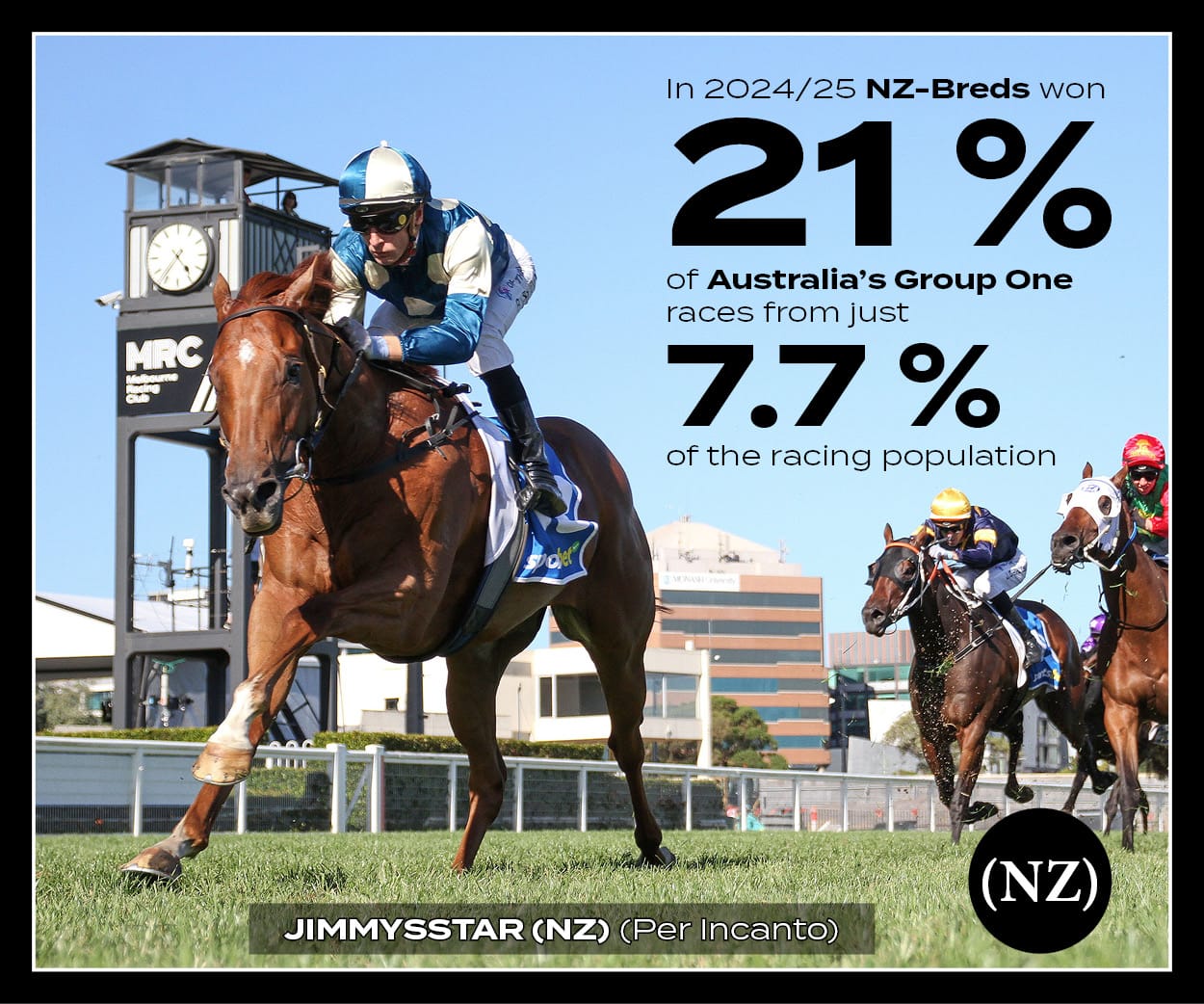
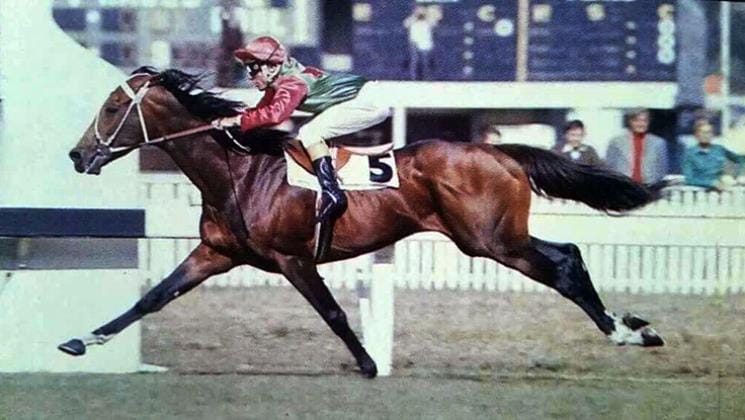
Balmerino was a champion Australian and New Zealand three-year-old, winner of two major Guineas races in New Zealand, the NZ Derby and Tulloch Stakes, Rawson Stakes and Brisbane Cup in Australia.
“He could probably have won two Cox Plates but all I could think about was the Arc,” Smith said.
En route to the 1977 Prix de l’Arc de Triomphe, Balmerino first competed in the US, winning an Invitational at Hollywood Park under Smith’s name.
“I wanted to acclimatise him for Paris, that’s why we went to the US,” Smith said.
Lester Piggott had ridden for Smith in New Zealand and signalled his desire to ride Balmerino in the Arc, where the Kiwi-bred champ had been transferred to be prepared under the name of Dunlop. Piggott forfeited the chance when called up for the glamour colt, Alleged.
Instead, Aussie ex-pat Ron Hutchinson rode Balmerino at Longchamp. Robert Sangster had a handful of runners but only one, Alleged, was earmarked for a rich career at stud.
Victory was essential.
In a field of 26, Hutchinson got bottled up on Balmerino, then flashed for second, beaten a length-and-a-half by Alleged, the 4-1 favourite. Alleged would return the next year to win the Arc again.
Smith said a couple of well-connected Europeans clarified “what really happened in that Arc”, including an Englishman “who bottled me up in the Champagne Bar” at Randwick. It’s a theory that Smith believes to this day.
Hutchinson later rode a winner for Smith in New Zealand.
“I legged him on and said ‘you’re allowed to hit this one, Ron!’
“He came back, threw the reins over the horse’s shoulder and said: “Was that better, Brian?”
That day in Paris will never sit easily with Smith but overall, he’s happy to train the last two horses on the books then drift into the sunset.
“You hang on too long, and you go crazy. I’ve seen it happen,” he said.
“I just want to wander around and not have to worry like I have for 50 years, staying awake at night, worrying about horses, coming up with things.
“That’s been my entire life but I’m done with thinking too much.”
Related Articles
Rowe On Monday – A fruitful Femme for Murray, Monds’ time to reflect, Hutch hails new investment and a Libyan dream lives on
In this week’s Rowe On Monday, Peter Murray on owning a sudden blue hen, Linda Monds reflects on the state of the industry, Sebastian Hutch on where the new investment is coming from and Dr Ahmed’s Australian flavour to his Libyan thoroughbred renaissance.
Letter To The Editor – Matt Cumani – Don’t turn the Derby into a Dodo
Trainer Matt Cumani mounts a vigorous defense of the Victoria Derby in its current form, arguing, among other things, that thoroughbred racing can not just be made to be a measure of speed.
Straight Talk – Rising costs for trainers, cuts to Tassie meetings and the future for smaller breeders and live broodmare sales
Straight Talk looks at training costs amid concerns about ATC increases, Tasmania’s reduced race meeting schedule, challenges for smaller breeders and much, much more.
