
Increased costs drive Tasracing to a loss, but racing revenue increases
Tasracing’s annual report shows declines in turnover in both thoroughbred and harness racing but increases in race field revenue in a year where the state’s racing regulator took on greater integrity responsibilities.
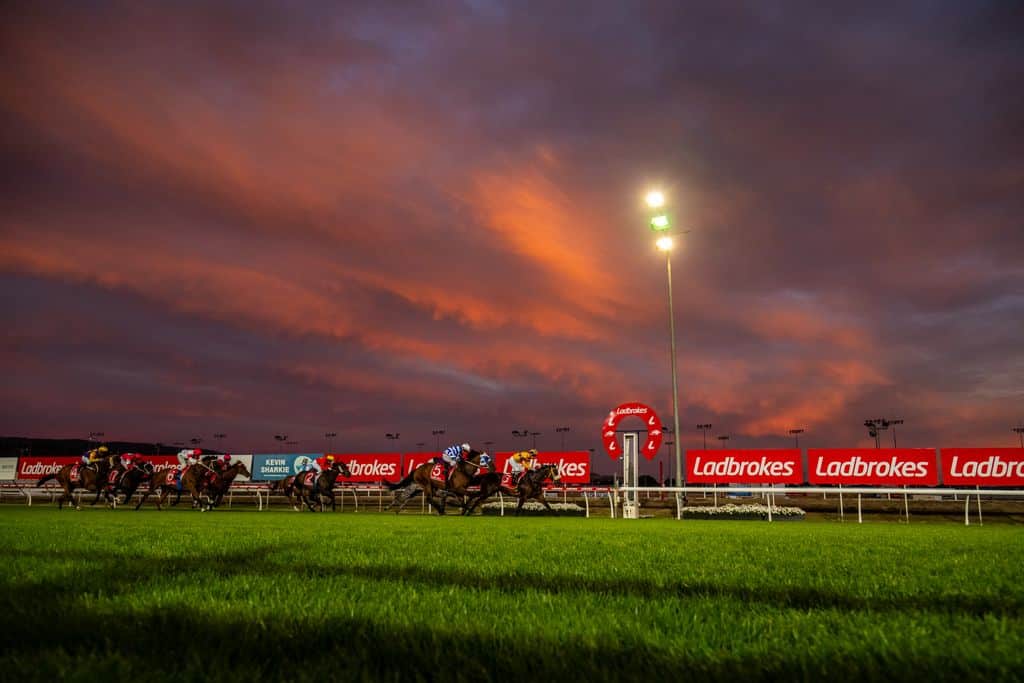
Tasracing reported a $1.2 million loss for the 2024/25 financial year, but while wagering turnover was well short of projections, overall revenue from race field revenue increased.
The regulator for thoroughbred, harness and greyhound racing in the island state endured some significant change during the 2024/25 year, including the integration of key integrity functions back into Tasracing after a major change of structure led by the Tasmanian government.
The overall result, a $1.21 million loss, is very similar to the 2023/24 year ($1.2 million), with a $1.7 million increase in workers’ compensation costs cited as a major contributing factor in a near $2 million jump in overall expenses.
Racing revenue grew to $26.7 million, from just under $25 million, driven by $1.18 million increase in returns from racefields and a $320,000 increase in sponsorship and digital revenue.
The jump in racefield revenue occurred despite a slight reduction on wagering turnover, which across all products amounted to $710.45 million, down from $710.8 million. Tasracing had forecast turnover to be over $740.2 million, while it had peaked at $860.3 million 2021/22.
Breaking down the individual codes, there was a drop in turnover on Tasmanian thoroughbred racing, which slipped from $333 million to $322 million, a 3.3 per cent annual fall. It had peaked at $369 million in 2020/21.
Harness racing turnover also fell, slipping to $108.2 million, or 2.9 per cent, while greyhound turnover surged 5.2 per cent to $280.5 million.
The irony in the jump in greyhound turnover is that the Rockliff government decided in August to ban the sport from 2029 and only this week introduced a bill into parliament to formalise that decision.
Tasracing spent $10.6 million less on capital expenditure than forecast after it abandoned its decision to proceed with plans for a new harness and greyhound track in the northwest of the state.
Overall government funding increased to $39 million, up $2.8 million from last year, with the additional integrity costs contributing $1.8 million of this since it was introduced in February.
That comes as the Tasmanian government considers extending the current funding deed, which is due to expire in mid-2029. As things stand, 52.7 per cent of Tasracing revenue is derived from government funding.
In terms of funding split by code, $20.4 million was allotted to thoroughbred racing during the 2024/25 financial year, up $500,000 from 2023/24, $10.1 million on harness racing, up $185,000, and $7.3 million on greyhounds, which was the same.
Tasracing chairman Gene Phair said in the annual report that the integration of the integrity functions was a key achievement through the 2024/25 financial year, but two key issues remain unresolved.
The first is the future funding deal with the government.
“Tasracing continues to work closely with the Minister for Racing and the Tasmanian Government on the deed,” he said.
“We have stressed the urgency about the matter as it needs to be resolved as soon as possible to provide confidence in the industry for long-term investment.”
The second was the issue around the cost of workers’ compensation premiums to the broader industry.
“In addition to the issue outlined on the previous page that we are facing as a company, Tasmanian racing industry participants are telling us that they can no longer afford workers’ compensation insurance premiums,” he said.
“The company understands this and stands ready to work with participants on this critical issue.”
Author

Related Articles
🔒 🔒 A deed delayed – Tasmanian racing still awaiting funding certainty past 2029
The long wait for a new funding deed for Tasmanian racing continues with the latest minister responsible for delivering certainty to the industry, Roger Jaensch, saying final details are unlikely to be formalised before the state budget in May next year, while any new agreement is unlikely to be as long as the current 20 years.
John Sadler confirms November 30 end to training operation
After almost 50 years training in his own right, John Sadler will close his stable in late November and join Clinton McDonald in an advisory capacity.

Run The Numbers – King’s latest successes put female jockeys on brink of 50 Australian Group 1 wins
As Rachel King builds her own formidable Group 1 record, she is also helping female jockeys power towards a significant milestone: 50 Group 1 wins in Australia. Run The Numbers dives into the major contributors from Diane Moseley to Siena Grima.
