
Silence and vetoes – Does Australian racing deserve stronger national leadership?
Racing Australia’s role as a national racing body is often lambasted, but it is the system, not the organisation which it created, that needs reform. Bren O’Brien asks if the answer to racing’s problems may be found in other national sports.
Comment: When a near four-year leadership void in the chairmanship of Racing Australia is filled without any industry acknowledgement, you have to wonder whether Australia’s billion-dollar racing industry is doing its best when it comes to transparency.
The low-key nature of the appointment of Rob Rorrison as chairman of RA, heard in industry whispers in recent days and confirmed with an update to Racing Australia’s website, is a symptom of how the national body functions.
Anyone who has tried to elicit information out of RA, be it public comment or for other purposes, will attest that it is mostly a fruitless task. When this approach is questioned by others, state-based directors say they don’t have the authority to speak on behalf of RA.
Key RA meetings, such as the current discussion on the Pattern, are not spoken about publicly, leaving journalists to work their sources and others to fill the gaps with rumours.
We will wait and see if Rorrison’s elevation to chairman, a role not filled since March 2022, might present an opportunity for a changed approach.
RA’s own staff are limited in what they can say. Chief executive Paul Eriksson is polite, but careful in any commentary beyond purely operational matters. Given he treads the delicate state-based politics of the Australian industry, you can’t blame him.
It is confirmation of what sits at the heart of the dysfunction within the Australian racing landscape, a national body, controlled via vetos from New South Wales and Victoria, whose remit is broad but whose powers are extremely limited.
This is not a comment on the capability of those within Racing Australia, or indeed the six men which sit on its board, all state-based representatives, five of them in director roles and one who is a chief executive at state level.
It is a comment on a national administrative system for the rules of racing and the function of a national industry which appears broken and not fit for purpose.
Racing in Australia is regulated on a state and territory basis, with individual racing bodies empowered by a myriad of state legislation, which gives the industry its right to operate in those jurisdictions.
Racing Australia is a public company where the shareholders are those state-based bodies.
Its stated objective, according to its constitution, is to disseminate nationally consolidated racing materials, administer and maintain the Australian Rules of Racing and the Australian Stud Book, manage ownership information and allocate surplus funds by way of grants or subsidies for the purposes of encouraging and promoting horse racing.
But its function extends beyond that, including key areas such as international recognition of Australian racing and horse welfare.
Its role internationally has come under the spotlight due to the impasse of the Pattern. Racing Australia briefly found a unified path forward on this vexing issue in September last year, but the solution didn’t find its way to the relevant international authorities because Racing Australia never submitted it, after key states withdrew their support.
The Pattern debate has become tiresome and attritional, but also a lightning rod as to the spate of issues which require national leadership in a system that is bereft of it. It’s easy to point the finger at Racing Australia, but it is the system that is broken, not the body that exists within it.
Equine welfare is another issue which has had limited national approach. There have been significant reports done into best practice solutions, but nothing driven on a unified front, leaving state by state approaches.
Data-led solutions, many driven by artificial intelligence, are improving best practice in a range of agricultural industries, but the thoroughbred industry in Australia relies on a host of legacy data systems, and is being left behind.
As an example, there have been widespread suggestions of a drop in fertility rate of mares this spring, a significant issue if it should adversely impact foal crops, as some have suggested.
Reporting on anything but the anecdotal is near impossible, as while there are data systems which track matings “in play”, they are not incorporated into any form of database.
We will find out next spring when the foals start arriving, but again, the data set, despite Racing Australia insisting on 30-day foal returns, is far from complete until March the following year.
By that time, 18 months have passed and any identified issues can’t be addressed until the following spring.
These are the practical implications of the current political structure of Racing Australia. A national body should lead the way in regard to data-led insights and reporting, but it needs to do so with the right funding and to be given the political heft to do so.
It was intriguing to see Racing Australia’s current veto system feature in the Queensland Racing Minister Tim Mander’s The Next Lap report released last week. The government wants Racing Queensland to advocate for reform, to get Queensland to a 25 per cent share of the vote, and remove the veto which Victoria and New South Wales have by reducing their share.
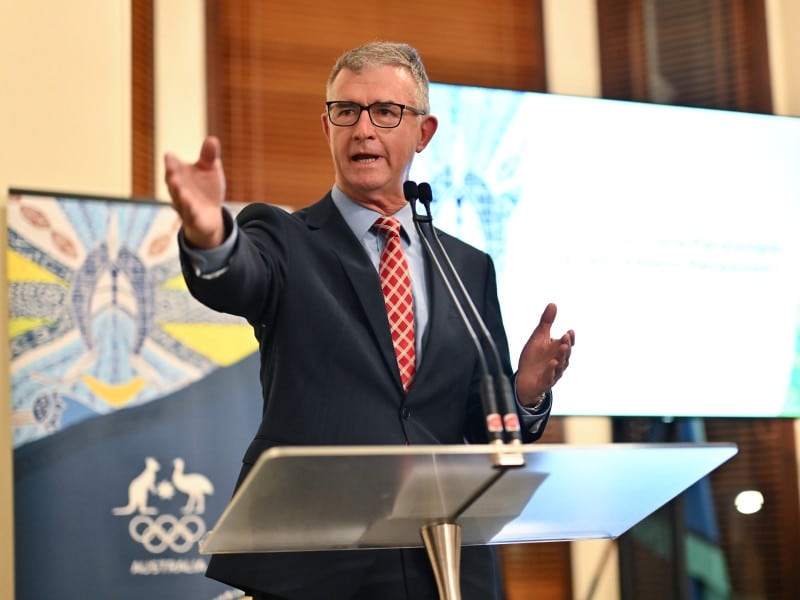
That would, in theory, break through some of the interstate politics that has defined the past decade, and give the smaller states a much greater say. But given it was just one of the 100-odd recommendations from the report, you would think RQ has enough on its plate without poking that bear.
The ray of light could come from another sporting code, which made landmark changes to its leadership structure in 2012.
Riven by state-based politics for a century, Cricket Australia needed to make a leap forward if it was to make genuine progress.
In 2012, it created a nine-person board, with three independent directors. The states got their say, but the independents were also able to make sure that the board acted more in the game’s best interests as opposed to the states. There are now 10 CA board members with four independents.
The result has been a more stable and transparent board which has enabled cricket to meet its challenges as a national game, with the states as key stakeholders.
It may not be a like-for-like fit, but a similar approach is certainly worth considering.
Author

Related Articles

Why Hong Kong has made Mark Newnham a better trainer
As he closes in on a century of Hong Kong winners and a real live opportunity for a first Group 1 success since his arrival, trainer Mark Newnham reflects on all that he has learned and why the city has worked so well for him.
Flemington walkover – No contest at VRC elections
Next week’s Victoria Racing Club annual general meeting is set to prove a non-event with no additional candidates coming forward to contest the three available board positions.
Racing Australia ends four-year leadership void, but Pattern deadlock remains
Racing Australia has ended its long leadership vacuum by appointing Rob Rorrison as chair at a time when the nation’s Pattern issue heads into a critical meeting in Hong Kong this week.