
Run The Numbers – Classic consistency – How the middle market stays steady
The recently completed Inglis Classic Sale, regarded as the best guide to the health of the all-important middle market, produced the same median figure as it has in five of the past six editions. What does that tell us? Run The Numbers finds out.
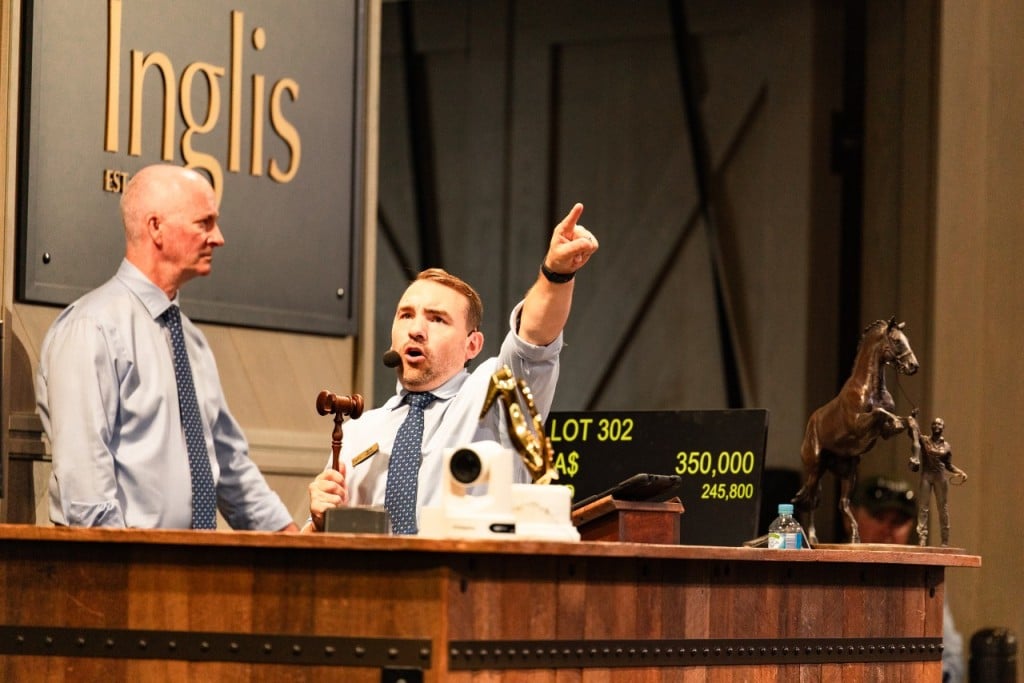
At the conclusion of last week’s Inglis Classic Yearling Sale, the auction company was toasting a rise in aggregate of almost $3 million and the third-highest average in the sale’s history.
Given the importance of the Classic to the middle market – that crucial aspect of Australian bloodstock occupied by trainers and syndicators – the strong result, which also included a boosted clearance rate, points to the health of the heart of the thoroughbred industry.
The 2026 Australasian yearling sales season has begun with the same confidence with which 2025 concluded. Even accounting for the drop in value of the New Zealand dollar, there has been AU$5.9 million more spent to this point of the sales season as there was last year. That is a 1.7 per cent increase.
What drove the upside at Classic this year was not only a higher clearance rate, but a stronger “top end”, with 62 horses fetching $200,000 or more in 2026 as compared to 56 in 2025.
But when it came to the centre of the supposed middle market, there was little difference. The median was identical at $70,000. In fact, the Classic Sale median has been exactly that figure for the past four editions and for five of the past six.
Run The Numbers has broken down the Classic Sale results since 2021 by decile (combining the books in 2021 and 2022 when the Sale had a Highway Session) and found remarkable consistency across the results.
Deciles divide the market into 10 per cent segments, providing further insight into market parts. The 10 per cent decile – that is the cut-off for the bottom 10 per cent of horses sold – was $25,000. That falls within the $20,000-$30,000 range for the previous five editions.
Where differences do appear is at the 20th percentile mark. This year it stood at $40,000, while last year at Classic it was $10,000 lower. In fact, 31.1 per cent of horses were sold for $40,000 or less last year compared to 23.7 per cent at this year’s Classic Sale.
There were also more horses passed in at reserves of $40,000 or below last year, 45 as compared to 32. We’ll dig into those figures a little more later on.
The 30 per cent market decile of $50,000 was above last year’s level and equal to three of the previous four editions of the Classic, while the 40 per cent decile of $60,000 was also at its highest in three of the previous four editions of the Classic.
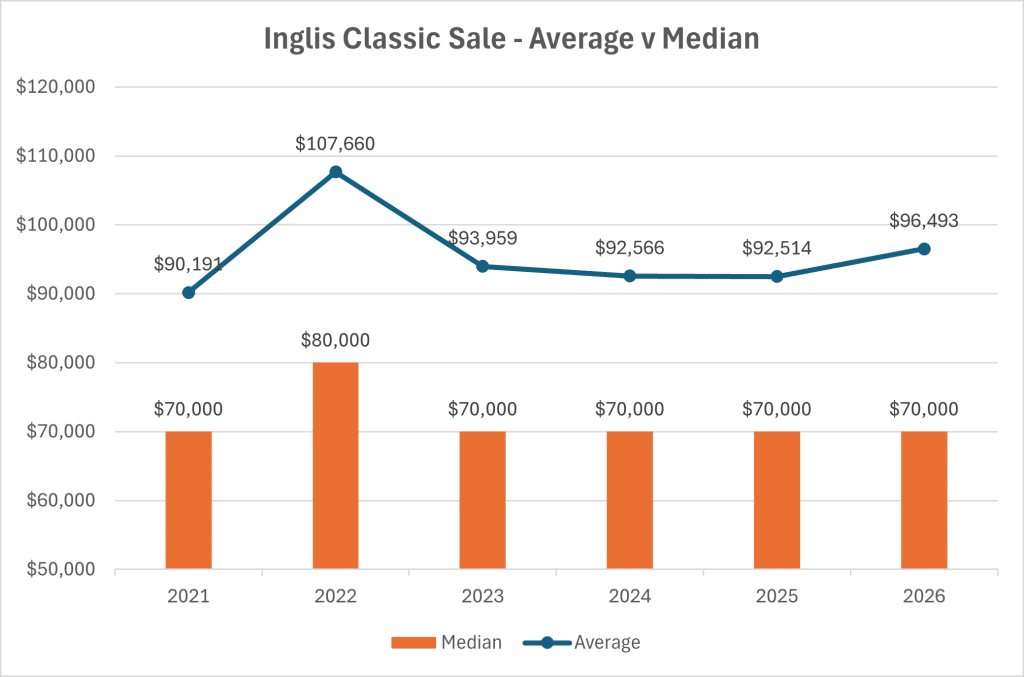
As mentioned, the 50 per cent decile, by definition the median, was exactly the same at $70,000 as it was in 2025, 2024 and 2023. In 2022, it was higher at $80,000, while in 2021 it was also $70,000.
The averages of those sales have fluctuated, as the below graph shows, but in each of them, except 2022, you could have bought as many yearlings, by percentage of those sold, above $70,000 as you could below them.
That consistency is also evident at the 60th percentile figure of $90,000, the same as last year and the 70th percentile figure of $110,000, which has been identical the past four Classic Sales.
This year’s scale skews higher at the 80th percentile ($150,000 as compared to $140,000 in 2025) and the 90th percentile ($200,000 as compared to $180,000).
These are not major variations, but they do, as other figures do, point to increased strength at the higher end in 2026 at Classic compared with 2025.
It is not, however, evidence of a dramatically divided market, which had been feared a couple of years ago.
The average price of a horse at the median and below at Classic in 2026 was $43,615, compared to $37,427 in 2025. That is a much better result for those selling horses in lower demand.
The average price of a horse at median and above was $142,737 this year, as compared to $144,486 in 2025. It’s arguable, based on those figures, that the Classic market is less divided than it was 12 months ago.
Another interesting measure is to use the reserve prices of passed-in lots to estimate a loose “money left on the table” figure. The aggregate reserve price for passed-in lots this year was $7.8 million, while in 2025 it was $8.5 million.
That correlates with the rise in other “demand metrics” such as clearance, which point to a market that is more forgiving than it has been over the past two years.
Inglis Classic Sale market split into deciles since 2021
Author

Related Articles
Run The Numbers – Dam good – Extraordinary maternal influences to the fore
In Classic races either side of the Atlantic at the weekend, descendants of a trio of true blue hens further enhanced the influence of their families, while South Australian Derby winner Wigmore put his globetrotting grand dam’s name back up in lights.
Run The Numbers – The mistruths about non-Group 1-winning sires
After Wordsmith became the eighth non-Group 1 winning racehorse to sire a Group 1 winner in Australia this season, Run The Numbers looks at how commonplace this pattern has been over the years.
Run The Numbers – Jigsaw’s streak a two-in-a-million chance
While one famous equine winning streak came to an end earlier this month, at the weekend, another rolled on as Jigsaw extended his run to seven straight victories. We look at Australian racing’s best current streaks.