
Three champions, one frame – Steve Hart recalls an iconic Rosehill Guineas moment
After four decades capturing racing’s defining moments, including the 1996 Rosehill Guineas finish, through a camera lens, Steve Hart has stepped back into the jockey management arena, bringing hard-earned industry insight to a role he helped pioneer.
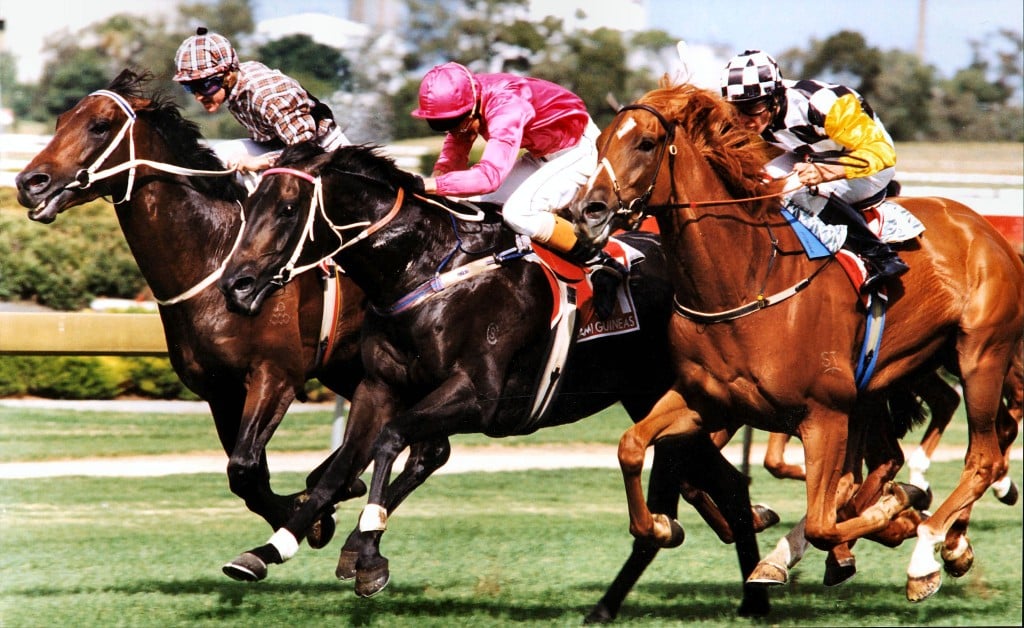
During an unforgettable Sydney autumn campaign in 1996, Octagonal never failed to answer the call.
Not from his champion jockey Darren Beadman and certainly not from an adoring public.
Octagonal scrapped his way to four Group 1 wins – one against older horses in the Mercedes Classic and three over his own age among a benchmark crop of three-year-olds to this day hailed as the best of their generation.
“Sometimes you’d have your heart in your mouth but I always had faith in him and he delivered,” Beadman said in paying tribute to the horse he called a champion upon news of the stallion’s death in 2016.
Octagonal’s clashes with Saintly, Nothin’ Leica Dane and Filante in the Rosehill Guineas and the AJC Derby are a part of Australian racing folklore.
They rumbled their way through the autumn, etching their names forever into the racing psyche, helped in no small part by an image taken by now semi-retired racecourse photographer Steve Hart.
On the eve of the 30th anniversary of Octagonal’s Rosehill Guineas over Saintly and Nothin’ Leica Dane, Hart says his photograph of the finish remains one of the most important – and cherished – he has taken out of countless snapped from his position on the winning post.
Octagonal also delivered for Hart on that day, March 23, 1996.
In much the same way that the Rosehill crowd only had eyes for Octagonal, so did Hart through the lens of his camera.
“As the horses are coming towards me, I could see Octagonal in the middle, and he was obviously the favourite in the race,” Hart told The Straight.
“So, I was aiming to frame the lens solely on Octagonal. As I’m firing away, I reckon I’d probably got, in those days, about five or six frames before the horses actually went out of my frame because they became too tight in the viewfinder.
“They were the film days, so you have a reasonable idea what you’ve got, but it’s not until the film is processed on the Monday that I went through them and reviewed them.
“I found that I’d not only framed Octagonal in the middle, but obviously Nothin’ Leica Dane on the inside and Saintly storming down the outside.
“Had any of the three won the race, it would have been fine because I’ve covered all three of them, but it just so happened that Octagonal stuck his head out at the line and won the race. So, he was pivotal in the picture, obviously, being in the middle.”
Modestly, Hart says that capturing a moment of such significance came down to good fortune more than anything else.
His technique was to pivot to a certain part of the racetrack, unable to conquer the art of focusing on an object that the photography profession called “pull focus”.
Sports photographers became adept at the move, but capturing racehorses proved too difficult.
“I couldn’t do it. I had tried doing it in racing, but the best option was to find a spot on the track where you thought the horses might pass through,” he said.
“Hopefully, that was the sharpest point of the track.
“I have to admit it was pure luck to get all three horses, particularly the winner Octagonal in the middle … and what a great crop of three-year-olds we had in that year for those three to cross the line like that for a Rosehill Guineas.
“When you talk about images of what I’ve shot over the years and which ones, that one has to stand out in my mind. And then you could go on and see a series of pictures of, say, Makybe Diva.”
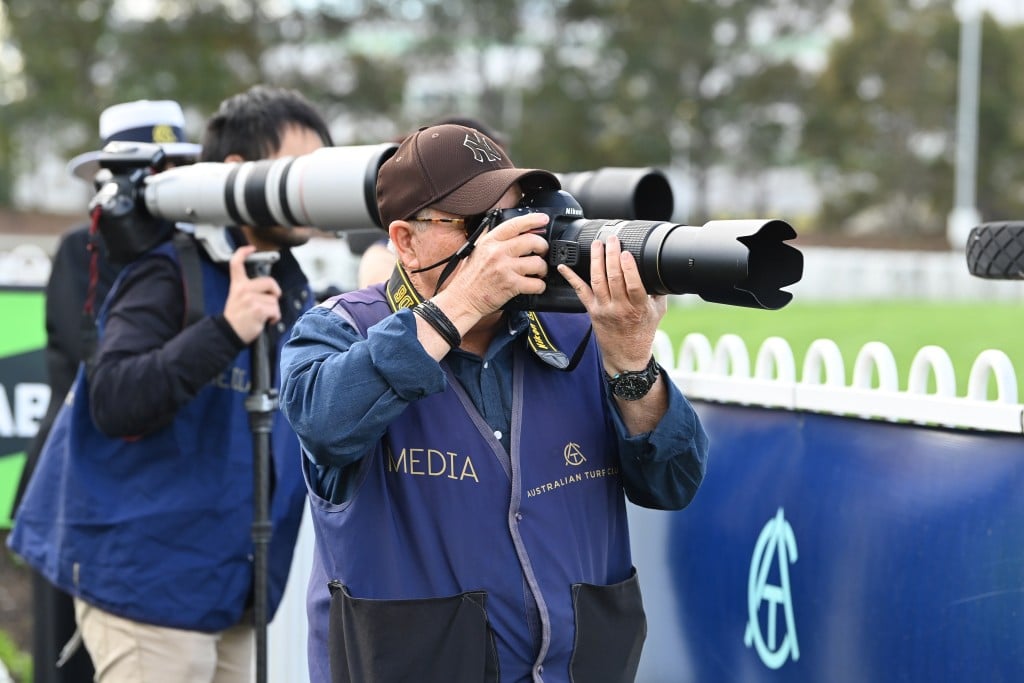
Hart spent four decades framing Sydney racing’s greatest moments through a camera lens, but these days he is seeing the sport from a different angle as a jockey manager.
Yet a foray into the world of a rider’s agent is hardly a reinvention for Hart, revealing he was at the coalface when Australian jockeys first began outsourcing their bookings on a commission basis.
Commonplace in other parts of the world, the role of a fully fledged jockey manager with an accompanying accreditation didn’t become de rigueur in Australian racing until the 1990s.
Media personalities such as Ron Dufficy in Sydney and Bruce Clark in Melbourne were as well known as the jockeys they managed.
Dufficy took care of business for the Cassidy brothers, Jim and Larry, while Clark worked the telephone for Damien Oliver.
Hart was also among the first cohort in Sydney, taking on senior Mal Fitzgerald and the talented LeeAnn Olsen, at a time when female riders were still fighting for mainstream acceptance.
He saw an opportunity to position Olsen not as a novelty but as a serious, professional athlete.
With a piece of marketing that had never been employed before and in all probability hasn’t been since, Hart suggested Olsen sponsor a race during a meeting at the Gosford Race Club in a bid to lift her profile.
“Female jockeys at that time were rare, few and far between, and no trainer wanted to put a girl on,” Hart said.
“I heard every excuse under the sun about why they wouldn’t put a girl on.”
Hart’s strategy worked, creating publicity that landed Olsen on the back pages of a metropolitan daily newspaper and in front of the cameras as a guest on breakfast television.
“It turned out to be a pretty good marketing ploy. Mind you, it didn’t lead to any Group 1 rides, but it certainly brought her to the attention of trainers,” he said.
“Now, of course, today they’re almost full programs with all girls and nobody has any hesitation about it. But at the time, it was a struggle for recognition.”
But Hart’s dive into management ended abruptly when authorities ruled he could not hold a licence while also working in the media, a decision the then photographer challenged unsuccessfully.
“They claimed there was a conflict of interest, but in my case I couldn’t see a conflict of interest, so that’s why I appealed it,” he says.
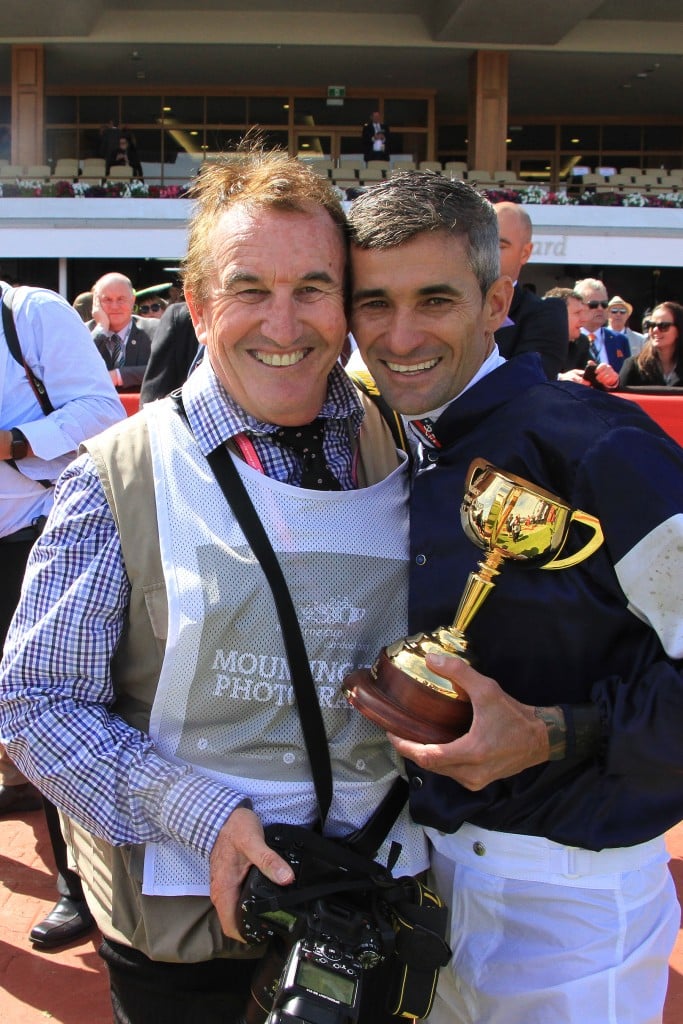
His appeal failed and he “had to go with what my strength was, which was my photographic work”.
That photography career began in the mid-1980s after an apprenticeship in fitting, machining and welding, with Hart blending a childhood love of racing and a fascination with cameras inherited from his grandfather.
He remembers spending weekends at the races as a young man, drawn as much to the theatre of the mounting yard and the roar of the crowd as to the mechanics of competition, long before he imagined it would become his livelihood.
“When I first started, media passes weren’t just given out … you had to go to an interview and show why you should be right next to the winning post,” he says.
Hart eventually built a client base of around 20 publications that relied on his images within minutes of a race being run, supplying metropolitan dailies, specialist racing outlets and international clients chasing shots of Australian feature winners.
Sydney racing was his staple, but the Melbourne Cup was always an annual highlight.
For the second year running, Hart will be missing from a vantage point near the Rosehill winning post and the hurried nature of the press room as he slips into semi-retirement.
“When digital photography came in, it changed everything, and we’d be sending images out within five or 10 minutes of the race being run, and if it wasn’t there within 10 minutes, I’d get filthy emails,” he says.
Hart believes the craft has been diluted by accessibility, arguing: “These days you pick up a digital camera and anyone can shoot, and it’s taken a lot of the skill out of it.”
Commercial pressures have also intensified as new entrants emerged, making it increasingly difficult to justify the long hours, travel, and the demands of covering Saturday meetings and major carnivals.
“For 12 months, I thought to myself, I’m not getting the enjoyment out of this,” Hart says of the decision to step back from the track after 40 years behind the lens.
“The drive and the enthusiasm to turn up to these major carnivals, the zest has gone in me, and driving down to the races on a Saturday (from his Central Coast home) was becoming a chore rather than something I looked forward to.”
By 2024, Hart knew instinctively it was time to step away, preferring to leave the profession on his own terms.
The return to jockey management has provided a different rhythm.
He now represents senior riders Adrian Layt and Serge Lisnyy, mapping out their engagements days in advance, studying nominations and form, and negotiating with trainers to secure opportunities that suit each jockey’s strengths.
“I can sit at the computer, watch the races, make notes and my phone’s on 24-7, and it takes that stress off them,” he says.
While the camera has been packed away to some extent, his connection to racing remains as strong and his memories will be everlasting, thanks to Octagonal and his cohorts.
Related Articles
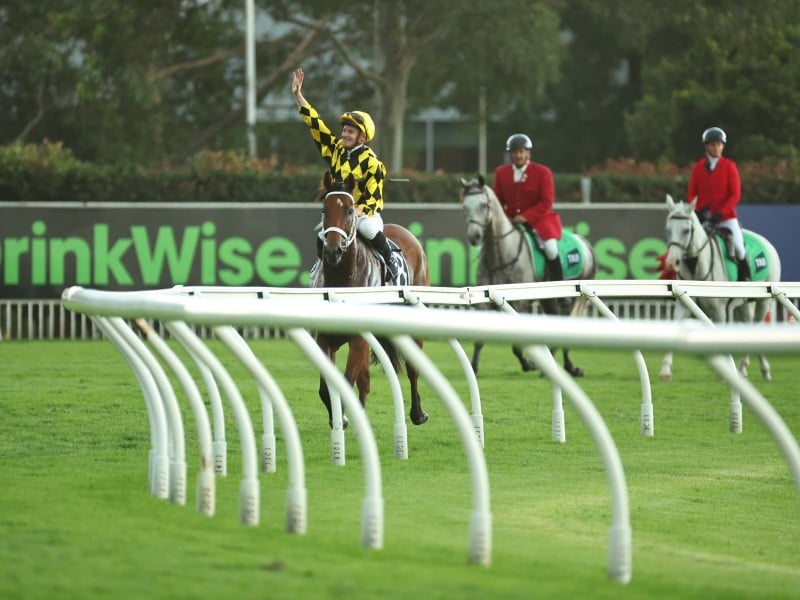
Five things we learned – Golden Slipper Day – J-Mac’s record, Arrowfield’s four-timer, a Slipper triple play, a curse banished and Jigsaw
On a rare Golden Slipper day where the headline race didn’t take centre stage, it was a record-breaking jockey who stole the limelight on what was also a brilliant day for Arrowfield, a return to the pinnacle for Marhoona and another off-script success for Cindy Alderson.
ATC broaches $10m question as Supreme Court defers hearing ahead of Racing NSW appeal
Accusations Racing NSW owes the Australian Turf Club almost $10 million in unpaid wagering distributions remain unresolved after the NSW Supreme Court deferred the fresh dispute, with April dates looming for an appeal hearing into the broader legal row between the club and the regulator.
Written In The Stars – A Cat of a different colour
Apache Cat was born to stand out, be it on the racetrack, in the paddock or in retirement, as an ambassador for the industry. As the first equine subject of Written In the Stars, Jessica Owers found out from those closest to him that he was never destined to be “just another brown horse”.