
Written In The Stars – ‘He was interested in the dreamers’ – One perfect portrait of the gentle genius of JJ Atkins
James Joseph Atkins is a revered name in Queensland racing, but for those who knew him, it was the way the legendary trainer went about his craft which defined him more than the winners he had on the track. In the final Written In the Stars, Jessica Owers talks to those who knew JJ, and witnessed, with fascination, his “old ways”.
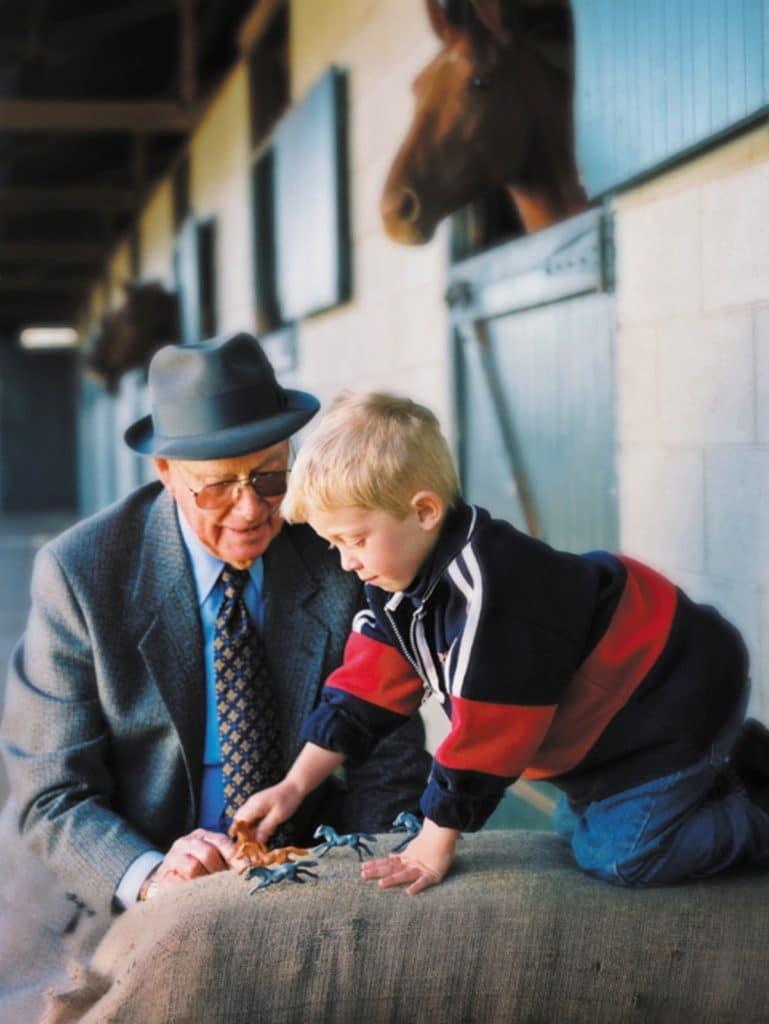
closest to him (Photo: Andrew Rankin/Supplied – Copyright, Not to be used by any other publication)
In the life story of the late Queensland trainer Jim ‘JJ’ Atkins, there featured an old Wise Force gelding called Yeoman.
Unrecorded in the Australian Stud Book, from an equally unrecorded May McCarthy, Yeoman was a 1936 foal who raced usefully around Rockhampton until 1942, when he brought JJ Atkins to Toowoomba.
Speaking to the ABC late in his life, Atkins said: “I’d come to Brisbane (from South Grafton) and I starved for a couple of years. I couldn’t do any good. I won maybe one, two races, then got a chance to come to Toowoomba.”
It was the start of 68 storied years on the Darling Downs.
Yeoman, at that time, was on lease to Atkins, just about the only racehorse the young trainer had in his care. It was 1942, and without access to fuel, let alone a truck, Atkins walked Yeoman the 88 miles from Deagon through Rosewood and Gatton, overland through the Liverpool Plains to Helidon, and finally to Toowoomba days later.
It should rank among the folklore that says Archer walked to the first Melbourne Cup in 1861, except that Yeoman did walk to Toowoomba and Archer, 81 years before, had jumped on the Melbourne Express direct from Sydney.
“The move to Toowoomba all depended on a game of snooker,” Marylou Hewlin tells The Straight. Hewlin is Atkins’ niece, a daughter of jockey Ambrose Atkins, who spent most of his life alongside his famous brother.
“They wanted to go to Toowoomba because there was less rationing going on than in Brisbane, but they needed a bit of money to do it. My father was a bit of a pool shark, so they won the money in the end and Jimmy ended up walking that horse to Toowoomba.
“It took them three days, and there were stables behind the Newtown Hotel and that’s where they put him.”
JJ Atkins, full title James Joseph Atkins, was 26 years old then. Until his death in 2010, he remained the same stoic, unwavering horseman of downtown Toowoomba.
He won the Toowoomba trainer’s title countless times, the equivalent Ipswich title six times, and was five times champion trainer of Brisbane. In the 1983/84 season, he was the first man in 15 years to break the stronghold of rival Bruce McLachlan.
Atkins’ best horse was Dalrello, who was as smart in Sydney as he was in Brisbane, but he also had Grey Affair and Prince Ruling, along with the AJC Oaks winner Just Now.
Like with most high-achieving trainers, however, after a while the facts only say so much.
“To anyone that knew him, he was Jimmy,” Hewlin says. “He was an incredible horse trainer, but he was also an incredible gentleman.”
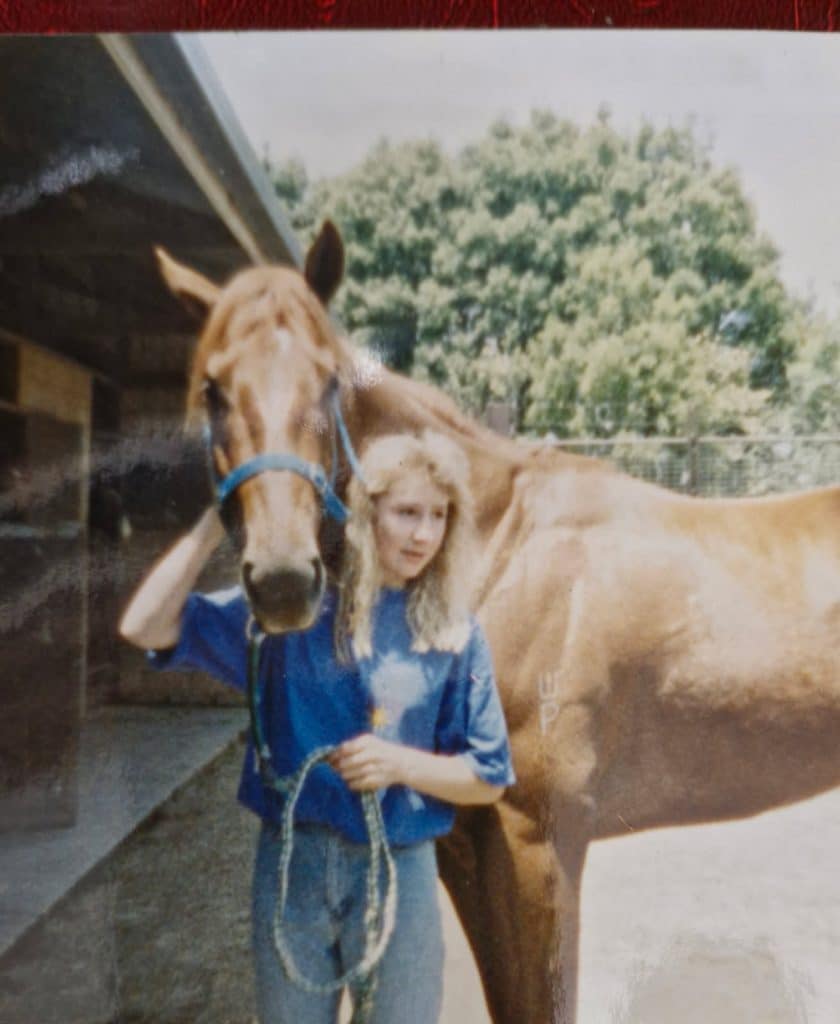
Sonya Plant is a veterinary nurse at Darling Downs Vet, but in 1991 she took a job as a strapper in Atkins’ yard, which was spread across about 50 horses and three streets surrounding Clifford Park in Toowoomba.
“Jimmy was amazing to work for,” Plant tells The Straight. “He was very kind to his horses, and that’s how I remember him.
“He took a lot of pride in the presentation of his animals, and every morning he’d come and check every single horse, walking along the stables and putting his head in every box. Their welfare was everything to him.
“He always wanted to know they were happy. If they weren’t, he’d move them down from the top stables to the bottom stables away from things. He was very old-school, a lot more hands-on than a lot of trainers now.”
Plant worked for Atkins for 12 years, give or take. She recalls a quiet man (he never swore, and never talked dirt) who spoke to his horses with more ease than speaking to people. Like Hemlin, Plant says Atkins was a gentleman, but horses came first.
“I came to him straight from school as a teenage girl, so he taught me so much about horses. And I’m in veterinary now so I can see how he had those old-school ways of doing things.”
As if straight off the set of Seabiscuit, Plant recalls Atkins using Epsom-salt bandages and crystals. He believed in oats, chaff and lucerne, and he learned more from listening than from any x-rays, DNA swabs or modern technology..
“In my experience with him, he didn’t really like change,” Plant says. “He stuck with what he knew and what worked best for him, and it did work well for him. He always got the best out of the horses.”
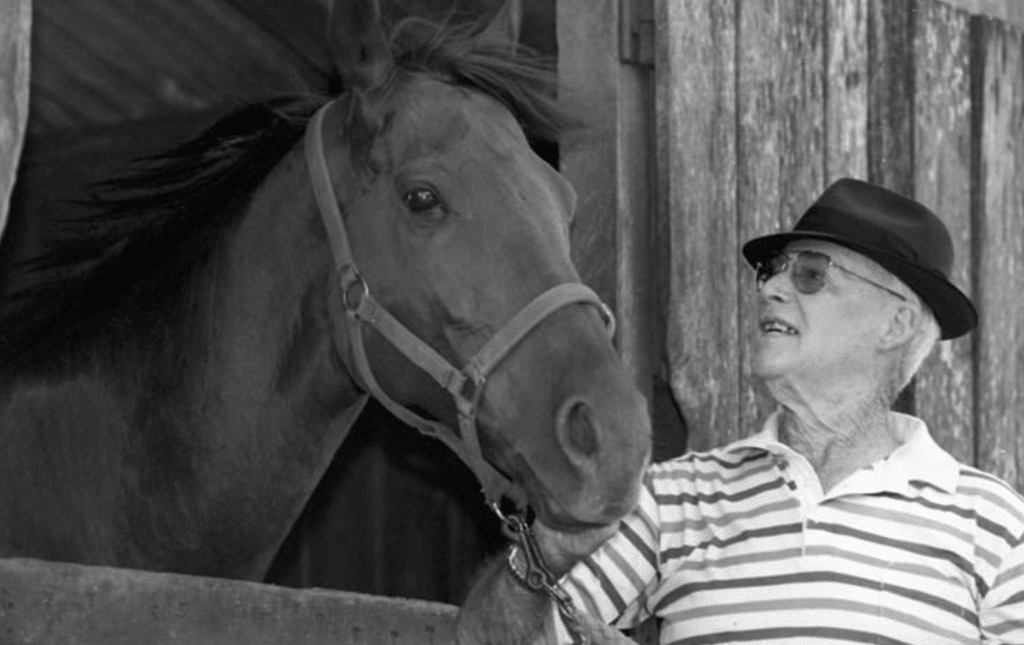
Racing has changed quickly since Atkins’ era. People trade bloodstock today without ever laying a calloused hand on a thoroughbred, and they’re reading metrics and biology and genetics the way the old timers read the Stud Book and JJ Miller’s Sporting Annual.
If there are old timers left, they aren’t winning the premierships in town.
It is this ‘romance’ of the yesteryear horsemen, with their dusty daks and ears cocked for a misstep, that makes horsemen like Harry Telford, TJ Smith and JJ Atkins so mythical. And so missed.
“I would stand with JJ in the mornings for trackwork. He would only stand on the bend,” says Heather Pascoe, a Toowoomba local, breeder and former journalist for The Australian. She remembers a man who lived his whole life on feel.
“JJ would walk from the stable he had near the track along a little back lane under some trees. He stood right on the bend, past the winning post where that Toowoomba track hooks quite hard to the right-hand side.
“The horses would be working clockwise through the fog in the winter and he’d say, ‘here they come now’. And there would be plenty of other horses on the track, but he knew his horses by the hoofbeats because he listened. He knew the rhythms.”
Pascoe and her husband, equine veterinarian David Pascoe, had many of their own racehorses with Atkins over the years. She says she would head to his stables on Taylor Street, or the one on Wyalla Street or McDowall Street behind the home of JJ’s mother-in-law, and she would sit on the feedbags listening to him talk about horses.
“I became fascinated with that recognition of the old ways,” Pascoe says. “I’d grown up in the middle of isolated Queensland on a homestead, so I was seeing again those old ways, that same language of horsemanship.
“JJ’s methodology was so steady and he had his horses’ confidence, which was beautiful to see. Everyone says things like this now, but really you just don’t see that sort of horsemanship anymore.”
As other trainers jumped on flashy compound mixes, seeds and legumes, Atkins kept to the best oats, chaff and lucerne. Fitness and soundness were everything to him; if a horse wasn’t right, it was rested.
Atkins’ horses stood in the stalls waiting their turn every morning on the track, and they didn’t fidget or carry on. David Pascoe remembers just a handful of such horses by the end, most of them cripples.
“He’d give a horse a month off and sure enough they’d be at the races again, going well,” he tells The Straight. “It was just a pleasure to watch that level of horsemanship.”
In 1966, a story was published in Esquire magazine about Frank Sinatra. By journalist Gay Talese, it became one of the formative character pieces on the famous singer.
In it, Talese writes: ‘In an age when the very young seem to be taking over, protesting and picketing and demanding change, Frank Sinatra survives as a national phenomenon, one of the few pre-war products to withstand the test of time.’
In Heather Pascoe’s opinion, the same can be said of JJ Atkins.
“He was like something from The Last Cowboy Song, which is the era of those men. Things have really hit the fast button since then,” she says.
“But what’s so interesting is that for a man who never trumpeted himself, because he didn’t have PR agencies and marketing companies, his reverence lives on through people’s respect for him. And that’s why his race continues to hold such an honour among all the people who knew him.”
The JJ Atkins Stakes will take place next month. It is a race that has been rebadged many times since 1893, but you get the impression among the Darling Downs set that it won’t be rebadged again.
“They would get it from us if they did,” Pascoe says. “What else matters in this sport? Can we sell every part of ourselves?”
When Atkins died in August 2010, the then Queensland Premier, Anna Bligh, described it as “a sad loss to the Toowoomba community”. Atkins featured on the nightly news, on radio and in the papers the length of Queensland.
He became an inaugural inductee to the Queensland Racing Hall of Fame and, the year of his death, was inducted into the Australian Racing Hall of Fame. As recently as 2024, he sailed into the Queensland Sport Hall of Fame.
It was a long way from the little boy born in Grafton in 1916, one of 12 children in a crowded household squeezed by the Great War overseas. Atkins’ father, William Milton Atkins, was also a trainer in the Grafton district.
Despite growing up in such a large family, Atkins himself had only one child with his wife, Merna. Their life was humble, troubling no one and wanting for nothing. Much like Tommy Woodcock in the twilight of his own life, Atkins tinkered in the stables from sunup to sundown.
One afternoon, however, Heather Pascoe showed up with photographer Andrew Rankin. They were working on a promotional campaign for the Darling Downs breeding industry. Nearby, a little boy, no more than five years old, his father fixing the fences somewhere close by, was kneeling on a feedbag with a set of tiny horses.
Atkins crouched down, and the little boy and old man lined up the figurines for a photo-finish, three across the track in their imaginations. Rankin clicked, and the moment was captured forever.
“That was JJ,” Pascoe says. “He would have walked right up to that little kid playing with his little model horses, and he would have been interested because he was interested in the dreamers.
“And it was that split second with the horses’ heads out and the little boy hadn’t started to get bored of his toys, and JJ was having a ball teaching him. It was a time and place I will never forget, and a man who will live on forever.”
Editor’s note: This will be the final edition of Written In The Stars. As Jessica Owers has other committments which will prevent her from writing for this series, we have opted not to continue for now. Feel free to read through our Written In the Stars archive.
Related Articles

Written In The Stars – Sam Hayes on dynasties, succession and forging your own path
Born into one of Australia’s most famous racing families, Sam Hayes had no shortage of career advice growing up, but it was the words of ice hockey legend Wayne Gretzky, plus the inspiration of his late father Peter, which led him to step in his own direction.
Written In The Stars – Basil Nolan and a Raheen tale of triumph and tragedy
In an industry full of unsung heroes, Basil Nolan doesn’t know why he was singled out for induction into the Queensland Racing Hall Of Fame. But as Jessica Owers reports, Nolan’s experiences in 54 years running Raheen Stud have shaped a perspective which has helped him give back to the thoroughbred industry.
Written In The Stars – Emma Cully and the heartbeat of syndication success
Over 14 years, Emma Cully has become an indispensable and important part of the success of Star Thoroughbreds – the quiet constant beside Denise Martin. So how did this Irish-born daughter of a national hunt trainer end up in the heartbeat of one of Australia’s leading syndication companies? Jessica Owers finds out.
