
Three-tier racing shake-up looms as NZTR awaits funding clarity for next season
New Zealand Thoroughbred Racing’s proposed three-tier racing structure and delayed funding model have intensified concerns over prize money, infrastructure and the possible divide between metropolitan and regional racing in New Zealand.
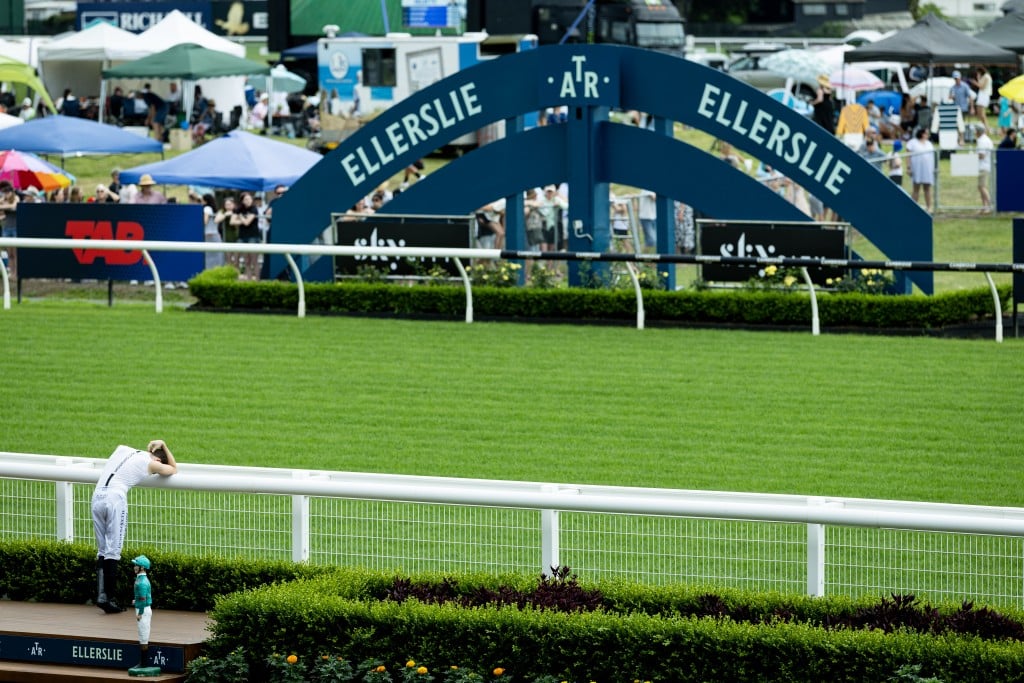
New Zealand Thoroughbred Racing is expected to implement three tiers of racing in a strategy which is likely to reprioritise the distribution of prize money across a widened classification of the horse population.
The potentially polarising move threatens to heighten tensions and further fracture the industry as the governing body awaits confirmation from TAB NZ of its funding for next season.
NZTR intends to classify the country’s racecourses in three categories, metropolitan provincial and community, in a similar manner to Australia’s larger racing states’ three-tiered system.
Further details of which clubs fall into which categories is set to be confirmed next week.
A circular was sent by NZTR to recognised industry organisations this week indicating that an outline of next season’s race dates, stakes and club funding had been pushed back due to the uncertainty surrounding distributions from TAB NZ.
It also comes as NZTR informed participants it would delay the release of an important infrastructure strategy, Project Stamina, which promises to shape the future management of assets owned by the New Zealand industry.
NZTR chief executive Matt Ballesty said the governing body had “made no secret to the fact that we do want to review the racing” structure by “considering a recategorisation of some of our racing”.
“We’ve loosely got it at the moment but what it does do is provide future planning where we can provide certainty and a runway for people in the industry,” Ballesty told The Straight while in the South Island, meeting with industry stakeholders.
“The current circular that we have talked about our inability at this point in time to provide clubs with their funding and what the stakes look like.
“The simple reason for that is that we haven’t yet received any guidance from the TAB on what funding might look like so It’s typically a case of we can’t present what we don’t know.
“So, we’re hoping that we work through that with the TAB and our board to understand what it’s going to be like for next year. There’s nothing more to it (than that).”
The delay and lack of information has caused friction with the race clubs who are concerned about the likely significant changes to their own funding models.
But Ballesty defended the correspondence provided to the industry.
“We just felt that instead of not saying anything at all. It’s important to let them know that information will be coming,” he said.
It’s understood the Members’ Council met earlier this week to discuss some of the issues pertaining to NZTR and plans are being made to meet with its board, chaired by Russell Warwick.
An attempt was made to contact Warwick on Friday.
There’s also been change at the helm of the Members’ Council with former chair Geoff Vazey stepping down in April after six years, with his former deputy Bernard Hickey stepping into the role.
As NZTR liaises with TAB NZ to ensure a distribution of funding for next season, concerns will be raised by participants about whether prize money levels will be maintained in 2026/27.
Ballesty acknowledged the uncertainty overshadowing the New Zealand industry.
“Our preference has always been to maintain or grow (stake money) and that’s where we’ve really focused and think that’s shared by the TAB and Entain, of course,” he said.
“It’d be a welcome outcome for all participants and I don’t have any reason to believe it won’t be, but we just don’t know until we’ve got a clearer idea of what funding we’ve got to work with.
“Our focus is making sure we’re running NZTR in the best way possible, working on our costs and our outputs.
“The funding is something we’re the beneficiaries of from our product but I don’t have that (final) answer right now.”
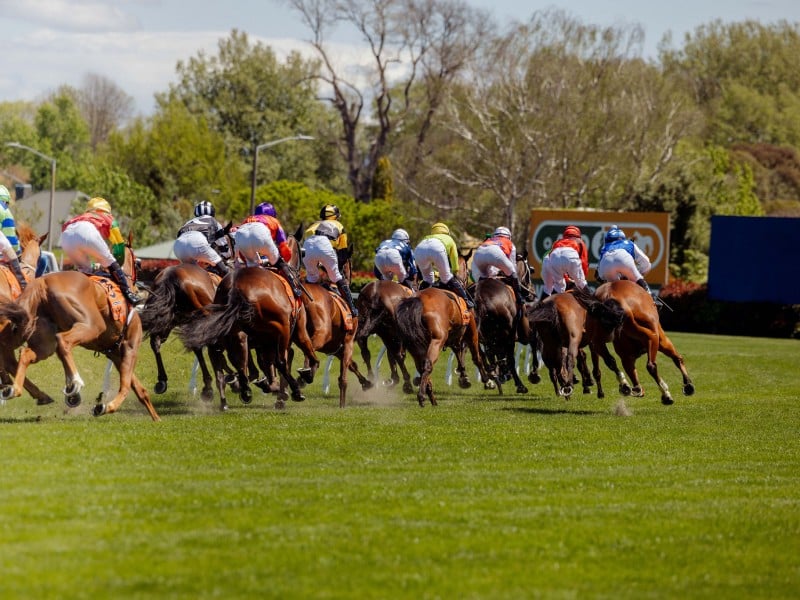
Under the three-tier system, it is likely that the redeveloped Ellerslie is the linchpin of the plan, with the Auckland track consolidated as New Zealand’s premier wagering-generating racecourse.
There is an undercurrent of discontent in some circles that, although turnover points to Ellerslie’s importance to financing the industry, it can’t be wholly and solely relied upon.
“We have one metro track with a huge population around it (in Ellerslie) and you could argue that Riccarton’s probably not too far from that either,” Ballesty said.
“We’re focused on Ellerslie and these decisions are always going to be backed by data, and working closely with other stakeholders because we are underpinned by wagering returns, so that’s important.
“But our future can’t just be on one venue or two (tier one) venues across the country.”
Ballesty’s statement on infrastructure and how NZTR intends to develop those much-needed projects, including greenfield sites in the Waikato and Hawke’s Bay, may become clearer when Project Stamina is made public.
Author

Related Articles
V’landys/TTR defamation case set to go before a jury
A defamation case brought before the NSW Supreme Court by Racing NSW chief executive Peter V’landys is likely to be heard before a jury as the defendants, which includes The Thoroughbred Report, are forced into a strategic reset after a court set aside key subpoenas.
Stirring memories – Taylor Marshall’s fresh start meets family history in Doomben 10,000
Taylor Marshall will chase a breakthrough Group 1 victory aboard Spicy Martini in the Doomben 10,000, the race his late father John Marshall won three consecutive times in the 1980s.
Queensland racing looks to Olympics as gateway to international arena
Brisbane racing officials are examining how preparations for the 2032 Olympic Games can be used to help turn its winter carnival into a viable destination for overseas horses.