
Court of Appeal retires to consider decision as the ‘definition of horse racing’ comes under scrutiny
The future power dynamic between Racing NSW and the Australian Turf Club now lies in the hands of three senior judges after legal argument concluded in the crucial appeal against the ATC’s bid to defy administration.
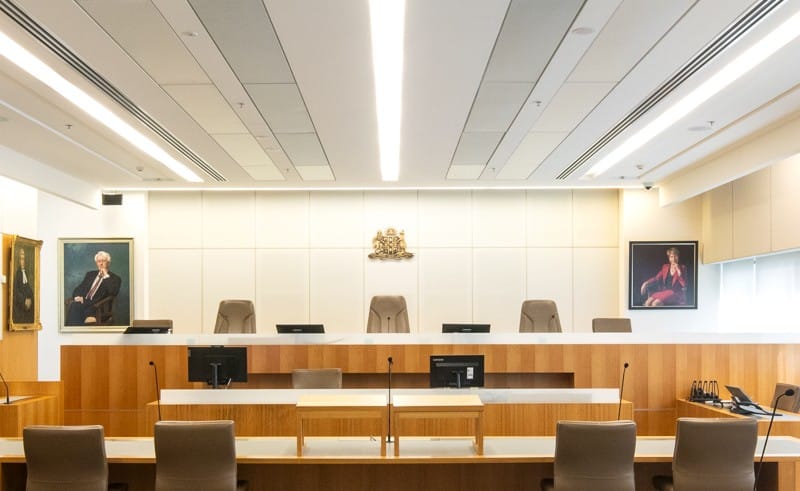
The NSW Court of Appeal has reserved its decision in the crucial case brought by Racing NSW regarding its attempt to put the Australian Turf Club into administration after a second day of technical legal arguments and responses from each side.
The second day of the hearing in front of a panel of three judges, Justices Jeremy Kirk and Kirstina Stern and Acting Justice John Griffiths, continued on Friday and saw the ATC’s legal counsel Scott Robertson spend the morning responding to the appeal case brought forward by Racing NSW and its legal team, led by Justin Gleeson SC.
Much of it centred on Racing NSW’s rights to appoint an administrator and on whether there were broader inconsistencies between the Thoroughbred Racing Act (TRA) and the federal Corporations Act.
Robertson argued that if the intention of the Thoroughbred Racing Act was to operate separately to the Commonwealth corporations law, then that could have occurred with a Commonwealth legislation displacement provision when the TRA was substantially amended in 2008.
“In that event, the Corporations Act will retreat and there’ll be no relevant inconsistency,” he said.
Part of the discussion from Racing NSW’s representative was the definition of what Racing NSW’s functions were and what their powers were.
“In an Act where functions and powers are not sharply divided, to then erect that sort of further constraint, we submit, would be erroneous,” Gleeson said.
A key distinction in the original decision handed down in the Supreme Court by Justice Kunc was that Racing NSW’s powers in relation to clubs were restricted to the racing of horses as it relates through the Australian Rules of Racing, as opposed to extending into other commercial matters of the club.
Gleeson had highlighted this narrow definition on day one, saying the intention of the Act was to define the scope, as opposed to harness or greyhound racing, rather than limit its powers. He revisited this as he close of his case on Friday.
“The critical question for your Honours is whether one should prefer the construction of the definition of horse racing, whereby it’s telling us it’s the racing of galloping horses of the thoroughbred type governed by the ARR, without of itself confining you as per paragraph 58 of the primary judgment,” he said.
Gleeson also attacked Robertson’s reliance on the Temby Report, authored in 1995, in his argument. That report set down the path for the establishment of the Thoroughbred Racing Act three years later.
“Despite the attempt to resurrect Mr Temby, it became perfectly apparent that Mr Temby did not draft the functions that are in the bill. He didn’t draft the powers,” he said.
“In the second reading speech nothing was actually said about the power in section 13.1b or its relationship to section 14, save for the words that the powers and functions were appropriately comprehensive.”
A judgment will be handed down in the case at a time to be advised, with no further orders made.
Author

Related Articles
Golden Eagle gets Group 1 nod
The Golden Eagle will be run at Group 1 level in 2026, one of 19 new black type races in Australia in the new racing season, with no races dropped. Of those 19, 16 are in NSW.
Darryl Hewitt’s turn to serve as Sir Now chases Group 3 Caulfield win
The Hewitt name is in the sporting spotlight again, with Cruz making headlines at Wimbledon while great-uncle Darryl takes Sir Now to Caulfield in search of a Group 3 victory.

Revisiting the Formula – Racing’s latest quest for a league of its own
Greg Maffei made Formula 1 a global growth story and is looking to apply some of the same principles to thoroughbred racing through the newly launched Horse Racing League. Bren O’Brien looks at the challenges and opportunities of a league concept in thoroughbred racing.
