
Revisiting the Formula – Racing’s latest quest for a league of its own
Greg Maffei made Formula 1 a global growth story and is looking to apply some of the same principles to thoroughbred racing through the newly launched Horse Racing League. Bren O’Brien looks at the challenges and opportunities of a league concept in thoroughbred racing.
There has been no shortage of wealthy businessmen around the world who have tried to turn a handful of blockbuster race days into sustained, year-round fan engagement in thoroughbred racing.
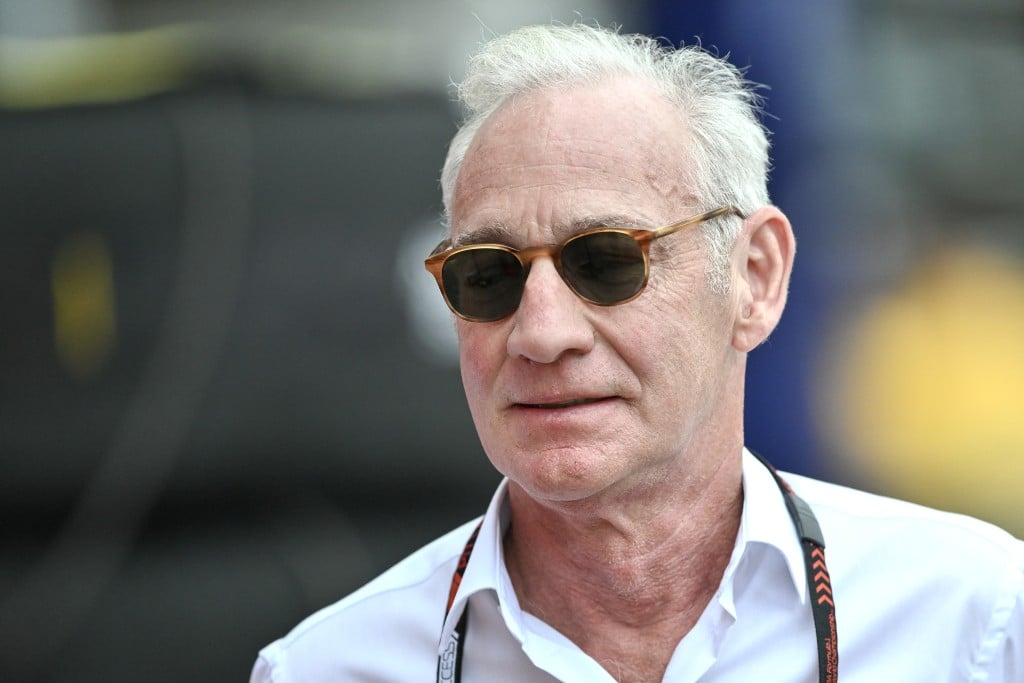
Former Liberty Media chief executive Greg Maffei is the latest to try to unearth a formula which can capture a global audience he estimates to be 50 million “fans” of the sport, with the launch of the America-based Horse Racing League.
Maffei’s credentials in this area are strong. Liberty Media, which he was president and CEO of from 2005 to 2024, was behind Formula 1’s remarkable resurgence in the past decade, updating the image of a sport that seemed of another era to become a global cultural and sports business leader.
Many have pointed to Formula 1 – and the success of Netflix’s Drive to Survive – as a template for horse racing to learn from. Many have also tried to launch league-style racing, with minimal impact to date.
The challenge has always been that while thoroughbred racing has a global footprint, the sport and the business are run and administered locally. Not just by national federations, but often state by state and club-by-club.
As Australia has found, achieving common ground on something as simple as a racing calendar, is close to impossible in a federated model.
So where does Maffei, with his American lens on the sport, feel he and his team can succeed where others have failed? Speaking to CNBC this week, he highlighted challenges racing faces.
“There’s enormous interest, but some of it’s episodic, and we’re trying to capture both the fan interest that’s in big events like the Kentucky Derby and bring continuity across the season,” he said.
“A lot of people show up at the Kentucky Derby, see a bunch of three-year-olds race there, and they’ll never see them again. One of the ideas is to create continuity of interest throughout the season and build toward a real championship.”
Partnering with Skylark founder Danny Epstien, he is launching the Horse Racing League, which is a team-based thoroughbred racing competition scheduled to debut in February 2027.
The key hook for the HRL is the concept of teams, mirroring what has driven F1’s success.
The inaugural season features 10 teams competing for points across events hosted at Santa Anita Park in Los Angeles, Gulfstream Park in Miami and Keeneland in Lexington, Kentucky. Teams will accumulate points throughout the season, culminating in a championship race and more than $10 million in annual purses and prizes.
Who are the teams? Well, following the F1 model, it will be ownership driven. The first three to sign up are Godolphin, WinStar Farm and the Barber–Viola–Pucillo Team, featuring owners who between them have multiple Kentucky Derby, Breeders’ Cup and Belmont Stakes victories.
It is intended that the remainder of the teams will be major thoroughbred racing organisations, sports owners, entertainment industry figures and celebrities and brands.
“We’re going to definitely lean on social media, and we have some plans to introduce some celebrities who will own parts of these teams and show their true interest in horse racing,” Maffei said.
It is at this point where the concept will face its greatest scepticism from the global thoroughbred industry. While celebrity-led racing promotion has worked, and there was significant cut-through from the Race For The Crown Netflix-style program, focusing on the people not the horses will always create debate.
One would hope that Maffei and his team have also identified that the key difference between Formula 1 and horse racing is that one involves a machine and one involves an animal. Jockeys, trainers and even owners are important participants, but the ultimate central characters are the horses themselves.
Where Formula 1 succeeded was that its central characters could be effectively scripted, through selective use of the Drive To Survive concept, to fulfill the narrative. That “scripting” ended up frustrating those characters as they felt their words were being twisted to create drama.
No matter how you shape the narrative in racing, horses cannot be scripted. They can be heroic one start and then underperform the next, and often no-one is any wiser as to why.
It’s one of the most appealing things about the sport, but it makes it challenging for that consistent “narrative” aspect which Maffei is clearly keen on.
The key question is whether you believe sport should drive the promotion of the narrative or whether the narrative should drive the promotion of the sport.
HRL is keen to lean on the owners in order to drive those stories and connections.
“The modern sports fan doesn’t just follow an event; they follow a story,” Maffei said. “They want personalities, competition, behind-the-scenes access and something to root for over time.
“That model has transformed sports and entertainment globally, and horse racing is uniquely positioned to benefit from it.”
The other aspect which is not referenced is that racing is largely commercially and narratively driven by wagering. This is an essential part of the “fandom”.
For Florida Panthers owner Vinnie Viola, the opportunity lies in providing a continuous product for potential global audiences.
“Horse racing already commands one of the largest single-day audiences in American sports,” he said.
“Investing in a team-based concept designed to carry that momentum across a full season is what makes the HRL so exciting for us.”
There is a reasonable argument that previous concepts in this league-style racing space haven’t worked because the capital wasn’t there to sustain it. With Maffei, Epstien and powerhouse global owners behind the concept, it won’t lack for investment.
But it will be far from a “shock and awe” approach from the start. The 2027 launch will feature three event days, one at each of the above-mentioned courses.
Each event will feature four team-based races – two on turf and two on dirt – for a total of 12 races in the league’s first season, with organisers targeting an expansion to six events in future years.
“Formula 1 showed what can happen when you combine a great sport with modern storytelling. Horse racing already has the competition, heritage, drama and glamour,” Maffei said.
“The opportunity is to connect those elements into a season-long experience that fans can follow and care about.”
Author

Related Articles
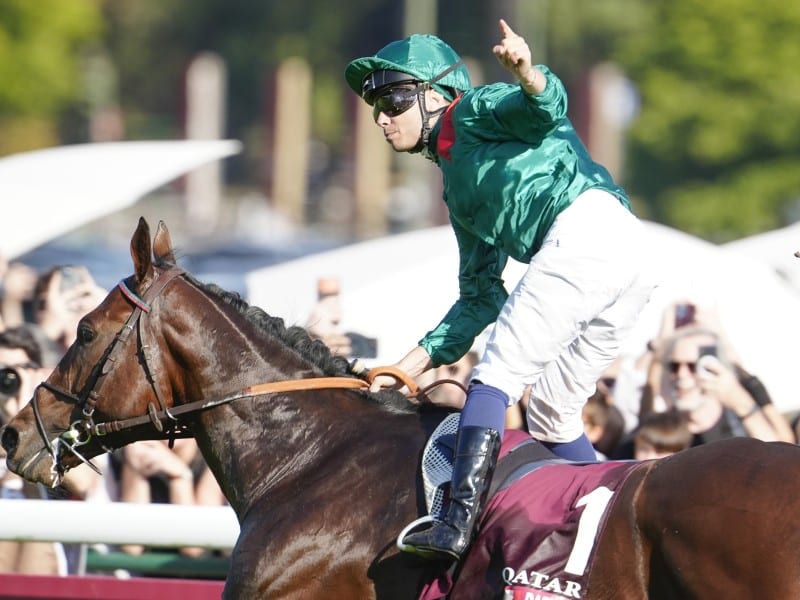
Daryz wins historic second Arc as stallion career beckons
Daryz gave the Aga Khan family a record ninth victory in the Prix de l’Arc de Triomphe, becoming the first colt to go back-to-back in 48 years.
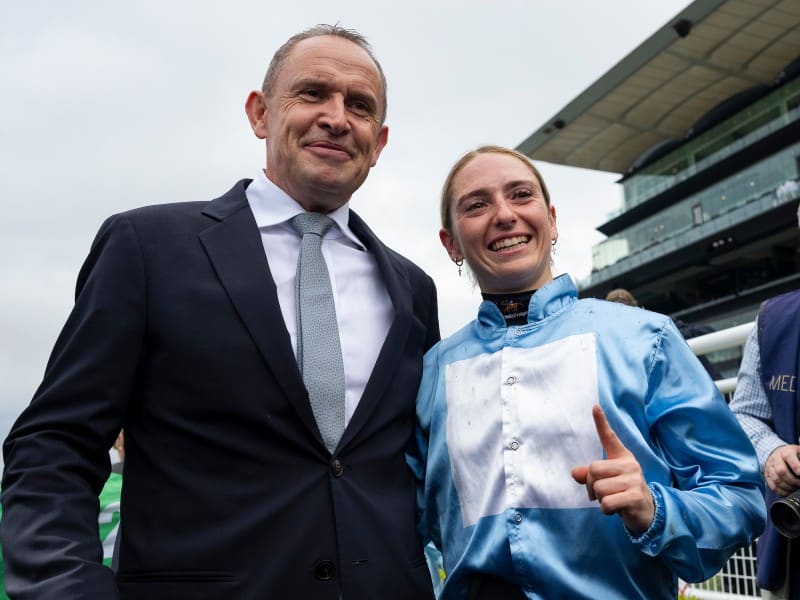
Siena Grima fulfils Epsom dream on God’s Window at her first Group 1 ride
Siena Grima and God’s Window delivered Chris Waller his seventh Epsom Handicap, with an upset win in the famous Randwick mile.
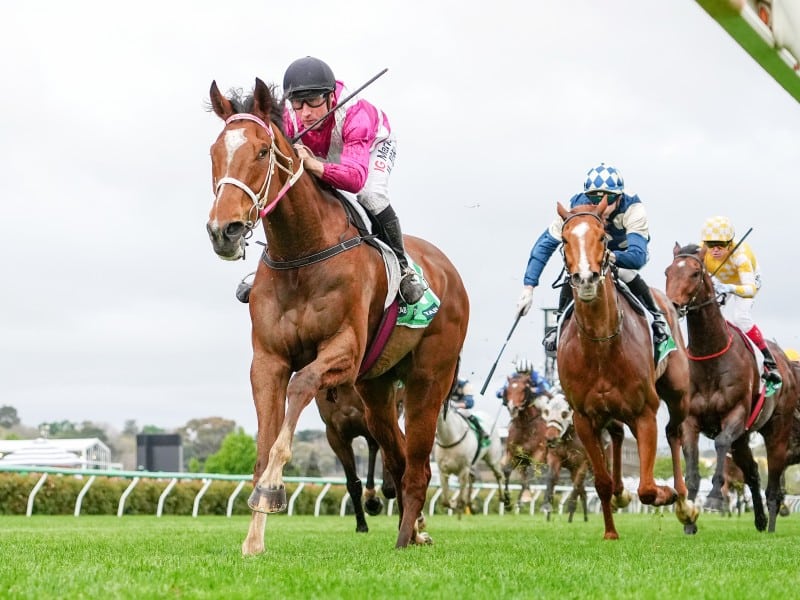
Cosmic Crusader gives Andrea Leek her first Group 1 in Turnbull Stakes
Cosmic Crusader claimed his second Group 1 and William Pike’s 19th in the Turnbull Stakes at Flemington, with a Cox Plate or Caulfield Cup campaign now under consideration.
