
Is racing getting the political leadership it needs?
By legislative necessity, racing bodies and state governments are tied at the hip. So what does the likelihood of a more turbulent political environment mean for the thoroughbred industry? Events in Queensland and Tasmania give us a clue, says Bren O’Brien.
ANALYSIS:
“Every time we get a new racing minister, it’s another 12 months down the drain.”
That quote, from an understandably concerned racing industry figure, contemplates another year-long education process after a recent political change.
From the same conversation: “Yeah, but who would want to be a racing minister?”
Racing is a complex ecosystem with its own political pitfalls. Sure, the racedays can be nice, with champagne and hospitality and all, but the downside is being dragged into issues of integrity, welfare and intra-industry politics.
This is all while having other portfolios and priorities to attend to. The racing industry may be worth hundreds of millions of dollars, but it doesn’t command exclusivity.
In Victoria, the racing minister is also the Minister for Police and Crime Prevention, while in New South Wales, David Harris also holds the portfolios of Aboriginal Affairs and Treaty, Gaming, Veterans, Medical Research and the Central Coast.
In WA, where there is a state government-led review into racing occurring the minister has Police, Corrective Services and Gaming, while in South Australia, the portfolios also include Emergency Services, Local Government, Recreation and Sport.
Currently two states in Australia, Queensland and Tasmania, are without permanent racing ministers.
Tim Mander, who had been Queensland’s racing minister since the Crisafulli government took charge in November 2024, stepped aside due to an investigation into electoral irregularities last month.
His role, which includes the hardly minor portfolio of Sport and the Olympic and Paralympic Games, is being temporarily held by Andrew Powell.
The sudden suspension of Mander’s role couldn’t have come at a trickier time for the Queensland industry. The recommendations of the McGrath Review are currently being introduced, while Matthew McGrath himself is still getting his feet under the desk as the new chairman of Racing Queensland, chosen by Mander.
Mary Collier, charged with leading the implementation of the review, is coming to the end of her contracted term, while a decision has not yet been made by the new-look RQ board as to who the permanent chief executive will be.
Lachlan Murray has been in the seat in a temporary capacity for 15 months, having required an intervention of Parliament to extend his position beyond three months. It is not known if he wants the role full-time, but if not Murray, then who? Any external recruitment is likely to take months.
Put simply, while the review outcomes have been announced and some progress has bene made, it is arguable that Queensland racing has been in a state of stasis since the change of government 19 months ago.
While initiatives like the new greyhound track at Bundaberg and the new harness track at Toowoomba may have pleased members of the backbench, they have been described as unnecessary distractions by industry insiders who would prefer progress on fundamentals.
Queensland politics is very much local, and with over 100 tracks, most of which are in regional areas, every MP has a say in which should get priority. It is no way to run an industry that recorded $426 million in expenses last financial year.
In his temporary ministerial role, Powell addressed a Brisbane Racing Club committee function last Saturday, acutely aware that the John Power Stand, in which it was held, will be condemned in a matter of weeks. Full funding for the rebuild has yet to be finalised.
The discord between the revelry of the moment and the uncertain reality of the future seemed appropriate.
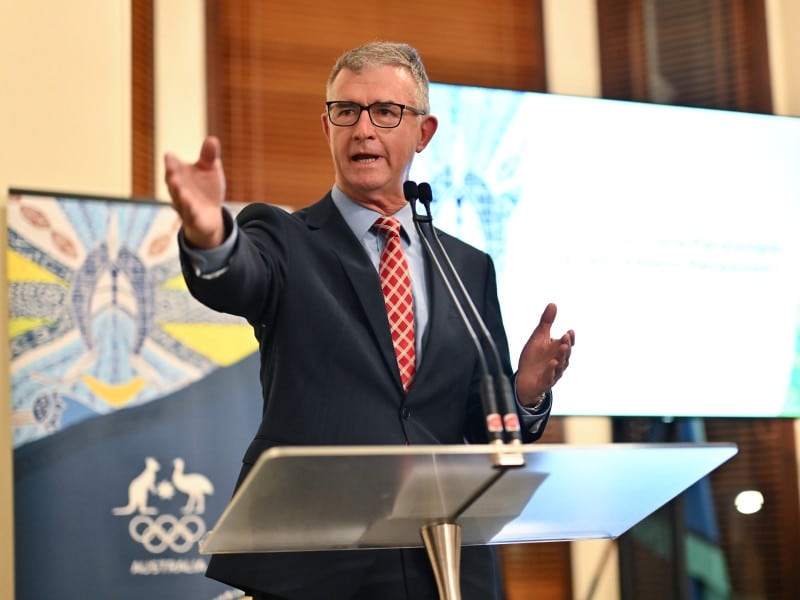
Just a week ago, then Tasmanian racing minister Jane Howlett signed on to additional ministries after the resignation of Madeline Ogilvie due to a parliamentary scandal. Now it is Howlett who has followed her out the ministerial door, thanks to a complex political entanglement, including issues involving Tasracing.
Anyone who tuned in to watch Howlett speak as racing minister during parliamentary estimates a few weeks ago would have had concerns for her long-term future in the portfolio.
It was 90 minutes of seat-squirming viewing as she constantly deferred to Racing Integrity Commissioner Sean Carroll, facing a barrage of questions about the botched attempts to ban greyhound racing and the future of the funding deed for the other codes.
In a newly created role, Carroll has become the most powerful man in Tasmanian racing and is seen as a de facto commissioner, enlisting the help of Ben Sellenger, the former CEO of Ciaron Maher Racing, to conduct multiple reviews, on the minister’s behalf of course, into what future may look like.
Tasmanian racing is three years from falling off a $40 million cliff, well over half of the industry’s annual revenue, where there is no guarantee of government funding beyond that point. Meanwhile, there is a perception that the addition of the integrity layer has led to what one insider termed a ‘frivolous duplication of power’.
Breeders are buying broodmares without knowing what prize money the resultant progeny from spring matings will race for when they are two years old.
The uncertainty is strangling investment, and the departure of the racing minister, despite misgivings over her performance in her latest two-year stint in the role, only makes things worse.
On top of this, the term of Tasracing’s chair, Gene Phair, has been extended beyond its expiration date in May, with no confirmation yet as to who will replace him. It’s hard to find a new chair if you don’t have a racing minister.
What aspiring politician in their right mind would want to take on a portfolio that must execute a so-far bungled greyhound racing ban, while likely informing the industry that it has to do more with less?
The challenge for the racing industry is that while politics in Australia is already complex, if the polls are to be believed, it’s about to get a whole lot harder.
Minority leadership, such as that which has caused political chaos in Tasmania, is set to become the norm.
That makes it harder for racing to get its needs met. It also means the conveyor belt of racing ministers at state level may accelerate.
What is the answer? Well, the wagering industry has significantly scaled up its political representation in recent years to ensure its interests are heard by relevant state and federal politicians.
It’s arguable that part of Racing NSW’s commercial success as a PRA in the past 15 years has been its alignment with politics, although that has not been without complications.
Some state bodies are expressly forbidden from lobbying the government, putting them at a disadvantage and casting executives in purely functional roles without the power to influence change.
In the context of looming political turbulence, it leaves the whole industry a sitting duck.
Author

Related Articles
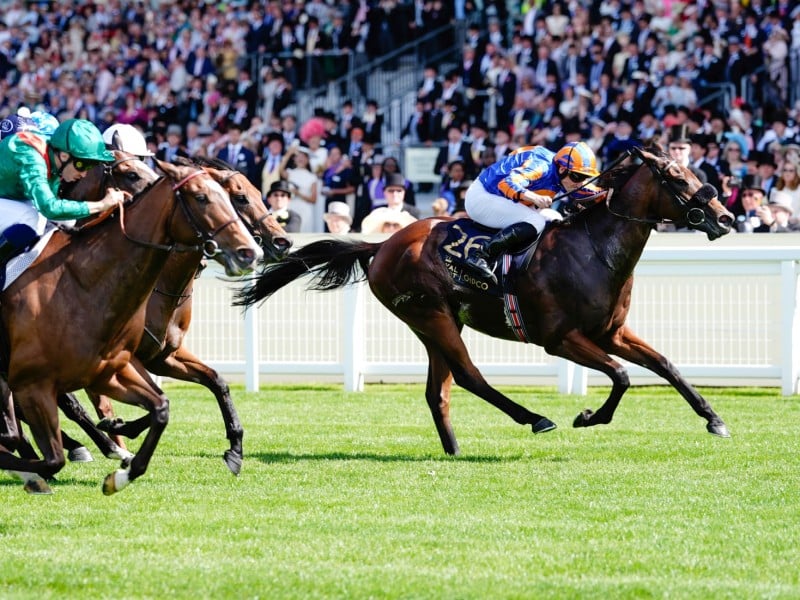
Everest Mission on agenda after O’Brien and Moore upset Aussies at Ascot
Fresh from seeing off two Australian sprinters in the King Charles III Stakes at Royal Ascot, Mission Central could be set to tackle Australia’s richest race in October.
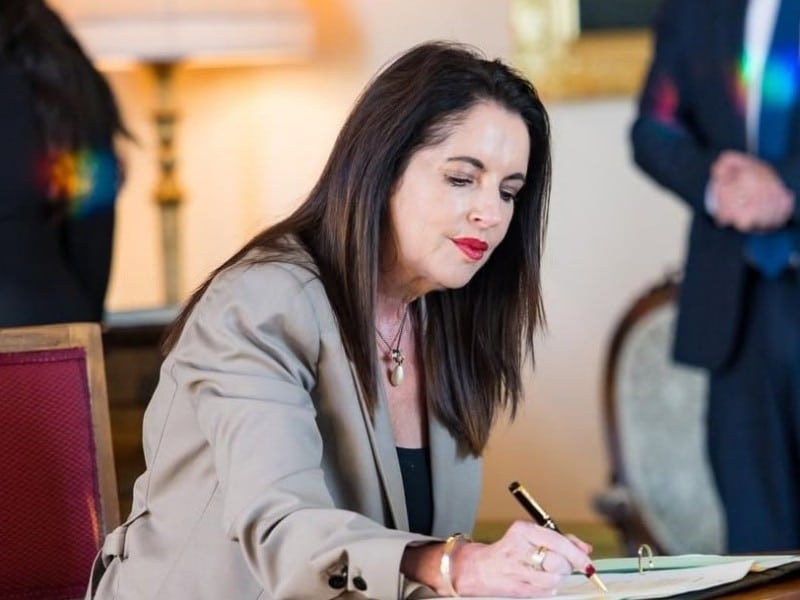
Racing Minister’s resignation increases uncertainty for Tasmanian racing industry
Already dealing with future funding uncertainty, Tasmania’s racing industry must now confront the fallout of the resignation of the state’s racing minister Jane Howlett.
$6 million Cup – Caulfield raises stakes, boosts ballot-free races for 150th running of 2400m handicap
Connections of all runners in this year’s 150th running of the Caulfield Cup will receive a slice of the $6 million prize money on offer, with four ballot-free races also added by the Melbourne Racing Club.
