
ANU study sets betting participation on racing at 11.7 per cent as sports betting climbs
The Australian National University’s Gambling in Australia 2026 study found 11.7 per cent of adults bet on racing and 8.7 per cent on sport as researchers establish a participation baseline ahead of wagering advertising reforms which start on January 1.
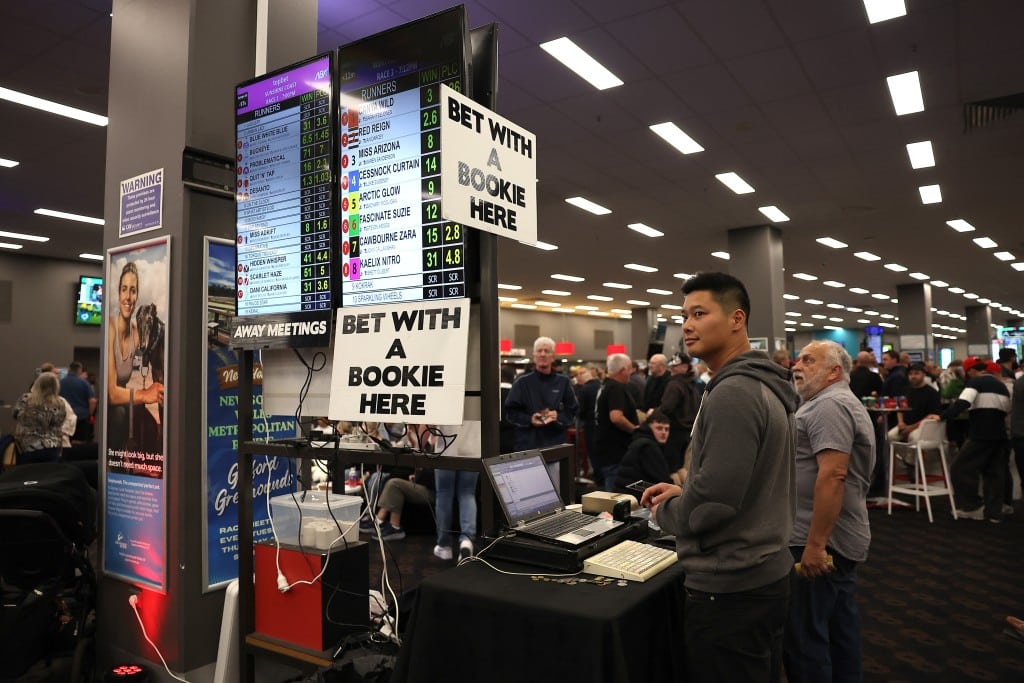
Sports betting participation among Australian adults has nearly doubled in two years while race betting has held above 10 per cent, according to the Australian National University’s (ANU) Gambling in Australia 2026 study.
The study, released earlier this month, helps establish a national baseline for researchers to assess the impact of the wagering reforms that begin on January 1.
The study surveyed 3,482 adults in March and weighted the responses to Australian population benchmarks.
It found that 11.7 per cent of adults had bet on horse or greyhound races in the previous 12 months. That was down from 12.6 per cent in 2025 but above the 10.0 per cent recorded in 2024.
Sports betting rose from 4.7 per cent in 2024 to 7.0 per cent in 2025 and 8.7 per cent this year. Differences between years were not tested for statistical significance.
Overall gambling participation was 60.6 per cent on the study’s historical comparison basis. That is down from about 66 per cent in 2019, when the first survey was conducted.
Racing remains largely an online product. Of those who bet on races, 71.4 per cent did so online at least half the time, compared with 76.9 per cent in 2025 and 73.4 per cent in 2024. Among sports bettors, the figure was 89.8 per cent.
The study links online gambling with more frequent gambling and higher risk.
Wagering operators have also highlighted the responsible gambling challenges posed by high-frequency racing betting, particularly overnight, as previously reported by The Straight.
Of respondents classified as at risk, 61.5 per cent gambled online at least half the time, compared with 38.5 per cent gambling in venues. Among online gamblers, 68.3 per cent gambled monthly or more often, against 47.3 per cent of venue gamblers.
The at-risk measure counts anyone scoring one or more on the Problem Gambling Severity Index (PGSI). On the historical comparison basis, 17.6 per cent of adults were at risk in 2026, down from 19.4 per cent in 2025 but above the 13.7 per cent of 2024 and 13.6 per cent of 2019.
“We’re seeing fewer Australians gambling than a decade ago, but that hasn’t translated into a corresponding reduction in gambling-related problems,” lead author Associate Professor Aino Suomi, director of the ANU Centre for Gambling Research, said.
“Gambling participation appears to have settled, but the level of risk remains concerning. We need to shift attention from looking at how many people gamble to how they gamble, and who is most affected.”
The study treats the March survey as a key reading of the state of play before the federal reforms begin on January 1.
The reform package includes advertising restrictions, restrictions on inducement marketing directed at at-risk customers, a prohibition on commissions for staff and affiliates linked to customer activity, and expanded enforcement powers against illegal offshore services.
“These results give us an important baseline for evaluating the reforms,” Suomi said. “The real test will be whether we see reductions in gambling-related problems and harm, not just changes in participation.”
The study also points to growing use of products that licensed operators cannot offer.
The share of casino table-game players gambling online at least half the time rose from 4.8 per cent in 2024 to 11.8 per cent in 2025 and 21.8 per cent this year. For poker machines, the share rose from 6.5 per cent to 12.0 per cent and then 13.4 per cent.
“Online casino games and poker machines are illegal to offer in Australia, yet Australians are increasingly accessing them online,” Suomi said. “This raises serious questions about the reach and effectiveness of existing consumer protections.”
Author

Related Articles

🔒 🔒 Tabcorp cuts 50 full-time jobs ahead of proposed BetMakers integration
Tabcorp has cut 50 full-time positions and additional contractor roles ahead of its proposed BetMakers integration, with technology teams among those affected.

🔒 🔒 ACMA clarifies triple-lock rules for online wagering ads, exempting dedicated racing sites and apps
ACMA has outlined new triple lock rules for online wagering ads from January 1, 2027, confirming dedicated racing sites and apps are exempt, but racing and wagering businesses’ social media pages are not.

Melbourne Cup turnover of $229 million second only to 2025 record
Betting on the 2026 Melbourne Cup reached $229 million, the second-highest turnover on the race, 7.4 per cent below last year’s record.
