
‘A daisy-eating, scenery-loving, sleepy-eyed and slightly pot-bellied hussy’ – The legend of unbeaten Kincsem lives on in Hungary
The Hall of Fame Legend elevation of Black Caviar and Winx may have created some debate, but in Hungary, there remains no doubts as to who was the greatest of them all, and as Matt Stewart reports from Budapest, the legend of Kincsem remains strong, 138 years after her death.
Bernborough, Tulloch, Kingston Town and other timeless greats have not yet made a shortlist of immortals, or Legends, but next month the list of horses will expand to five; Carbine, Phar Lap, Makybe Diva, Black Caviar and Winx.
The addition of Winx and Black Caviar relatively soon after the end of their careers was the subject of some debate in the aftermath of last week’s announcement, with the suggestions that the panel had fallen victim to ‘recency bias’.
Other than the perennial top dog status of Phar Lap, debates over Australian greats exist because none stood head and shoulders above the rest.
Many thousands of miles away from the Australian great debates is Hungary, where there is simply no debate, just reverence for a horse who represents perfection and surpasses even Phar Lap as a national hero.
Australian racing and sporting fans became aware of Kincsem as Black Caviar began racking wins that rounded off at an unblemished 25.
Kincsem, translated as “My Treasure”, was the benchmark for invincibility in racing and sport. Horses, individuals and dominant teams were compared against her phenomenal 19th century record of 54 wins from 54 starts.
Hungary is not a horse racing superpower but it has a rich history of racing and celebration of the horse. There have been many great Hungarian racehorses, including the modern-day globetrotting sprinter Overdose, but only one true immortal.
About two kilometres from the Budapest racecourse named in honour of Kincsem – a venue once described as “the most beautiful track in Eastern Europe” – is Heroes’ Square, a popular tourist spot framed by towering bronze statues of warrior horses.
Hungary’s position in the middle of Europe has put it at the centre of most of the continent’s conflicts. Horses have played a huge part in that history.
Kincsem has his own place as an immortal figure in Budapest, an ancient city of many immortals.
“Kincsem? Oh yes, very famous. I learned from my father and grandfather. We were taught about Kincsem in history class,” Richard, a 31-year-old restaurant waiter said.
A handful of other locals were subjected to the same Kincsem quiz and all bar one was aware of the legendary mare.
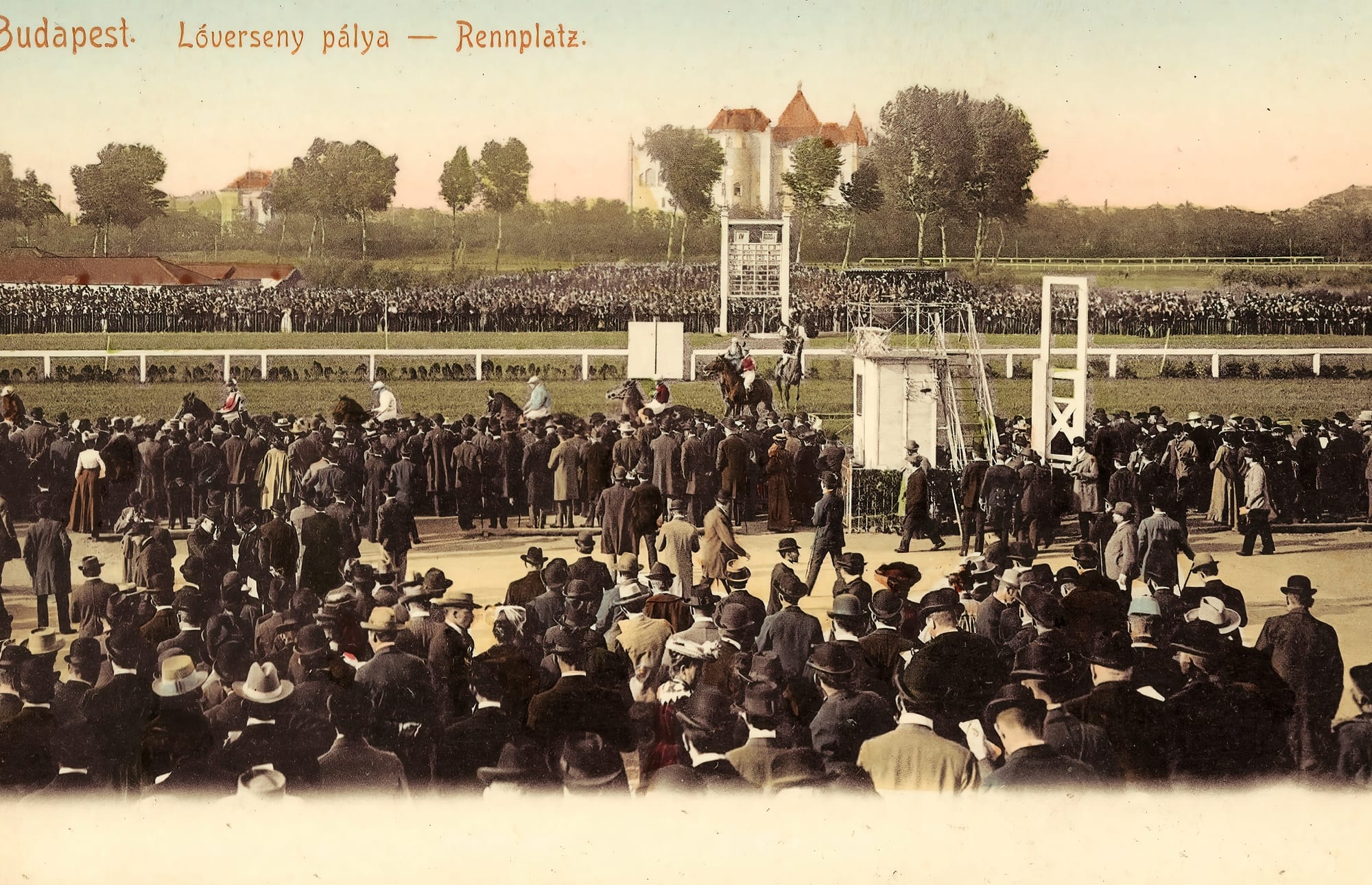
The vast inner-suburban precinct named after the Kincsem no longer has the manicured grandeur that once made it one of Europe’s most beautiful racetracks. Trots and dogs also race there. The picket fences could do with a splash of paint and vines push through gaps in the bricks of 100-year-old barns that house the 300 thoroughbreds trained on site.
The magnificent cream-stone coloured grandstand that welcomed fans to Kincsem Park’s grand opening in 1925 now has a less attractive, between it and the racetrack.
The old grandstand is now a racing museum dedicated mostly to one horse and occasionally provides seating for community events and rock concerts. Madonna played in front of 40,000 at Kincsem Park in 2009.
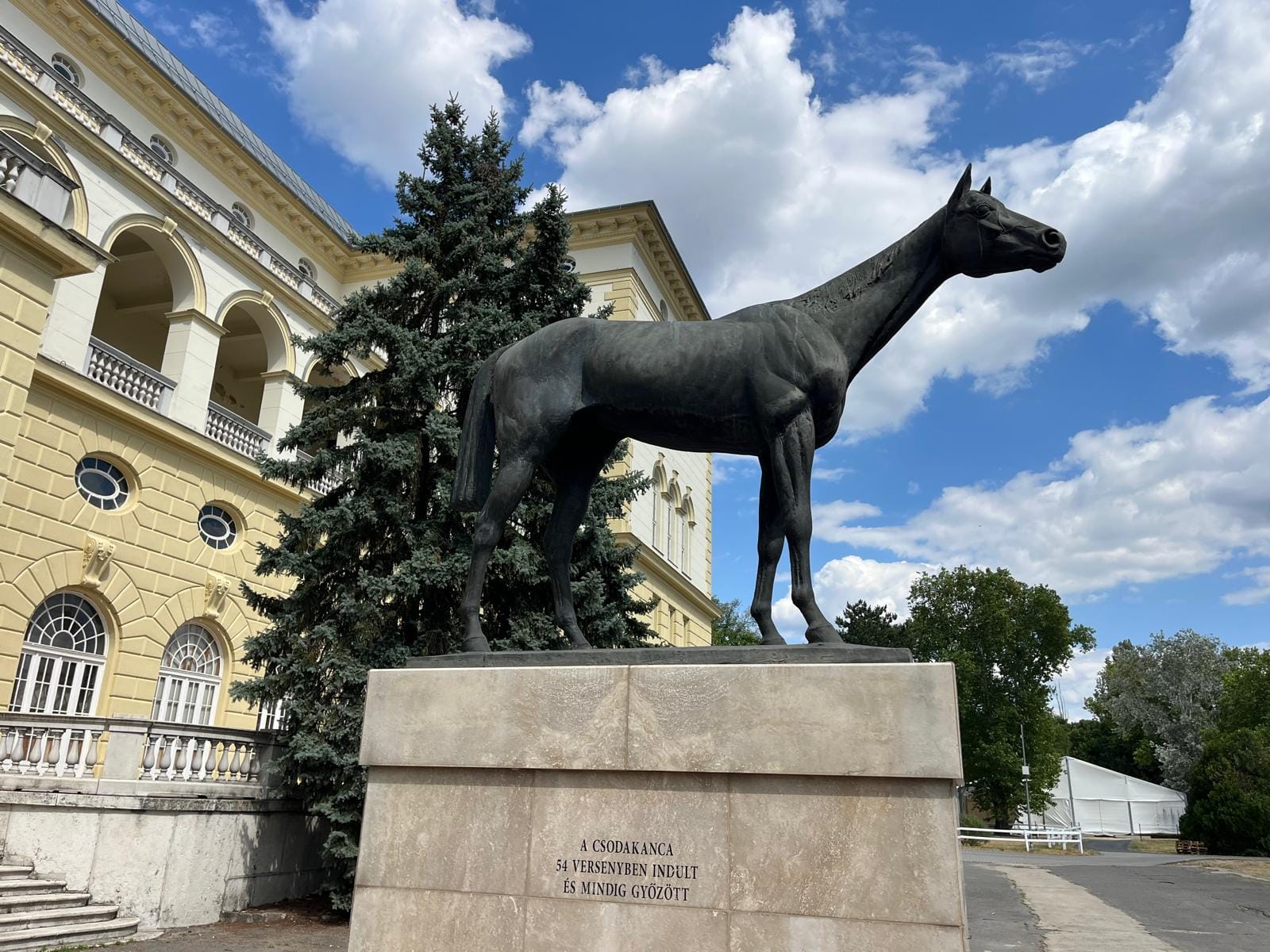
A statue commemorating Kincsem stands at the front of the old grandstand, surrounded by a garden and firs, or giant Christmas trees. It has hallmarks of Phar Lap statue at Flemington.
The similarities don’t end there, Like Phar Lap, Kincsem reinforces that racing is a game of chance. The true immortals are flukes. They are beyond breeding and planning and for that reason they inspire wonder.
Kincsem carried English blood but was born in a village on the Austrian-Hungarian border in 1874. According to author BK Beckwith “she was as long as a boat and as lean as a hungry leopard … she had a U-neck and mule ears … she was lazy, gangly, shiftless … she was a daisy-eating, scenery-loving, sleepy-eyed and slightly pot-bellied hussy.”
Kincsem was offered for sale as part of a six-foal package, rejected because of her “inferior quality” and then raced by her breeder. She was trained by a somewhat mysterious ex-pat Englishman named Robert Hesp, who’d previously spent time in the Hungarian Secret Service.
While the careers of Winx, Black Caviar and other modern greats were carefully choreographed, Kincsem was thrown to the wolves.
She raced often and often out of her comfort zone, far from the cocooned champion, she travelled constantly.
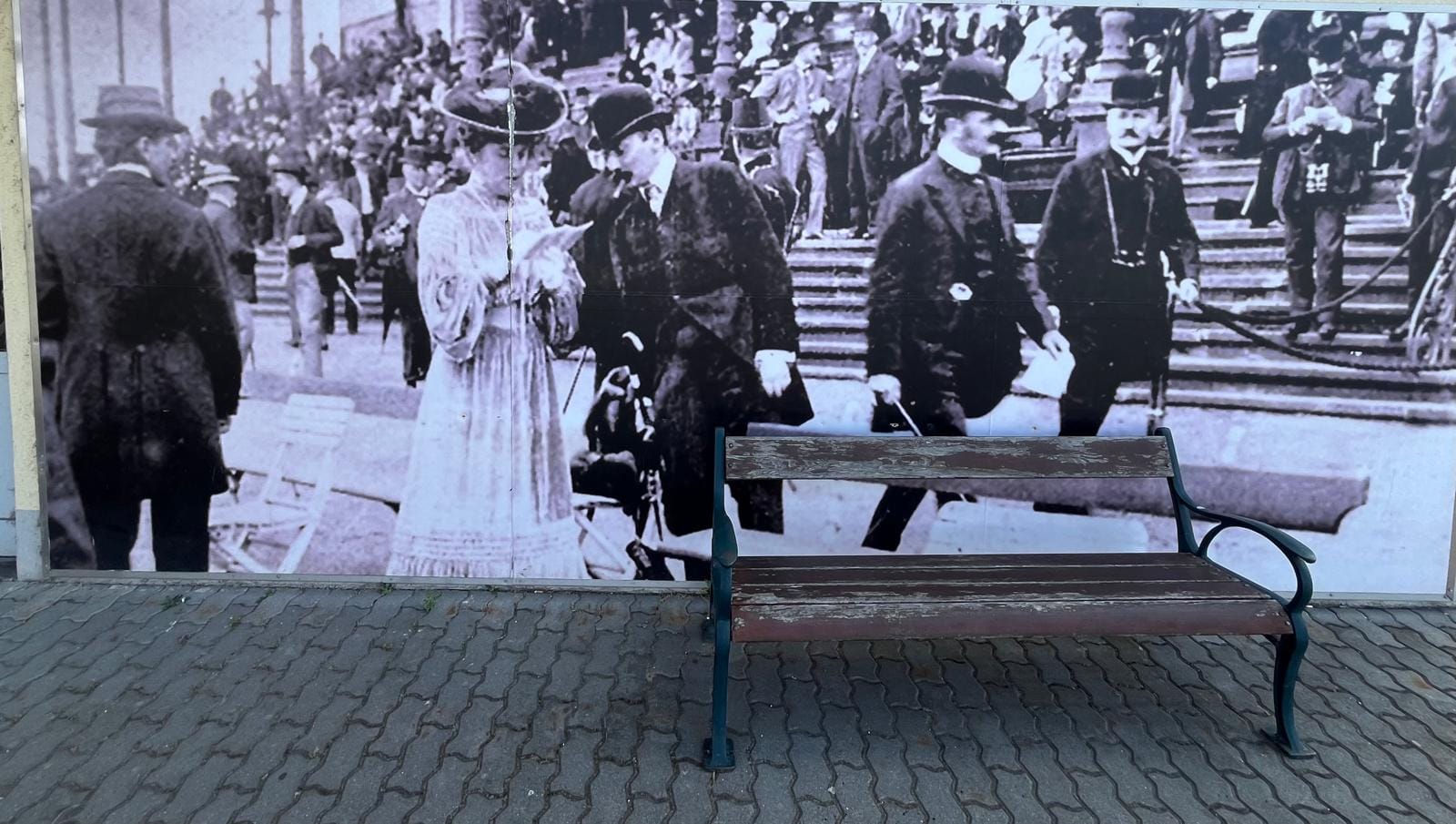
At two, she raced in 10 cities in Hungary, Austria and Germany, attracting ever-increasing crowds. The season began in Berlin and concluded in Prague. In between she raced in Hanover, Hamburg, Doberan, Frankfurt, Baden Baden, Sopron, Budapest and Vienna.
At three, she raced 17 times, capturing the Hungarian Oaks, Thousand Guineas, St Leger and Derby. Two of those wins were walk-overs. Many years later in the US, Man O’ War had a handful of virtual walk-overs, scaring off all-but one rival. Phar Lap, Winx Black Caviar also had wins against scant rivals.
By the start of her four-year-old season Kincsem had won 27 races, most by huge margins. She won nine races in five weeks while her two wins in Vienna in three days and three wins in Budapest in five days echoes Phar Lap’s famous Cup Week of four wins.
Just as Phar Lap’s legend was sealed after being hoisted in a crate and loaded on a ship bound for California, Kincsem’s fame grew when she was aimed up at England, where she won the Goodwood Cup.
At her final race, Kincsem won the Hungarian Oaks for the third time, carrying 28 pounds more than her rivals.

Many champions have quirky side-stories. Kincsem’s constant travelling companion was a cat called Csalogany, who, as legend would have it, disappeared when Kincsem arrived to race in France. The mare apparently “cried and refused to get off the boat until she and her feline friend were reunited.”
In 2017, her legend was centre stage in the most expensive Hungarian film ever made, Kincsem – Bet On Revenge.” Much of it was fictionalised, told as a story of romance, but Csalogany the cat was front and centre, adding a degree of factual credibility to an otherwise quite incredible script.
Kincsem raced on and on, mostly in Eastern Europe. Her margins were becoming less emphatic. On one occasion she dead-heated, then clearly won the run-off.
At four and five she became increasingly fickle. She not only needed her cat, but also special feed shipped from Hungary.
Without it, she refused to eat. Once, her special water from a specific well failed to arrive and she didn’t drink for three days. Her owner had a ritual of attaching bouquets of flowers to her bridle after each win. If the flowers didn’t arrive, Kincsem would sook and refuse to be tended to.
At six the walkovers continued as rivals ran scared. The curtain call was that third Hungarian Autumn Oaks, where she shouldered the grandstand.
The trailer for Kincsem – Bet On Revenge.
Kincsem was unable to produce anything at stud even half as good as herself.
Two daughters were feature race winners. She had two colts, one unraced and moderately successful at stud, one an unraced dud and another suddenly dead at three after showing some promise.
Kincsem features on the damline of some 21st century champions, including Epsom and Irish Derby winner (and leading stallion) Camelot, and English and French Group 1 winner Wonderful Tonight, both as their 19th dam. Australian stakes winner Inverloch is another descendant.
She died in 1887 from a colic attack on her 13th birthday (or the day before pending which source you believe). Many years later, in California, Phar Lap suffered a similar fate.
And the similarities continued after their deaths. Phar Lap’s hide resides at the Melbourne Museum, and is the most popular exhibit, and Kincsem’s skeleton is on display at the Hungarian Agricultural Museum in Budapest.
Phar Lap had Tommy Woodcock and Kincsem had a devoted lad named Frankie, whose surname was unknown, and he became ‘Frankie Kincsem’
A website called Hungarianconservative told an anecdote of Frankie and Kincsem which mirrors the legend of Phar Lap and Woodcock.
“On one bitterly cold night the mare woke up to find Frankie curled up next to her with no blanket. She pulled off her blanket and dropped it on Frankie, and from that night on, refused to have a blanket on at night, always dropping them on Frankie if one was placed upon her.”
Related Articles

Written In The Stars – Sam Hayes on dynasties, succession and forging your own path
Born into one of Australia’s most famous racing families, Sam Hayes had no shortage of career advice growing up, but it was the words of ice hockey legend Wayne Gretzky, plus the inspiration of his late father Peter, which led him to step in his own direction.

Rowe On Monday – Many winners from SA Derby, a Down Under carrot for Bizakov, Tutta La Vita plans on hold and Aussie bookies’ Ascot adventure
In this week’s Rowe On Monday, we delve into the sales background of South Australian Derby winner Wigmore, explain why Nurlan Bizakov’s investment is a good sign, report on a high-profile online auction withdrawal and reveal what’s next in the UK for two prominent bookmakers.

Five questions yet to be answered about a National Tote
Tabcorp is on the brink of realising a generational ambition to create a single national tote across Australia. But two months out from its slated launch, scepticism remains as to what its impact may be and even when it will be rolled out. Bren O’Brien looks at the key unanswered questions.