
Another Saratoga spending spree – Massive top-end investment defies clouds over American industry
A booming US bloodstock market has left Australian agent Will Johnson stunned, with Saratoga’s record-breaking sale highlighting a surge in demand for elite yearlings despite broader uncertainty surrounding American racing.
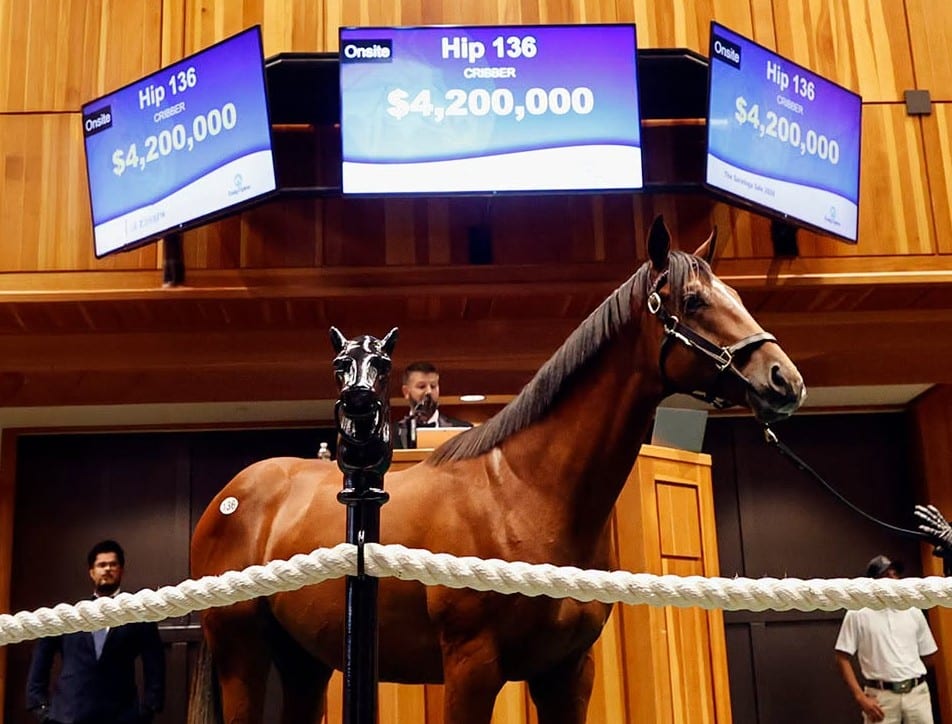
It’s been four years since Australian agent Will Johnson was at Fasig-Tipton’s Saratoga Sale, a unique high-end offering of yearlings to open North America’s bloodstock sales season, and the change in sentiment is unmistakable.
At that 2022 sale, Johnson witnessed MV Magnier outlay US$2.3 million for a Gun Runner colt who would become known as Sierra Leone, a subsequent three-time Grade 1 winner and America’s champion three-year-old colt of 2024.
Coolmore’s Magnier was in the US again this year, buying two colts – a $3 million son of Not This Time and a $1.9 million son of Gun Runner – but it was the depth of the Saratoga buying bench that shocked even the most hardened of global industry observers.
The surge in values of yearlings at the top end of the market, which is typified by the select nature of the Saratoga Sale, even surprised a returning Johnson.
“I have probably noticed a doubling effect in what was making $300,000 is now making $600,000, if not more (compared to two and four years ago),” Johnson told The Straight from the sales complex at the end of a stunning two evenings of selling.
Trade at last year’s Saratoga Sale soared on the back of US President Donald Trump’s One Big Beautiful Bill, which provided an immediate 100 per cent tax write-off on bloodstock, leading to a flurry of investment from high net-worth individuals and entities.
The Netflix series Race For The Crown was also credited with creating heightened interest in US racing.
Despite the ongoing war in the Middle East and inflationary pressures, demand at this year’s Saratoga Sale reached greater heights, with the aggregate of $118.215 million, up $13.37 million on last year’s benchmark.
The extraordinary average of $777,730 and $525,000 median were also up by 24 and 17 per cent respectively.
“I think it’s a flow on from not only the Netflix series, but Donald Trump’s Big Beautiful Bill where they’re buying the yearlings, putting them into training and getting that (immediate) 100 per cent tax deduction, which is unheard of for the rest of the world,” Johnson said.
Whatever buyers’ motivation, the Saratoga results left Fasig-Tipton president Boyd Browning beaming, with the long-time auction house representative describing the two days as the best he’d seen.
“We’ve had some wonderful moments, and some not so wonderful moments, and last night and tonight were simply incredible,” Browning said.
“It shows you what happens when you are able to assemble a magnificent group of horses on the grounds, and that’s really where it starts and really where it finishes.”
Thirty-five yearlings sold for $1 million or more, with the two highest-priced lots bought by The Flying Dutchmen, led by Travis Boersma and his son Payton.
The Flying Dutchmen dipped their toes in the Australian yearling market at the Inglis Easter sale in late March, buying an I Am Invincible-Shoals filly for $750,000.
But the Dutch Bros Coffee founders made a far bigger impression at this week’s Saratoga Sale, taking home 11 yearlings at an average of US$1.966 million.
Their haul included the US$4.2 million sale-topping Intomischief-All American Dream colt, making him a brother to Grade 2 winner Barnes.
Resolute Racing’s John Stewart, who was a major investor in the Australian yearling market in 2025 but was a notable absentee this year, also made his mark with three horses bought at Saratoga.
Starlight Racing’s Jack Wolf is another American thoroughbred investor who has previously been involved in the Newgate Farm-China Horse Club colts fund, but despite some success, elected to focus on his American thoroughbred interests.
As Johnson has experienced first-hand while attending the Saratoga Sale, the time difference between America and Australia is an obstacle that disincentivises some owners from embracing racing in the southern hemisphere.
“I think the difficulty with Australia is our time zone and having been here for the last week, when the races are on in Australia, it’s 2 and 3am,” Johnson said.
“So, if you’ve got a horse running and you’re having to wake up in the middle of the night to watch the race, that’s the challenging part.
“If anything, I’d be saying some Australians should be investing in different aspects of the American market with the idea that horses can ultimately return to Australia for breeding.
“I wouldn’t say it’s the case that there’s any more Americans really wanting to invest in Australia at the moment.”
What’s occurring in the US bloodstock markets could be perceived to be at odds with the disquiet from sections of the American racing industry about its direction.
Chicago’s Hawthorne Racecourse has been sold off, New York’s Aqueduct recently shut the gates for the final time while nine other tracks, including Arlington Park, have closed since 2021.
Another eight American racecourses were listed as under existential pressure in a recent report by the International Federation of Horseracing Authorities.
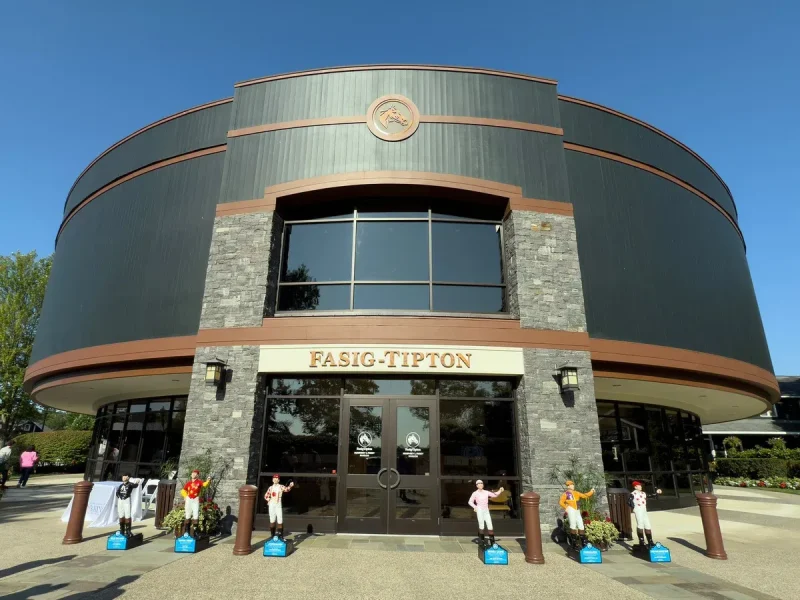
The US foal crop is declining, but demand for elite racehorses has rarely been stronger.
Johnson said it’s not just the tax incentives which have led to increased interest in the sport.
“I think the main difference is there’s 280 million people and there’s only 28 million people in Australia, so you’ve still got a large population to showcase the sport to and they have come a long way in the last five to six years,” the agent said.
“Through HISA (Horseracing Integrity and Safety Authority), with what they’re doing to keep the horses sound, the fatality rate on the tracks has declined significantly and they’re not allowed to use lasix in Group races. A lot has been done to improve the industry.”
He added: “The tracks that are closing are more to do with who owns them and their ability to monetise them as publicly listed companies through landbanking as opposed to Australia where the clubs own it or other members or the racing bodies do.”
Author

Related Articles
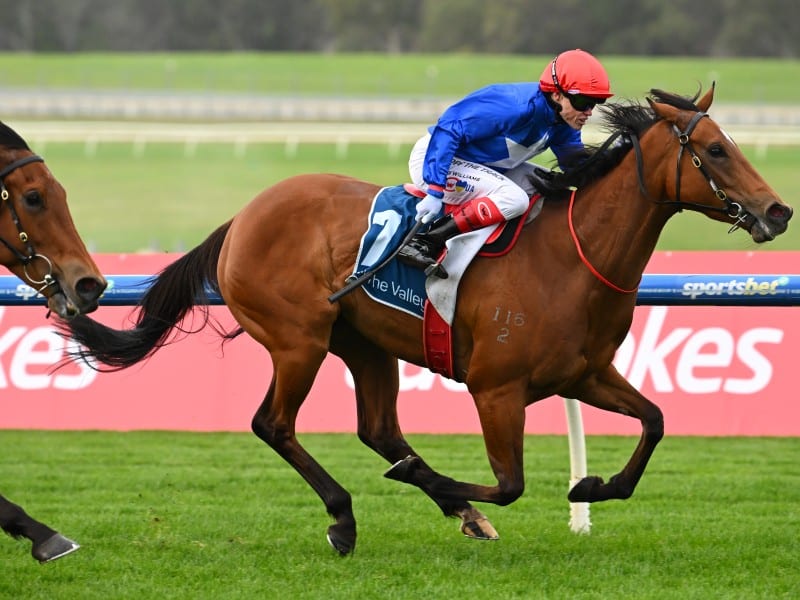
🔒 🔒 Prime selections – the army veteran who turned ‘reconnaissance’ into a racing advantage
Joe O’Neill has spent almost three decades turning careful research and sharp judgement into winners, with Cavalry Girl now offering Prime Thoroughbreds an unexpected shot at a spring Group 1 contest.
Two-year-old racing and the benefit of patience – Louis Le Metayer
Louis Le Metayer of Astute Blodostock looks at the pros and cons of two-year-old racing and the importance of patience.
Run The Numbers – What has become of the American shuttle stallion?
After a major decline in trans-Pacific shuttling of stallions, there are no stallions standing in Australia in 2026 that have shuttled directly from the United States. Fifteen years ago, 23 made the annual trip. Run The Numbers looks at how this trend has evolved.
