
🔒 🔒 Offshore adventures – Five Australian wagering brands that went abroad and how their overseas bets paid off
Centrebet, Tabcorp’s Sun Bets, PointsBet, BlueBet’s ClutchBet and Dabble each took an Australian betting business overseas by a different route. Their outcomes range from a takeover to costly closures, depending on the market they chose, the competition and the capital required.
Many Australian wagering brands have tried their hand in overseas markets, and the record, to put it politely, is mixed.
One business was absorbed in a takeover, two closed, one retreated to a single foreign market, and one of the most recent has just posted its first profit while operating in three countries, but is undergoing its own growing pains.
What separated the outcomes was rarely the product alone. The market each brand chose, the strength of local competition, the cost of getting started and how far each adapted to local betting habits all shaped the results.
Centrebet
Centrebet, founded by Alice Springs bookmaker Terry Lillis in 1992, launched a Danish website in late 1997 and added Norwegian, Swedish and Finnish sites during 1998. By November 1999 it had more than 30,000 customers in over 80 countries.
“We have Scandinavianised that side of our business to a fairly significant degree,” Mike Miller, then Centrebet’s business development manager, told a Senate committee that month. “So the experience for them is close to being as smooth as it would be when dealing with a domestic operator, totally run by people in their country.”
He also explained why Centrebet had steered clear of Britain: “It is also difficult to differentiate ourselves in Britain, being an Australian company.”
A review in FY2009 narrowed Centrebet’s European focus to Norway, Denmark and Greece, which together supplied 26 per cent of revenue in FY2010.
Its 2010 growth plan proposed using European cash flows to fund marketing in Australia.
Sportingbet bought the business in 2011 for $2 cash per security, valuing the equity at about $184 million. The $2 offer represented a 26 per cent premium to Centrebet’s last closing price before the deal was announced.
Sun Bets
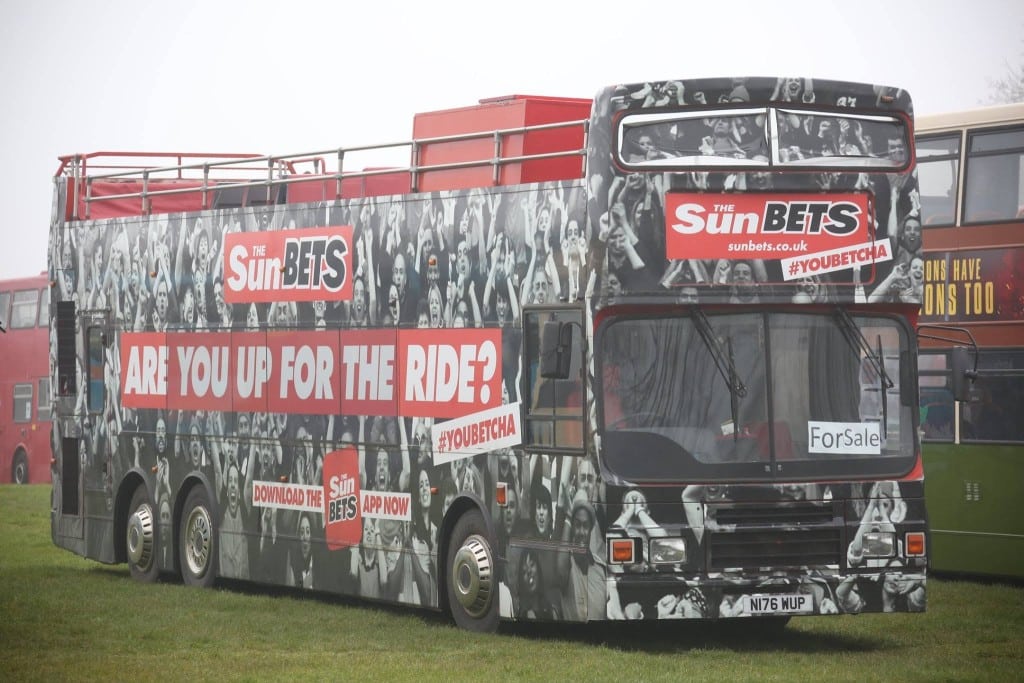
Tabcorp chose a partnership model, announcing Sun Bets with News UK in December 2015 under an initial ten-year agreement. The brand launched in August 2016. It ceased trading on July 19, 2018, having attracted more than 300,000 registered users, but failed to gain traction in the UK market.
In its final year, FY2018, Sun Bets produced statutory revenue of $7.4 million and an earnings before interest and tax (EBIT) loss of $38.2 million. Tabcorp agreed to pay News UK about $71 million (£39.5 million) to leave the agreement and reported a separate after-tax significant item of $90.5 million for the exit.
“While we didn’t get it right, we have taken valuable learnings from the Sun Bets start-up process and operations,” chief executive David Attenborough said.
Then chairman Paula Dwyer defended the decision at that October’s annual general meeting: “Not all these bets will pay off. However, it does not serve the interests of shareholders for Boards and management to do nothing for fear of retribution.”
PointsBet
PointsBet designed its business for the United States from the outset. Co-founder Sam Swanell told Intelligent Investor in 2020 that the Australian market “was very mature, very hard to come in and start from scratch. Whereas, in America, you’re talking about a population that’s 13x the size of Australia.”
The company launched in New Jersey in January 2019 and signed a five-year marketing deal with NBCUniversal worth US$393.1 million, paid partly in equity and options. It aimed to hold a blended 10 per cent share of the states it entered by 2025.
Instead, in 2023 it sold the US business to Fanatics for US$225 million in a strategic retreat.
The company kept its Canadian business, citing a more favourable market with fewer state-by-state complications.
In the six months to September 30, 2026, PointsBet’s Canadian revenue fell 6 per cent to $20.9 million in Australian dollars, although it rose 3 per cent in local currency. PointsBet, now controlled by Japan’s MIXI, still expected to launch in Alberta during 2026.
ClutchBet
BlueBet announced its ClutchBet brand in April 2022, before it had launched anywhere. ClutchBet went live in Iowa that August, added Colorado in April 2023 and was operating in Louisiana by March 2024. The plan was to use these consumer sportsbooks to demonstrate BlueBet’s technology and then sell white-label services to US partners. It signed one such deal, for a proposed Mid-Ohio Sportsbook, which still needed regulatory approval.
BlueBet announced its withdrawal from the US in August 2024, and all three ClutchBet sportsbooks closed on September 16.
“Scale players are currently dominant with smaller operators unable to achieve the necessary unit economics,” the company said.
Its discontinued US operations reported an after-tax loss of $40.9 million in FY2024, including a $27.1 million impairment.
Scale does not guarantee profits in the US either.
In the third quarter of 2026, Flutter’s US adjusted earnings before interest, tax, depreciation and amortisation (EBITDA) fell 94 per cent to US$3 million, on revenue of US$1.455 billion.
Dabble
Dabble, part owned by Tabcorp, has entered each market with a different product. In Australia it has run a licensed sportsbook since July 2021. In the US it operates a daily fantasy app, launched in October 2023. In Britain it runs a licensed consumer betting business from Leeds, holding a remote betting licence active from April 3, 2025.
Its revenue rose 133 per cent to $274.2 million in FY2025, when it made a $16.8 million profit, its first. Then chief executive Tom Rundle told Earnings+More last year: “We want at least 5% of the global betting business.”
Rundle left at the end of October 2026, and co-founders Dave and Jon Robin have taken over the day-to-day running of the business. The international business has become less straightforward, with greater regulation and taxation in Britain and a complex competitive environment in the United States.
The international strategy, however, remains in place.
“We have more belief in the opportunity for Dabble than we have ever had,” Dave Robin told The Straight on news of Rundle’s departure.
Author

Related Articles
🔒 🔒 Flutter sets aside $157.5 million for Sportsbet Fast Code class action
Sportsbet’s parent company Flutter remains confident in its position in the Fast Code class action but has provisioned A$157.5 million towards a potential resolution and confirmed Australian revenue fell 4 per cent in the September quarter.

The Melbourne Cup betting phenomenon – 70,000 bets a minute and $250 million in turnover
The Melbourne Cup remains Australian racing’s unrivalled betting event, generating turnover figures that dwarf every other race and reinforcing its status as the nation’s biggest day for punters.
🔒 🔒 $1 million to win $9.6 million – Hopewell Rock tops Melbourne Cup Call of the Card
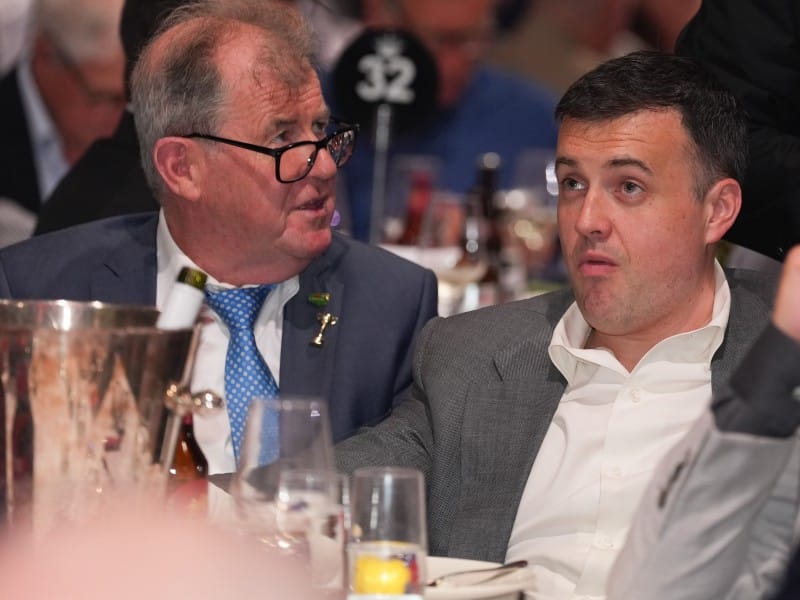
A $1 million wager by JP McManus on the George Boughey-trained Hopewell Rock, laid by Lyndon Cleary, Chris Lester and Swiftbet was the biggest bet at Monday’s Melbourne Cup Call of the Card at Crown.
