
🔒 🔒 ‘Having a healthy sport wagering side is really important for racing’ – Sportsbet’s warning on impact of new reforms
Racing cannot afford to be complacent about sweeping new wagering advertising reforms, with a key executive from Australia’s leading bookmaker warning the industry’s fortunes remain closely tied to the health of the broader sports betting market.
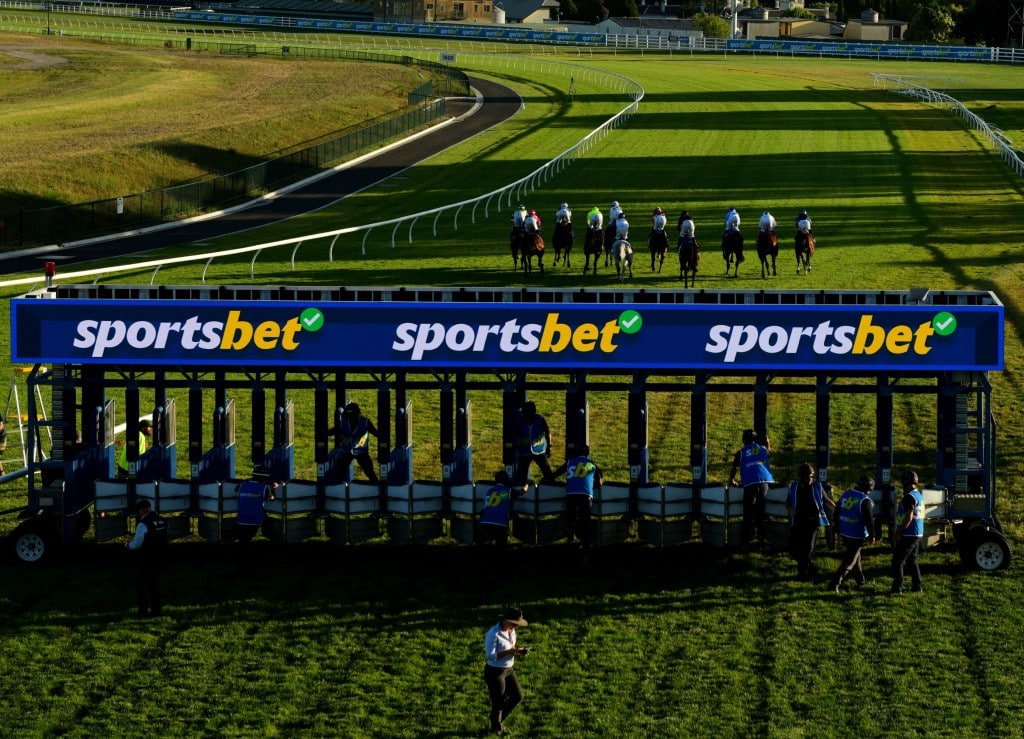
Sportsbet chief commercial officer Nathan Arundell has cautioned that racing could feel the impact of what he called the biggest change to wagering advertising he had seen in 20 years, despite the industry’s carve-out under the federal legislation.
Wagering companies are still working through the implications of the changes, with the Australian Communications and Media Authority offering guidance in recent weeks on how the laws will apply from January 1.
Speaking on the Straight Talk podcast, Arundell said Sportsbet supported the intent of the reforms but was still working through compliance implications.
“We support the intent of the reforms. But, like everything, the devil is in the detail, and we’re working through some of that detail right now, especially with some of the reforms that come in from the 1st of January, because some of the guidance on those are just getting released right now,” he said.
“We want there to be clear rules, consistent compliance with those rules.”
The carve-out afforded to racing publications and racing advertising is not clear-cut. Under the Australian Communications and Media Authority’s guidance, dedicated racing and wagering websites and apps are exempt from the triple-lock requirements, although their social media profiles are not.
Arundell said the change would reach well beyond Sportsbet’s marketing department, also affecting its customer relationship management (CRM) team and its technology team “because of the way things are sent out”.
But he said any effect on racing could take longer to appear, noting that most of Sportsbet’s new customers come through sport.
“Racing’s obviously got a carve-out which is really important and we really hope that that works as it is intended to work to make sure that racing continues to get its carve-out,” he said.
“Having a healthy sport wagering side is really important for racing. So if that was to really drop off, it may take some time but it will eventually flow through to racing.”
Arundell pointed to the introduction of Point Of Consumption Taxes (POCT) as a precedent for how the impact might unfold.
“If you look at the first half of 2019, nothing really changed because people were working out how to adjust to everything,” he said.
“The second half of 2019, there was a real pullback in generosity and the like and therefore wagering turnover really suffered in that second half.”
He said the longer-term impacts of the imposition of POCTs across the various states and territories were harder to track as the pandemic had its own major impact.
About two million of Sportsbet’s 2.5 million customers bet on racing each year.
“Some people see sport wagering as an enemy of racing but they shouldn’t because, from our perspective, from the industry’s perspective, we acquire most of our new customers through sport wagering and because of just the volume of product on racing, they eventually cross over to racing,” he said.
Arundell said the measures against offshore operators, including payment blocking, were crucial to helping protect the regulated market.
“They’re a good thing if they’re policed correctly and they do work. Obviously, if they’re not policed correctly and they don’t work, unfortunately, that’ll probably just accelerate the move offshore,” he said.
In a wide-ranging interview, Arundell, who has worked in the Australian wagering industry since 2007 and joined Sportsbet in 2009 when it acquired International All Sports, gave an insight into how the betting industry has evolved in that time.
He said the key change was the rise in the number of online bookmakers to around 150, from a small number before COVID. Sportsbet’s turnover is now split roughly 50-50 between the two halves of the year because of a constant stream of events, including one-off UFC fixtures.
He has also seen a major change in the corporate wagering industry’s engagement with racing, through sponsorship and partnership deals.
He said corporate bookmakers had become involved in race and club sponsorship mainly in the past 10 years, after a long period when those deals were “tied up by the TAB”.
He also rejected the view that on-course attendance matters little while customers bet from home.
“I actually don’t think that’s sustainable for the long term. You have to get them to the track,” he said. “The corporate bookmakers or the TAB really have the relationship with the customers. So we’re the ones that can help bring them to the racetrack.”

Part of Sportsbet’s evolving commitment around racing is the Every Horse Counts program, which will commit $1 million to equine welfare projects, chosen with the Principal Racing Authorities in each state.
The first allocation, announced at Morphettville last Saturday, gives $100,000 through Thorough Care SA towards proposed retraining arenas at the Gawler and Murray Bridge racecourses, with $50,000 going to each club.
Also this week, Sportsbet announced $70,000 for Thoroughbred Racing NT’s Off The Track program to help about 40 more retired Northern Territory thoroughbreds travel interstate for rehoming or retraining in 2027.
Arundell said Sportsbet was already one of racing’s major funders and that the program was “about going over and above”.
“The social licence of racing really, really depends on making sure the horses are looked after, not just during their racing career but in their post-racing lives as well,” he said.
He said further announcements were expected in the coming weeks and into 2027. He described this year as “a test year” and hoped the program would become an annual commitment.
Reflecting on the spring, Arundell said Sportsbet was probably outperforming the thoroughbred market for the first time in a while and that margins were probably bookmaker-friendly for a lot of the carnival.
“The punters did get away to a flying start, but then the bookies fought back in the second half of the carnival,” he said.
He described the same-day sell-outs at The Everest and the Caulfield Cup as “an amazing result”. Royal Randwick drew a record 52,110 for The Everest.
Attendance among people aged 18 to 24 rose 20 per cent year on year at The Everest meeting. Melbourne Racing Club figures put the rise at 37.8 per cent across the Caulfield Cup Carnival.
The spring result followed a weaker September quarter. Parent company Flutter reported on November 4 that Sportsbet’s organic revenue fell 4 per cent year on year in the three months to September 30, despite a 5 per cent rise in turnover. Flutter attributed the revenue decline to less favourable sports results and a less favourable mix of sports bets.
However, Sportsbet remains the clear market leader in Australia. Sportsbet generated US$1.3 billion (A$1.95 billion) in customer revenue in 2025. Tabcorp reported $1.07 billion in digital domestic wagering revenue and $981.2 million in cash domestic wagering revenue for the year to June 30, 2026.
Author

Related Articles

🔒 🔒 Betr expects little impact from January wagering ad restrictions
Betr reaffirmed its earnings forecast for the 2027 financial year with chairman Matthew Tripp saying the bookmaker expected little impact from federal wagering advertising restrictions starting January 1.
🔒 🔒 Bookmakers overhaul staff incentives ahead of looming commission ban
New laws targeting customer-linked commissions set to be imposed from January 1 are forcing wagering operators to rethink pay and bonus structures for staff and affiliates, with significant earnings impacts expected for some in the industry.

🔒 🔒 Tasracing puts race field fees on the table in bid to lift wagering turnover
Tasracing will offer wagering operators a three-month race field fee rebate tied to growth in Tasmanian thoroughbred turnover during the peak summer carnival period, as the racing body looks to reverse declining wagering revenues.
