
Australian Classics in Asian Pattern Committee’s line of fire, but no firm decisions imminent
The Asian Pattern Committee will hold a virtual meeting with delegates on Thursday, with Australia’s dysfunctional black-type calendar high on the agenda. However, stakeholders hoping for an immediate shake-up may be disappointed, write Tim Rowe and Warwick Barr.
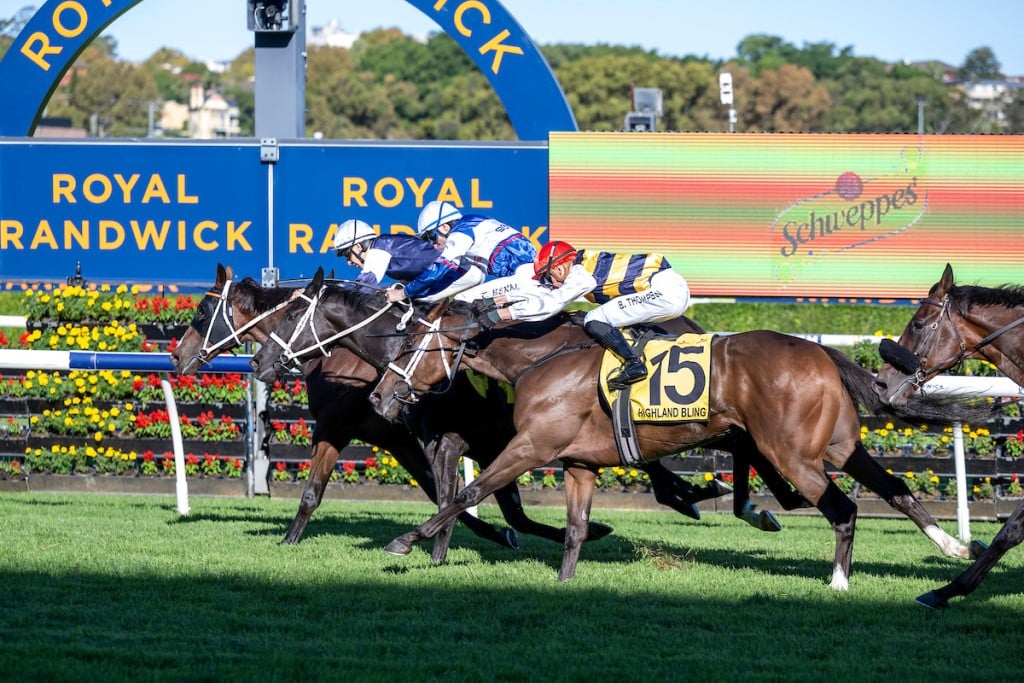
The coveted Group 1 status of Australia’s time-honoured Derbies and Oaks races could come under scrutiny at a crucial Asian Pattern Committee (APC) meeting on Thursday.
But whether the country’s long-held three-year-old Classic races designated for staying horses face downgrading is unlikely to be determined by APC delegates when they meet during a video conference call.
How Australia’s problematic black-type calendar can be reshaped will be central to discussions, but the reformation of the APC’s largest jurisdiction’s stakes race calendar is set to take longer to resolve than the time available at this week’s meeting, The Straight believes.
Racing Australia was sensationally stripped of its right to control what races deserve Listed or Group status after almost a decade-long political stalemate forced international intervention late last year, leading to the overarching Asian Racing Federation (ARF) taking charge.
Of all the Australian Group 1s, it won’t come as a surprise that races that have been historically tagged as Classics are under the most pressure.
In the most recent example, The Straight understands the Queensland Derby has emerged as the latest race to be placed under scrutiny as part of the wider review of the Australian black-type calendar.
It is believed that the race has been placed under formal evaluation because it has consistently failed to meet benchmark performance standards.
As it stands, the process means there is no immediate threat to the race’s Group 1 status.
But it does put the race on notice while providing administrators with some breathing space to improve the ratings performance before any final determination is made.
The Queensland Derby is far from an isolated case.
In a letter sent by the ARF to Racing Australia last October, it said the Sydney Cup and The Metropolitan, Sydney’s autumn and spring Group 1 staying features, as well as Perth’s signature Group 1 Railway Stakes should all be downgraded.
The Group 2 Adelaide Cup, Victoria’s Herbert Power, the WATC Derby and Tasmania’s Group 3 Launceston Cup were also put on notice for downgrades.
Several other races of similar stature, whose ratings have fallen below the accepted level, have also landed on the pattern committee’s radar as it assesses their relevance in the Group 1 landscape.
Unlike lower-grade races assessed almost exclusively on ratings, the Queensland Derby benefits from its historical significance.
As one of Australia’s traditional Group 1 Classics, it has a heritage and importance to the racing calendar that will form part of any future deliberations.
Despite those challenges, there is a strong case to be made that Derby and Oaks races continue to hold considerable commercial appeal.
They remain marquee events that administrators are adamant still resonate with punters, international wagering partners and racing jurisdictions, ensuring they retain significance beyond their official ratings.
Rob Rorrison, Racing Australia’s chair, will represent his country’s interests at Thursday’s APC virtually conducted meeting presided over by the organisation’s chair, the Japan Racing Association’s Takahiro Uno.
Bruce Sherwin, who is New Zealand’s representative, is also expected to dial in to the meeting alongside delegates from Hong Kong, South Africa and the Emirates Racing Authority.
In the APC committee members’ hands are the Black Type Advisory Group’s recommendations for the upgrading, downgrading and awarding of Listed or Group status to Australian races.
There is, however, nothing stipulating that the APC has to follow any or all of the recommendations, whatever they may be.
Formed earlier this year to circumvent the warring factions of Racing Australia, BTAG’s seven inaugural members signed non-disclosure agreements preventing them from publicly discussing their road map for the overhaul of Australia’s Pattern races.
For that reason, it is unknown whether BTAG advocated for the grading protection of some of Australia’s historical races, such as the Derbies and the Oaks.
Another issue working against a race like the Queensland Derby and its South Australian equivalent is their position towards the end of the Australian racing season.
There is a belief the current ratings methodology does not adequately reward horses that subsequently enhance the quality of that form through performances later in their careers. There is also the fact that some of the best-performing horses from these races end up in Hong Kong, where there are fewer stakes races to validate their ratings.
In seeking clarification about the process, the Asian Racing Federation has previously told The Straight that its policy is not to comment to the media.
“As such, no comment will be provided by the ARF or the APC on the Australian pattern matter,” the ARF wrote in an email sent in May.
The international body’s takeover of the management of Australia’s black type calendar is intended to be on a temporary basis until a functioning local pattern system is in place.
Late last year, in response to the ARF entering Australia’s Pattern conflict, Rorrison suggested that the international committee’s intervention could lead to a six per cent jump in the number of stakes races run in Australia each season.
In the 2024/25 racing season, Australia conducted 623 stakes races, including 76 Group 1s.
Authors

Related Articles
🔒 🔒 Perth Racing flags profitability challenge despite gains
Perth Racing has reduced its annual loss but remains under pressure to turn stronger revenue, increased activity and major investment into sustainable returns as the WA racing industry awaits the findings of an independent funding and sustainability review.
New Zealand equine safety initiative targets earlier injury-risk detection
The New Zealand Equine Safety Initiative will combine development, training and veterinary records with movement data and blood research, aiming to give breeders, trainers and veterinarians earlier warnings of injury risk.
‘He had a good blow’ – Ka Ying Rising on song for second Everest
There were fewer dramas with Ka Ying Rising after a Randwick barrier trial on Tuesday than there was a year ago, leaving trainer David Hayes and jockey Zac Purton happy their star sprinter is on track for his second shot at The Everest.
