
Beyond the Slipper: Bott extends the Tulloch Lodge vision
The deal to move into Leilani Lodge represents more than just an expanded footprint for Adrian Bott as he spearheads a strategic pivot away from two-year-old racing, designed to keep his training partnership with Gai Waterhouse at the forefront of Australia’s training ranks.
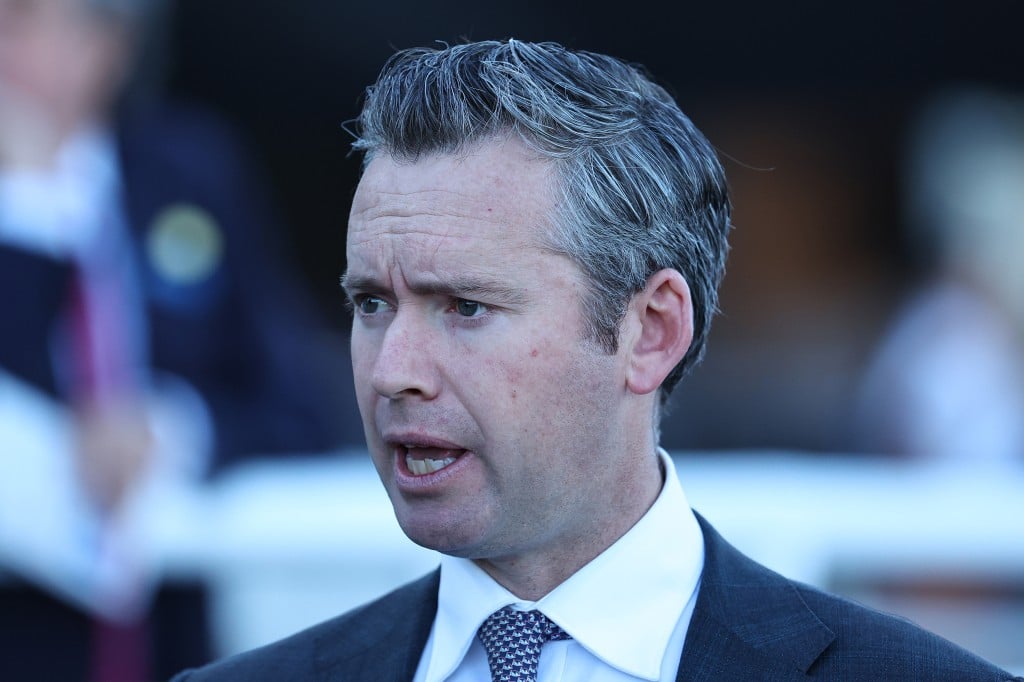
Re-imagining the future of an 85-year-old racing operation was never going to be an easy task for Adrian Bott, but a decade after he joined Gai Waterhouse, he is surging forward with a new strategy for one of Australia’s most revered and successful racing stables.
History seeps from the walls of Tulloch Lodge, and Adrian Bott is very much aware of those ghosts of past success. Making your own stamp on a stable which has been part of the Sydney racing fabric since 1941, a place of a famous 33 trainers’ premierships and which has seen close to 500 Group 1 winners pass through the doors, is no easy task.
But generational re-invention has been a key part of that history as well. When TJ Smith handed over to his enthusiastic and determined daughter in 1992, she was a similar age to what Bott is now. It set the scene for her emergence as arguably racing’s most prominent and successful participant of the past 30 years.
Bott lacks the genetic showmanship of TJ and Gai, but is a man suited to his own era of trainers in the guise of businessmen, scaling operations of size, optimised towards prize money returns and owner retention.
Chris Waller has changed what it means to be a horse trainer in Australia. Ciaron Maher has followed suit. Big race success is good for marketing, but it is the process which matters in the ‘factory’ era, where an army of workers support an army of horses.
Waterhouse-Bott has maintained its profile and success over the past decade by focusing on what it has historically done best.
It has leveraged the profile of Gai, and the burgeoning reputation of Adrian, to sustain connections with the powerhouses of Australian racing and their better horses, while pursuing a two-year-old-led strategy.
The Golden Slipper wins of Farnan in 2020 and Lady Of Camelot in 2024 speak to that focus. But, while leaning on the history of juvenile success of the past, Bott has been considering what is best for the future.
“You want to be able to offer a wide variety of horses to owners that can be competitive in various types of races,” Bott told The Straight when asked about the danger of being cast as a stable which is only focused on two-year-old successes.
“People have different dreams and aspirations of races they want to win and you want to be able to cater to everyone.”
“As a trainer, you want to be able to be training Classic winners and Cup winners along with Slipper winners.”
Inter-generational training partnerships are designed to combine the experience and success of the past with the vision and drive of the future. That has certainly been the case with Waterhouse and Bott.
But the past few years have clearly seen Bott in the drivers’ seat of the operation and given the opportunity to pursue his own plans, while leaning on the advice of the ever-energetic Waterhouse.
Gai’s name is still firmly on the door and her input remains in all the key decisions, but it is Bott with his hands on the wheel. It was with that in mind that the conversation has evolved to how the training partnership might adapt for current and future realities.
“That’s always just a natural conversation that you review, that you take each year, and maybe the landscape around us has changed and evolved and we’ve got to try and move with it as well,” Bott said.
Analysis told Bott that the Sydney racing landscape had evolved and that focussing heavily on two-year-olds was limiting, given race programming.
But there was also an instinct that when it came to Australia’s biggest racedays. There was too much spectating and not enough participation.
“You certainly don’t want to be going to those big race days and sitting on the sideline and watching those big races go by and the thought process isn’t even there to be in contention,” he said.
“It’s always a hard spot to be sitting there.”
This season, the stable only had 22 Group 1 runners, less than half of the 47 of 2024/25. Recent analysis from The Straight’s Run The Numbers showed that 2025/26 is the season with the lowest number of starters Waterhouse and Bott have had since 2020/21 and the fewest winners since 2018/19.
A large part of that drop has been a reduction in the number of two-year-olds the stable has raced.
It was a decline Bott deliberately pursued and the strategic reset began last year as he, Waterhouse and their bloodstock team changed the horses they were picking out of the yearling sales.
“We’re here and we want to be competitive at the top level on all aspects of it. You’ve got to try and put strategies in order to do that,” he said.
Twelve months ago, aware of the need for Tulloch Lodge to continue to evolve in an era where the stables around them were only getting larger, Bott made a concerted bid to secure Leilani Lodge at Randwick as a key base.
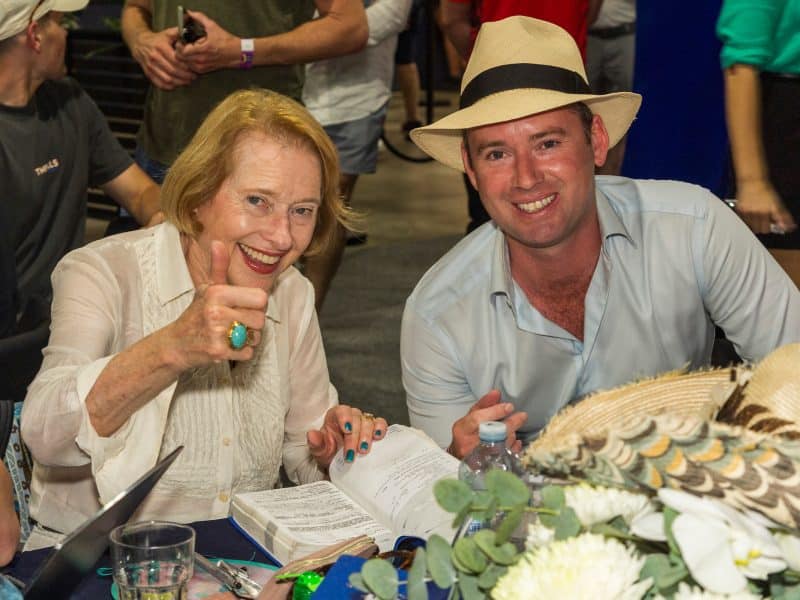
Located only 800m from Tulloch Lodge, but on the racetrack side of Doncaster Avenue, the former home base of Bart and Anthony Cummings was seen as a crucial next step in Bott’s vision.
Frustratingly for the ambitious trainer, the Australian Turf Club opted to give access instead to Maher. Even more frustratingly, Bott watched on as works were done to modernise Leilani Lodge but Maher never moved in.
As time wore on, and with Maher linked to a move to Godolphin’s former racing stables at Crown Lodge near Warwick Farm, Bott began to suspect that his ambition for Leilani Lodge, while delayed, was not necessarily denied.
The opportunities the extra stables presented were more than just about size. It was also about logistical practicality. Last week, the pieces fell into place and Waterhouse and Bott secured a second facility in one of the world’s most prized racing precincts.
“Randwick’s one of the best training facilities in the country,” Bott said.
“I feel we’ve got one of the best facilities within that complex, so it’s significant for the stable, and what we can offer for everyone going forward.”
The impact for Bott and Waterhouse ahead of the new racing season is expected to be immediate.
“It’s remained vacant for the last 12 months while works were carried out to an extent, so there’s a fair bit that’s already been done over that 12-month period, so we’re in a good position there in that regard,” he said.
“It gives you certainly a lot of security and, as a showpiece, to be able to continue to build and centre yourself around.”
There is a symbolic value of a stable not willing to just sit where it has for 85 years but step up its ambition to compete every day with not only the biggest, but emerging stables, such as Bjorn Baker, Michael Freedman and Annabel and Rob Archibald.
“We try not to pigeonhole ourselves too much with the yearling selection, so it might have been a bit quieter on the two-year-old front this year, but I’d like to think that can then set us up for some better years going forward with some horses to hit the track that are a bit more later-maturing.” – Adrian Bott
Sydney is one of the most competitive racing jurisdictions in the world and there is no time to sit back and just watch while others grow and develop.
“That aspect doesn’t necessarily come down to stabling, but definitely strategy change within the business,” Bott said.
“Obviously, there’s been a bit of a transition there.
“We try not to pigeonhole ourselves too much with the yearling selection, so it might have been a bit quieter on the two-year-old front this year, but I’d like to think that can then set us up for some better years going forward with some horses to hit the track that are a bit more later-maturing.”
“We can see that through their three-and four-year-old careers, and then that’s where we’ll see the numbers and the starters.”
Bott’s greatest fear among all the competition is that Tulloch Lodge becomes no longer relevant.
“Ultimately, you need those types of horses and run that type of operation to be staying relevant and staying competitive with the other trainers that have got significant numbers and starters and winners.”
“It’s hard to do that just operating as a two-year-old stable.”
Exactly 33 years separates Bott and his famous training partner. It’s a generational divide which could prove insurmountable, especially given he is so focused on building the next Tulloch Lodge empire, while Waterhouse could easily lean back on past glories and enjoy semi-retirement.
But the pair share more than just a birthday. There is a ambition to plan and build for the future.
“Nothing happens overnight. Everything needs to be big-picture, long-term strategies,” Bott said.
Author

Related Articles
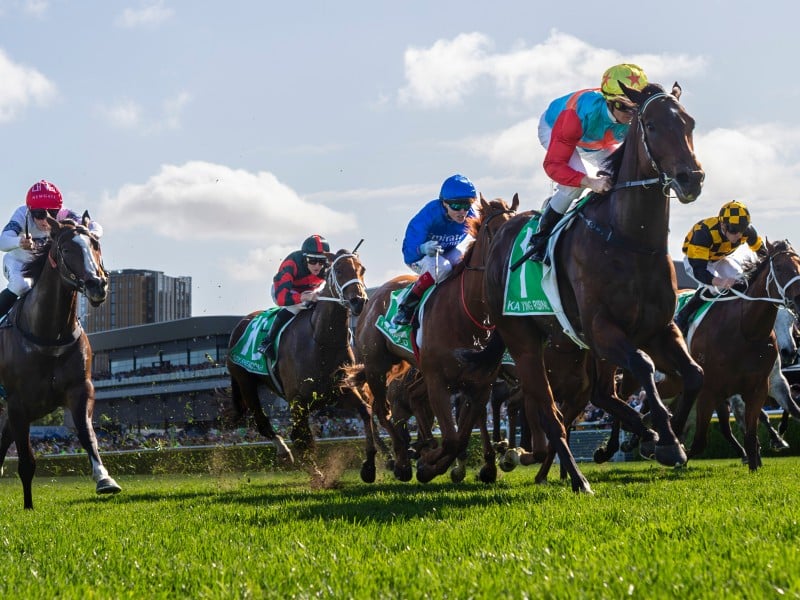
🔒 🔒 The Everest’s new summit – Can the slot model sustain its next phase?
As The Everest approaches its 10th edition, even the most ardent critics of Racing NSW could not deny the success of a one-time “pop-up’ race that has become the Group 1 centrepiece of racing in NSW. But how does the race evolve into its second decade, and will the slot format sustain that industry engagement?
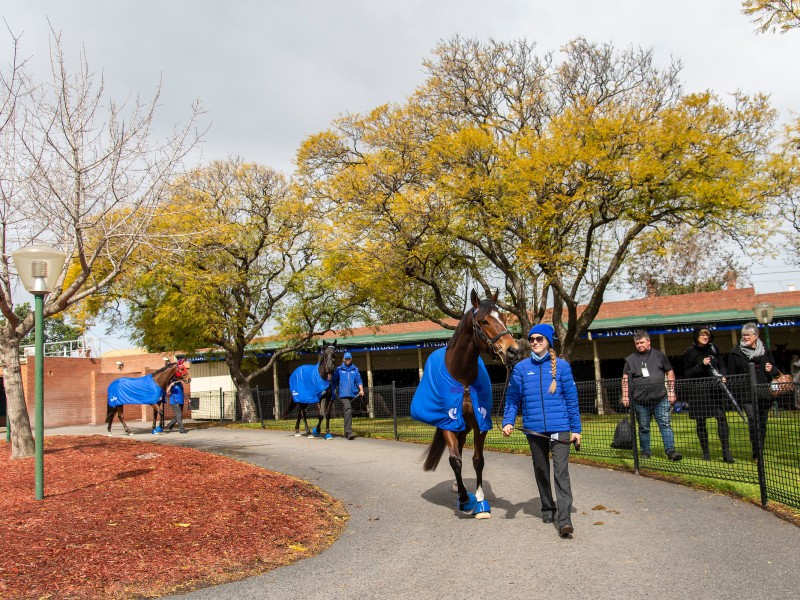
The scope and size of employment in Australia’s thoroughbred industry
Australia’s thoroughbred industry carries considerable political and social weight, contributing not just as a sporting pastime but as a fully fledged industry. But exactly how big is it, and exactly how many people does it employ? We have pulled together the latest national estimates and state-by-state figures.
🔒 🔒 Perth Racing flags profitability challenge despite gains
Perth Racing has reduced its annual loss but remains under pressure to turn stronger revenue, increased activity and major investment into sustainable returns as the WA racing industry awaits the findings of an independent funding and sustainability review.
