
🔒 🔒 Bye bye, Benny? New gambling laws likely to see social media influencer Scarf head overseas
Forced into a likely move overseas by the latest changes to gambling laws, social media influencer Ben Scarf doesn’t want sympathy. But he does hold concerns about how the landmark shift will impact the Australian wagering industry.
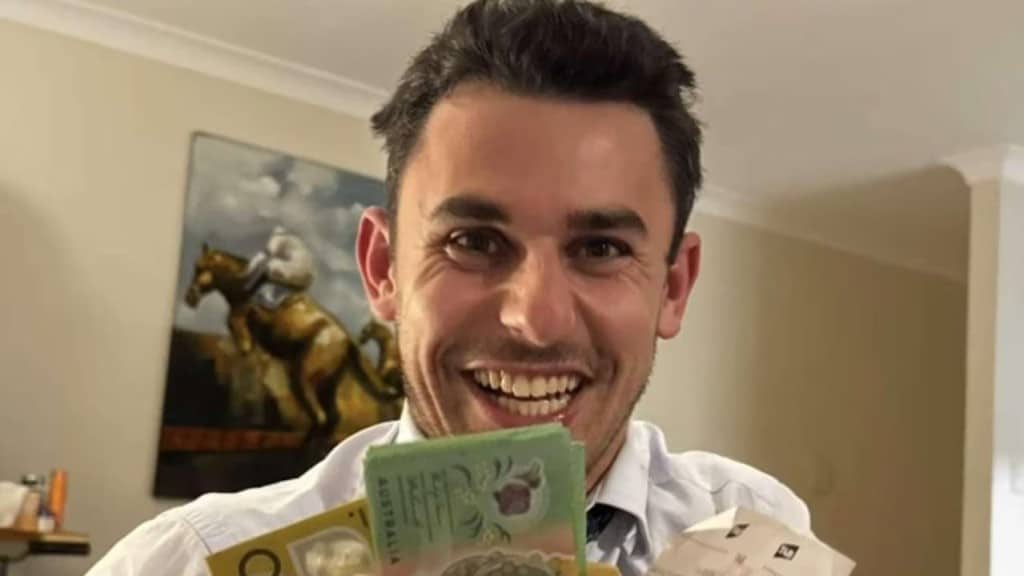
Ben Scarf, the prolific social media influencer whose gambling exploits have created him one of the largest followings in Australian racing, is strongly considering a move overseas after recent changes to promotion laws by the federal government.
Under the crackdown, part of the biggest-ever change to Australian gambling laws, “notable” persons will be banned from promoting any gambling or related content via social media.
The term “notable” is a catch-all to ban former or current sporting figures, celebrities, influencers or other prominent people from directly promoting wagering products. While there is a carve-out for racing content, it only applies to specific online racing channels.
Scarf hasn’t yet been told he is a “notable” person, but it is arguable that in Australian gambling circles, no one is more notable.
He has 222,000 followers on an Instagram account where he details his trials, triumphs and tribulations, in all its theatrical glory. The account is blocked to anybody under 18.
He has monetised this largely through affiliate deals with bookmakers, a business model that has its fair share of critics but, to date, is perfectly legal.
Scarf’s presentation style, to put it mildly, is brash and often crass. He divides people. But he has also engaged an audience the entire racing and wagering industry has been desperate to reach: the 18 to 25 set.
He might not be everyone’s cup of tea, but, conversely, anyone who is drinking a cup of tea is not Scarf’s target audience.
But he now finds himself what he laughs off as effectively “being deported”. His business is no longer welcome in Australia, a decision which he sees as highly hypocritical.
The Straight caught up with Scarf at this week’s Backing The Punt wagering conference in Melbourne. At 25, he stands out in a crowd largely of middle-aged men in suits.
With changes likely to take effect from January 1, he has four months to work out what’s next.
“It will probably depend on if I can find a loophole. A legal one, of course,” he said.
“Look, there’s a chance I can run my own bookmaker as well. I actually find it hard to believe that you can ban founder-led content.
“If not, I’m more than happy to move overseas. I think the government’s gone about this the completely wrong way.”
Scarf, in person, is a toned-down version of the extreme caricature which has built such a following. There are flashes of his trademark grin and the cockiness and confidence which have become his trademark. But there is also a sense that he is just another young guy trying to work out what is next.
There is also a strong sense of injustice, in that he has become an unwitting target of legislation which, he rightly says, was driven by the desire to stop kids being exposed to gambling advertising. If that was its plan, then Scarf says it has failed.
“I think they’ve gone way too soft on TV ads where children are exposed to it. That’s what they’ve been trying to clamp down on. Yet someone like me whose content is only accessible to over-18s is completely banned from working in Australia. So how does that work?” he said.
“I’m well known purely for gambling. I have nothing to do with the correlation between sport and gambling. I have absolutely no exposure to children, which yet, despite all this, there’s still ads on TV, which is just blatant hypocrisy from the government.
“I’ll happily take my tax dollars elsewhere. The amount I’ve paid, whether it’s point of consumption, company, everything, I’m happy to go elsewhere, whether it’s to Malta to work in casinos. It’s probably where the future’s heading.”
It would be easy to mistake Scarf’s unsubtle approach to gambling promotion as unsophisticated. But his ascent to prominence has been well planned. He is no accidental influencer.
But he sees no future for his craft in Australia and thinks that the latest law changes signal tough times for the Australian wagering game.
“It’s very hard to not be pessimistic about the future of wagering at this stage. I feel like Steve Carell in The Big Short, just pretty much acting like a doomsday device,” he said.
“But what choice have they led me? My whole entire career is built on gambling, and now I’ve been told I can’t work in gambling in the one country I’ve lived in for 25 years. So I’ll happily leave and go elsewhere.”
The Steve Carell line refers to the character of Mark Baum, who predicts the downfall of the American housing market ahead of the global financial crisis in the late 2000s.
It is interesting that Scarf makes this comparison, given his influencer persona probably owes more to Wall Street than to the betting rings of Randwick or Flemington.
Scarf’s behaviour hasn’t been without scrutiny as he has built an enviable following over the past two to three years. Regulators have investigated and cleared him, then introduced laws, which, within reason, he feels have been targeted at him.
“Two-and-a-half years and I’ve had no fine. So, there’s always people trying to dob on me and trying to get me for whatever,” he said.
“I’ve had a few investigations but passed everything. I’m here to make a living.”
If Scarf is a casualty of the federal government changes, then he will struggle to garner much sympathy from the Australian Communications and Media Authority, which will be empowered to enforce the laws.
“There’s no way I don’t come under that category,” Scarf admitted.
“So whilst it’s not officially confirmed, I’m gone. I’m not going to start setting anything in stone. Right now, I’m discussing contingencies, whether it’s Malta, the US, a few others. I’ve got four months to think about it. So I’m not worried.
“I’m excited. Like, whilst it’s nervous and it’s scary, I’m excited.”
Scarf does come across as a fish out of water among the wagering and racing executives at the two-day conference. But he does see somewhat of a future version of himself among the sharp suits and corporate conversations.

One of the panel guests at the conference is Tom Waterhouse, who at one point around 2013 became a divisive figure due to his ubiquitous presence as bookmaker of choice across sporting broadcasts and the like.
Waterhouse utilised the laws of the time to promote his business and wore the consequences of public opinion. The circumstances between Scarf and Waterhouse were different, but there are similarities across two generations in how a young, brash upstart sought to disrupt how things were done.
“I think back to when I was a lot younger. I was 10 years old,” Scarf said.
“And Tom Waterhouse wore all this stuff. There were sites called IhateTomWaterhouse.com and now he’s worth well over $100 million.
“If you’re not willing to accept criticism, this game is not for you. And you’re very unlikely to make any real coin unless you’re willing to accept shit like this.”
Like the challenge Scarf is now facing, Waterhouse had to pivot his business and now finds himself in charge of a successful wagering venture capital company.
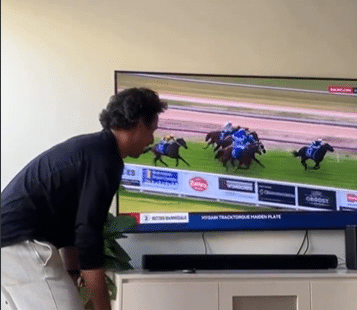
Both young men have a driving ambition, although Scarf admits he has no long-term plan for how he will conquer the gambling world.
“You can’t think that far into the future with any sort of business, with life, especially in gambling with such changing environments. People say to me, what’s your five, ten-year plan? I have no idea,” he said.
“You’ve got to take every day as it comes. If you’re going to start planning five years into the future, I guarantee you it won’t go as planned.”
If not having to have a plan is an asset of being in your mid-20s, and having, in the words of his X account, “conquered a $1 billion industry in four weeks”, then Scarf is happy to keep playing those cards.
He knows there is a time where he will be expected to “grow up” and evolve beyond the character he has been known for.
The next chapter, and a likely move overseas, looms, and he has no regrets.
“All I have done and am doing is, I’m selling gambling. I’m selling emotion,” he said.
“Like, what about it is problematic? All I’ve done is prove that gambling can be fun and there are ups and downs.
“If I was doing what I do, but I only show the wins, then of course, but there’s no creator like me who also shows losses. So, if anything, all I’ve done is prove that you can’t win gambling.”
Scarf’s social media antics may be dramatised, but they aren’t glorified. He rides an extreme roller coaster and people watch for entertainment. He is banking on that having the same appeal across the world as it has in Australia.
Author

Related Articles

Tabcorp fined $350,000 after failures allowed unauthorised withdrawals
Victoria’s gambling regulator fined Tabcorp $350,000 for failing to put extra login checks in place for all betting customers after some accounts were accessed without permission and money was withdrawn with affected customers repaid by their banks or Tabcorp.

ACMA probe exposes more than 300 bets in Palmerbet self-exclusion failure
A compliance failure left a Palmerbet customer able to wager for months after entering BetStop, prompting an ACMA investigation.
Responsible Wagering Australia backs national match-fixing laws but seeks clearer boundaries
The wagering industry body supports tougher national integrity offences, while calling for guidance on legitimate sporting decisions, trading activity and overseas competitions.
