
🔒 🔒 Field calls for American-inspired broodmare write-downs as Keeneland November completes third session
Newgate Farm managing director Henry Field has called for faster Australian broodmare write-downs, arguing that US tax incentives are helping drive a thriving market as Keeneland’s November sale reaches US$173.9 million (A$248 million) after three sessions.
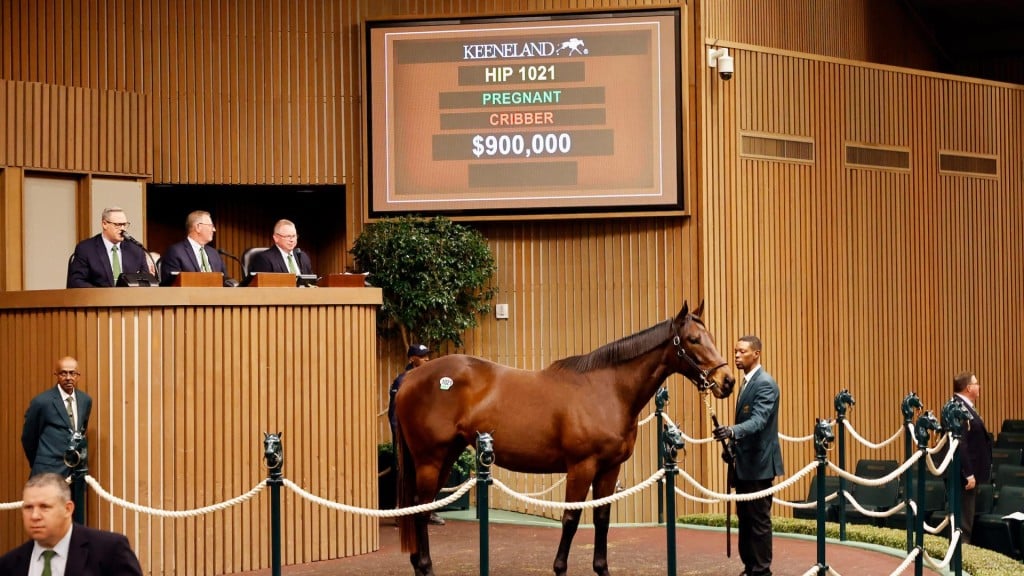
As the major week of American broodmare sales nears its end, Newgate Farm managing director Henry Field has delivered a glowing assessment of the North American market.
Field has been in Kentucky this week and credits the strength of the American market to a tax rule that allows buyers to write off a mare in full on the day they buy. He wants Australia to move closer to that model.
“The fact that all these guys in the USA can depreciate mares 100 per cent straight away is so important to the strength of this USA market,” Field told The Straight from Kentucky.
Field had earlier taken to Newgate’s social media platforms to discuss the strength of the American market.
“The market is strong. There is participation from all over America and the world,” he said.
“I look at the broodmare market here and I say to myself, this is thriving, whereas the breeding and broodmare market in Australia, much tougher,” he said.
“I feel the market in Australia is in a decline, the market in North America, it’s increasing, it’s powerful, it’s strong, it’s only getting stronger.”
He said he had asked key operators to explain the difference, and nearly all gave the same answer:
“The fact that they can depreciate a mare 100 per cent the day they buy her due to the North American tax rules.”
The One Big Beautiful Bill Act, signed into law on July 4, 2025, made a 100 per cent bonus depreciation allowance permanent for eligible property purchased after January 19, 2025.
Equine accounting firm Dean Dorton has said most horses fall within that qualifying property, and the bonus rate scheduled for 2025 had previously been 40 per cent.
In Australia, the Australian Taxation Office’s horse-industry ruling allows purchased female breeding stock to be written down annually under a special valuation option, with the value reaching $1 by the end of the year in which the mare turns 12. The write-off is capped at 33⅓ per cent of cost in any one year. Across the Tasman, mares aged eight or older when first used for breeding are written off in full in a single year.
“If you’re running a profitable horse business in North America, you are totally incentivised to reinvest all your profits to buy more mares, buy more breeding stock, build your business, employ more people, and allow the industry to thrive,” Field said.
“Whereas in Australia, the fact that you can’t depreciate a mare until the age of 12 makes it a lot tougher. Even in New Zealand, you can depreciate a mare at the age of eight.”
“So what we need to try and do in Australia is bring the age of mare depreciation to eight, six, or four. Four would be ideal,” he said. “I truly believe if we do that, it’ll be the shot in the arm, the invigoration that our breeding industry needs to really grow, thrive, and prosper.”
Newgate has bought one filly at Keeneland this week, Sporting Lady, a four-year-old daughter of Munnings out of the Uncle Mo mare Securely, purchased for US$180,000 (A$256,630) from the Bluewater Sales consignment.
She was catalogued as a racing or broodmare prospect. Sporting Lady has won twice and earned US$250,950 (A$357,784), with a third placing in this year’s Nelson J. Menard Memorial Stakes, and is a half-sister to stakes winners Hold Tight and Secured Freedom.
“She’s a very fast-looking American mare by a top USA sire in Munnings. We will try and breed her Southern Hemisphere time to Not This Time before flying her home,” Field told The Straight.
The Keeneland November Breeding Stock Sale’s cumulative figures support Field’s read of the top of the market.
By the end of three of nine sessions, 563 horses had sold through the ring, bringing US$173,947,000 (A$248 million), up 5.98 per cent on the corresponding stage last year.
The US$308,964 (A$440,496) average was 12.20 per cent higher, and the US$190,000 (A$270,887) median held steady.
This year, 24 horses have brought US$1 million (A$1.426 million) or more, versus 18 in 2025, with much of that strength coming from the opening session, where Ace Stud bought three mares.
Thursday’s session, which closed Book 2, was more selective. It sold 201 horses for US$38,483,000 (A$54.866 million), down 12.59 per cent on the corresponding session.
At US$191,458 (A$272,966), the average was 3.93 per cent higher; the US$150,000 (A$213,858) median was 6.25 per cent lower. The buy-back rate climbed to 31.86 per cent from 24.37 per cent a year earlier, following a softer second session on Wednesday.
Mike Repole’s Repole Stable topped the day at US$900,000 (A$1.283 million) for Royal Slipper. The five-year-old Uncle Mo mare is a full sister to Grade 1 winner Bast and is carrying a member of the first crop by Repole’s homebred champion Fierceness.
Keeneland vice president of sales Tony Lacy said buyers had found it difficult to secure the horses they were following.
“On the flip side with the sellers, when you had something that hit the mark, it was great. If you didn’t, selling was tougher. But the day felt more energized,” he said. “Japanese buyers are still active, buying what they feel is necessary for their needs.”
Book 3 begins on Friday, and the sale runs until November 11.
Author

Related Articles
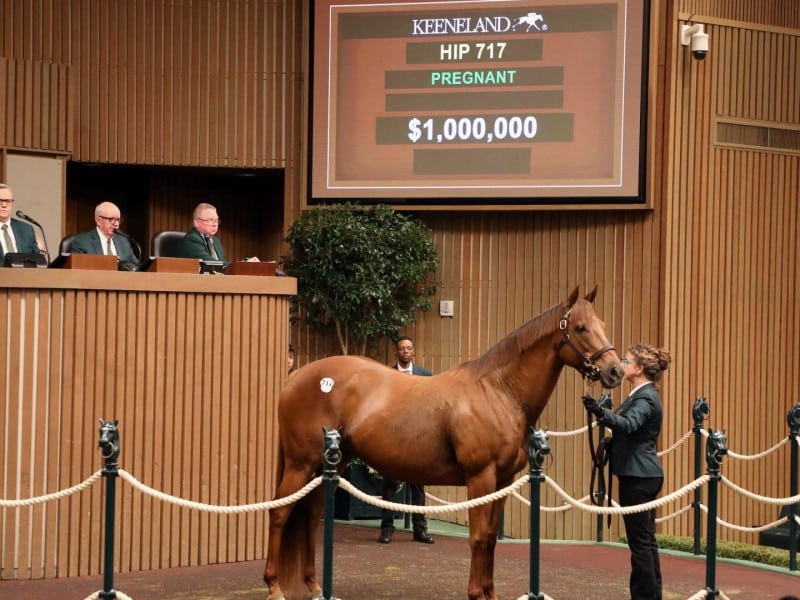
Flightline mare Zee Drop tops second Keeneland November session at US$1 million
Al Ruwais Stables paid US$1 million for Zee Drop, a mare in foal to Flightline, on day two of the Keeneland November Breeding Stock Sale. Session turnover fell 16.5 per cent on 2025, but cumulative gross remains almost 13 per cent ahead.
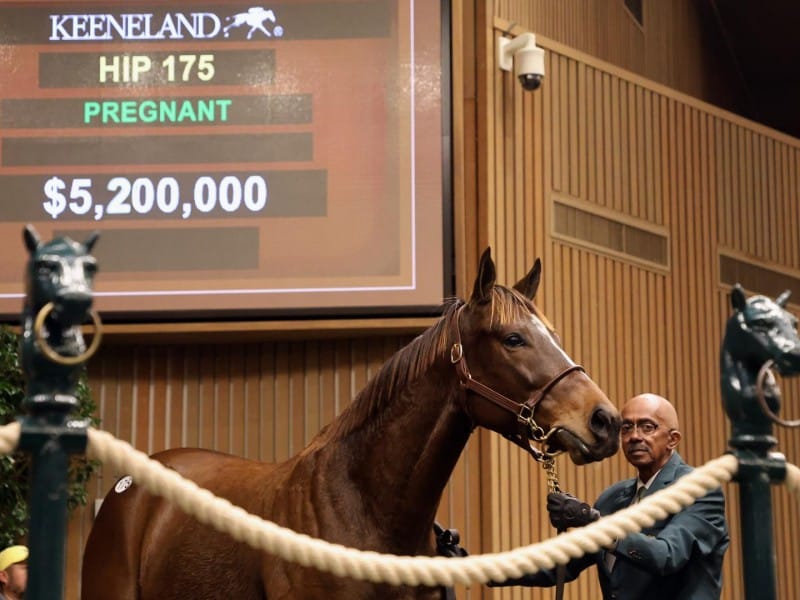
Ace Stud buys three mares as Keeneland November sale opens with gross up 32 per cent
The US$5.2 million (A$7.45 million) purchase of Quietside by Erdenheim Farm highlighted a bullish opening day of the Keeneland November Breeding Stock Sale, while Harris Li’s Ace Stud was busy buying a trio of well-credentialed mares.
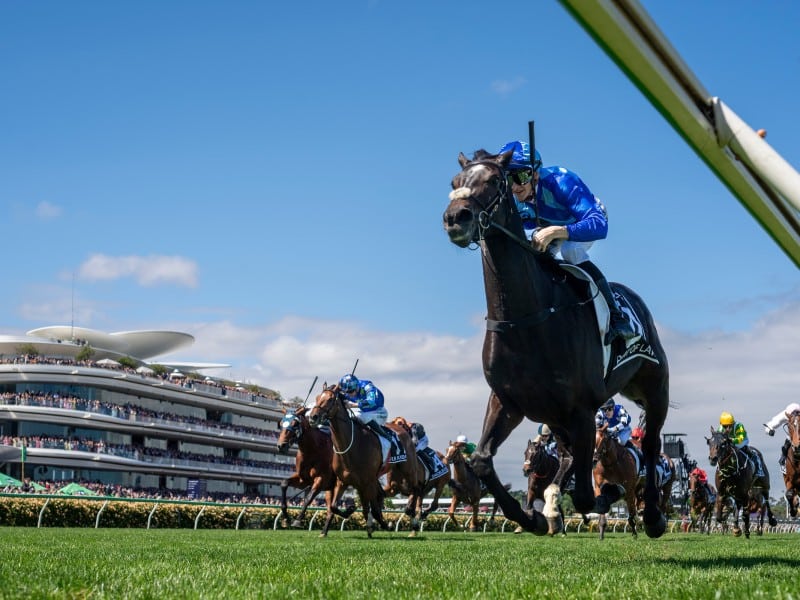
Point Of Law gives Frankel the Melbourne Cup sire honour that eluded Galileo
Point Of Law’s Melbourne Cup win gives Frankel his first winner of the race from 11 starts by his progeny, an honour his sire Galileo never achieved from 39 starts, and makes him Frankel’s fifth individual Australian Group 1 winner.
