
Export changes reignite de Kock’s ‘burning desire’ for Australian success
When South Africa emerged from 21 years of international isolation in 1991, what followed was an extraordinary sporting success story.
The end of apartheid and release of Nelson Mandela had prompted a rapid period of change for the country reimagined as the rainbow nation. Sporting success sat at the heart of that change.
Within 12 months, South Africa had made a Cricket World Cup semi-final, and were only undone against England by the Sydney rain and Duckworth-Lewis.
In 1995, South Africa hosted and won the Rugby World Cup, with Mandela himself presenting the trophy at Ellis Park in a Springboks jersey. Also in the 1990s, South African Ernie Els would reach the pinnacle in golf, winning two US Opens, while swimmer Penny Heyns and marathon runner Josia Thugwane would claim Olympic gold in 1996.
The circumstances and the context surrounding the European Union recently lifting the export ban on thoroughbreds after 13 years is different to South Africa’s post-apartheid era sporting renaissance, but that burst of comeback success can offer some encouragement to those in the racing game.
The virtually impossible will now be relatively easy following the dropping of a direct export ban by the EU. The ban had been in place since 2011 following the outbreak of African Horse Sickness.
OTI’s Terry Henderson, who raced top mare Under Your Spell in South Africa, said it took “the best part of a year” to meander from quarantine station to quarantine station to import horses from South Africa.
For the most significant South African trainer, news that the shutdown had ended was cause for celebration and renewed focus.
Mike de Kock had thought about retiring this year. Now, he’s spinning the globe and salivating.
“I’m chomping at the bit. I was close to retirement but now if there’s one thing I’m gonna do before I die, it’s to win a Group One race during the Melbourne spring carnival,” de Kock said.
“I now have a burning desire.”
The most successful trainer in South African history, and its most successful globetrotter, is determined to rein in lost ground on a racing world that has changed enormously since the introduction of “crazy” quarantine rules that led to South Africa’s exclusion for global racing.
“It was crazy because you had to have two full years after an outbreak before you could reapply for an export licence,” de Kock said this week from Sydney where he is attending the Inglis Easter Yearling Sale.
“Instead of merely containing the outbreaks and pushing on, it was another two years – with no outbreak – before you could reapply. It made no sense and for South African racing, it was devastating.
“The fact it was non-contagious made it even more frustrating.”
Shifting horses from South Africa to Dubai had involved 21 days in quarantine in Cape Town, 90 days in Mauritius, then 30 days in the EU or 60 in any other jurisdiction.
De Kock said direct flights to the US had been possible “but you spend 60 days locked up in a hangar, where the horses don’t see the light of day. The horses can come out fried.”
The skies are now clear and while De Kock admits 13 years is a long time in dry dock, he believes they will – again – make an impact on world racing.
But the resurrection comes after cost.
“Reputational, that was a cost. It destroyed my business in Dubai,” de Kock said of the export ban.
“It tests your confidence in the industry and you spend so much of your time banging your head against a wall.”
Like most South Africans, de Kock is a fan of sport, of competition. He now has a longing.
“Any sportsman has that desire, you have to put the best against the best. Imagine Ernie Els unable to compete on the US PGA,” he said.
“It’s no less in racing. I’d love to bring a team to Melbourne in the spring. You want to see good horses racing against each other. It’s intriguing. You have to beat the best.”
He is buoyed by his own history of off-shore success. No South African trainer has plundered the world like de Kock. Ten of his 133 Group One wins came on the international stage.
Before the forced closure of his Dubai satellite in 2018, De Kock’s South African horses had more than held their own against the might of the Middle East.
“I’m chomping at the bit. I was close to retirement but now if there’s one thing I’m gonna do before I die, it’s to win a Group One race during the Melbourne spring carnival” legendary South African trainer Mike de Kock.
As well as winning major international races in Singapore and Hong Kong, de Kock’s boutique squad won the UAE Derby on five occasions.
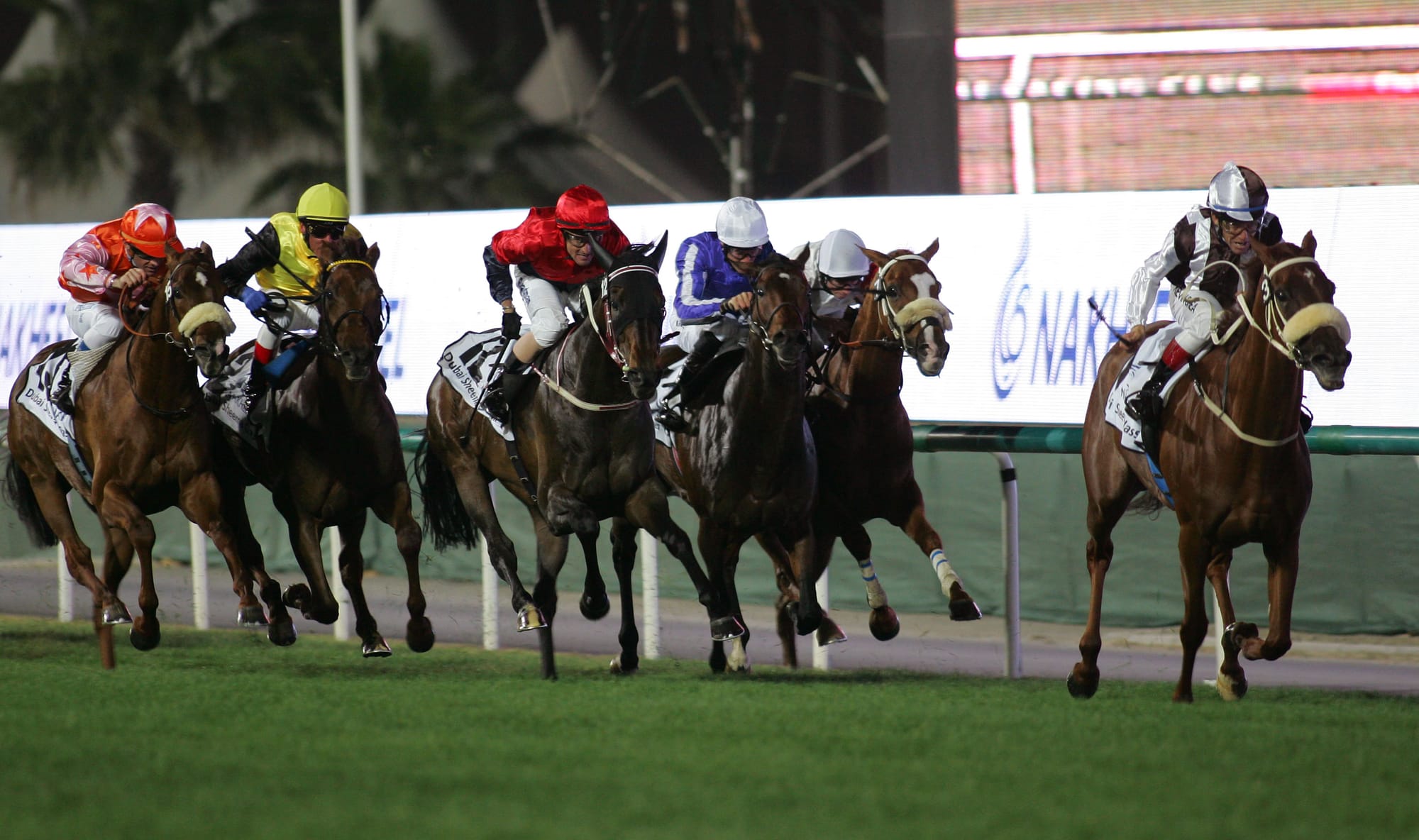
He also scored placings in the Dubai World Cup as well as Group One wins in the Dubai Duty Free (2003, 2004), Sheema Classic (2008), Jebel Hatta (2012, 2014), and Al Quoz Sprint (2013).
Australian-bred mare Sun Classique delivered Sheema Classic glory for de Kock and the trainer said Dubai had provided a showcase for South Africa.
“We were on the world circuit. We had exposure week in, week out. We had good results in the US and England. We stacked up,” he said.
“It’s a very interesting discussion. We’ve had many years without our form being exposed. Now you’re wondering to yourself if we have a benchmark but our best horses have always been world-class.”
Najem Suhail, who is co-trained at Cranbourne by his son Mat, gives de Kock a gauge.
The Australian-bred sprinter won a feature nursery race in South Africa before suffering an injury in Dubai. The son of Starspangledbanner eventually found himself in Australia during an export process that was allowed, but with lengthy pitstops.
“He’d be a Group 2 sprinter in South Africa and he’s raced to that level now in Australia,” he said.
“When you’ve been around for a while you get a gut feeling about a good horse and a good horse can come from anywhere in the world. Times don’t lie.”
South African bloodlines had been boosted by the importation of well-bred stock from all over the world, including Australia.
The eclectic bloodlines of South African stock long ago attracted John Messara’s Arrowfield Stud which has had decades of breeding success with imported South African fillies. Messara hailed the easing of export protocols as “a positive development for the international industry”.
De Kock said South Africa’s strength was in breeding “Classic” horses rather than sprinters.
He says his best-ever horse, Horse Chestnut, would have been a champion in any jurisdiction. “A freak horse anywhere,” he said. Horse Chestnut won nine of 10 starts in the late 1990s and is regarded as arguably South Africa’s greatest horse.
It remains to be seen if the South African respite will influence Australian quarantine officials.
The island nation requirement of lengthy in-and-out quarantine has restricted the flow of the world’s best horses to Australia.
However, de Kock believes the triangle of South Africa-Dubai-Australia is now a viable travel route.
Mike de Kock is one of world racing’s great trainers and raconteurs. From the wilderness, we will now be seeing a lot more of him.
Related Articles
Eureka’s Spirit Of Boom dies, aged 18
The Queensland thorughbred industry is mourning the sudden loss of highly influential stallion Spirit Of Boom.
BetStop breaches put Entain under ACMA eye
Entain has become the latest wagering company found to have breached its BetStop obligations, with more than 500 instances of self-excluded customers accessing its services.
Another Special result – Sir Patrick’s prediction provides Carrick with sales ring windfall
The metrics for day one of the Australian Weanling Sale were up year-on-year, which auction house chief executive Sebastian Hutch says is the result of a pragmatism that wasn’t evident at the recent Easter sale.