
🔒 🔒 Diamonds in the rough and the syndicator with a Grand plan for everyday owners
Peter Morley has built Grand Syndicates on an affordable share platform and an eye for overlooked talent, turning modest yearling purchases into some of racing’s biggest success stories. Winterbottom Stakes runner Persian Spirit is his latest example.
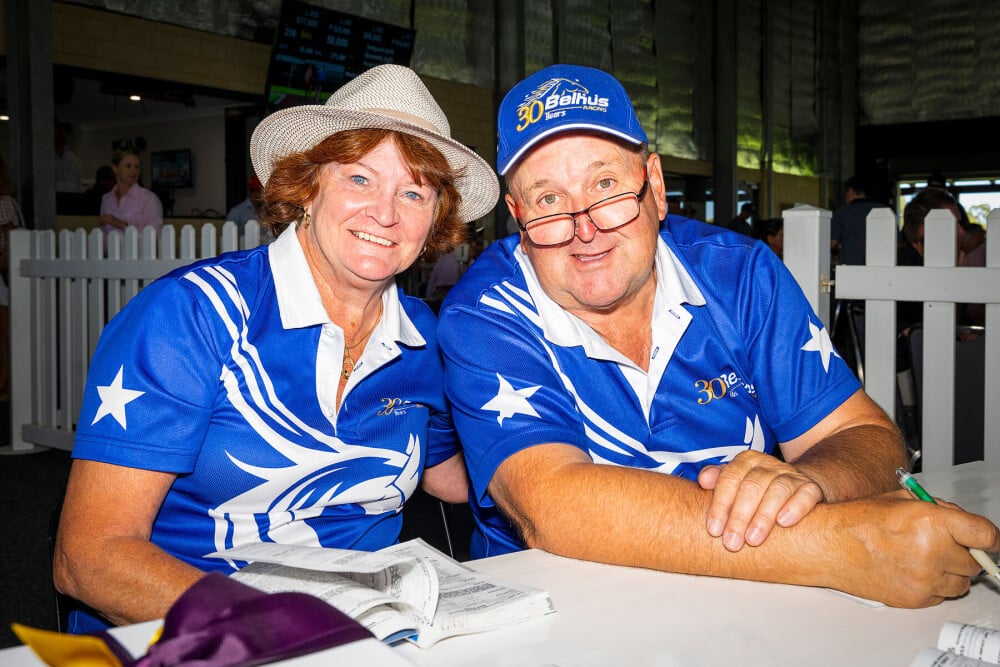
There must be a special satisfaction in watching a horse outperform its price tag, especially when the gap between the two is measured in millions of dollars.
For Peter Morley, founder of Grand Syndicates, that is more than an occasional bonus.
It is a philosophy that has helped establish Morley in Australian racing, with a willingness to look where others might not and take a chance on horses whose commercial appeal does not always match their potential.
Persian Spirit is the latest to provide a compelling example.
He cost Grand Syndicates just $6000 at the 2022 Inglis Premier Yearling Sale; he has already won seven races and earned more than $660,000 in prize money.
Trained by Warrnambool’s Symon Wilde, Persian Spirit is preparing to take on some of Australia’s best sprinters in Saturday’s $1.5 million Group 1 Winterbottom Stakes (1200 metres) at Ascot.
Morley will also have Fluro Neuro, representing his other syndication operation Belhus Racing, in the field, but the two runners are only part of a much bigger story about a businessman who has spent more than three decades making racehorse ownership accessible to ordinary punters.
His most celebrated bargain remains Behemoth, whose purchase for the same $6000 in 2017 produced one of the more remarkable returns in recent Australian racing.
Behemoth went on to win three Group 1 races, including successive Memsie Stakes, and accumulated more than $3.2 million in prize money.
Morley remembers buying a sandwich at the Magic Millions sales when bloodstock agent John Price alerted him to the horse.
Price had spotted the giant youngster, previously sold as a weanling for $120,000.
While others were having lunch, Price was bidding.
“And, well, he was a giant. And I looked at him, and I said, ‘Well, he’s OK, Johnny. But he’s going to take a while’,” Morley recalled.
Price’s judgment proved sound, with Behemoth becoming the flagship horse for a syndication business that had begun with a far more modest ambition.
Belhus Racing will celebrate its 32nd anniversary in February, while Grand Syndicates was established after Morley recognised that the financial pressures following the global financial crisis were changing the way people approached racehorse ownership.
The original idea was to offer shares for about $1000, making the commitment more manageable for people who might otherwise have been priced out of the market.
Morley remembers the signs of caution among consumers at the time, drawing an unusual comparison between two different purchases.
“The $4000 and $5000 share sales were drying up in much the same way as jet ski sales were drying up,” he said.
Households were cutting back on discretionary spending, prompting Morley and his wife, Karen, to devise a lower-cost alternative.
“A grand ($1000) a share, Grand Syndicates, where all the shares are a grand, you know, plus GST,” he recalled of the conversation that produced the name.
Inflation has since pushed typical Grand Syndicates share prices to between $2000 and $4000, but affordability remains central to the proposition.
The Morleys operate the two businesses from Perth, with Belhus concentrating on its Western Australian connections and Grand Syndicates developing a substantial eastern states presence.
Between them, they have about 120 horses and 1500 to 1600 owners, with Morley estimating that 45 horses are with Belhus and about 70 with Grand Syndicates.
The buying process is built around Price’s eye for horseflesh, with the businesses acquiring between 25 and 30 yearlings annually.
Morley says the usual approach is to compromise on either pedigree or physical attributes because combining the two often pushes a horse outside their budget.
“We’re just looking to buy primarily the athlete first,” he explained.
This approach has produced other rewarding purchases, including Khutulun, bought for $16,000 before earning close to $500,000.
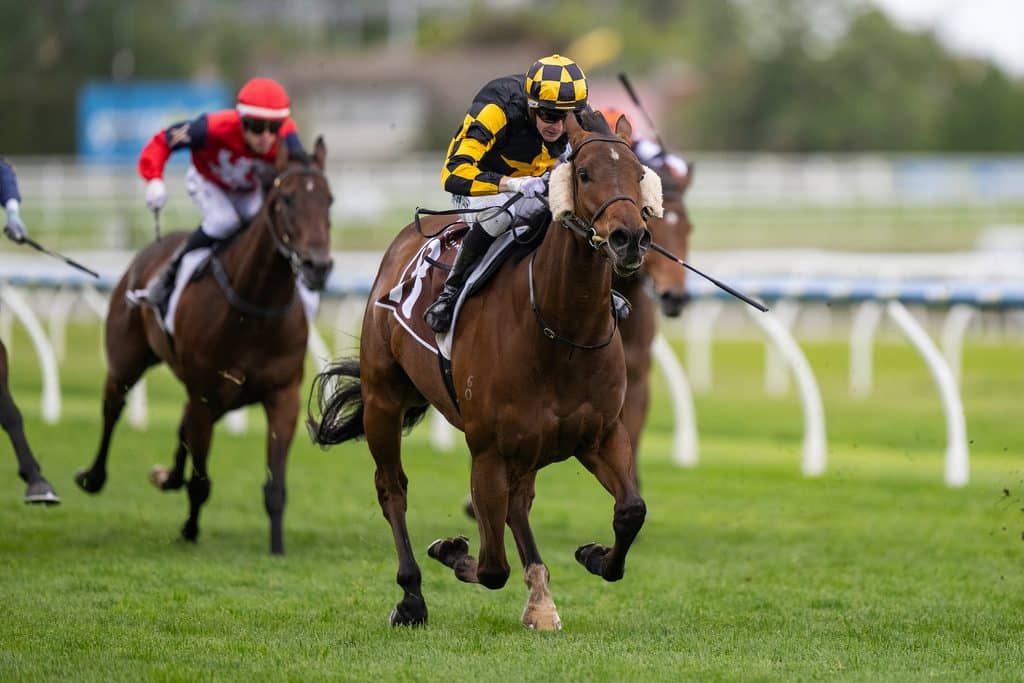
Persian Spirit has followed a similar path, although his purchase holds particular significance for Morley because he allocated much of the original ownership as compensation to clients who had previously endured disappointing horses with the syndicate.
“We gave most of these shares away. We didn’t even sell them,” he said.
Persian Spirit has since provided those owners with a return few could have anticipated, while earning a place in one of Australia’s major sprint races.
Yet finding the next bargain is not necessarily the greatest challenge facing Morley. He believes the difficult part of syndication has increasingly become finding people prepared to buy into the horses.
The contrast with the COVID period is striking. With travel restricted and fewer opportunities to spend money elsewhere, demand for racehorse ownership surged.
“We couldn’t sell horses quick enough,” Morley recalled.
He regards syndication sales as a useful barometer of household confidence and discretionary spending, with the current environment requiring considerably more work to fill ownership groups.
Despite those pressures, there is no intention to radically change the model.
The ownership base still consists largely of mum-and-dad investors, with the average client holding about one and a half shares and women accounting for 28 per cent of the clients.
For Morley, the appeal is as much about the people and experiences as the financial outcome.
Among his longstanding owners is an 80-year-old racing fan who has been involved with him for 26 years and has an interest in Fluro Neuro.
It is the sort of relationship that helps explain why Morley has stayed in the business for so long.
There will be considerably more expensive horses lining up at Ascot on Saturday, but Persian Spirit’s presence is yet another example that the road to elite racing does not always begin with a seven-figure cheque.
Sometimes, it starts with a $6000 purchase, a good eye for a horse and a willingness to give ordinary owners a chance to share the ride.
Related Articles
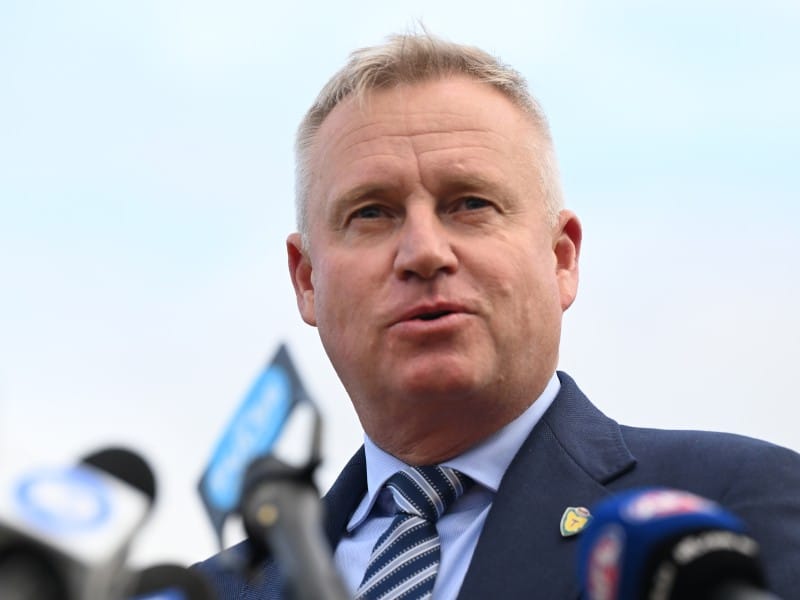
Tasmanian greyhound ban bill fails but government steadfast on plans to end funding
Tasmania’s upper house rejected a bill to phase out greyhound racing, but Premier Jeremy Rockliff says the state will not fund the code after 2029.
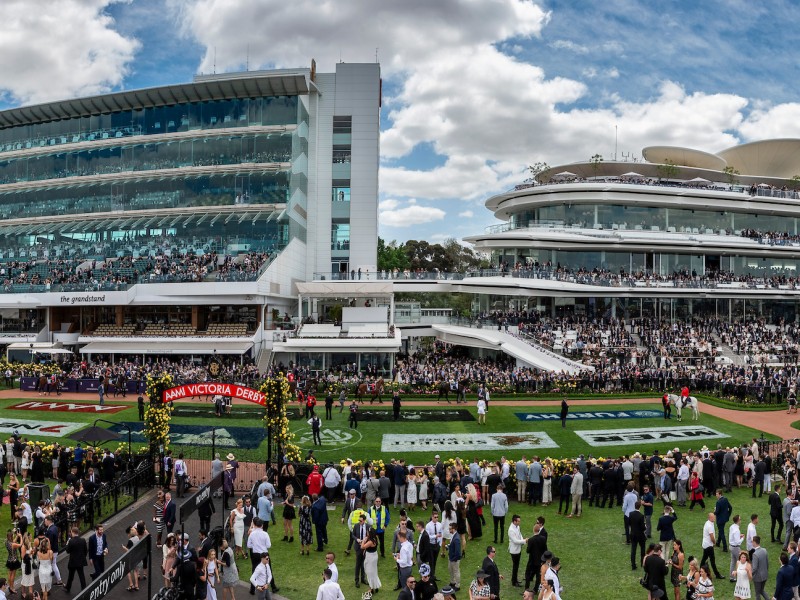
VRC moves AGM to December 16 as members await board candidate list
The Victoria Racing Club has confirmed the revised date of its AGM but is yet to reveal the final board election field, with a closely watched contest for four director positions unfolding alongside the belated release of its full annual report.
ATC eyes $15 million three-year turnaround while board elections are on hold
Two Australian Turf Club directors whose terms end in January will have to wait until the club leaves administration to seek re-election, while administrator Morgan Kelly has painted a rosier financial future for the club ahead of Thursday’s annual general meeting.
