
In the shadows: Why Leon Corstens remains racing’s best supporting actor
Leon Corstens is one of the remaining active links to a legendary Flemington era, which has his old boss, Bart Cummings, at its centre. At 80, he is still a key background figure, now in the resurgence of fortunes of the stable he shares with his son Troy, and Will Larkin.
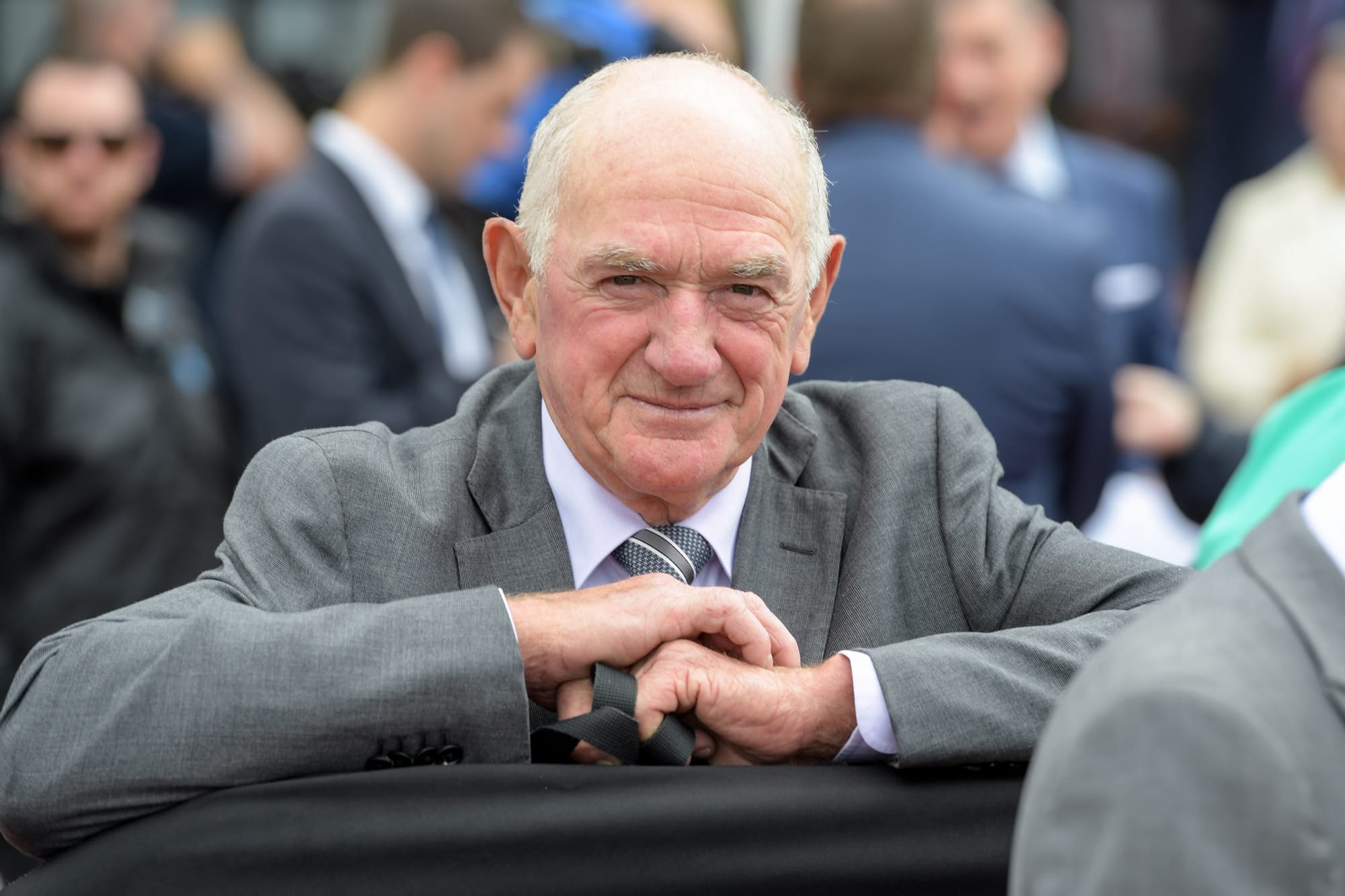
Leon Corstens’ best horse will contest the feature race at Caulfield on Saturday but the legendary trainer, reprising his career role as the humble offsider, will be out of shot.
Age and injury have caught up with Corstens, a figure synonymous with Flemington but now an 80-year-old resident of Geelong. He and wife Chris own a unit overlooking Corio Bay and a holiday house in Port Arlington.
Corstens spent much of his life in racing’s most recognisable shadow.
There’s a famous racing photo hung up on the walls of Flemington with an instantly recognisable silhouette of Bart Cummings and Clarry Conners. Their profiles, mostly Cummings’s eyebrows, instantly identify them.
Corstens’ profile may be less iconic but is hugely significant in the success of the most high-profile racing figure of the last century.
Alas, it won’t be his famous humility but an ailing body that will keep Corstens from watching Baraqiel contest the Bletchingly Stakes at Caulfield on Saturday. He’s had four hernias removed and suffers lingering effects of a double-barrel horse kick that left him with two fractured vertebrae and almost killed him.
The last figure of a golden era of gargantuan training figures – Cummings, Tommy Smith, Colin Hayes, Geoff Murphy, Tommy Hughes et al – almost joined the list of the departed.
“I was lucky. Very, very lucky,” Corstens said of the vicious kick.
Corstens played arguably the greatest second-banana role in Australian racing history. As Cummings’ modest and bashful Melbourne “foreman” – a title that slightly irks his son Troy – Corstens was executor of one of Cummings’ great eras. From 1976 until 1994, Corstens clutched the bridle of four of Cummings’s 12 Melbourne Cup winners.
Cummings was both a magician and a ghost. Corstens worked from Cummings’s basic script but the Cups King was rarely on the ground. Even for Melbourne Cup campaigns, he’d arrive from Sydney close to the death in time to splash some magic touches, delight the media with some funny quips and resume centre stage.
While Corstens insists “Bart was always the boss”, Troy says his father played a major role.
“I don’t want to diss Bart, at all, but the old man, he did everything; he employed the staff, although Bart obviously paid them, he did all the rosters, he did the race programming, he basically organised all the trackwork,” Troy said.
“But Dad never wanted the limelight. It’s not his go and never has been.
“Back then it was described as ‘foreman’ but Dad was Bart’s assistant trainer. He was obviously on the phone a lot to Bart but Bart was in Sydney and if a horse had a terribly hard gallop on the Tuesday, Dad was there to see it and deal with it.”
It was never regarded as a friendship – “although I generally got on very well with Bart” – but the Cummings/Corstens relationship was enduring.
Like Cummings, Corstens grew up in Adelaide, the son of a baker and a stay-at-home mum to eight kids. Only two, Leon and Theo, who trained, found horse racing.
Corstens rode briefly as an apprentice, first for Cummings’ father Jim, then Bart. He suffered a bad fall at age 17 and gave it away. He spent four years as Bart’s foreman at Morphettville, before securing the Flemington job, in the busting off-track training community up at Leonard Crescent.
He doesn’t recall the first time he met the brash, brylcreemed Bart, but he recalls how even at age 25, the genius of Jim’s son was apparent.
“He hit the limelight pretty quick. I remember the old fellas in the stripping sheds at Morphettville, saying “he’ll be gone pretty quick” but Bart kept going and going and going,” Corstens said.
“He revolutionised it. Him, Percy Sykes, Tommy Smith. They started doing blood counts, they’d (legally) use hormones, they’d inject knees, sophisticated stuff for the time. It made a big difference.”
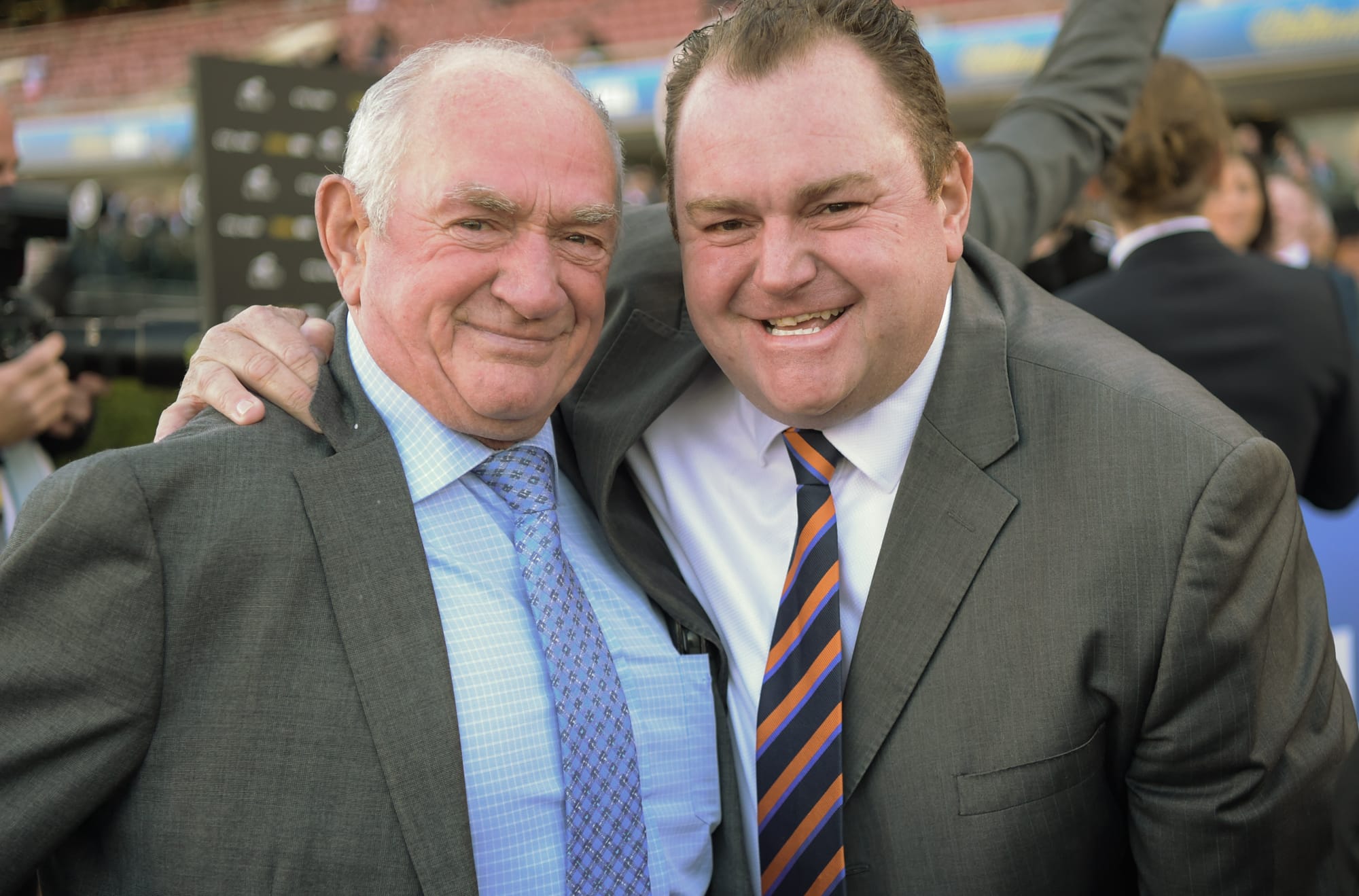
When Cummings died in August 2015, that Morphettville era was captured in an obituary, where Corstens tells the story of the day Cummings got dumped.
The horses were being swum at Glenelg in treacherous conditions. Staff would row the horses beside the jetty but couldn’t get past the breakers. Cummings arrived in his LTD, asked why the horses weren’t being swum, scoffed that it was too rough, grabbed the reins and an oar and was immediately smashed by the first wave.
He emerged like a drowned rat and conceded: “You’re right. It’s too rough.”
Corstens delights at the retelling of that story and a handful of others of the often-unintended comical side of Cummings and the rhythm of their relationship.
He recalls a day up at a farm near Seymour. A horse trained by Geoff Murphy called Hyperno was nursing a bad suspensory in a paddock. Hyperno’s owner Ray Lake asked Cummings if he’d train the horse.
“I knew the horse and was nudging Bart in the ribs to take him. Then Bart says ‘yeah, I’ll take him. Might win a couple of hurdle races with him’. Instead, chiefly under the watchful eye of Corstens, Hyperno won the 1979 Melbourne Cup.
The secret to those big Cup winners, and some of the other notable horses of that era, was in the feed. Cummings was a legendary feeder, passed on to Corstens.
Troy remembers the feed shed back at the old Leonard Crescent stables, since razed and replaced by apartments as Flemington morphed into a precinct that Leon Corstens now says he barely recognises.
“Bart, CS and Tommy had the edge. These days the advantage is gone because the feeds are pre-mixed but up until a few years back we’d boil our own barley, we had molasses mash; oats, maze, chaff, vitamins. There was a real skill to it,” Troy said.
Cummings seemed either to be flailing or flying. For two decades, Corstens clung on for the ride.
“We had a phenomenal run for the most part. At the finish I was getting cocky. We’d win the Cup and I’d jibe Bart ‘where’s the next one?’ He’d just say ‘something will pop up’, which it often did.
“But I can remember one bad year when we maybe had one or two winners. One day we won a maiden at Kyneton on a bloody cold, wintry day. Bart rings me, worried about how we were going.
“He says ‘are you doing everything I ask?’ I said ‘of course, why wouldn’t?’ Then he says ‘well don’t change anything, they’re just bad horses’. And they were.”
By 1994, Corstens was itching to do his own thing. Sons Troy and Kevin were growing up and both would later train; Kevin mostly solo, Troy eventually right-hand man and co-trainer.
It was a rollercoaster era, starting with the high of Corstens’ first win as a stand-alone trainer with Mamawa at Caulfield in 1995. “It was such a different feeling, Dad doing it in his own name.” Troy said.
Corstens won nine Group 1 races, and later two in partnership with Troy.
Most notable were the Caulfield Guineas, Rosehill Guineas and Victoria Derby with Helenus and the Caulfield Guineas with Starspangledbanner.
“But Dad never wanted the limelight. It’s not his go and never has been” – Troy Costrens on his father Leon
There were the difficult times as well, including suspensions. During one such time, he was ordered off the training farm in Romsey, where he and Chris lived.
“It did hit me a little bit, having to leave the place, away from my wife (who remained on the farm),” Leon said.
Troy says those dark days are in the past and casting forwards, the partnership, which extended to three with Will Larkin added in 2024, is on fire.
A winless day at Flemington last Saturday broke a run of eight consecutive metro Saturdays with at least one winner. Horses like Marble Nine, Zou Sensation, Harry’s Yacht, Magnaspin, Santa Ana Moon and He’ll Rip were consistent through winter and Baraqiel is ready to kick off on Saturday.
The stable has evolved. The Geelong stable closed because of lack of numbers; Leon and Chris stayed on the Bellarine. “I absolutely bloody love this town,” Leon said.
There are now stables at Benalla and a training base not far from it, as well as 40 boxes at Flemington.
“The farm has got a lot to do with it,” Troy said. “They come off a race and basically spend four or five days in a paddock.”
Leon is a bit smashed up down the road at Geelong but Troy is determined that the old man keeps chipping in, in the background as always.
“He comes to Flemington twice a week. Life’s a little bit easier than it was when he was up at 2.30. At 80, he’s still sharp, he’s a great second set of eyes,” he said.
Leon adds: “I just potter around a bit, ya know. I might tell them one’s lightened off or something.”
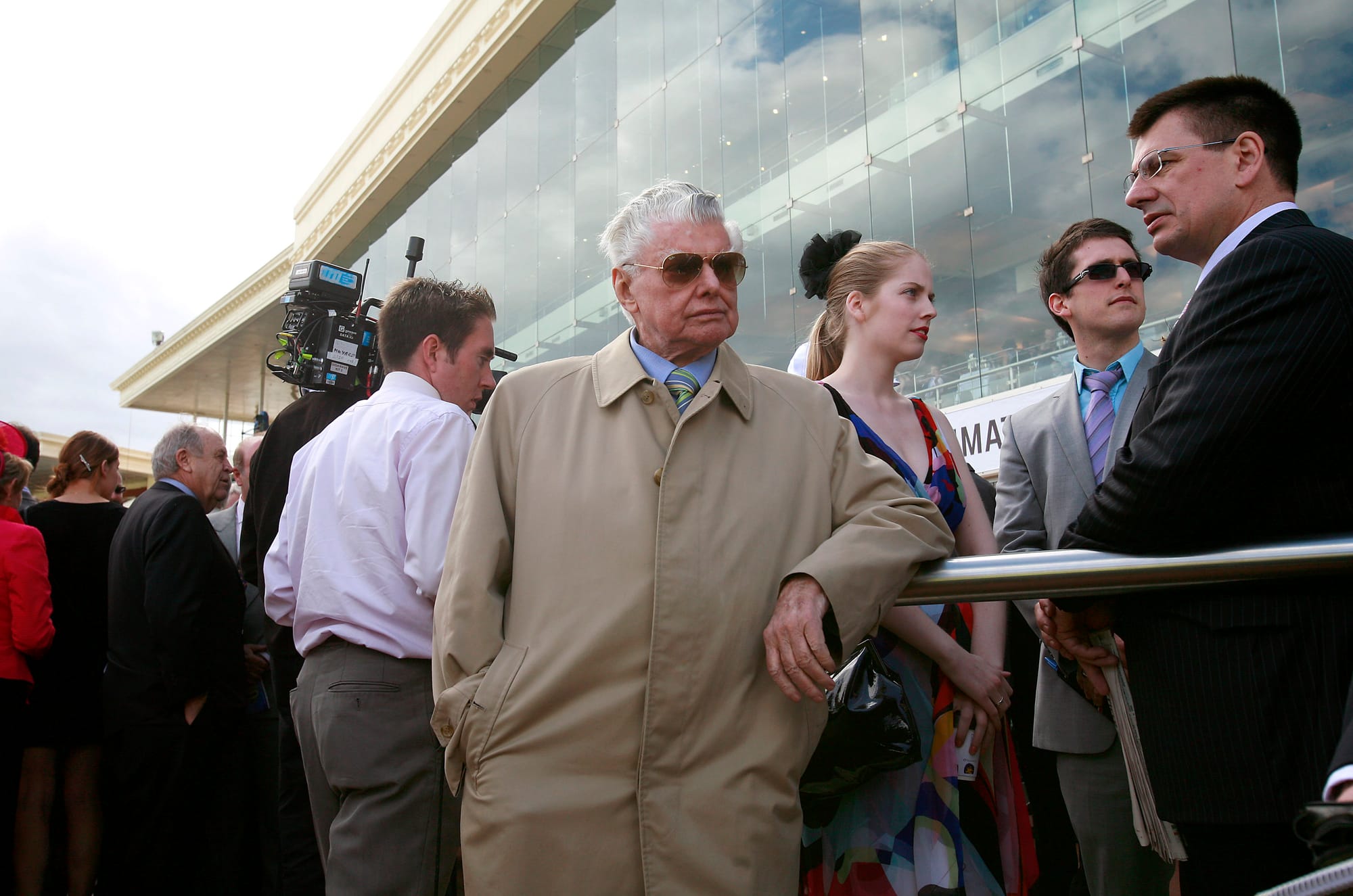
Twice a week, Corstens returns to a precinct that’s not what it used to be.
The centrepiece of Flemington is a grandstand that resembles a cruise ship. The off-course stables up at “Whiskey Hill” are now apartments surrounded by pop-up high-rises, the horses no longer traipse down the Crescent for trackwork, the old grandstands and old faces are gone.
One of the last of the great Flemington horsemen to pass was the legendary breaker John Patterson.
“I guess change was always going to happen. Even back when we were training up on the hill we knew the day would come when they’d knock them down,” Corstens said.
“I go there now, I get lost. I keep thinking where the hell did that building come from? It’s nothing like it was but it’s progress, you can’t stop it.”
Related Articles
Rowe On Monday – A bidding cat and mouse, Messara’s statistical argument and a family formula pays off for Field
In this week’s Rowe On Monday, sales companies’ bidding strategies under the spotlight, John Messara ponders a fairer distribution of prize money and Henry Field’s formula for sire success.
Written In The Stars – Emma Cully and the heartbeat of syndication success
Over 14 years, Emma Cully has become an indispensable and important part of the success of Star Thoroughbreds – the quiet constant beside Denise Martin. So how did this Irish-born daughter of a national hunt trainer end up in the heartbeat of one of Australia’s leading syndication companies? Jessica Owers finds out.
‘One of the most influential sires in the world’ – Coolmore unveils Delacroix amid growing Dubawi influence
Coolmore will bolster its Australian roster with dual Group 1 winner Delacroix, as the influx of sons of Dubawi to the southern hemisphere gathers pace amid rising expectations around Home Affairs’ next service fee.