
🔒 🔒 Living in the juvenile past? What will become of Australia’s two-year-old racing?
The decline of participation in Australia’s two-year-old ranks is accelerating, prompting strategic resets by some of the country’s biggest stables, and questions about whether the racing program needs to adapt to meet the new reality, writes Bren O’Brien.
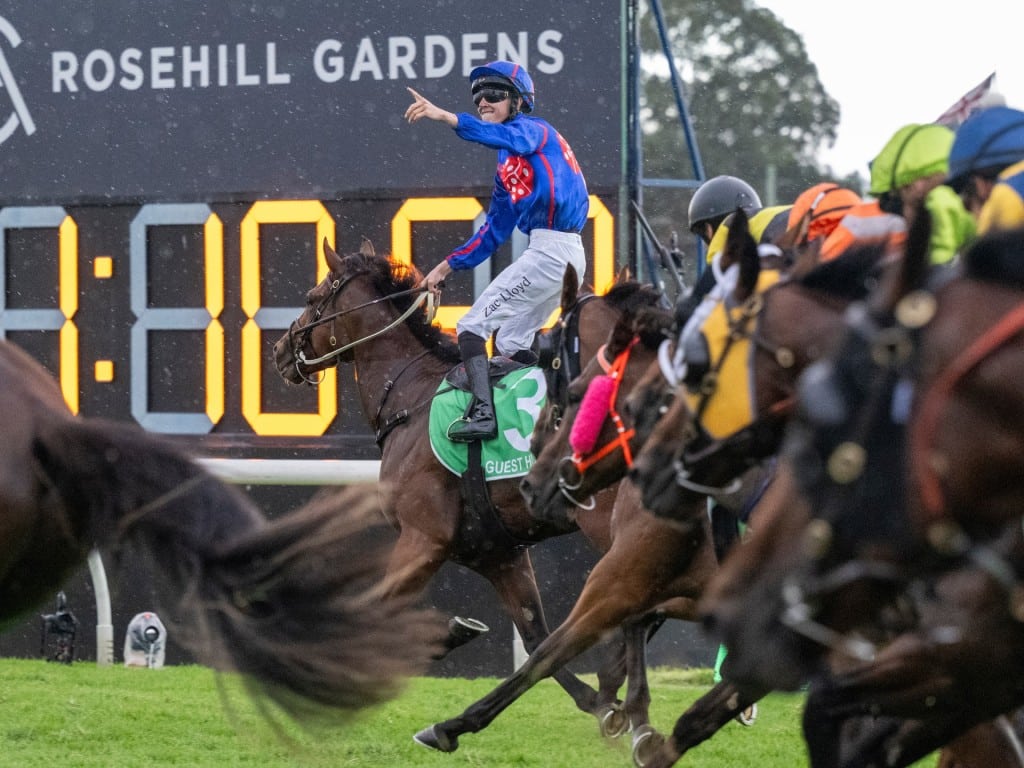
Analysis: Adrian Bott’s recent revelation on The Straight that Tulloch Lodge, the stable arguably more famous than any other for its two-year-old record, was moving away from its juvenile-led strategy, is the most compelling evidence yet that Australia’s obsession with precocity has become an outdated myth.
While the commercial breeding and bloodstock market still drives a narrative of the virtues of fast and early horses, Australian owners and trainers are voting with their feet. They are far more interested in racing a three-year-old than a two-year-old.
The data is unmistakable. Participation in two-year-old racing in Australia has nearly halved since 2000. On our projected data, there will be 2100 two-year-old starters in Australia in the 2025/26 season.
That number has not only fallen over the long-term. The decline is accelerating. There has been a 26 per cent decline in the past five years, and an estimated 7.8 per cent drop this season alone.
This change has far outpaced the overall decline in the active thoroughbred population in Australia. Australia’s foal crop has dropped, but that is not necessarily driving the fall in two-year-old participation.
Since 2002/03, the number of individual horses active each season has fallen 10 per cent, while that figure stands at 45 per cent for two-year-olds.
The data suggests the issue is not just fewer horses being bred. It is that fewer horses are being prepared to race at two.
Racing Australia’s data tells us that in 2002/03, 12.4 per cent of active race horses in Australia were two-year-olds. That figure is projected to be around seven per cent in 2025/26.
While there is no specific Racing Australia data kept around the volume of two-year-old races per season, it is clear that the options for trainers have been reduced. Two-year-old programming is a constant bugbear for those trainers who focus on juvenile racing.
Tracking the top 200 two-year-old sires each season via Arion provides a strong indication of the number of two-year-olds winning races in Australia.
That data shows us that in 2012/13, across the vast majority of sires, there were 611 two-year-old winners. In 2025/26, that number is projected to be around 470. That tracks in line with the overall decline in two-year-old runners.
The question needs to be asked then: is two-year-old race programming declining because of fewer starters, or are there fewer starters because there are fewer races for them to compete in?
It’s a chicken-and-egg dilemma, which likely reflects an era where race programmers are far more tuned in to the impacts of wagering. Two-year-old races tend to attract lower wagering engagement, so there is less incentive to program them.
There is a counter-argument that two-year-old racing suffers because it is usually programmed at the start of racedays, where wagering is lower anyway. While the lack of exposed form makes it a more uncertain racing product to bet on, it has never been a priority betting product, with the exception of feature races.
If we assume that two-year-old racing is an inferior wagering product, and the data tells us that trainers are far less likely to run a horse at two than has historically been the case, then should that reflect in the amount of prize money being distributed?
The 2024/25 figures tell us that two-year-olds won $70 million in prize money in Australia. The average prize money per two-year-old runner was $30,743. In 2012/13, that per-runner figure stood at $17,318.
What that tells us is that while there are 20 per cent fewer runners than 2012/13, they are earning 87.8 per cent more on average.
Comparing that to the general horse population, the average active thoroughbred in 2012/13 was generating $18,154 for the season, while that figure in 2024/25 was $36,114, or double.
We can see, then, that the prize-money boosts of the past 15 years have been focused away from two-year-old racing, reflecting their diminishing importance. However, what also needs to be considered here is that two-year-olds have fewer average starts than older horses.
The data on this is not great, but utilising what we have, we can estimate the average starts per two-year-old runner in Australia this season is around 2.3, while the average number of starts for the broader active thoroughbred population is 5.05.
Extending that logic, the average prize money per start for a two-year-old in Australia is considerably higher, at around $13,300 as opposed to $7,150 across all horses.
While those figures are approximate, they point to the fact that racing a two-year-old is nearly twice as profitable per start as older horses in terms of prize money.
It is a similar theme with black type. In 2012/13, one in every 36.5 two-year-old starters was a stakes winner, but in 2025/26, that figure is one in 28.
Put simply, the number of two-year-old stakes races hasn’t changed despite a 20 per cent drop in the number of juvenile runners.
From a commercial point of view, it should mean trainers are more incentivised to get their horses to the track early, but the broader statistics and the plans of Adrian Bott and Gai Waterhouse tell us the opposite is true.
The devil’s advocate’s position is to ask: if two-year-old participation is declining, then why are prize money and black-type aligned in a way that rewards it?
Should consideration be given to reducing two-year-old prize money?
Any move towards reforming this would have to take a considered look at what impact a change in prize money priorities would make on the bloodstock industry, as a significant correction would be seen as a lack of confidence. It is unlikely to have the support of sales companies and breeders.
But the data outlined above warrants at least a discussion to determine whether two-year-old participation rates can be revived, or if the racing program needs to change to reflect the current reality.
Author

Related Articles
🔒 🔒 Prime selections – the army veteran who turned ‘reconnaissance’ into a racing advantage
Joe O’Neill has spent almost three decades turning careful research and sharp judgement into winners, with Cavalry Girl now offering Prime Thoroughbreds an unexpected shot at a spring Group 1 contest.
Two-year-old racing and the benefit of patience – Louis Le Metayer
Louis Le Metayer of Astute Blodostock looks at the pros and cons of two-year-old racing and the importance of patience.
Run The Numbers – What has become of the American shuttle stallion?
After a major decline in trans-Pacific shuttling of stallions, there are no stallions standing in Australia in 2026 that have shuttled directly from the United States. Fifteen years ago, 23 made the annual trip. Run The Numbers looks at how this trend has evolved.
