
Needs Further, the sire who transformed a family, a farm and Tasmanian breeding, dies at age 19
For Armidale Stud’s David Whishaw, Needs Further was more than a horse who helped reshape Tasmanian breeding. The stallion’s death at 19 has left a family and a farm grieving a close mate and facing the difficult task of finding his successor.
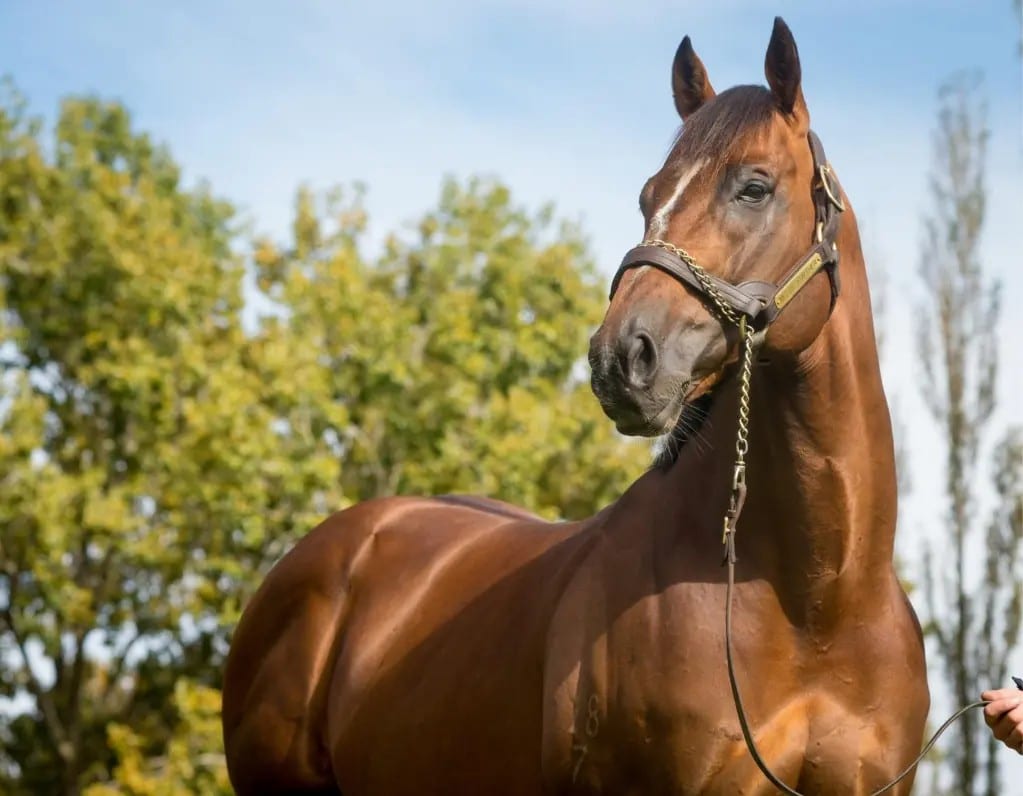
Not for the first time in the past few days, David Whishaw is stopped in his tracks by his own tears.
Whishaw, the principal of Armidale Stud, lost one of his best mates, star stallion Needs Further, this week.
‘Ned’, as he was known around the farm, fought hard against colic. Whishaw and his team fought with him, with the studmaster there in the operating theatre last weekend, helping where he could.
The intervention worked at first. And then it didn’t. Such is the curse of colic. At age 19, Needs Further’s time came. The man who believed in him, and who helped him reshape the course of Tasmanian breeding, is devastated.
In the busy life of an all-round farmer, there is little time to stop and grieve. But the emotion finds you, even out here in the paddocks.
Whishaw is spraying onions, talking on the phone, and falling in and out of composure.
Anyone who knows Whishaw knows his heart is always near to his sleeve, but also knows his gift for words.
He takes a breath and recalls a horse which, in many ways, has proven life-changing for him and his family.
“I’ve lost a close mate, and I’ve lost a stallion that’s done so much for us, for the business and for the state,” he said.
“Nothing’s as bad as it seems at the time. You give something time, and there’ll be light somewhere — but I’m sitting here this week going, ‘How do you replace that?’”
In the commercial scale of Australian thoroughbred breeding, the premature death of a Tasmanian stallion who stood for $5500 and had produced 10 stakes winners would cause little more than a ripple.
The Australasian industry has lost giants like Snitzel, Savabeel and So You Think over the past 18 months. Needs Further didn’t sit in their league, but for an island racing state and a family-owned farm, his influence was enormous.
“When you work with them for as long as you do, they become like your family. You get more attached to them than you do your pet dog — they really are an extension of your family. He was just the most amazing horse to work with,” Whishaw said.
“He and I got on like a house on fire. As far as the covering barn was concerned, I don’t think I’ll ever get a horse as good as him. He was deadly — he never missed, didn’t muck around, and would serve anything you put to him.”
The son of Encosta De Lago had been active in Tasmania since 2013 – save for a year in Victoria – and is most famous for producing Group 1 winner Mystic Journey with his second crop.
But the emergence of that star filly, the winner of the All-Star Mile and the Australian Guineas, changed the perception of Tasmanian breeding. Suddenly it went from a backwater to a place capable of producing champions once again.
That breakthrough came in the autumn of 2019, five years after Whishaw had taken the risk, together with agent Brett Howard, on a well-related but far from perfectly proportioned stallion.
“I was determined to find a horse that I believed in — one you dreamed could make an impact on our lives and on the people who breed horses to him. It’s too hard for us to stand stallions just to make money. We need more than that,” he said.
“He helped validate my belief in what I wanted to do here in Tasmania, and I think he validated a lot of the other breeders down here, too.”
“He showed people they could come to our local sales, buy a horse cheaply and take it to the mainland.”
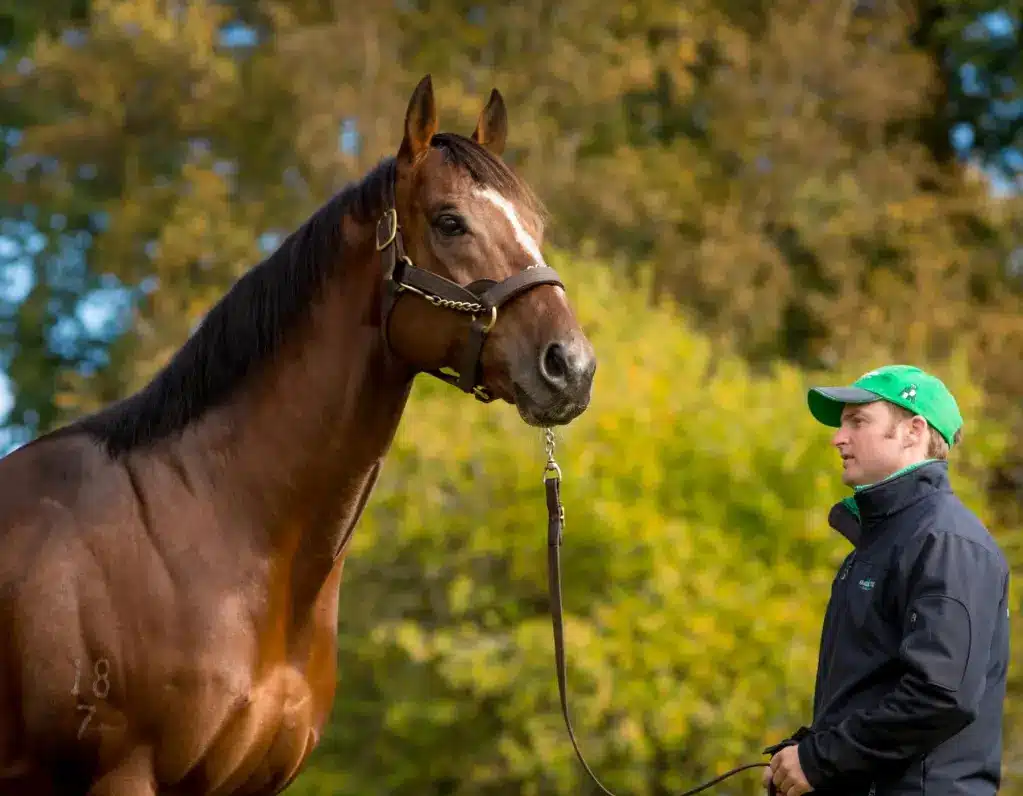
The numbers confirm that story. He stood for an average service fee of $6400 across those 13 seasons and had 182 winners from 303 runners, with those horses averaging over $70,000 in prize money. Even without Mystic Journey, the average was close to $60,000.
At the yearling sales, they averaged just over $30,000, an amount barely worth a breath in another sales ring, but a nearly five-fold return on service fee.
But while Needs Further afforded Whishaw and his wife Rhiannon the opportunity to improve the family’s financial affairs and assume direction of the farm just outside of Carrick, it was also a journey of the heart.
At a time of year when $1 million races are run and $30 million future stallions are crowned, the story of Needs Further and Whishaw’s raw emotion speak to an industry held together by equine and human connection.
“I feel half-sorry for the big boys in this industry. I bet they don’t feel what I feel, because they haven’t had to fight like we’ve fought, and they haven’t worked with a horse like him one-on-one,” Whishaw said.
“There hasn’t been that roll of the dice for them like there was for us.”
Whishaw pauses regularly during the interview, sometimes to collect his thoughts, other times to regain his composure.
With the guidance of Howard, Needs Further helped David write his legacy on the third-generation farm. His grandfather David first spoke to him about resilience when Whishaw was a kid.
“He looked me in the eye and said ‘boy, good men won’t be beaten’,” he said.
When Denis Whishaw, David’s father, passed away suddenly in 2004, his wife Robyn and her children ran the stud before David and Rhiannon took control around the time that Needs Further entered the fray.
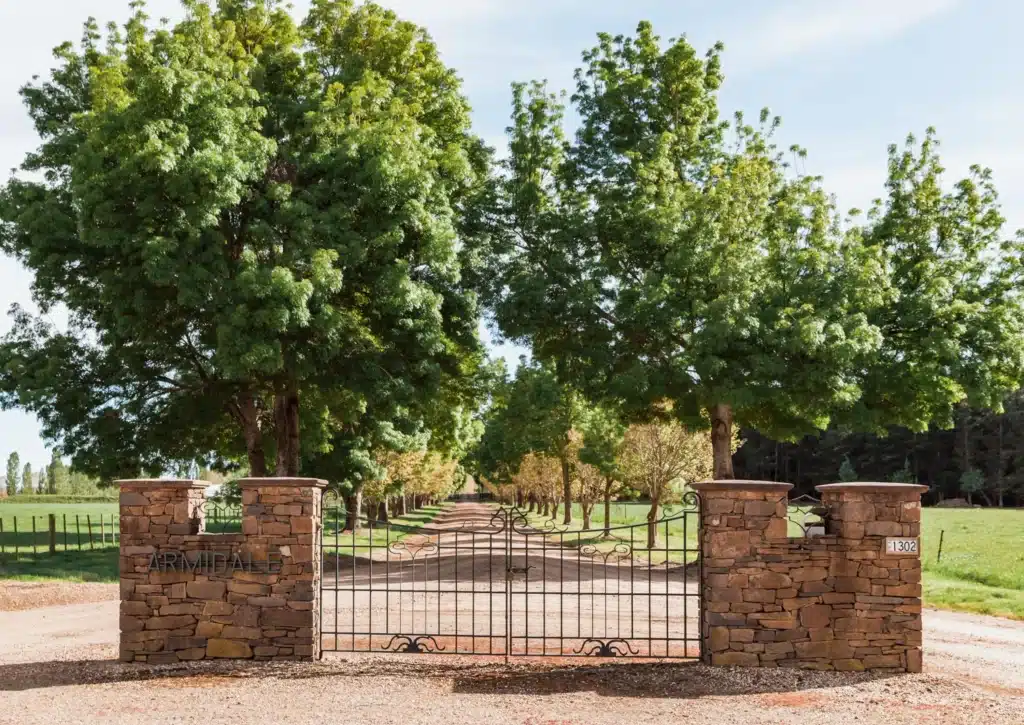
Succession was already planned in the breeding barn with the addition of Bodyguard to the stud in 2025, but there will be some tough years until it is known if he can step into the void left by Needs Further.
Whishaw concedes, despite his own determination, there are doubts.
“We need to go out and get another horse to try to walk in his footsteps, but there’s an investment of cash — and that’s only part of the story. We need the broodmares to go with it, too,” he said.
“If I’m making a decision this year to buy a stallion, it’s five or six years before I’ve got any idea if he’s going to make the grade. There’s a very good chance he won’t be as good as the one we’ve just lost.”
“If it was just us, we’d take the risk. But I feel a responsibility that’s much bigger than just my family and me.”
Part of that is the uncertainty of the state’s racing funding, with the government deed set to expire in 2029, and no confirmation of what things may look like beyond that.
“I feel half-sorry for the big boys in this industry. I bet they don’t feel what I feel, because they haven’t had to fight like we’ve fought” – David Whishaw
Whishaw has been at the heart of discussions for years, but has become tired of getting promises from politicians that are never delivered upon.
“I’ve spoken about it before, but the industry’s really at the crossroads, and I haven’t seen any light from the government, and if I did, I’d be worried it was a freight train at the moment,” he said.
A Tasmanian industry which is so dependent on long-term confidence has been sorely let down by a state government with other priorities.
Amid a maelstrom of feelings, Whishaw brings it back to the story of Needs Further, and the bloodstock agent who brought him to Tasmania.
“Without Brett Howard, we wouldn’t have found the horse. He believed in us and believed in the horse,” he said.
“Brett is one of the good guys, and I’ve got a lot of time for him and Rachel. They’ve been beautiful and empathetic with us this week, and they’ve always trusted us to do the right thing by the horse.”
As for his reflection on the 13-year journey with the stallion:
“He’s been a champion to work with, and it’s been such a positive experience,” Whishaw said.
“I treasure the journey, the friendships, and the happiness he brought to our family and to Tasmanian racing. The people who bred to him and bought his stock believed in him, and I don’t take that for granted.”
Author

Related Articles
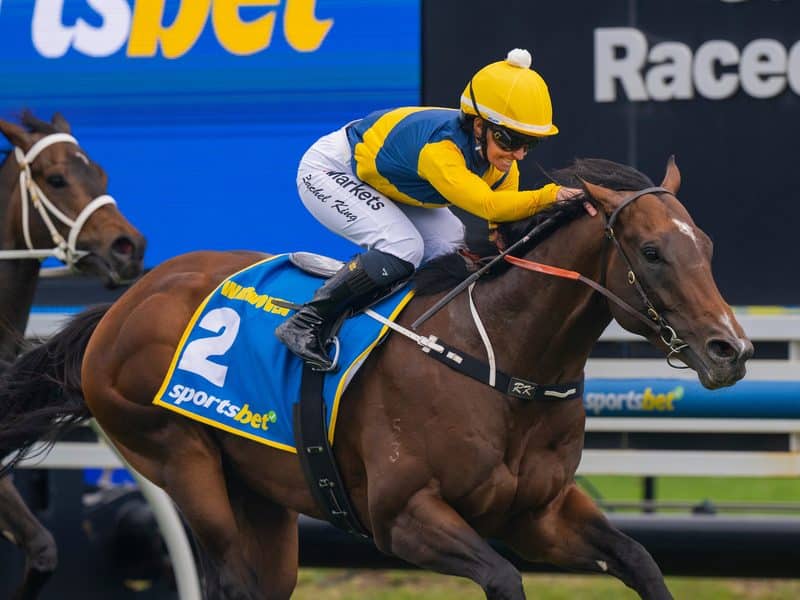
Vinery secures controlling interest in Warwoven as Kia Ora keeps its stake
Vinery Stud has agreed to buy a controlling interest in Bjorn Baker-trained Golden Rose and Caulfield Guineas winner Warwoven, who will stand at the farm on retirement. Breeder Kia Ora Stud, a Vinery shareholder, keeps its interest and the colt is set to race on in the autumn.
🔒 🔒 Laurel Oak full of hope for Coolmore upset with Marffiano
Louis Mihalyka has a longshot chance of winning the Coolmore Stud Stakes, but the Laurel Oak Bloodstock principal believes his Home Affairs three-year-old Marffiano is capable of causing an upset.
Kris Lees lands 95,000-guinea French Artist as Australians buy more than 20 lots at Tattersalls
Newcastle trainer Kris Lees and Bahen Bloodstock bought once-raced two-year-old French Artist for 95,000 guineas, the top price on the final day of the Tattersalls Autumn Horses in Training Sale, where Australian buyers took more than 20 lots.
