
New Zealand foal crop slide sparks warning over field sizes and industry sustainability
New Zealand’s racing industry faces a mounting sustainability challenge, with a declining foal crop and shrinking breeder base threatening future field sizes and wagering unless breeding numbers are urgently rebuilt, according to the country’s thoroughbred breeders’ association.
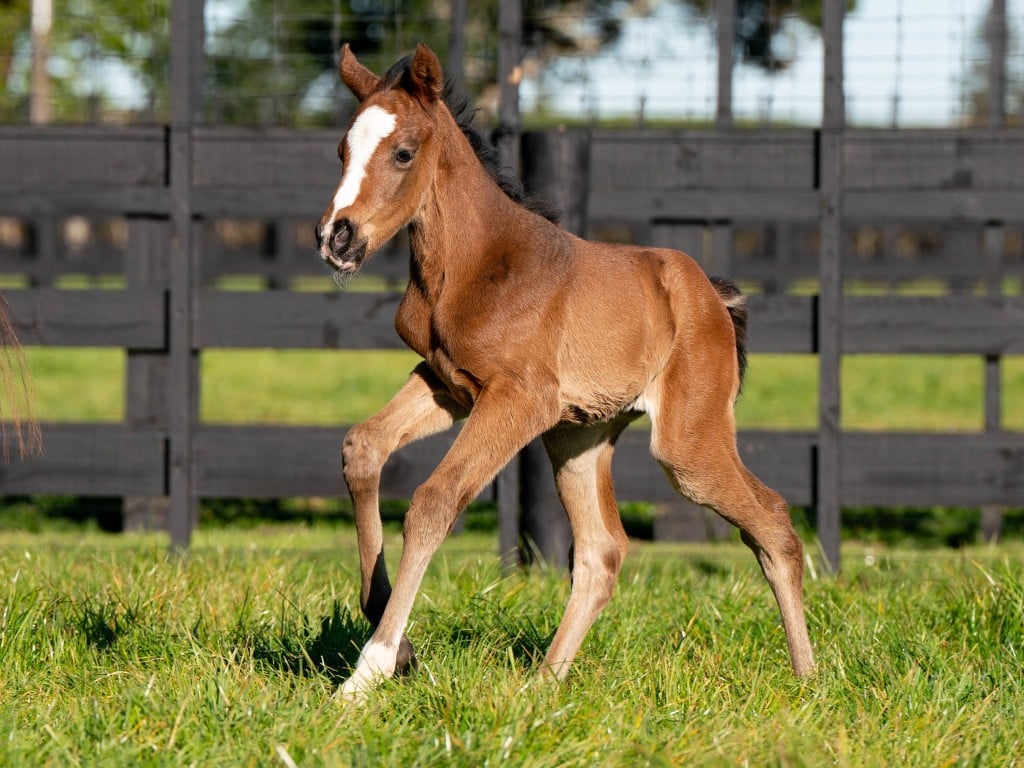
New Zealand’s shrinking thoroughbred horse population needs an additional 500 foals born each year to sustain its current racing calendar, or it risks a negative snowball effect on wagering and participation, the industry’s breeding experts say.
Research compiled by the New Zealand Thoroughbred Breeders’ Association indicates that the country’s foal crop has dropped by 10 per cent since 2020, and if the trend continues, it will create a major sustainability problem for the country’s racing industry.
In response to a report by The Straight that Australia’s foal crop is poised to drop to its lowest level in five decades, NZTBA has revealed New Zealand’s own stark figures, suggesting the country’s foal numbers have also fallen by 22 per cent over the past decade.
The statistics have been compiled by NZTBA chief executive Nick Johnson and Evergreen Advisory’s Lachlan Fitt, the former chief financial officer of Entain Australia and New Zealand, the company that holds the 25-year licence to run the New Zealand industry’s wagering business TAB NZ.
Their data also shows more than 500 breeders have exited the industry in the past 10 years, reducing active participants in that sector by almost a third, with the scale of the New Zealand industry exacerbating the problem compared to what is being experienced across the Tasman.
Johnson says that despite the precarious position of New Zealand’s declining foal crop, the New Zealand-bred horses’ ability to compete on the international stage was a major selling point for the industry.
NZ-suffixed horses have won about 20 per cent of Australia’s Group 1 races from 8 per cent of the runners in recent seasons.
“That continued global demand speaks to the underlying strength and reputation of New Zealand breeding,” Johnson says.
“That is a tremendous success story and one of the great strengths of the industry.”
“Modelling shows that roughly 35 per cent of yearlings through to three-year-olds are exported, along with a further 8 per cent of older horses.”
“In a system producing around 2700 foals, once you account for exports, natural attrition and horses that do not make it to the track, the domestic racing population is coming off a relatively small base.
“The objective is not to reduce export, it is to grow the base we are exporting from.”
For comparison, using Stud Book stallion covering data, Australia’s foal crop is predicted to be about 10,325 in 2026, which would be down about 900 on the number of foals born last year.
Evergreen’s Fitt warns that the local industry faces a field size crisis by the mid-2030s.
“Foal crop numbers get the attention, and rightly so. But the figure that really drives the racing product and wagering revenue is the number of horses actually racing each season,” Fitt says.
“In 2016, New Zealand had over 5100 individual thoroughbred starters. Last season that had fallen to 4,390.”
Any turnaround in foal crop numbers won’t be felt for a number of years, if it occurs at all, with the pair pointing out that the majority of horses who will fill New Zealand’s race fields in 2030 have already been born.
“Because there is a three-to-four-year lag between a foal being born and a horse appearing on a racetrack, the foal crop declines being recorded now will not fully show up in the racing population until financial year 27 and beyond,” Fitt says.
“On current trends, we expect starters to fall to around 3600 by the mid 2030s (and) that represents roughly an 18 per cent decline from today, which would mean either fewer races or smaller fields, both of which have a direct impact on wagering turnover.”
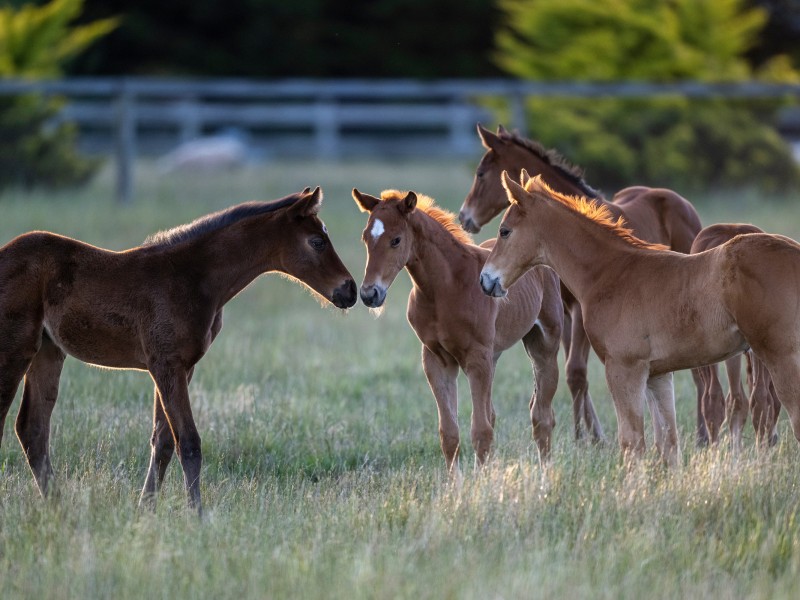
Johnson says prize money, which hit a high of $99.8 million last financial year, is not the only driver of reinvestment, particularly for breeders.
He argues that the New Zealand industry’s decision makers should explore the potential for incentives to encourage breeders to mate their mares, pointing to France’s breeders’ premiums of up to 21 per cent of prize money as one example.
“When you step back and look at the industry holistically, everything begins with breeding,” Johnson says.
“If the industry genuinely wants to grow the foal crop, it needs mechanisms that operate directly at the breeding level (and) France is the clearest example of that.
“Their breeder premium system, which returns a share of prize money to breeders based on racetrack performance, contributed to a 14 per cent rise in foal crops between 2005 and 2023, during a period where the global foal crop fell 38 per cent.
“There is no single silver bullet, but without targeted support at the breeding level, the numbers suggest the current settings are not enough.
“Ultimately, those types of measures need to be supported through how industry returns are prioritised, because that is the primary lever available to influence breeding participation.”
Latest statistics, however, show that France has also experienced a downturn in foal numbers, with an 11 per cent decline in last year: 5663 foals were born, compared to 6371 the previous year.
In an interview with TDN Europe in January, Nicolas de Chambure acknowledged France’s shrinking foal crop.
A director on France Galop, the equivalent of New Zealand Thoroughbred Racing or an Australian principal racing authority, de Chambure also manages breeding operation Haras d’Etreham and is a board member of France’s thoroughbred breeders association as well as its representative on the European Breeders’ Fund.
“Our job at France Galop is also to maintain the confidence in the market and to maintain the investment of breeders to avoid too much of a drop in the foal crop,” de Chambure said earlier this year.
“Otherwise, it means fewer horses in training, fewer runners and less gambling on those races.
“So, we need to maintain the numbers to fill those races and to prepare for the future.”
In New Zealand, data released by NZTBA found that five people had 101 mares or more in 2025, while nine Kiwi breeders had between 51 and 100 mares, and a further 18 had between 21 and 50 mares.
But it’s the hobby or small breeders where the decline is being felt the hardest, with 635 breeders owning one mare in 2025, down 31 per cent in a decade, with similar declines for those with between two and seven mares.
“One of the striking things globally is how often ‘growing the foal crop’ is talked about, but how rarely that is backed up with targeted action at the breeding level,” Johnson says.
“That has certainly been the case here in New Zealand, and experiencing it in my role, I would say it has not yet been treated as a tangible industry priority supported by a clear and coordinated strategy.”
Author

Related Articles
Owners resist sale ring riches to retain Stefi Magnetica
Newly retired Stefi Magnetica won’t be seen through a sale ring, with the dual Group 1 winner to be retained by her owners as a high-calibre broodmare.
Run The Numbers – International mare influence surges at Australia’s major yearling sales
Australian breeders’ desire for intentional pedigrees has arguably never been stronger, with a historically high number of progeny of non-Australasian-bred mares represented at the Inglis Australian Easter Yearling Sale. Run The Numbers examines long-term trends.
JJ Atkins winner Cool Archie to stand at Newhaven Park
Group 1-winning two-year-old Cool Archie will stand at Newhaven Park at Boorowa, the place of his birth, after studmaster John Kelly struck a deal with owner Max Whitby.