
Run The Numbers – International mare influence surges at Australia’s major yearling sales
Australian breeders’ desire for international pedigrees has arguably never been stronger, with a historically high number of progeny of non-Australasian-bred mares represented at the Inglis Australian Easter Yearling Sale. Run The Numbers examines long-term trends.
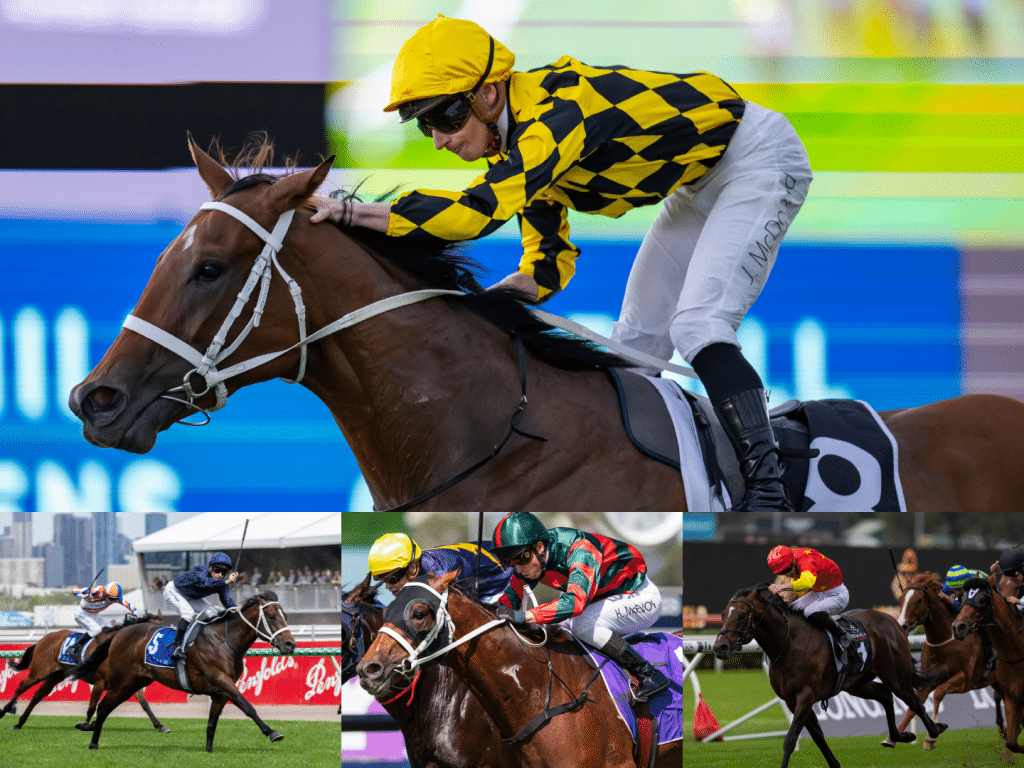
Autumn Glow’s hitherto 11-race unbeaten streak has captured the public’s imagination, much in the same way that her own sire, The Autumn Sun’s short but successful career did seven years ago.
Both graduates of the Australian Easter Yearling Sale, what that pair also share, apart from the obvious, is that both are out of internationally bred mares.
They are not the only recent Inglis Group 1-winning Easter graduates whose dams were bred outside Australia or New Zealand. Others in recent years include Switzerland, Glint Of Hope, In The Congo, Wild Ruler and Funstar.
With such a run of results, it shouldn’t surprise that the number of yearlings out of non-Australasian mares is on the increase.
In this year’s Easter catalogue, there are 86 yearlings that fit that category, the highest number since the 2017 sale. Those 86 lots make up 18.22 per cent of the 2026 catalogue, the highest percentage of any sale in the past decade.
The 2026 Easter sale features the progeny of 27 mares bred in Ireland, 26 from the USA, 12 from Great Britain, nine from France, eight from Japan, two from Canada, and one each from Germany and South Africa.
The trend towards more international mares can also be seen in the Magic Millions Gold Coast Yearling Sale held in January. While this year’s number of yearlings out of non-Australasian mares dropped to 144 from 157 in 2025, in terms of percentage of the catalogue, it rose from 11.21 per cent to 11.79 per cent. That is also the highest percentage in the past decade.
Graduate success is one reason for this, but another is the influence of major international breeding operations such as Yulong. Of Yulong’s 41-strong draft at the 2026 Easter Sale, 10 carry a suffix other than Aus/NZ. It was 22 out of 69 on the Gold Coast.
But it is also longer-term Australian vendors who are looking for that international flavour.
In this year’s Easter catalogue, Newgate has five of its 25 yearlings out of non-Aus/NZ mares, North Bloodstock five of 14, Sledmere nine of 27, Segenhoe six of 23. Silverdale four of 14, Vinery four of 10 and Widden six of 28 and Arrowfield nine of 66.
But rather than yearlings of this profile taking the spots of the progeny of Australian-bred mares at the elite yearling sales, it appears the trend is at the expense of New Zealand-bred mares.
If you look at the percentage of overseas-bred (including NZ) mares in Easter catalogues since 2017, it has largely been unchanged. In the past five editions, it has stood in the band between 29 and 31 per cent of the catalogue.
This year’s total of 137 is actually below the average for the past decade, which stands at 141.2.
However, the number of progeny of NZ-bred mares, 51, is the lowest in over 10 years, and significantly down from the height of 76 reached in 2022.
Interestingly, this trend is less evident in the Magic Millions’ catalogue, where the number of yearlings out of Kiwi-bred mares has jumped over the past three editions.
While there are some particular factors to 2026 which may impact the Easter representation from Kiwi-bred mares, such as New Zealand Bloodstock’s campaign for local breeders to keep their best stock in NZ this year due to the 100th edition of the Karaka sale, the long-term trend for Easter indicates a preference for yearlings out of non-Australasian mares over Kiwi-bred mares.
It is interesting to note that of the 25 yearlings that secured $1 million or more at Easter last year, three were out of non-Australasian mares and two out of NZ-bred mares.
Going back over the past four completed Easter sales, of the 89 seven-figures lots, 11 were out of NZ-bred mares and 11 were out of mares bred outside of Australasia.
That means 24.7 per cent of yearlings sold at Easter for $1 million or more since 2022 have been out of overseas-bred mares, compared to 30.06 per cent of the overall catalogue.
At the top end at least, these progeny of those mares still don’t command the same premium as the progeny of Australian-bred mares.
A quick look at the average prices of those yearlings at last year’s sale backs that up. The average price of a yearling out of a non-Australian bred mare was $416,036, compared to $463,311 for progeny of Australian mares.
The average price for a yearling out of a Kiwi-bred mare at Easter in 2025 was $370,521, while those with a non-Australasian dam averaged $450,714.
Inglis Easter Yearling Sale representation of internationally bred mares
*2020 data from original sales catalogue
Author

Related Articles
Run The Numbers – The mistruths about non-Group 1-winning sires
After Wordsmith became the eighth non-Group 1 winning racehorse to sire a Group 1 winner in Australia this season, Run The Numbers looks at how commonplace this pattern has been over the years.
Run The Numbers – Jigsaw’s streak a two-in-a-million chance
While one famous equine winning streak came to an end earlier this month, at the weekend, another rolled on as Jigsaw extended his run to seven straight victories. We look at Australian racing’s best current streaks.
Run The Numbers – Streets ahead in the damsire stakes
Idle Flyer’s victory in the Queen of the Turf Stakes provided her late damsire Street Cry with his fifth Australian Group 1 winner in that role this season, well clear of any other stallion as the remarkable record of the produce of his daughters continues to build.