
‘No one is trying to buy it’ – WA TAB future and racing review under scrutiny in estimates hearing
The future of the WA TAB, political appointments, money-laundering fears and racing’s shrinking revenue base have collided in a budget estimates exchange between Western Australian Racing Minister Paul Papalia and opposition spokesman Lachlan Hunter.
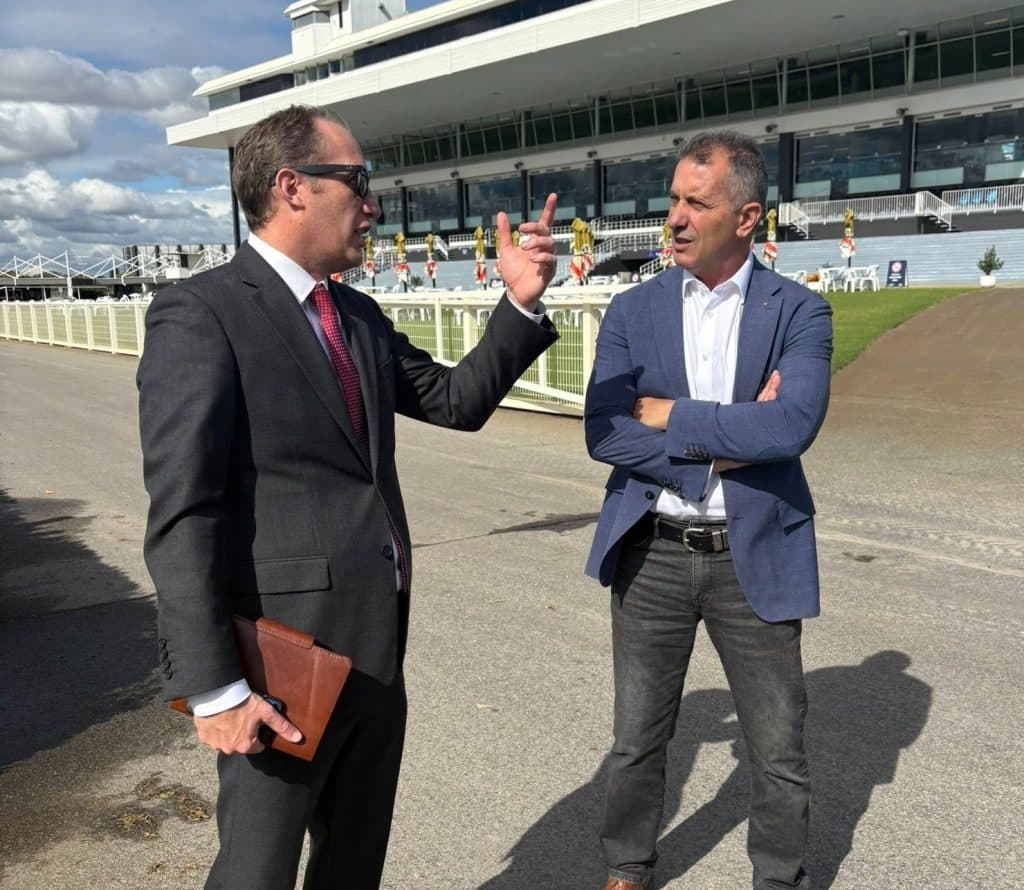
Questions about the long-term future of the WA TAB and the financial sustainability of the state’s racing industry have been raised during a budget estimates hearing examining revenue, governance and funding pressures across the sector in Perth.
WA Racing Minister Paul Papalia said there was no buyer for the TAB and ruled out any active consideration of privatisation.
“I do not have a position on the TAB other than … there is no one trying to buy it,” he told the hearing in response to questioning from opposition racing spokesman Lachlan Hunter.
The WA TAB has been the subject of intermittent privatisation speculation for more than a decade, with successive governments examining whether a sale could unlock capital while reshaping how wagering revenue is distributed to the racing industry.
The most developed proposal emerged under a previous Labor government, which explored options ranging from partial to full privatisation as part of broader wagering reform considerations.
That process advanced to early market engagement and advisory work, with modelling focused on impacts to racing funding guarantees and long-term revenue streams for the three codes.
However, while betr was lined up as a possible suitor, the plan was ultimately abandoned over concerns about market conditions, stakeholder opposition and the complexity of maintaining stable racing funding under private ownership.
Since then, the TAB has remained in public hands under Racing and Wagering Western Australia (RWWA), although the question of future ownership has continued to surface during policy debates and budget scrutiny.
During the hearing, Papalia referred to that earlier privatisation attempt when he said: “I tried to sell it. I was the minister when we tried to sell it.
“Actually, we began the process and were well down the path, and then the term ended, my role as minister ended at that time, and the next guy failed.”
The exchange came amid broader questioning about RWWA’s financial position, which relies on wagering revenue to fund prize money, infrastructure and integrity services across thoroughbred, harness and greyhound racing.
The industry’s funding base has been under pressure from shifts in customer behaviour, including declining retail activity and continued growth in online bookmakers, which has reduced the proportion of turnover flowing through the TAB system.
Those trends have contributed to the ongoing debate about whether current funding arrangements remain sustainable in the long term.
Much of the hearing focused on the state government’s independent review into RWWA’s financial position and governance, composition and scope.
Hunter asked why the review was announced on December 30, in the usual holidays period between Christmas and New Year’s Day.
“My office never sleeps, I guess,” Papalia said in response to concerns about the timing of the announcement.
He said administrative hold-ups, including the withdrawal of one proposed panel member for family reasons, contributed to a delay.
The political affiliations of the review panel were also put under the microscope following the appointment of former Labor minister David Templeman as chair.
Papalia acknowledged some appointees were likely members of the Labor Party but said independence was defined in relation to the racing industry rather than politics.
“The point is that it is not about whether it is politically independent,” he said. “It is very much independent of the racing industry.”
He said selecting reviewers from within the racing sector risked conflicts of interest.
“It is pretty difficult to find a person involved in the racing sector who is not conflicted in some way or other to conduct a sustainability and governance review of that sector,” he said.
The government instead sought external expertise, he said, to ensure the review was not influenced by industry participation or internal stakeholder interests.
“I had a lot of people from the industry offering their services when we first announced the intent, but the idea was not to have anyone who might be questioned as to their motivations,” he said.
The hearing confirmed that each of the three reviewers will be paid $160,000 for their work.
Papalia defended the panel, citing the members’ professional experience.
“The role of the review is a very specific task for which each of the reviewers has a range of skills, experience and knowledge that they bring,” he said.
“I think it is no small thing that David Templeman … is a very experienced former minister in two governments.”
Integrity issues in the broader gambling sector were also examined, with Papalia linking racing to national anti-money laundering scrutiny led by AUSTRAC following increased oversight of major wagering firms Entain and Tabcorp as well as casino operators.
He did not confirm if the state-owned WA TAB was expected to come under similar scrutiny.
“The concerns regarding anti-money laundering and counterterrorism funding activities … are also applicable to racing,” he said.
“I have had indications from AUSTRAC that it is looking further afield.
“It has gone further afield and is looking towards racing as well because it is vulnerable just by its nature.”
Point-of-consumption tax arrangements were also raised, with Hunter asking whether changes were being considered to increase funding for the racing industry.
Papalia said the issue remained under review but cautioned against expecting a straightforward fix.
“It is not necessarily that simple that an adjustment of the disbursements of point of consumption tax would result in the outcome the member is talking about,” he said.
“Have I been briefed? Well, I have talked about the point of consumption tax, yes.
“I am really looking forward to the review findings because it will look at sustainability and nothing is off the table. It is considering all matters and the point of consumption tax might be one of them.
“(The) motivation (for the inquiry) was the fact that we confront that revenues generated by wagering for the industry are diminishing as betting habits and attendance at racecourses and tracks and the like diminish as well over time.
“It is just the nature of the sector. At the same time, there are increasing operational costs and there is a challenge around the sustainment of infrastructure. That is a challenge.
“We have diminishing money coming in and costs are going up.”
Regional racing funding and infrastructure commitments were also highlighted, with Papalia outlining recent projects across country clubs including Geraldton, Bunbury, Carnarvon, Esperance and Northam under the Regional Racing Infrastructure Fund.
However, when asked whether he could guarantee there would be no future reductions to regional race meetings across the three codes, Papalia declined to provide an assurance.
“No, I cannot do that,” he said.
“We have implemented a review … for the purpose of addressing the challenge we have that there is not enough money being generated to fund the increasing costs over time.”
Related Articles

NSW government dismisses petition to broaden Hazzard Review
A petition to expand the scope of the Hazzard review has been denied by Racing Minister David Harris, who said the proposed changes would make the review “fundamentally different in nature”.
‘No longer fit for purpose’ – Racing Australia proposes major changes to syndication
Racing bodies will be left to oversee the regulation of much of Australia’s thriving syndication industry under a preliminary proposal put to the Australian Securities and Investment Commission by Racing Australia.
$1.7 million washout – NZ racing turnover hit by Timaru abandonment and Trentham postponement
Abandoned races and rescheduled meetings has cost New Zealand racing an estimated $1.7 million in turnover, according to modelling by TAB NZ and betcha operator Entain.
