
Public liability? – The changing face of holiday racing in Australia
Melbourne Cup day aside, metropolitan racing on a public holiday in Australia is a shadow of its former self as clubs and regulators grapple with high costs and changing consumer habits.

When Lonhro turned almost certain defeat into an Australian Cup win that is etched into the memory as one of the more extraordinary victories of the modern era, his heroics happened on a Monday.
Unless there is a seismic shift in wagering patterns or an unforeseen need to transfer a race meeting of such stature, it’s highly improbable a Group 1 race will ever be staged again on a Monday in Australia.
Lonhro won on a Labour Day for Victorians but racing on national public holidays has changed markedly since then with metropolitan race clubs and principal racing authorities trying to find the right balance between profitability, a racing schedule that can become congested and consumer demand.
The Victoria Racing Club, which hosts its traditional ANZAC Day meeting at Flemington on Friday, concedes public holiday racing has its challenges.
“We struggle during public holidays,” chief executive Kylie Rogers told The Straight during an interview on the eve of this year’s Australian Cup, a race that now occupies a Saturday timeslot.
“And it is a discussion that we are having with Racing Victoria (RV) around the scheduling of races to ensure that we can put our best foot forward to be profitable.”
Rising costs, penalty rates and stagnant turnover have conspired to make public holiday racing a serious financial imposition for some clubs.
 Bren O’Brien
Other factors such as the AFL and NRL scheduling marquee public holiday matches during their seasons are also at play.
And while RV says its commitment to public holiday racing remains strong, some key metrics are beyond its control.
“Public holidays provide a good opportunity to showcase thoroughbred racing to communities on a non-workday for most and we see them playing a role into the future,” an RV spokesperson said.
“What has become more pronounced in recent times is that engagement with public holiday meetings, both from a wagering and attendance viewpoint, is influenced by the day of the week on which they fall.
“Modern behaviours around holidays and travel appear to play a role in that.
“Public holiday meetings that fall on a Friday are going to outperform those on a Monday regardless of the venue.”
Lonhro’s memorable Australian Cup win was on a public holiday Monday.
That should be at least welcome news for the VRC and the ATC as they commemorate ANZAC Day but public holiday racing at a metropolitan level looks nothing like it did between the 1960s and Lonhro’s era in the early 2000s.
Group 1 racing often underpinned programming on public holiday Mondays that coincided with major racing carnivals.
Easter Monday was once one of the most significant days of the Sydney autumn carnival while the Brisbane Cup and JJ Atkins used to be run on the Monday of the then-Queen’s Birthday long weekend.
The Metropolitan was held on a NSW Labour Day holiday on the first Monday in October.
The abovementioned races have been shifted to capture maximum attention in racing’s prime time on Saturdays.
Metropolitan racing in Sydney and Melbourne on these public holidays survives but the overall quality of horseflesh has been lessened in keeping with reduced purses for races that don’t have black-type status.
NSW was the first major jurisdiction to implement a different scale of prize money for city public holiday racing and Victoria followed suit in 2023. Melbourne Cup day is the only exception.
Standing alongside the Melbourne Cup as a designated public holiday for racing is the South Australia Jockey Club’s (SAJC) Adelaide Cup meeting.
Adelaide Cup day was given public holiday status in the early 1970s and the state government gazetted for it to remain that way despite a move from May to early March in 2006.
The placement of the Adelaide Cup in relation to other staying races on the Australian calendar seems to be an annual debate but the SAJC says the meeting works well despite competing with other public holiday attractions in the city.
“There’s always discussions about this, I’ve been here seven years and there’s a discussion pretty much every year,” SAJC chief executive Grant Mayer told Racing.com in 2024.
“For me, I think everything is on the table. The most important thing for the Cup for us is around the public holiday, we own that day in March and that’s what we want.
“Ultimately, it’s a decision for the state government to talk about where the public holiday sits.”
The other public holiday success story has been Boxing Day at Randwick, a relatively modern phenomenon drawing over 20,000 people, in what has become a celebration for ex-pats from Ireland.
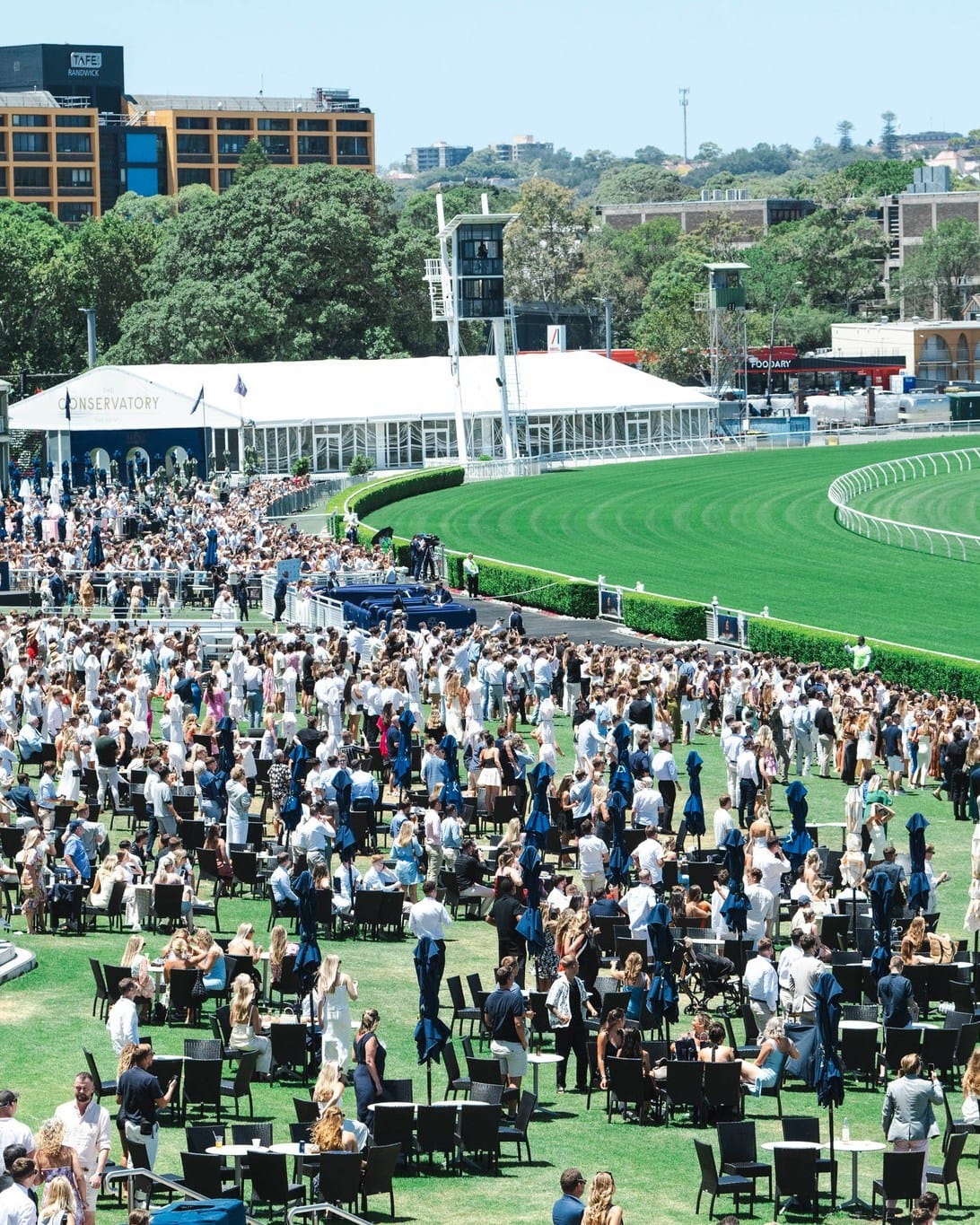
Of the 18 meetings programmed around Australia on ANZAC Day this year, Flemington and Randwick will be the only metropolitan venues.
Flemington hosts two black-type races – the $175,000 Anzac Day Stakes and the $200,000 VRC St Leger – both at Listed level.
There is no stakes racing on Randwick’s Kensington track but a $100,000 race for maidens and a $150,000 benchmark event give the meeting more substance than a usual midweek offering.
Provincial and country meetings dominate the ANZAC Day landscape, providing a regional approach that RV has used to add Good Friday to its schedule since 2022.
So far four different clubs across the state have hosted a Good Friday meeting that includes a $500,o00 feature race.
Good Friday racing in Victoria would appear to be a winner for RV as it starts to piece together its 2025/26 fixtures.
“Our process to confirm the race dates for the 2025/26 season is nearing completion,” the spokesperson said.
“It will again give consideration to the wishes of clubs, along with opportunities to maximise engagement and industry returns.
“The allocation of race dates is the culmination of an extensive consultative process between RV and its clubs, participants and other industry stakeholders following the submission of their requests for the season.”
Related Articles

Celebrations and setbacks – Chris Munce on racing’s fickle fortunes
Having experienced enormous highs and lows of racing as a jockey and a trainer, Chris Munce knows he can rebound from the injury setback to his star colt Cool Archie this week. The feeling is slightly different this time, shared with his children Corey and Caitlin, who are key parts of his training business.

What will be the five biggest stories in wagering in 2026?
As the calendar turns into another year, it’s time to turn our focus to the crystal ball to see what might shape the wagering industry headlines of 2026, and there is a certain familiarity to our predictions.
Defining the chosen few – Andrew Rule on Australia’s champions
Who are the greatest Australian race horses? And what qualifies them for this honour? In this extract from his book The Chosen Few, Andrew Rule discusses the concept of champion and what defines them.