
Racing NSW wins appeal in bid to put ATC into administration
The Court of Appeal has cleared the way for the Australian Turf Club to be put into administration after Racing NSW secured a major legal win which upheld its powers under the Thoroughbred Racing Act.
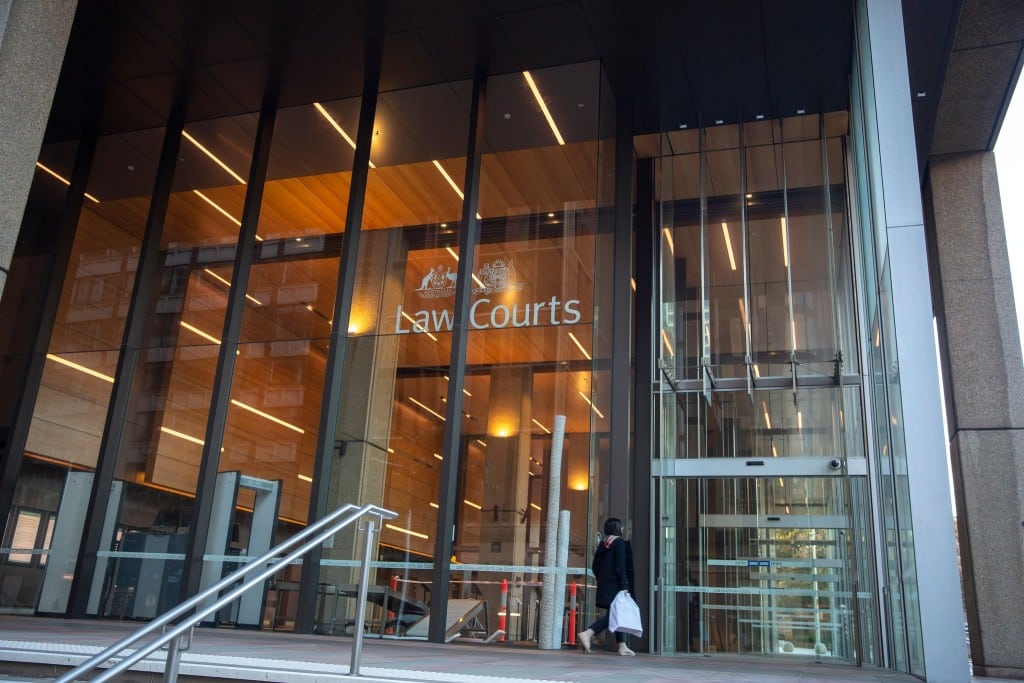
Racing NSW has succeeded in its appeal against a Supreme Court decision which prevented it from putting the Australian Turf Club into administration, with the Court of Appeal confirming it acted within its powers in taking that action.
The Court of Appeal hearing, before Justices Jeremy Kirk and Kirstina Stern and Acting Justice John Griffiths, took place in late May, with the judgment handed down on Friday.
Among the court’s orders was that the original Supreme Court ruling by Justice François Kunc in February be set aside and that the substantial costs of the legal proceedings be borne by the ATC.
The court also ordered that a stay be put on the appointment of Morgan Kelly as ATC administrator until 5pm on July 13. This was done so the ATC could consider whether it wanted to apply for special leave to appeal to the High Court.
In the judgment, the Court of Appeal found Justice Kunc had erred in applying too narrow a definition of Racing NSW’s powers under the Thoroughbred Racing Act (TRA), in that he held that the finances and corporate governance of the ATC do not fall within the definition of horse racing in the TRA.
The Court of Appeal said it was “comfortably satisfied” that the promotion, conducting or controlling of race meetings, the operation of facilities and “ensuring that both appropriate corporate governance and adequate finances are available to enable race meetings to be appropriately managed and operated” all fall within the definition of horse racing for the purpose of the Act.
It follows that under that provision, Racing NSW was authorised to appoint an administrator, as it had sought to do back in December.
The court also determined that the actions taken by Racing NSW during the process were within both the scope of its functions and powers under the Act.
The ATC had argued successfully before the Supreme Court that Racing NSW erred in its treatment of a key KordaMentha report it had commissioned and that error amounted to a jurisdictional error invalidating the administrator appointment.
However, the Court of Appeal rejected this determination.
“It is not easy to understand how any misreading of the KordaMentha report (assuming that there was a misreading which amounted to an erroneous finding of fact as claimed by the ATC) was a material error,” it said.
Furthermore, the Court said it was not persuaded that “RNSW’s assessment of the KordaMentha report, in the factual context described above, involved irrationality, illogicality or lacked an intelligible justification”.
Among the ATC’s other arguments was that the power to appoint an administrator was not available to Racing NSW due to the Merger Act which established it as a club, and that such a power would be inconsistent with various provisions of the Corporations Act.
However, the Court found that creating a special immunity for the ATC was not the intention of the Merger Act.
It also found that the Corporations Act authorised the concurrent operation of state laws and that an appointment of an administrator under the TRA would not “alter, impair or detract from the operation of any of the provisions of the Corporations Act identified by the ATC”.
Placing the ATC into administration could see the removal of its five-person board, chairman Tim Hale and vice-chair Caroline Searcy, as well as Annette English, David McGrath and Bernie Brookes, with Kelly to assume control.
However, under the Corporations Act, the administrator can retain some directors to assist in his duties, albeit their powers are removed.
It is believed there would not be any changes to the ATC’s executive, which is currently headed by Steve McMahon.
The ATC acknowledged the ruling in a statement on Friday but maintained its opposition to being placed into administration.
Hale said the Board remained firmly of the view that the appointment was unwarranted.
“The ATC Board strongly believes the appointment of an administrator is unnecessary,” he said.
“Throughout these proceedings, the Board has acted in what it believes to be the best interests of the Australian Turf Club and its Members.”
The club emphasised that it had continued to operate and implement governance and financial improvements while the legal challenge proceeded.
“The Board and management have always been committed to the highest standards of governance and to ensuring the long-term sustainability of the Club,” Hale said.
“Importantly, the Australian Turf Club has continued to move forward during this period.”
He pointed to a series of developments, including the appointment of a permanent chief executive, changes to board composition and progress on financial stability, as evidence of the club’s ongoing performance. He also expressed a preference for a more cooperative relationship with the regulator.
“It is not in the interests of racing for Racing NSW and race clubs to be in conflict. We should be working together,” he said.
“We remain committed to working constructively with Racing NSW, our Members and all industry participants in the best interests of racing in New South Wales.”
Hale said the club’s priorities remained unchanged.
“Our focus remains exactly where it should be, serving our Members, supporting participants, delivering world-class racing and ensuring the Australian Turf Club continues to prosper for generations to come.”
Author

Related Articles
Payne daring to dream after Proxima Dea’s ‘special’ Oaks win
Proxima Dea had every right to falter at the 2500m staying distance of the VRC Oaks but her superior staying qualities have her veteran trainer David Payne pondering a Melbourne Cup.
🔒 🔒 Dragged down by legal bills, ATC posts $4.8 million loss
The Australian Turf Club’s annual report has revealed the exact cost of its failed court challenge to Racing NSW: $4.1 million of its $4.8 million deficit in 2025/26 is attributable to its fight to prevent the appointment of an administrator.
🔒 🔒 From Elite to liquidation – Syndication company collapses
NSW syndicator Elite Thoroughbreds has gone into liquidation, with documentation showing unsecured creditors, including Inglis and Magic Millions, are owed over $400,000 and owners potentially left out of pocket.
