
🔒 🔒 Dragged down by legal bills, ATC posts $4.8 million loss
The Australian Turf Club’s annual report has revealed the exact cost of its failed court challenge to Racing NSW: $4.1 million of its $4.8 million deficit in 2025/26 is attributable to its fight to prevent the appointment of an administrator.
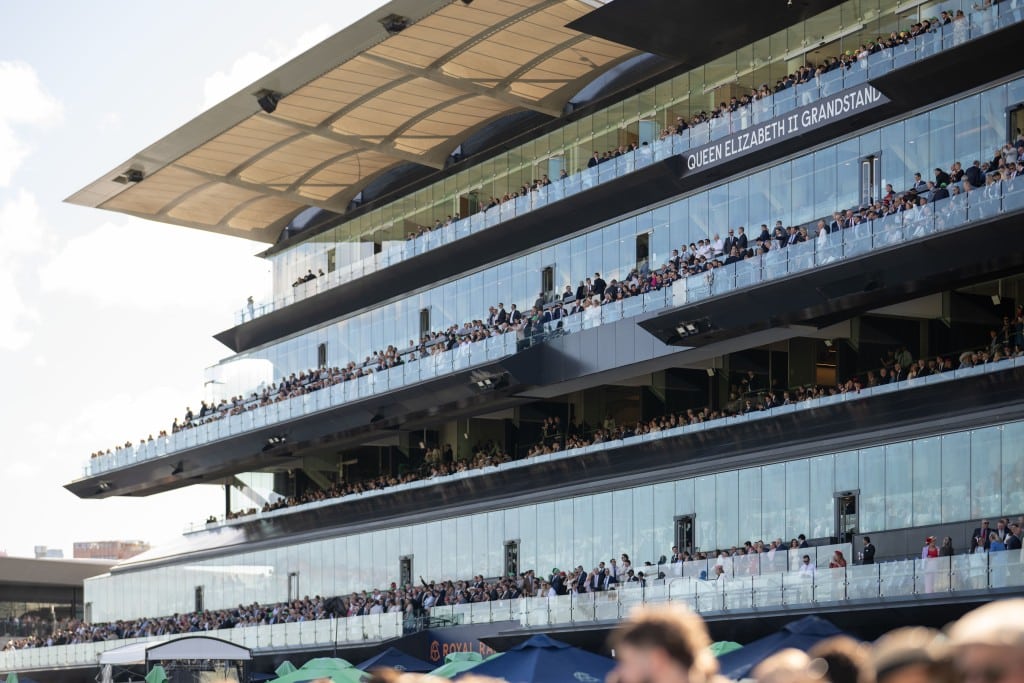
The Australian Turf Club posted a $4.8 million loss for the year to July 31, with $4.1 million in costs from a failed legal bid to prevent Racing NSW from putting the club into administration, blotting an otherwise improved result.
The annual report, which includes a report from administrator Morgan Kelly, was released to members on Thursday. Without the legal costs of the NSW Supreme Court challenge, the loss would have been about $735,000, compared with the $2.594 million deficit recorded in 2024/25.
Revenue rose 1.5 per cent to $379 million, up from $373.4 million. Expenditure climbed 2.1 per cent to $382 million, and operating EBITDA, as presented by the club, fell to $13.5 million from $14.5 million.
While the club remains in administration, directors’ ordinary management powers are suspended, and members have been told there will be no elections for new board positions this year.
However, the club will hold an annual general meeting on November 26 at Randwick.
An advisory sub-committee of Tim Hale, Caroline Searcy and Bernie Brookes from the elected board, with Racing NSW board members Simon Tuxen and Michael Crismale, advises Kelly.
Racing NSW first appointed Kelly as an administrator on December 15, 2025, and the ATC began proceedings against the appointment that day.
The club’s board won its legal fight at first instance, where the court found the appointment was not authorised under the Thoroughbred Racing Act 1996. On June 19, however, the Court of Appeal set aside those orders and ordered the ATC to pay the costs of the proceedings.
Kelly, of EY Parthenon, took control on July 8. In his report to members, he describes the legal bill as a significant one-off cost.
“While the club’s underlying assets and operations remain strong, the continued loss-making performance highlights the need to strengthen financial and commercial discipline across the organisation,” Kelly wrote.
“In a number of areas, costs have increased over time and opportunities to maximise revenue have not been fully realised.”
The accounts show how those costs changed:
- Personnel expenses rose 5.2 per cent to $63.3 million.
- Commercial expenses rose 3.6 per cent to $69.6 million.
- Facilities maintenance rose 6 per cent to $11.6 million.
- Administrative expenses fell to $17.785 million from $18.8 million.
- Prize money, trophies and subsidies were steady at $211.1 million.
The club’s own revenue lines improved. Commercial revenue increased to $83.8 million from $80.7 million and broadcast rights to $36.2 million from $33.8 million, while property revenue more than doubled to $2.8 million.
TAB distribution revenue was $87.4 million, down from $87.9 million, and the Racing NSW prize money subsidy was $146.4 million, down from $146.5 million. Together they account for about 62 per cent of the club’s revenue.
The going-concern note shows how much the ATC relies on the regulator it took to court. TAB distributions received from Racing NSW include a monthly top-up that keeps the club’s annual total consistent.
The administrator’s forecasts assume that the top-up will continue at baseline levels consistent with prior years, although the accounts state there is no formal agreement covering the arrangement.
Racing NSW also guarantees the club’s fully drawn $30 million Commonwealth Bank of Australia facility. Because that loan was due to expire on October 10, 2026, it was classified as a current liability.
As a result, current liabilities exceeded current assets by $37.201 million at the balance date, up from $8.709 million a year earlier.
The facility was extended on October 9 for a year, to October 10, 2027, and the club says it will seek to refinance before then.
Net cash from operating activities fell to $7.8 million from $22 million, while cash available for day-to-day operations dropped to $15.2 million from $21.9 million.
The interest-free Racing NSW loan used to build the Winx Stand has now been fully repaid. A year earlier, $1.371 million was still owing.
Kelly said his review is examining financial management, budgeting and forecasting, property and infrastructure, and the club’s broader organisational and operating model. He said the opportunities identified so far will be a key focus as he works to strengthen the club’s long-term financial sustainability.
“While there is still work to be done, the Club’s assets, people and position within Australian racing provide a strong foundation for the future,” he said.
Chief executive Steve McMahon’s report points to growth in other parts of the business. Membership rose 4.5 per cent to 12,070, with under-35 membership up 28 per cent. Meetings and events generated $23.6 million across 329 events, and TAB Everest Day drew 50,167 racegoers.
“The challenges we have faced have reinforced an important truth: the future of racing will be built through collaboration, innovation and a willingness to embrace change,” McMahon said.
“I am confident that, together, we can ensure the Australian Turf Club remains a strong, sustainable and dynamic leader of Australian racing for generations to come.”
Author

Related Articles
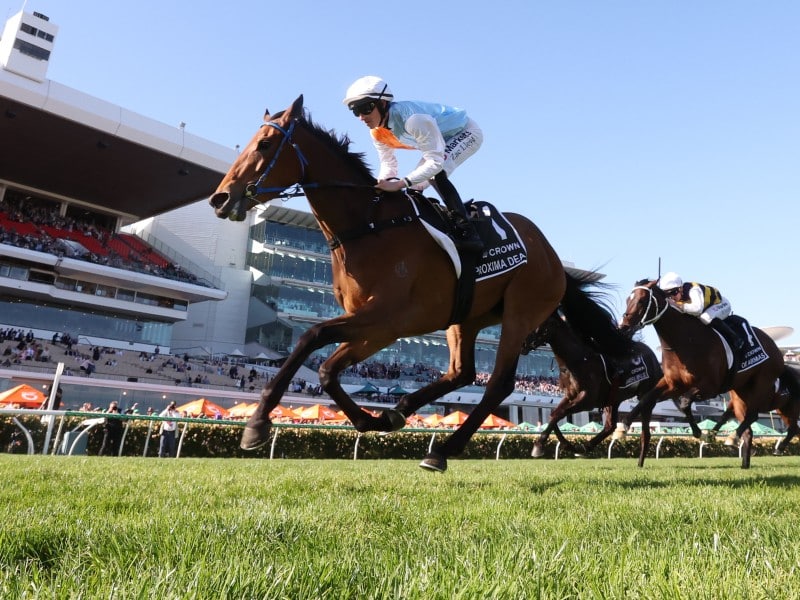
Payne daring to dream after Proxima Dea’s ‘special’ Oaks win
Proxima Dea had every right to falter at the 2500m staying distance of the VRC Oaks but her superior staying qualities have her veteran trainer David Payne pondering a Melbourne Cup.
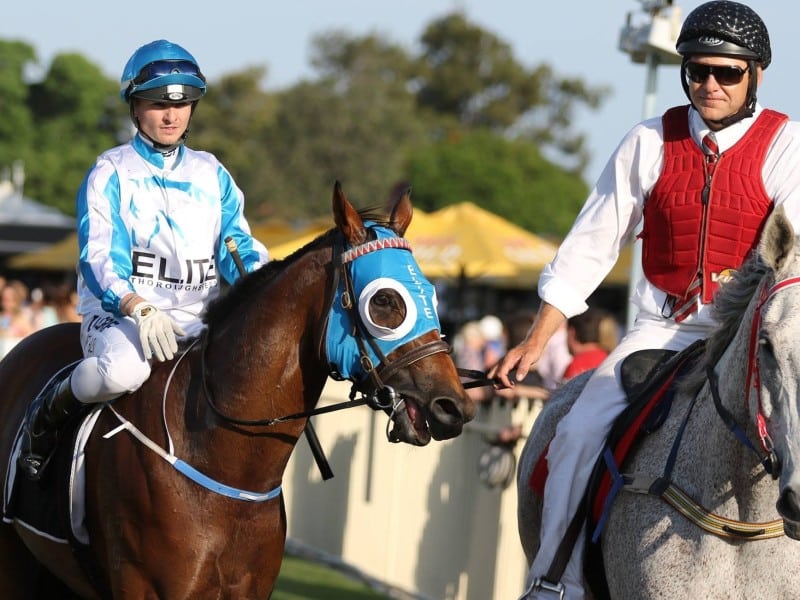
🔒 🔒 From Elite to liquidation – Syndication company collapses
NSW syndicator Elite Thoroughbreds has gone into liquidation, with documentation showing unsecured creditors, including Inglis and Magic Millions, are owed over $400,000 and owners potentially left out of pocket.
The Kanga comeback – former MRC chairman to stand in VRC election
John Kanga’s long-rumoured tilt at a position on the Victoria Racing Club board has materialised as the high-profile former Melbourne Racing Club chairman and club merger proponent puts his name forward for this month’s election.
