
Run The Numbers – Yearling market grows despite drops at biggest sales
Australia’s yearling market has grown in almost every key indicator to this point in 2026, despite the two major sales taking a step back. Run The Numbers takes the temperature after the Australian Easter Yearling Sale.
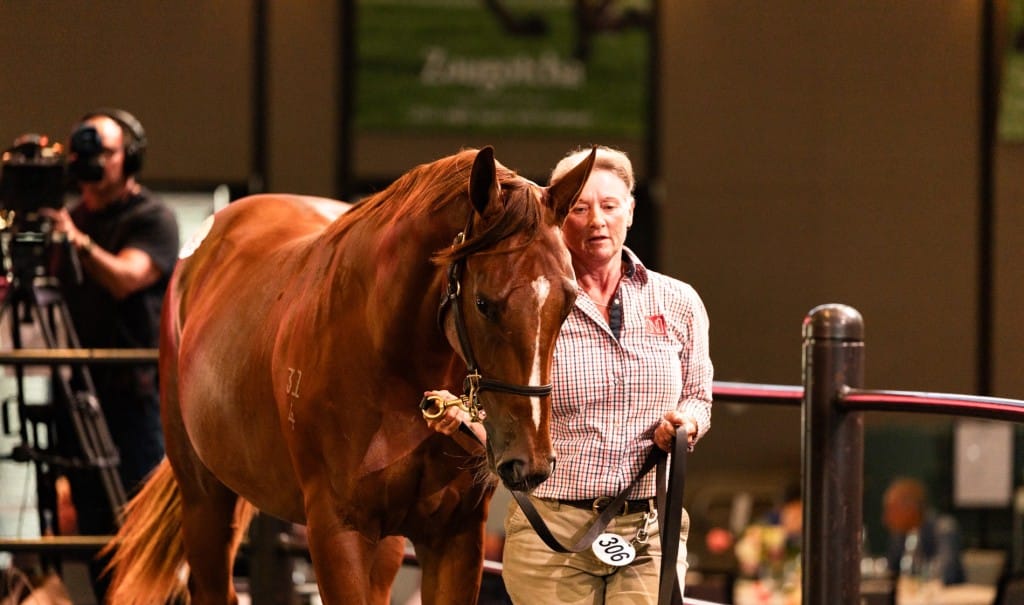
There was a hint of disappointment in Inglis Bloodstock chief executive Sebastian Hutch’s voice as he reflected on the fact that this year’s Australian Easter Yearling Sale did not live up to the bullishness of 12 months earlier.
Hutch has long said the two most important metrics for him are clearance and aggregate and both took a step backwards at the 2026 Easter edition. As it stands, clearance for the sale is at 75.9 per cent, down from 87.8 per cent 12 months ago and 80.2 per cent last year.
Inglis did present a larger catalogue this year than last year, up 51, and the total offered, after withdrawals was 415 as compared to 388. There were 100 horses passed in, 59 more than last year, in a more selective market.
The 315 horses sold over the past two days at the Riverside were, with the exception of the pandemic-impacted 2020 edition, the fewest traded at the famous sale this century.
It added up to a $5.595 million drop in aggregate spend year-on-year, a 3.96 per cent decline, with $145.88 million spent. That was the lowest Easter aggregate since 2023.
However, the average of $463,111 was the highest ever at this, or indeed any Australian yearling sale. That stat alone shows that, while Inglis didn’t feel it lived up to Easter’s formidable reputation, its standards are extremely high.
That stat might also point to a two-speed market – that the top end remains strong but the rest of the market is lagging, and that might have been the case at Easter, especially when you consider the number of seven-figure lots was one more than last year and just one off the all-time record, but it doesn’t reflect in the data across the rest of the yearling season.
In fact, Australia’s two most prominent sales, Easter and Magic Millions January, both saw overall spend decline, while the rest of the market rose significantly.
Total spend across Easter and Magic Millions was down $10.682 million, but every other sale, apart from Adelaide, grew. Across every other Australian sale, Classic, Premier, Tasmania, Perth and Gold Coast March, the spend was up $18.4 million.
The total Australian yearling market to this point in 2026 is up $4.1 million compared to 2025 to $532.86 million. The average price of a 2026 Australian sold yearling has also jumped to $156,264, up from $154,877 in 2025. It has also increased on the 2024 number.
The overall number of yearlings sold has remained almost the same year on year, at 3410, compared to 3414, indicating demand from buyers is not waning, albeit those public auction totals are low when compared historically.
It is possible to argue that the reasons behind the drop in overall spend at Magic Millions January and Inglis Easter were quite different.
Magic Millions did rationalise its catalogue and sold 83 few horses this year than last. But it also passed in 105 fewer horses, with buyers more willing to meet the market.
There appeared a greater disconnect between the expectations of buyers and vendors at Easter, with a couple of notable vendors having high pass-in rates.
It may have been the shortest gap between the two sales in history – this was the first time the Easter Sale had been held in March since 2003- but a lot has happened on a global level in that intervening time.
The outbreak of war in the Middle East and the resulting shock to oil prices clearly affected sentiment. It is not the first time Inglis has been caught on the wrong side of global events in terms of timing. The last time in 2020 left scars at the company, which persist today.
How the current global environment shapes the Australian bloodstock market going forward, we are yet to see, but with only a couple of smaller yearling sales to come, that aspect of the market has escaped quite well.
We will see what emerges in the breeding sales as to whether the shift in buyer sentiment noted at Easter becomes more widespread.
2026 Australian Yearling Sales
Source: arion.co.nz
Author

Related Articles

Run The Numbers – King’s latest successes put female jockeys on brink of 50 Australian Group 1 wins
As Rachel King builds her own formidable Group 1 record, she is also helping female jockeys power towards a significant milestone: 50 Group 1 wins in Australia. Run The Numbers dives into the major contributors from Diane Moseley to Siena Grima.
Run The Numbers – The elevated state of the global yearling market
With US$536 million spent across 12 sessions, the recently completed Keeneland September Sale was the highest-grossing yearling sale in history. Run The Numbers looks at whether it speaks only to the American market or reflects a broader global demand for elite bloodstock.
Run The Numbers – An influence runs Deep into the next generation
Legendary Japanese sire Deep Impact made a major mark on Australian racing from less than 50 runners. Does the emergence of Sheza Alibi point to that influence continuing to his sire sons as well? Run The Numbers takes a look.
