
Senate spotlight lands on wagering giants, as conduct and reform face parliamentary scrutiny
Sportsbet and Tabcorp have pushed back against explosive allegations about industry conduct aired at a Senate inquiry, as the wagering industry warns proposed advertising reforms could have unintended consequences of moving punters offshore and damaging related industries such as racing.
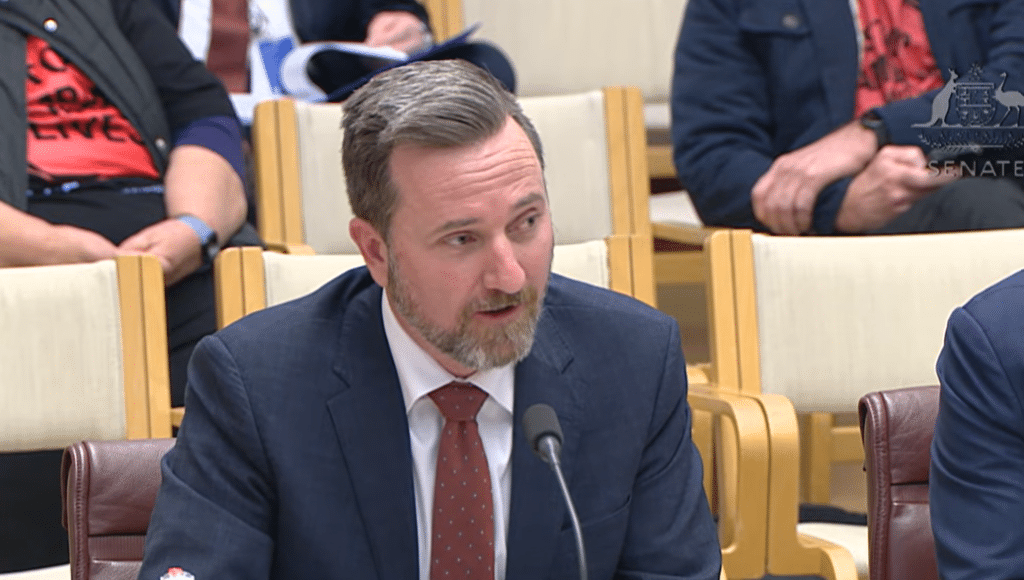
Two of Australia’s largest wagering companies have rejected allegations of predatory conduct and criminal wrongdoing while warning a Senate inquiry that tougher advertising restrictions could push gamblers towards illegal offshore betting operators.
Representatives from Sportsbet and Tabcorp appeared, along with Responsible Wagering Australia (RWA) chief executive Kai Cantwell, before a Senate parliamentary committee examining proposed gambling advertising reforms.
The first day of the Senate Committee inquiry heard sensational allegations that customers had been offered drugs and escorts by VIP managers, with Alliance for Gambling Reform’s Tim Costello naming Tabcorp and Sportsbet as being complicit in such activities.
Jules Norton Selzer from Sportsbet and Tabcorp’s Julian Whealing both said they had no evidence of such behaviour among customer managers and there was “no tolerance” for such conduct within their companies.
In what was a combative session, senators repeatedly pressed the wagering industry representatives over gambling harm, VIP customer programs and exposure of children to betting advertisements.
RWA’s Cantwell said licensed operators supported stronger consumer protections but argued the government’s reforms required greater clarity.
“We all want fewer children exposed to gambling advertising, and we all want appropriately targeted consumer protections,” Cantwell said.
“The challenge is achieving those objectives while keeping Australians inside the safest gambling environment available to them.”
The trio also maintained that excessive restrictions on licensed operators could increase the use of offshore gambling websites.
Norton Selzer, Sportsbet’s director of corporate affairs, cited industry estimates showing “one in three bets” were already being placed with illegal offshore operators and warned additional restrictions could worsen the problem.
The hearing became heated when Senator Sarah Hanson-Young challenged Sportsbet and Tabcorp over allegations raised earlier in the hearings that people suffering gambling addiction had stolen money to fund betting accounts.
“How much of the money that you have collected has been stolen? How much of the money that you have banked as profit are proceeds of crime?” Hanson-Young asked.
Both companies said they complied with anti-money laundering and customer verification obligations but declined to discuss individual cases.
The gambling operators’ VIP programs also came under the spotlight, including the role of account managers who maintain relationships with high-value customers.
Senator Hanson-Young requested details on the number of VIP account managers employed and the remuneration arrangements attached to those roles.
Another major issue was gambling advertising and its impact on children.
Independent Senator David Pocock presented evidence from a constituent who reported that a seven-year-old child could recite Sportsbet advertising slogans despite not understanding how gambling worked.
“You are advertising to children and it’s having an impact. You’re creating brand loyalty in the under-10 market,” Pocock told Sportsbet representatives.
Sportsbet rejected suggestions that it deliberately targeted minors, pointing to reductions in advertising and the removal of odds-based promotions during live sport broadcasts.
Cantwell was asked about a promotional racing event involving children wearing bet365-branded clothing, given the global company is a member of his RWA organisation.
Senator Pocock questioned whether such practices were consistent with claims of responsible advertising and whether such promotion would be still allowed under the proposed reforms given it was taking place in a racing context.
“Look, I think our members are absolutely proud of the contribution they make to local communities,” Cantwell said.
“I am not going to shy away from the fact that you’ve presented me with pictures of children wearing gambling products.
“I think that is something that I can absolutely take away and raise with my members and address moving forward.”
Separately, Cantwell raised concerns that if generosities such as bonus bets and boosted odds were banned, it would have an impact on the broader racing industry.
“We did hear, the committee heard evidence yesterday from the racing industry,” he said.
“I understand that promotions and generosities would account for around 30 per cent of their revenue.
“That would be a significant financial hit to the racing industry around Australia if there was a proposal to sort of look at banning these.”
Whealing also pointed to the threat of regulatory overreach to the related economics of a host of sectors.
“It is important these reforms strike the right balance in delivering effective, targeted protections for consumers and ensuring future sustainability for the racing, pub, club sectors, critical job-creating industries that also play a significant role in local communities, particularly in regional areas,” he said.
The inquiry is continuing its examination of the government’s proposed gambling advertising legislation, which would introduce new restrictions across television, digital platforms and sporting environments.
It will report back by August 17, with the new legislation set to go before parliament in the spring session.
Author

Related Articles

🔒 🔒 More punters added to Tabcorp’s banned list
Tabcorp’s actions on ‘higher-risk’ customers have resulted in more banning notices being issued, with a swathe of punters recently notified they could no longer transact with the betting company.

BetMakers boosts profitability as Tabcorp deal looms
BetMakers says a renewed focus on technology, automation and cost control paid off in FY26, with the wagering technology group reporting stronger revenue and a more than threefold increase in underlying earnings as it heads towards a proposed takeover by Tabcorp.

Waterhouse VC – The Missing Hedge Layer
In this month’s Waterhouse VC newsletter, from ice-cream shops to sports bars, businesses are beginning to use prediction markets to offset revenue risks, opening the door to a new generation of risk-management platforms.
