
🔒 🔒 Tasracing records $1.35 million loss and launches new 10-year strategy as funding deed nears expiry
Tasracing lost $1.35 million in 2025/26 as kennel cough, weaker thoroughbred margins and a full year of integrity costs outweighed higher government funding, while it has also signed off a 10-year industry strategy despite state funding beyond 2029 remaining unsettled.
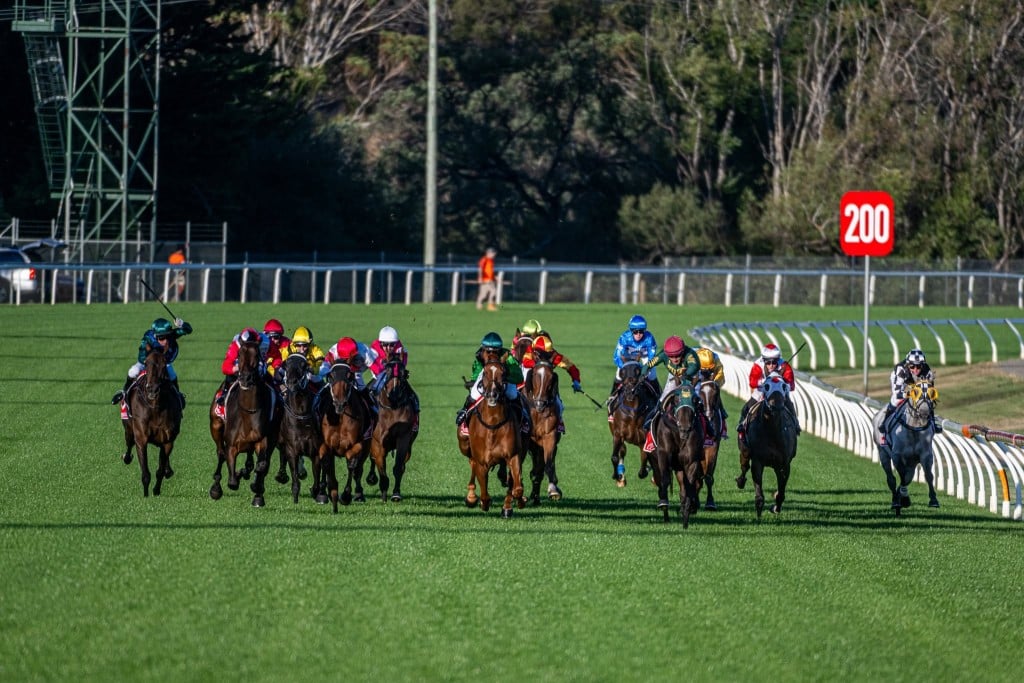
Tasracing recorded a total comprehensive loss of $1.35 million for 2025/26, up from $1.21 million a year earlier, as falling racefield revenue and the first full year of integrity costs outweighed an increase in government funding.
As revealed in its recently published 2026 annual report, Tasracing’s pre-tax loss widened to $1.89 million from $1.69 million.
Total revenue and other income rose to $76.12 million from $74.11 million, but expenses rose faster, to $78.02 million from $75.80 million, and racing revenue fell to $25.82 million from $26.74 million.
The result follows the loss reported for 2024/25, when integrity integration began.
Wagering on Tasmanian racing totalled $691 million, short of Tasracing’s $728 million target.
“Racefield revenue returns declined 4.9 per cent to $21.78 million ($22.90 million 2024/25) with a kennel cough outbreak during the year resulting in 12 greyhound meetings being cancelled and an extraordinary reduction in margin on thoroughbred racing in the first half of the year,” chief executive Andrew Jenkins wrote in his annual-report message.
“National wagering on Tasmanian racing was down $19.1 million (-2.7 per cent) on 2024/25 with the cancelled meetings worth $19.8 million.”
Racefield revenue is the fee income Tasracing earns from wagering service providers offering betting on its races, and the vast majority comes from interstate and overseas markets. It is separate from the $41.71 million in government funding and the $7.48 million in point of consumption tax funding, which rose from $7.30 million.
Also revealed in the report:
- Thoroughbred turnover slipped to $319 million from $321.8 million.
- Harness turnover rose 6.7 per cent to $115.5 million from $108.2 million.
- Greyhound turnover fell 8.4 per cent to $256.9 million from $280.5 million. The February outbreak suspended greyhound racing for four weeks.
The thoroughbred figure held up on a smaller program. Meetings fell from 73 to 65 and races from 575 to 528.
By The Straight’s calculation from the report’s figures, turnover per thoroughbred race rose about 8 per cent, from roughly $559,650 to $604,170. Launceston’s 22 night meetings averaged $5.579 million in turnover.
However, over the past five years, wagering turnover has fallen $107.8 million, or 13 per cent, and racefield fee revenue has fallen $0.8 million, or 4 per cent.
Over the same period, code funding rose $10.9 million, or 40 per cent, and stakes paid rose $7.7 million, or 32 per cent. Thoroughbred turnover was $369 million in 2021/22, harness $131.1 million and greyhound $359.7 million.
Integrity drove the cost increase for Tasracing, which took over integrity services for all three codes on February 1, 2025.
Employee benefits climbed by $1.99 million to $14.58 million, with $2.06 million attributable to the Integrity Unit. Other expenses reached $5.27 million; this figure included $770,000 in extra integrity costs and about $384,000 in impairment losses.
Of the $2.67 million rise in government funding, $1.86 million came from full-year integrity funding and one-off transition support.
Tasracing cut costs elsewhere. Ten administrative and marketing positions were made redundant or not replaced. Sales and marketing costs fell $331,054 to $1.47 million. Expenses for raceday and racing fell, reaching $9.72 million, alongside a decrease in workers’ compensation costs from $2.77 million to $1.94 million. Capital expenditure payments fell to $4.47 million from $6.55 million.
Thoroughbred code funding rose 2 per cent to $20.8 million, with the increase used for additional meetings, a higher riding fee and help with trainers’ workers’ compensation premiums.
Thoroughbred stakes fell to $16.63 million from $17.09 million. Stakes across all codes fell to $31.88 million from $32.47 million, with the report attributing $480,000 of the decrease to kennel cough and recording $280,000 in unspent code funding carried forward.
The board also signed off the Tasmanian Racing Industry Strategy 2026–2036 after balance date, for implementation in 2026. Its vision is “A united and growth-focused Tasmanian racing industry – built to last.” It has five pillars:
- Animal welfare and integrity
- Financial sustainability and operational excellence
- Industry development, participation and innovation
- Market position, brand and audience growth
- Industry leadership, culture and trust
The financial pillar seeks a lasting government funding arrangement, a broader revenue base, facilities and racing programs of an appropriate scale, and wagering growth through closer partnerships with wagering service providers.
Outgoing chair Gene Phair, since succeeded by Steve Old, wrote in his final message:
“The industry needs to be asking itself some critically important questions about its future, and embrace the direction proposed in the Tasmanian Racing Industry Strategy 2026 – 2036. Looking at ways to be more efficient as an industry while at the same time achieving growth will be important.”
Jenkins wrote that management was “very much looking forward to bringing the strategy to life over the coming year”.
The 20-year funding deed was established in 2009 as compensation for the sale of TOTE Tasmania, and it expires in 2029.
On the deed, Phair wrote: “Tasracing continues to work closely with the government on this critical issue. Tasracing is obviously keen to see the matter resolved as soon as practical to provide some important surety for industry participants.”
Racing Minister Roger Jaensch has said a replacement deed is unlikely to be formalised before the 2027 budget, with a heads of agreement intended to give earlier certainty.
“It could be a shorter period but with frequent renewal so you always can see within your investment horizon what’s going to happen next,” he told a parliamentary committee.
The government also plans to end greyhound racing by June 30, 2029. Tasracing’s directors expect lost greyhound revenue to be matched by savings and have identified $2.4 million in assets used solely for greyhound racing and training.
Author

Related Articles
Racing NSW postpones Scone meeting as Izzy Neale remains in critical condition
Apprentice Izzy Neale remains in a critical condition in Dubbo Hospital after a race fall at Warren on Sunday, with Racing NSW calling off Monday’s Scone meeting after consulting the jockeys and trainers.
Autumn Glow shines on Champions Day as Birdman reverses Plate fortunes and Point Barrow delivers in Group 1 sprint
Champions Day produced the expected dominance of Autumn Glow, but an unexpected result in both the Champions Stakes and the Champions Sprint, where Tempted’s winning streak came unstuck.
Melbourne Cup Carnival draws biggest crowd since 2017 as Stakes Day passes 70,000
The Victoria Racing Club drew 307,889 people across the four days of the 2026 Melbourne Cup Carnival, up 7.4 per cent on 2025 as Champions Stakes Day attracted 70,414, its largest crowd since 2012.
