
🔒 🔒 Ten Group 1 races honour Hall of Famers but our most influential horses and industry figures are not among them
Winx, Black Caviar and Makybe Diva have Group 1 races named after them. Phar Lap, Carbine, Tulloch, Bernborough and Kingston Town do not. As Adelaide renames the Goodwood for Bruce McAvaney, the question of how racing commemorates its greats deserves a fresh look, writes Bren O’Brien.
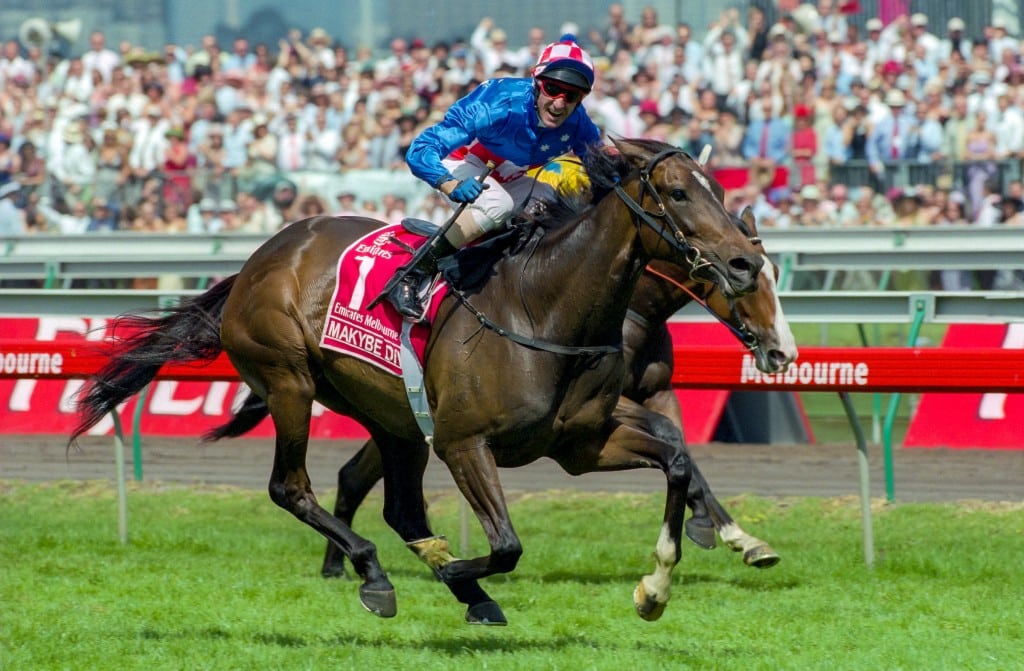
The rebadging of the Goodwood in broadcaster Bruce McAvaney’s honour shows how readily a Group 1 race can carry a famous name.
Yet only 10 of Australia’s 76 Group 1 races are named after Australian Racing Hall of Fame inductees, and just four honour figures elevated to Legend status. Most of the sport’s inaugural champions, including Phar Lap, remain absent from the top tier.
When the South Australian Jockey Club announced on Saturday night that its premier sprint would become The McAvaney Goodwood, it demonstrated something administrators elsewhere have been reluctant to do. It was willing to attach a person’s name to a Group 1 race without erasing its history.
The race, first run in 1881 and worth $1 million at Morphettville each May, keeps its identity while honouring the broadcaster on his induction into the South Australian Thoroughbred Racing Hall of Fame.
“There are few voices in Australian sport more recognisable than Bruce McAvaney’s,” South Australian Premier Peter Malinauskas said at the Morphettville induction. “And it all started with a love of racing here in South Australia.”
This is not a debate over whether McAvaney, a generational sports broadcasting talent, should be honoured this way, although some may say other figures from a pure racing perspective could have been preferred.
It raises a question. If South Australia can rename its best race for a broadcaster, why do so few of Australia’s Group 1 races carry the names of the horses and horsemen and women the national Hall of Fame regards as the greatest of all?
A comparison of the Australian Racing Hall of Fame roster against the Group 1 schedule produces 10 direct matches:
They are the Winx Stakes, Black Caviar Lightning, Makybe Diva Stakes, TJ Smith Stakes, Northerly Stakes, Manikato Stakes, Might And Power Stakes, Flight Stakes, Surround Stakes and JJ Atkins Stakes.
Eight of the 10 honour horses and two honour trainers. Below Group 1 level, the picture is broader, with Hall of Fame names attached to more than 15 Group 2 races, at least 20 Group 3 races and a similar number of Listed contests.
The 10 names are mostly modern and the commemorated horses skew that way. Winx, inducted in 2017 after 33 consecutive wins and 25 Group 1 victories, has her name on the race that opens the Sydney spring, previously known as the Warwick Stakes.
Black Caviar, unbeaten in 25 starts and inducted in 2013, is remembered in Flemington’s Lightning. Makybe Diva’s name sits on the Group 1 mile she actually never contested and was previously known as the Craiglee Stakes.
Verry Elleegant, not yet in the Hall of Fame, was honoured by the renaming of the Chipping Norton Stakes.
Legend status is the Hall of Fame’s rarest distinction. The roster of Legends includes the five inaugural horse inductees of 2001 – Bernborough, Carbine, Kingston Town, Phar Lap and Tulloch – along with Makybe Diva, Winx and Black Caviar, the last two elevated in 2025, and human Legends Bart Cummings, Colin Hayes, George Moore, Tommy Smith, Scobie Breasley and Gai Waterhouse.
The five foundation horses the panel judged the greatest in Australian history have no Group 1 race recognition.
Phar Lap, the most famous racehorse this country has produced, Carbine, whose 1890 Melbourne Cup under 10st 5lb remains a benchmark and Tulloch, Bernborough and Kingston Town are in the same position.
The Phar Lap Stakes is a Group 2 race held at Rosehill in March, while Carbine’s name sits on the Carbine Club Stakes, two three-year-old races run at Group 3 level in Flemington and Randwick.
The Tulloch Stakes is a 2000-metre Group 2 lead-up race to the Australian Derby, while the Bernborough Handicap is a Listed event held at Doomben in May
Kingston Town’s case is the strangest, because he once had the honour and lost it. Perth’s Group 1 over the summer carried his name as the Kingston Town Classic before it was renamed the Northerly Stakes in favour of the West Australian champion.
Northerly’s claim is legitimate, but the change moved one Hall of Famer’s name off the Group 1 roll to make room for another. Kingston Town is now represented by a Group 2 at Randwick, run over 2000 metres.
The imbalance extends to the sport’s greatest trainers.
Tommy Smith has his Group 1 as does JJ Atkins. Bart Cummings, winner of 12 Melbourne Cups and a Legend of the Hall of Fame, is commemorated by the Group 3 Bart Cummings at Flemington, a Cup qualifier, and nothing above it.
Gai Waterhouse, elevated to Legend status while still training, likewise has no Group 1 bearing her name. She has a Listed race at Ipswich.
Colin Hayes has a Group 3 and a Listed race in his honour, while George Moore has a Group 3 race named after him. Scobie Breasley has a medal but not a stakes race.
The roster is still growing, and each induction class adds names with no corresponding race.
Chris Waller does not have a race named after him, neither does Peter Moody, inducted in the 2024 class, or Lee Freedman. James McDonald has more Group 1s than any other Australasian jockey but not one to yet call his own.
The standard objections to renaming are real. Race names carry their own history, and races such as the Goodwood, the Ranvet and the All Aged are brands in themselves.
Sponsorship arrangements complicate any change, but the McAvaney Goodwood and the Black Caviar Lightning do address the issues of race recognition.
There is a way of preserving the race while restoring the reputation of the equine or human figure. The precedent of the Northerly Stakes shows clubs will rename a Group 1 when they want to.
It is incongruous that Australian racing has built a Hall of Fame it calls the sport’s ultimate honour, then left nine of its members on the Group 1 schedule and the five foundation horses off it entirely.
A sport that trades on its history in its marketing and its sales catalogues has a straightforward way to keep those names in front of the public 365 days a year.
Author

Related Articles
Trackside test to monitor equine lameness markers moves a step closer
Published and peer-reviewed research which links osteocalcin with lameness in thoroughbreds has moved the industry a step close to a possible biomarker test which could significantly enhance equine welfare.
Tributes flow for Paddy Payne Snr after death at 90
The patriarch of the famous Payne family, Paddy Payne Snr, has died aged 90, prompting a wave of tributes.

Ian Edwards appointed Synergy CFO ahead of RWWA departure
Outgoing Racing and Wagering Western Australia chief executive Ian Edwards will return to a finance role when he joins the state-owned electricity corporation in November.
