
The $5 billion Rosehill question that only the NSW government can answer
The NSW government’s appetite for the risk of paying $5 billion for Rosehill is arguably a more important question than the support of the Australian Turf Club members, writes Bren O’Brien.
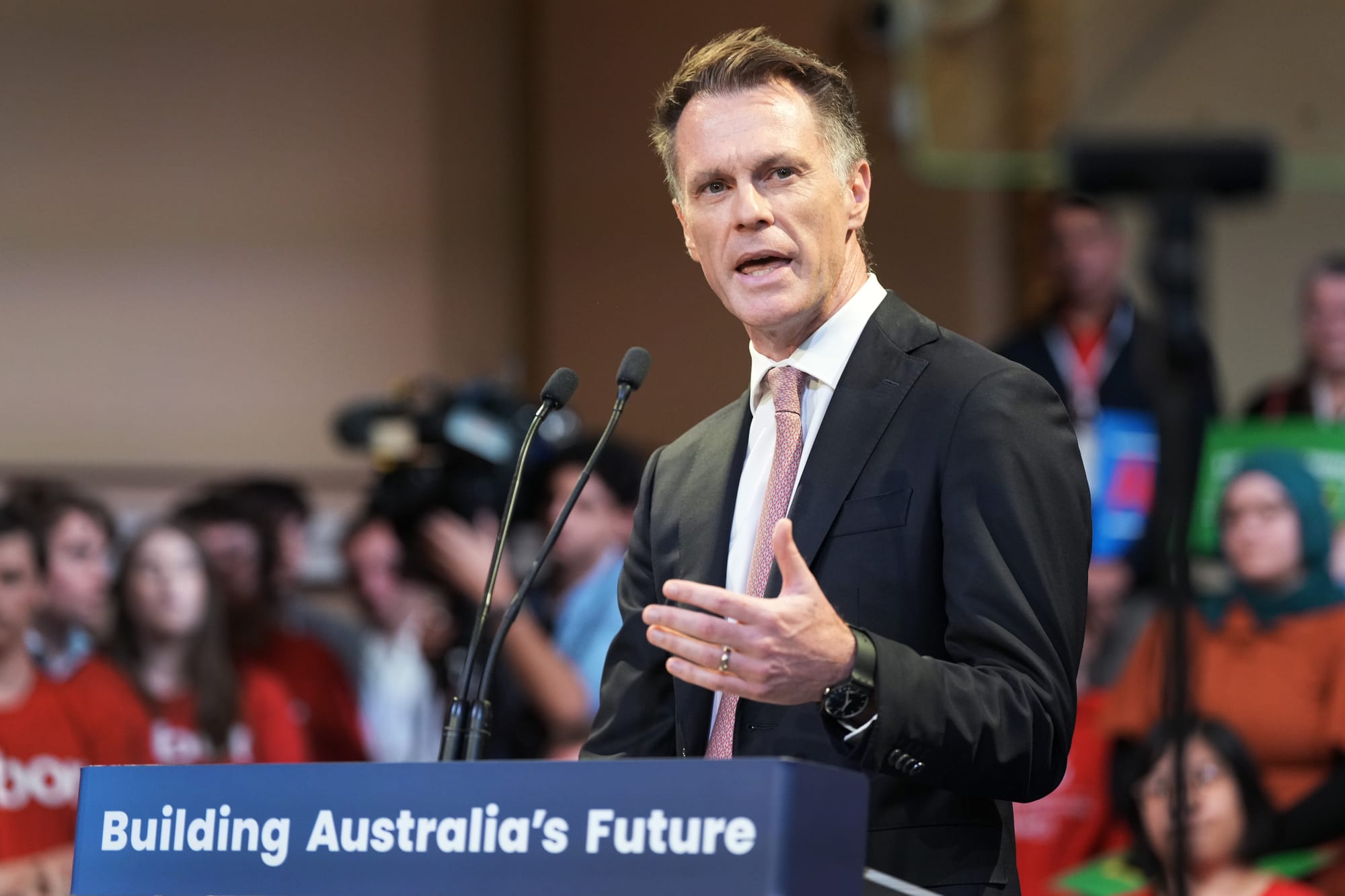
There are two contingencies for the sale of Rosehill to go ahead. One will be decided next Tuesday, when Australian Turf Club members vote, the other is the NSW government’s willingness to part with $5 billion for the 59 hectares on offer.
While much attention has focused on the first of those two questions, the impact of the second part of that contention will extend far beyond the 11,000 members of the Australian Turf Club to the entire eight million-plus people of New South Wales.
Under the ATC’s resolution, any sale would require a $5 billion net financial benefit for the club from the government, which, due to the fact it is going through an unsolicited proposal process, has given no guarantee that it will meet that price expectation.
A sale of this magnitude would be unprecedented, and the Minns government’s current stand is that it would consider the proposal should ATC members approve the deal.
“It’s really up to (turf club) members to make the decision about the future of Rosehill – if they do that, then we get to the next stage, which is a negotiation,” Premier Chris Minns said in March.
So where did the $5 billion figure come from?
When ATC chairman Peter McGauran and Minns announced on December 7, 2023 the plan to close and sell off Rosehill, the headline figure was $4.8 billion.
But that was for an ATC-managed project, with the government providing only a metro station and planning support, but not funding, and certainly not $5 billion.
“Zero. Nothing,” Minns said when asked what it would cost the NSW taxpayer.
 Bren O’Brien
During the parliamentary inquiry into the sale last year, that $5 billion valuation was said to represent $200,000 each for 25,000 dwellings proposed for the site, based on $8,400 per square metre, a price comparable with other property sales, although none anywhere near this scale.
That figure relied on the site being upzoned. McGauran conceded at the inquiry the current ‘as is’ valuation was around $1.6 billion, but that was “a paltry return for the loss of a premium racetrack. We wouldn’t even let that bid through the door.”
The ATC’s vice-chairman, Tim Hale, a barrister with expertise in property development, and an opponent of the Rosehill sale, put the improved value at $1.6 billion, not $5 billion.

To add to the confusion, Racing NSW board member Garry Charny said the long-term valuation of the project would be $20 billion, while Racing NSW CEO Peter V’landys said it could be as much as $23 billion over 30 years.
Added to the mix was the testimony of economist Peter Tulip that the current valuation of Rosehill under the existing ‘private recreation’ zoning valued it at only $26 million (that’s MILLION), or $43 per square metre. That would be the amount that the NSW government could conceivably compulsorily acquire it for.
So how did this then become a discussion about the government paying $5 billion?
At some point, the ATC decided it wasn’t equipped to handle the commercialisation of the biggest residential property development in Australian history. Nor was it best placed to secure the best deals with developers for the construction of what amounted to a new suburb.
 Warwick Barr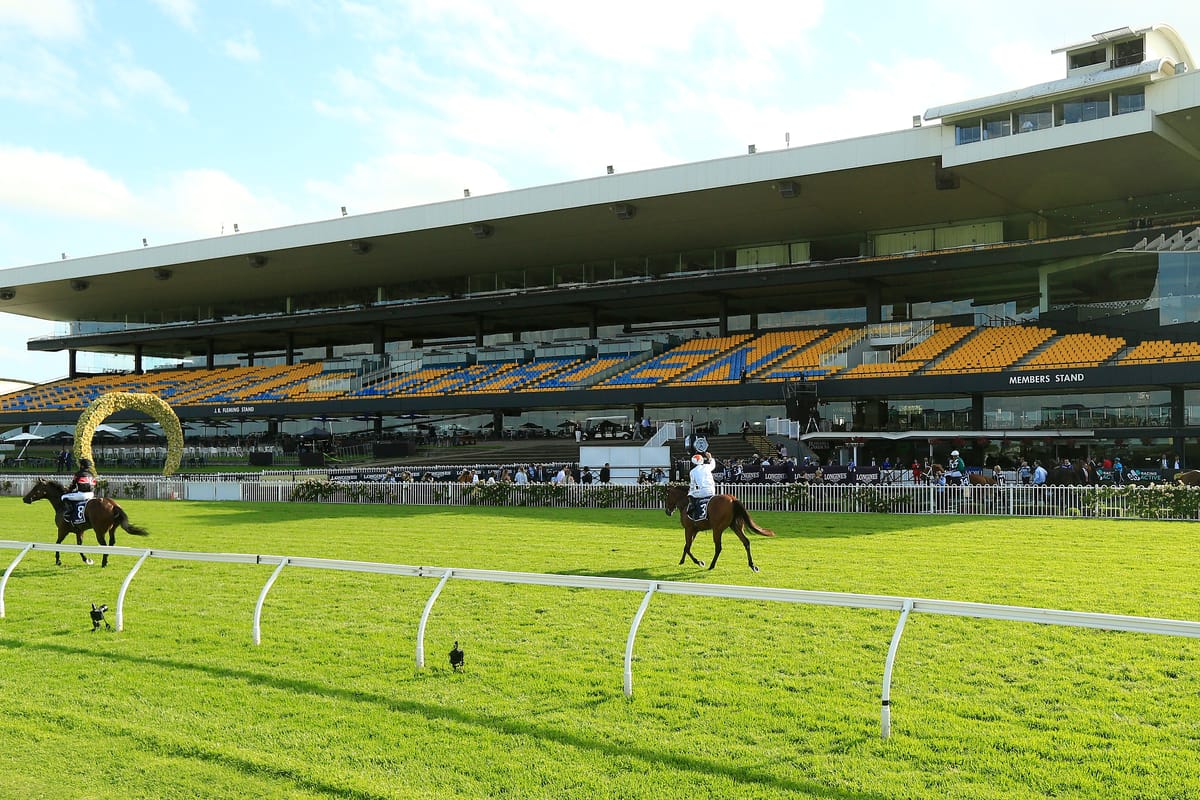
Tax and rates considerations may have played a part. It was raised during the Rosehill inquiry that if the ATC was being charged on the $1.6 billion or $5 billion valuation it would owe Parramatta City Council anything between $1.8 million and $5.5 million in annual rates.
Even more significant would be the land tax implications. Levied at 2 per cent, it would represent a $32 million a year contribution to the state’s coffers on the $1.6 billion valuation and $100 million a year for the $5 billion.
It is not known if this played a role in the change of tack from the ATC, but at some point after the inquiry it decided it wanted the government to take the risk on the project.
When ATC members were briefed on the proposal ahead of a since abandoned first vote, it was now proposed that the government take on the entire project and commercialise it themselves.
Minns has repeatedly ruled out compulsory acquisition, despite the fact that it would be $4.97 billion cheaper than the price which the ATC intends to ask them to pay.
 Bren O’Brien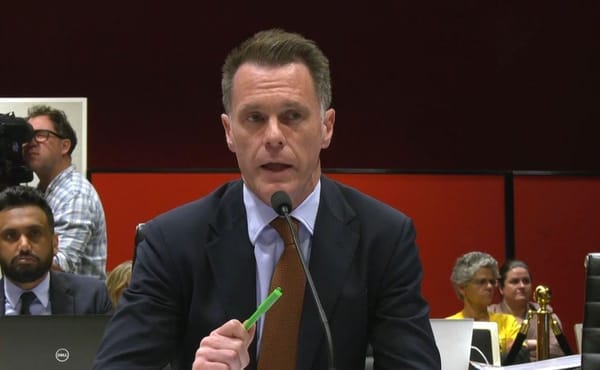
He was quoted as saying that would “completely trample all over the membership rights of ATC members”.
In parliament, Minns said no agreement had been reached with the ATC to meet the $5 billion price tag, but that his government was committed to helping resolve Sydney’s housing crisis.
The most extensive comments the Premier has made on the matter was in an interview with The Sydney Morning Herald in March.
“Ultimately, we’d be flipping the land,” Minns said.
“I think the ATC recommendation to members is 15 years as a sale period. The period of time in which we would then sell the land off into the public would be beyond that potentially.”
Asked about the government assuming the project risk from the ATC Minns said: “I don’t think it’s a big risk for us. We control zoning; we control planning, and we will put a station in.”
The metro station is apparently key to achieving maximum value from Rosehill. The boring machines on the $25 billion Metro West project (it started out at $13 billion) are working their way from Olympic Park towards Rosehill on their way to Parramatta, The need to fit out a station at the possible future site of a suburb for around 40,000 people has been cited as the reason for the rush on the ATC decision.
Metro West won’t open until at least 2032, but retrofitting a station would be an expensive exercise and the government wants to lock in its plans now.
The ATC’s latest $1.9 billion plans, which also involve a massive redevelopment of Warwick Farm, a huge refresh for Randwick and a new training – and likely racing facility – on the site of the current Penrith Golf Club, will see Rosehill remain a racecourse until at least December 2031.
As well as the overall price tag of $5 billion, the ATC is also setting out how it wants to receive the money.

Under the deal, the payments can be split into three areas. The $1.9 billion from 2026 until 2031 is for capital works, the $900 million (minimum) between 2032 and 2040 is for ATC’s future fund, while there is a (maximum) $2.2 billion final payment in 2041.
So, it is not just the overall amount which the ATC is setting out but the payment terms as well.
Setting out all your non-negotiables at the start of a deal process is an interesting way of doing business, but it’s a method that the ATC says it needs to follow to comply with the relevant Acts, and get the approval of the membership.
But the Premier clearly sees the approval of the members as just the start of the negotiation timetable. When asked about it in March he said he expects any talks over any purchase to be “long and laborious”.
Author

Related Articles
Racing’s burning questions as PM moves on wagering advertising reform
Racing has long expected a carve out from any federal gambling advertising restrictions, but even with an exemption, a significant shift in how bookmakers market to customers will have a commercial impact on the thoroughbred industry, writes Bren O’Brien.
Across hemispheres – The Piggott-Pilkington link behind Inglis Sires’ bid
There are no borders in racing anymore, and Am I Dreaming’s shot at the $1 million Inglis Sires’ sits squarely in that space, shaped by trainer Jack Pilkington and bloodstock agent Jamie Piggott’s international footprint.
Toronado steady, Diego Velazquez new as Swettenham sets 2026 fees
Swettenham will inject prized Frankel blood into Australia with Group 1 winner Diego Velazquez to stand at $27,500, headlining a roster anchored by the ever-reliable Toronado at an unchanged $88,000.