
The C word – Why the clearance rate on the Gold Coast will provide a window into the 2026 yearling market
Clearance rates don’t make sales companies rich, but they do tell a story. And in a market expected to remain selective in 2026, this statistic will be watched closely when Magic Millions launches the yearling sales season.
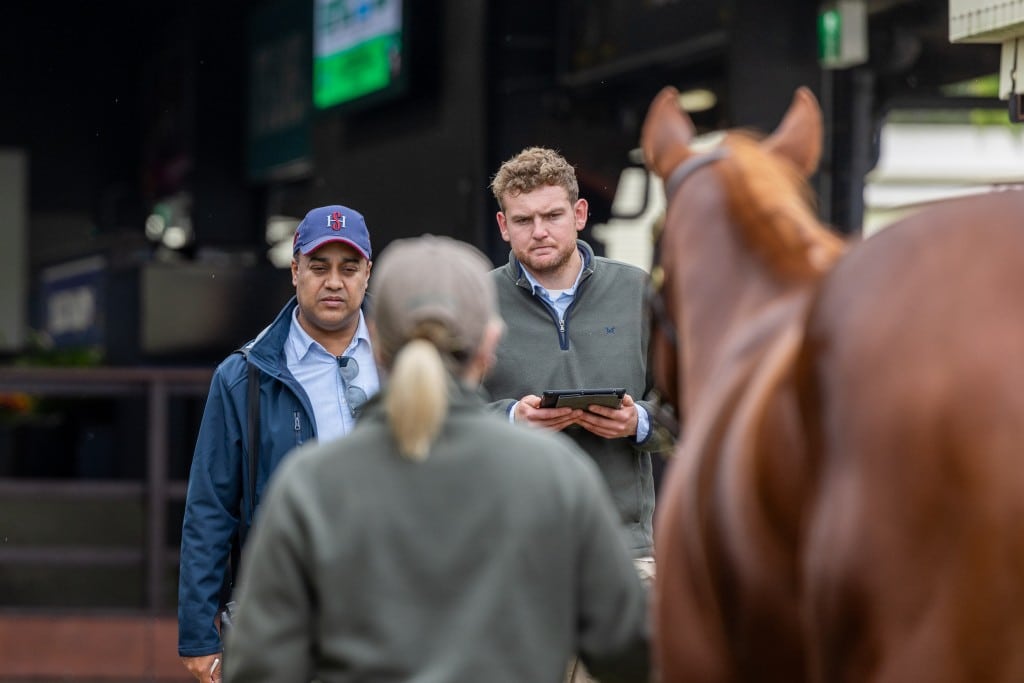
Analysis: The concept of a clearance rate – the amount of stock sold as compared to the amount of stock offered – is used as a measure of demand in a lot of different commercial contexts.
The story of Australia’s buoyant and often overheated real estate market is usually framed in terms of the weekly auction clearance rates in Australia’s major capital cities, giving an idea of where the demand and supply dynamics sit.
In a bloodstock context, the clearance rate may be a simple ratio of horses sold to horses offered, but it can also be an indicator of many other things.
At a basic level, it is a test of pure market demand, but it also measures vendor expectation, buyer sentiment and their interaction. It is also an assessment of the auction company’s ability to bring the right quantity and quality of horses to the market.
There are also aspects it doesn’t account for, such as how many horses are passed in short of reserve and are sold soon after at a lower price than the vendor had initially desired.
There is also the percentage of horses sold but part-retained by the original owner. Only the sales companies that pay out proceeds from the sales would have an idea of what the true clearance statistic looks like.
For commercial breeders, selling – even below reserve – is often better than passing in.
Rising production costs have squeezed margins, even as yearling prices have climbed. A decision not to sell can be more damaging than accepting a lower price.
This anxiety, combined with the ability of both sales companies and vendors to get the right product in front of buyers at yearling sales is why auction clearance rates at premium yearling sales in Australia are usually in the 85-90 per cent range.
However, Australian buyers have become more selective over recent years.
As The Straight revealed after last year’s Easter Yearling Sale, there were 809 yearlings passed in across Australia in 2025, 21 more than to the same point of 2024 and the most since 2013.
The overall clearance rate for those sales stood at 80.8 per cent, the lowest since 2013 and nearly nine percentage points down from the peak in 2022.
The trend began at last year’s Magic Millions Gold Coast Yearling Sale, where the clearance rate for Book 1 was 83.05 per cent, the lowest at the sale since 2010.
The feeling from that sale was that demand had shifted downward, while supply remained high. Magic Millions offered 1021 yearlings in Book 1 last year and has reduced that to 980 in 2026, while the overall catalogue has fallen from 1401 to 1221.
Rival Inglis had already pivoted in 2025, reducing its Easter catalogue from 500 to 421, while sustaining overall investment and boosting the sale average to record levels, with a clearance rate of 88 per cent, the second highest since 2010.
Inglis saw it as a triumph not only of reading the play but also of getting the right product in front of the right audience.
Indeed, the clearance rate is also a measure of the success of the selection process for the two auction companies in their biggest sales.
While there are certain styles and pedigrees of horses which are suited to the Gold Coast or Sydney markets, there is also substantial competition for those yearlings which could easily fit into either.
Direct comparisons between the two major sales can also be problematic because of timing differences.
Market sentiment can shift dramatically over the three-month intervening period, and that has usually favoured Magic Millions, which heavily promotes the “‘buy early” philosophy.
Most people hadn’t even heard of COVID-19 when the Magic Millions Yearling Sale was held in January 2020. By the time Easter had rolled around, the world was in shutdown and Inglis was forced to stage a divided virtual sale.
It’s an extreme example, but is an indication of how external factors can dramatically impact discretionary spending on yearlings.
Last year, the sentiment of the market arguably improved from January to April and that played in Inglis’ favour.
It is hard to chart exactly where that sentiment sits now. Broader economic uncertainty persists, but internal industry measures, such as prize money, remain strong, buoying confidence.
But when the hammer starts to fall next Tuesday, one key measure will give us a decent indication. If there is a disconnect between vendor expectations and buyer confidence, it will show up in the clearance rate.
Clearance rates of Australia’s two biggest yearling auctions since 2012
*Pandemic-impacted
Author

Related Articles
Run The Numbers – International mare influence surges at Australia’s major yearling sales
Australian breeders’ desire for intentional pedigrees has arguably never been stronger, with a historically high number of progeny of non-Australasian-bred mares represented at the Inglis Australian Easter Yearling Sale. Run The Numbers examines long-term trends.
JJ Atkins winner Cool Archie to stand at Newhaven Park
Group 1-winning two-year-old Cool Archie will stand at Newhaven Park at Boorowa, the place of his birth, after studmaster John Kelly struck a deal with owner Max Whitby.
Rowe On Monday – An Affair of consequence for Rogers, Home run to a fee hike and Derby-winning Ibis proves a columnist’s best friend
In this week’s Rowe On Monday, Hong Kong Derby winning breeder Tim Rowe speaks to Jeremy Rogers about selecting a Golden Slipper winner, ponders what Guest House’s success might mean for his sire and indulges in a bit of personal pride in the backstory of Invincible Ibis.