
The Derby dilemma – Why Australia’s young stayers are paying the price
For generations, Australia’s best three-year-old stayers naturally progressed into spring Cups contenders. Trainers say that pathway is becoming harder to navigate with every passing season.
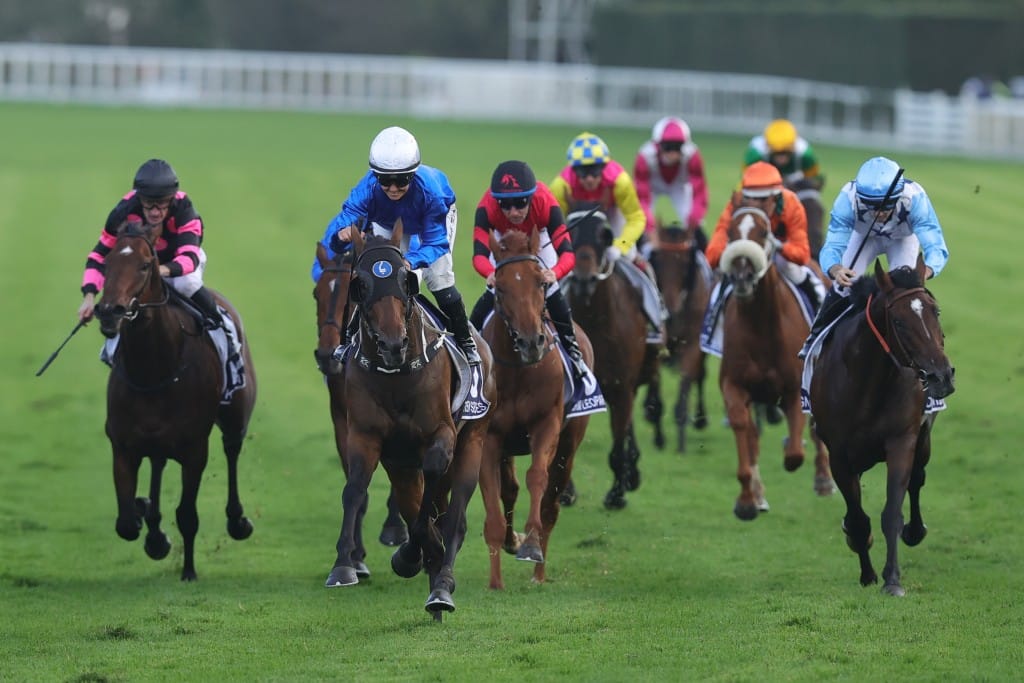
It came as no surprise to trainer Matthew Smith that his lightly raced three-year-old Dezignation performed so well in the ATC Australian Derby.
The real shock arrived a few days later.
Going into Randwick’s autumn blue-riband with a benchmark rating more applicable to a provincial-grade horse, Dezignation emerged from the Derby with a ratings penalty equivalent to winning six races.
The runner-up cheque of almost $400,000 softened the blow.
But the experience also highlighted a growing dilemma in Australian racing: what exactly is a Derby performance worth in the modern era?
There was a time when the answer felt obvious.
Run well in a Derby, and a horse immediately becomes part of the Caulfield Cup and Melbourne Cup conversation.
The old pathway was deeply ingrained in Australian racing culture – a two-year-old foundation, a blossoming three-year-old stayer and then, with maturity, a Cups horse.
That assumption, trainers say, no longer holds the same certainty.
“It doesn’t carry the same weight anymore,” Smith said.
“You’ll still get horses come through a Derby and end up in Melbourne Cups, but it’s not a given.”
On the eve of the Queensland Derby, there is a growing sense within the industry that Australia’s three-year-old staying form no longer translates cleanly into open-age success.
The issue is not necessarily a lack of talent. Smith is resigned to his Queensland Derby candidate Beauty Swift heading overseas after Saturday’s race.
Beauty Swift has Hong Kong connections. The Hong Kong Derby is considered the most prestigious of all the races run in the Asian thoroughbred capital.
Having a runner in the race is an overriding ambition for every Hong Kong owner. It is the race.
It’s also a race for four-year-olds, and therefore, the Hong Kong market has become another pressure point in the staying ecosystem as it taps into the potential of our three-year-olds.
Faced with a decision to stay in Australia and try and compete against European-sourced stayers with the burden of an inflated rating, or cash in on the Derby dreams of a Hong Kong owner, there has been a constant flow of staying talent out of the country.
The Queensland Derby has been a happy hunting ground for international bloodstock agents.
Five horses from 2018, including the winner Dark Dream, were subsequently exported to Hong Kong.
Recent editions have continued the trend. Last year’s runner-up King Of Thunder later relocated to Hong Kong, while 2022 placegetter Paternal now races there as Rapid Rabbit. Another runner from the same Derby, Satirical Glory, also transferred.
Earlier Queensland Derby graduates to establish Hong Kong careers include 2017 winner Ruthven and 2016 victor Eagle Way, while 2015 runner-up Werther developed into a dual Group 1 winner after his move.
The 2022 South Australian Derby winner hero Jungle Magnate was also sold to Hong Kong, as was the following year’s WATC Derby winner Awesome John.
But the talent drain is only one aspect of a broader shift confronting Australia’s staying program.
Rather, trainers such as Matt Cumani, who prepares this season’s Victoria Derby placegetter Deal Done Fast, argue that the structure surrounding Derby horses has changed dramatically.
“In early-season three-year-old staying races, they’re not always the strongest form races,” he said.
“In a Derby, you’re often just seeing the best of the horses that have made it to that distance at that time – not necessarily the best stayers overall.”
That distinction becomes important once those horses turn four.
They are suddenly meeting seasoned open-age stayers, fully developed horses from their own generation and an increasingly powerful wave of imported European talent that now dominates many of Australia’s major staying races.

The result is a pathway that looks increasingly fractured compared to previous generations.
The old assumption – that a Derby horse naturally develops into a Cups contender – has become far less reliable.
The handicap system only complicates matters further.
A strong Derby performance still commands significant respect from handicappers, partly because of the historical importance attached to Australia’s Classics.
But trainers privately question whether the ratings spikes always reflect the true depth of the form.
Dezignation’s case is a striking example and one not helped by the fact that he finished ahead of Observer, this season’s Victoria Derby and Australian Guineas winner.
Both Smith and Cumani understand why it happens. Principal racing authorities are obviously hell bent on their Group 1 races retaining their prestige and integrity.
But the consequences can be difficult to manage.
“It can be disappointing for owners,” Smith said.
“They think the horse has gone backwards or something’s wrong, when in reality it’s just stepping into a completely different level of competition.”
Cumani agrees the issue is complicated.
“It’s a bit of a double-edged sword,” he said.
“If you start saying Derby horses should be lower rated, you risk undermining the whole race.
“But if you leave it as it is, you get horses that are very highly rated without necessarily being ready for what comes next.”
That in itself creates a another debate surrounding Australian staying races.
While Derby winners and placegetters still generate excitement, trainers now speak more cautiously about their long-term prospects.
Bjorn Baker made an immediate Melbourne Cup reference after Green Spaces won this year’s Australian Derby, but such declarations increasingly feel aspirational rather than inevitable.
Modern Derby horses often require careful placement and patience rather than being fast-tracked into elite staying races.
Cumani believes some of the issue also stems from long-standing perceptions about Australian breeding and training culture.
“Everyone says no one wants to wait for stayers, but at the same time fewer two-year-olds are being pushed early,” he said.
“You’re only talking about a small shift in timing, but the perception hasn’t caught up.”
That contradiction has become more pronounced as Australia continues to prioritise speed-oriented breeding while simultaneously lamenting the decline of domestic staying depth.
The discussion now stretches past ratings and programming into larger questions about the future of staying races themselves.
Rating expert Daniel O’Sullivan recently ran a study of Derby graduates in the past decade and found that of the 667 starters in Australia’s four Group 1 Derbies, 21 had gone on to win a subsequent Group 1 race.
Ten came out of the Australian Derby, six from the Queensland Derby, three from the South Australian Derby and just two from the Victoria Derby.
If Derby form is no longer a dependable predictor of Cups success, what role should those races play?
And how does Australian racing encourage owners and breeders to remain invested in middle-distance and staying horses?
Some within the industry believe the solution is simple: more prize money.
Others argue for more restricted or conditioned races designed to protect locally trained stayers from having to immediately confront hardened imported opposition.
Cumani says the concept of a Derby itself may ultimately need a significant commercial reset that brings it into line with Australia’s richest races.
“To bring the Derby as a race back into fashion, you probably need it to be a $10 million race,” he said.
What emerges from the discussion is not necessarily a collapse in staying talent, but a disconnect between eras.
As a capacity Queensland Derby field illustrates, the horses are still there.
What may no longer exist is the system that once naturally elevated them from Derby horses into Cups hopes.
Twenty or 30 years ago, a Derby horse felt like the start of something bigger.
Now, it might simply be a peak.
Related Articles

Siena Grima fulfils Epsom dream on God’s Window at her first Group 1 ride
Siena Grima and God’s Window delivered Chris Waller his seventh Epsom Handicap, with an upset win in the famous Randwick mile.
Cosmic Crusader gives Andrea Leek her first Group 1 in Turnbull Stakes
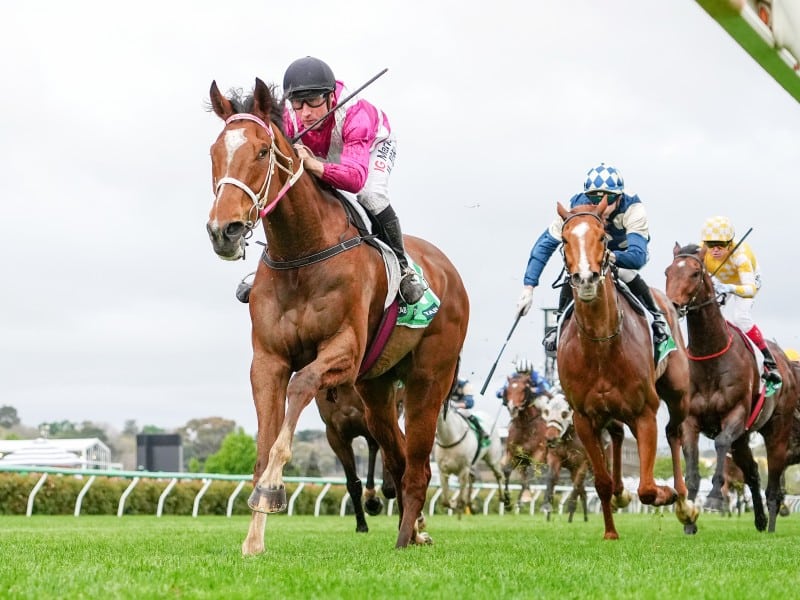
Cosmic Crusader claimed his second Group 1 and William Pike’s 19th in the Turnbull Stakes at Flemington, with a Cox Plate or Caulfield Cup campaign now under consideration.
Global Goal wins Flight Stakes to give Dylan Gibbons a third Group 1
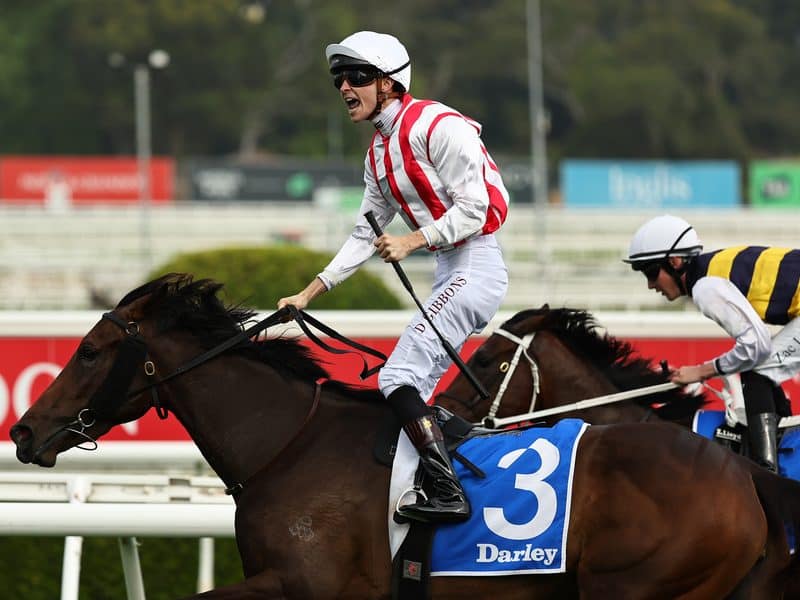
John Sargent secured his 12th Group 1 winner as a trainer and Dylan Gibbons his third as a jockey as regally bred Global Goal captured the Flight Stakes at Randwick.
