
The growing divide – Australia’s training ecosystem favours scale more than ever
Australia’s prize money boom may be over, but data collected by The Straight shows there has never been a better time to be a leading trainer. With the top 20 stables now capturing more than a third of all returns, Bren O’Brien explores the implications of an increasingly top-heavy training model
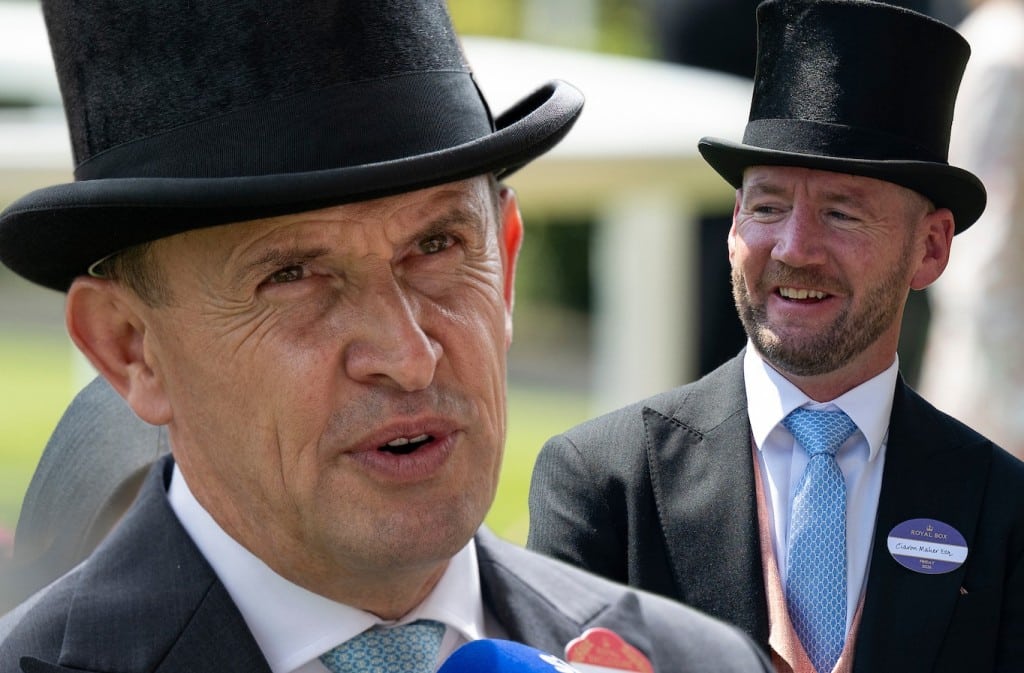
In five years, the names at the top of Australia’s training ranks haven’t changed. Chris Waller and Ciaron Maher remain at the pinnacle of their craft.
But what is different is how they dominate Australian racing financially.
With a month still to run this season, the pair’s runners have amassed $131.5 million in prize money. That’s more than the next nine trainers combined and almost double the $66.9 million they earned in 2020/21.
At first glance, it looks like a simple story of scale: bigger stables, more horses, more wins. But the data tells a different tale.
While their combined runner numbers have increased by 25 per cent in that time, winners are up just six per cent. Instead, it appears that the key advantage of scale is yield.
Since 2020/21, Waller’s average prize money per runner has jumped from $19,196 to $31,307. For Maher, who five years ago was training with David Eustace, his figures have risen from $15,768 to $24,403. Both are extracting far greater returns from each horse than they were five years ago.
It would be easy to frame this as a duopoly pulling away. But the broader top 20 suggests something more systemic is happening.
The top 20 Australian trainers, ranked by wins, have collected $335.7 million this season, up nearly 50 per cent on 2020/21. Their average prize money per runner now sits at $18,740, also up 49.7 per cent over five years.
But it is not necessarily because of scale. While there is still a month left in the season, total runners among the top 20 have fallen from 19,915 to 17,933, while winners have dipped slightly, from 2867 to 2762
Winning strike rates have also edged down from 16 per cent to 15.4 per cent.
Even Waller and Maher are winning less frequently than they did in 2020/21. Waller’s strike rate has fallen from 15.1 per cent to 13.9 per cent, Maher’s from 18.6 per cent to 14 per cent.
It has been apparent for some time that Australian racing is increasingly rewarding access to the biggest races.
But it is not just the same names at the top of the pile. There has been notable turnover in the top 20 since 2020/21 with nine new faces.
Annabel Archibald, then Neasham, cut out on her own in August 2020. Now she and her husband, Rob Archibald, sit fourth with one of the country’s largest operations.
The famous Freedman name has found new momentum with Michael emerging as a standalone force, now ranked in 11th, while Anthony and Sam Freedman, who weren’t in the top 20 five years ago, have moved into 12th.
Others new to the elite tier include Matthew Smith, Grant and Alana Williams, Chris and Corey Munce, and the Peter Moody-Katherine Coleman partnership.
At the same time, established names such as James Cummings, Kris Lees, Danny O’Brien and Adam Durrant no longer feature in the top 20.
Some turnover also reflects generational transition rather than structural change.
At Lindsay Park, the baton has passed to Ben, Will and JD Hayes after the departure of David Hayes in 2019 and Tom Dabernig in 2021. They now sit third nationally with around 60 more winners and nearly $10 million more in prize money than the stable managed five years ago.
While some stables seek scale, others have looked to eke better returns from less. Mick Price and Michael Kent Jr have earned $4.8 million more this season than in 2020/21, despite 245 fewer runners.
Similarly, Tony and Calvin McEvoy have nearly doubled their prize money with 240 fewer starters, albeit their stats are impacted by the Cup-winning heroics of Half Yours.
Bjorn Baker has climbed from 12th in 2020/21 to sixth this season, with just six extra winners, but $12.1 million more in returns.
Even Peter Snowden, Australia’s leading trainer in 2010/11, now 20th, is earning more per runner today than he was at his peak ($17,360 compared to $12,915).
Zooming out, the trajectory becomes clearer:
- Top 20 prize money in 2010/11: $106.1 million
- 2015/16: $169.4 million
- 2020/21: $224.4 million
- 2025/26: $335.7 million
Even more significant is the growth in the share of prize money that cohort of trainers wins.
In 2010/11, runners from the top 20 earned 24.8 per cent of total prize money. In 2015/16, it was 29.6 per cent, then moderated to 28 per cent five years later.
In 2025/26, it stands at 34.1 per cent.
That means more than one in every three prize money dollars in Australia now goes to less than one per cent of registered trainers. This occurred despite Australia’s richest race, The Everest, being won by an international trainer.
At the very top, the concentration is sharper again.
Fifteen years ago, the leading trainer won 3.8 per cent of the total Australian prize money, while 10 years ago it was 5.3 per cent and five years ago, it was 5.4 per cent.
As things stand in 2025/26, Waller’s runners are winning 7.9 per cent of the total pool. That is not a criticism of Waller, but a sign of a training ecosystem that is becoming increasingly tilted toward the top end.
With scale comes access to more talented horses, better-resourced owners, more qualified staff, better technology, better facilities. Scale feeds success, and success reinforces scale.
While new names are emerging, the dominance of the biggest trainers is becoming more entrenched. It is hard to see the top of the list changing much if we were to revisit this data in another five years.
Author

Related Articles
🔒 🔒 Racing digital publications get exemptions from new wagering advertising opt-out restrictions
Australia’s racing media sector has secured a carve-out from new wagering advertising restrictions, despite broader reforms designed to give consumers greater control over wagering promotions.
🔒 🔒 ‘The TAB will get sign-off from the codes’ – New Zealand thoroughbred and harness racing administrations likely to merge
New Zealand racing is on the verge of a major overhaul, with details of a proposed unified administration for thoroughbred and harness racing, as well as a new property trust, expected to be unveiled within the next two weeks, according to a leading industry media figure.
Letter to the Editor – Helen Sinclair on Racing for the Regions
Experienced racing administrator Helen Sinclair has written a letter to the editor questioning key aspects of the Racing for the Regions program.
