
Victoria, Queensland reports highlight racing’s economic strength
Twin economic reports released on the same day have reinforced racing’s importance to Victoria and Queensland, highlighting the industry’s growing economic contribution, regional employment base and community impact across both states.
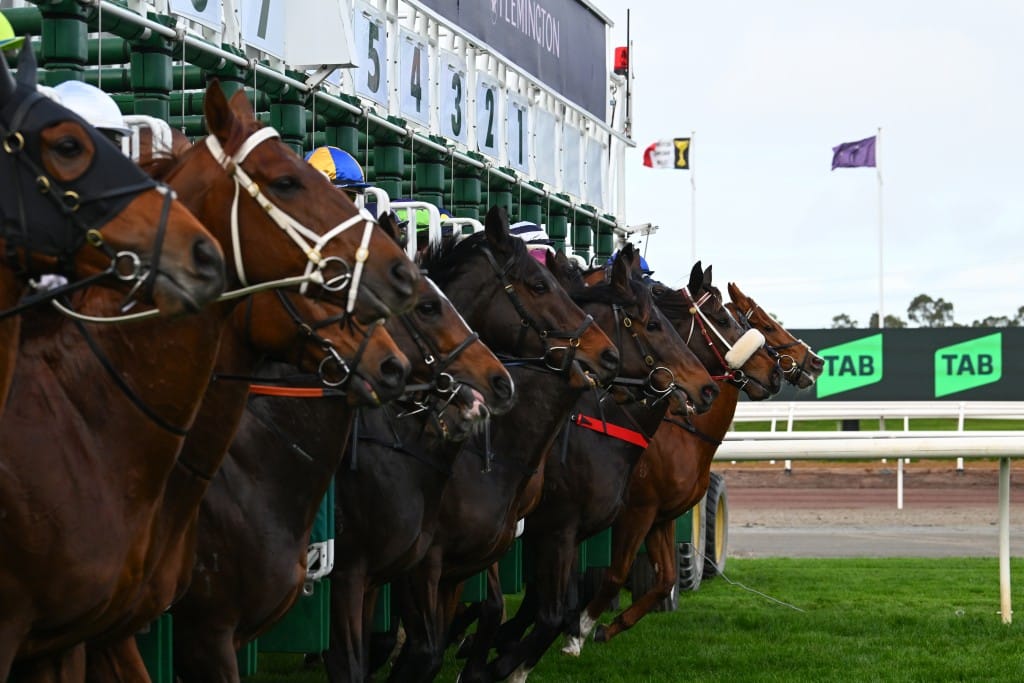
Independent economic reports released simultaneously by Victoria and Queensland have highlighted the growing importance of racing, with the industry’s annual contribution exceeding $8 billion across two of Australia’s largest racing states.
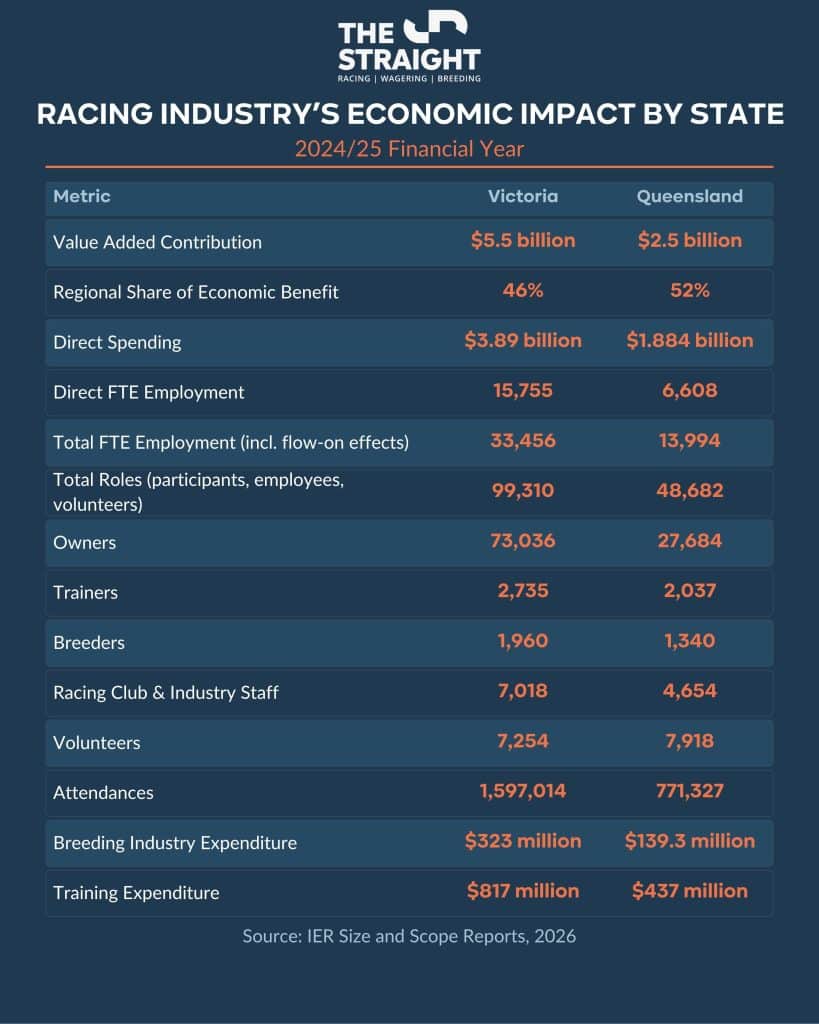
The Size and Scope reports, prepared independently by specialist consultancy IER, found the three codes of racing generated a value-added contribution of $5.54 billion to the Victorian economy in 2024/25 and more than $2.5 billion in Queensland.
The reports provide a snapshot of the industry’s scale at a time when both state governments continue to promote racing as a major regional employer and economic driver.
Victoria’s contribution has increased 18 per cent since the previous benchmark study covering 2018-19, rising from $4.7 billion to $5.54 billion.
Queensland’s industry has recorded a 104 per cent increase in value-added contribution since FY16, with its annual economic impact increasing by almost $50 million from FY24 to FY25.
The Victorian report found the industry sustains 33,456 full-time equivalent jobs, including almost 15,800 within racing itself and more than 17,700 across supporting industries.
“Victoria is the racing capital of Australia, and this record $5.5 billion contribution shows the strength, scale and impact of an industry that creates jobs, supports businesses and powers our economy,” Victorian Racing Minister Anthony Carbines said.
Queensland’s racing industry supports 13,994 full-time equivalent positions, up 47 per cent over the past decade.
Both reports identified regional communities as the major beneficiaries of racing’s economic activity.
Forty-six per cent of Victoria’s economic contribution is generated in country areas, while 65 per cent of the industry’s direct expenditure occurs outside metropolitan Melbourne.
More than half of Queensland’s economic contribution is delivered in regional hubs, where the racing industry stages almost 280 races across 30 meetings each week.
Racing Victoria chief executive Aaron Morrison said the findings highlighted racing’s enduring role in supporting jobs, businesses and local communities.
“The report findings reinforce that racing is much more than a sport – it is a major contributor to Victoria’s economy, a significant employer and an important part of communities right across the state,” Morrison said.
The Victorian report also found almost 100,000 people participate in the industry as employees, volunteers or participants, with close to 80 per cent based in regional areas.
It also highlighted racing’s broader social impact, with more than 560 not-for-profit organisations using racing club facilities, almost 1,000 charities supported by clubs and the three codes raising almost $5 million annually for local groups.
Harness Racing Victoria chief executive Matthew Isaacs said the findings highlighted the value of maintaining strong participation across all three racing codes.
“This report reiterates that the thousands of racing participants, clubs, volunteers and fans are the lifeblood of towns and cities, and that a racing industry built on three strong, supported and thriving codes delivers benefits well beyond the racetrack,” Isaacs said.
Queensland’s report found almost 48,700 people are involved in the industry as trainers, breeders, owners, jockeys, drivers, stablehands, employees and volunteers.
More than 750,000 people attended Queensland race meetings during FY25, with approximately three-quarters of those attendances recorded outside Brisbane.
The thoroughbred code remained the largest contributor in Queensland, accounting for $1.93 billion of the industry’s economic impact, ahead of greyhound racing at $348.4 million and harness racing at $222.9 million.
Queensland Racing Minister Tim Mander said the figures reinforced the industry’s importance to the state’s economy and workforce.
“Supporting 14,000 full-time jobs whilst contributing more than $2.5 billion in annual contribution to the state’s economy underpins the vital importance of the racing industry statewide,” Mander said.
Racing Queensland chairman Matt McGrath said the report reflected the commitment of participants across the state while underscoring the importance of maintaining a sustainable industry.
“This latest report highlights the importance of racing from both an economic and social perspective, especially in our regions where more than half of the industry’s economic contribution is realised,” McGrath said.
The Size and Scope of the Victorian Racing Industry report can be viewed here.
Click here to see a full copy of the Queensland FY25 Size and Scope Report.
Related Articles

Welcome to racing’s biggest stage – Donaldson-Aitken ready for Group 1 bid
Tyler Donaldson-Aitken has built his business around selling horses, but it will be at Caulfield on Saturday, not Inglis’ Riverside Stables next week, where his biggest moment in the industry may come.
🔒 🔒 The Everest’s new summit – Can the slot model sustain its next phase?
As The Everest approaches its 10th edition, even the most ardent critics of Racing NSW could not deny the success of a one-time “pop-up’ race that has become the Group 1 centrepiece of racing in NSW. But how does the race evolve into its second decade, and will the slot format sustain that industry engagement?
The scope and size of employment in Australia’s thoroughbred industry
Australia’s thoroughbred industry carries considerable political and social weight, contributing not just as a sporting pastime but as a fully fledged industry. But exactly how big is it, and exactly how many people does it employ? We have pulled together the latest national estimates and state-by-state figures.
