
Rowe On Monday – Tax relief for US owners and breeders, Cornerstone taps into Wootton Bassett popularity, Grenville adds to weanling stocks, big results for Newington Farm

In today’s Rowe On Monday column, Tim Rowe reports on an interesting bloodstock industry development in the US, checks out the latest weanling market moves on the Gold Coast and reveals an impressive statistic for Newington Farm.
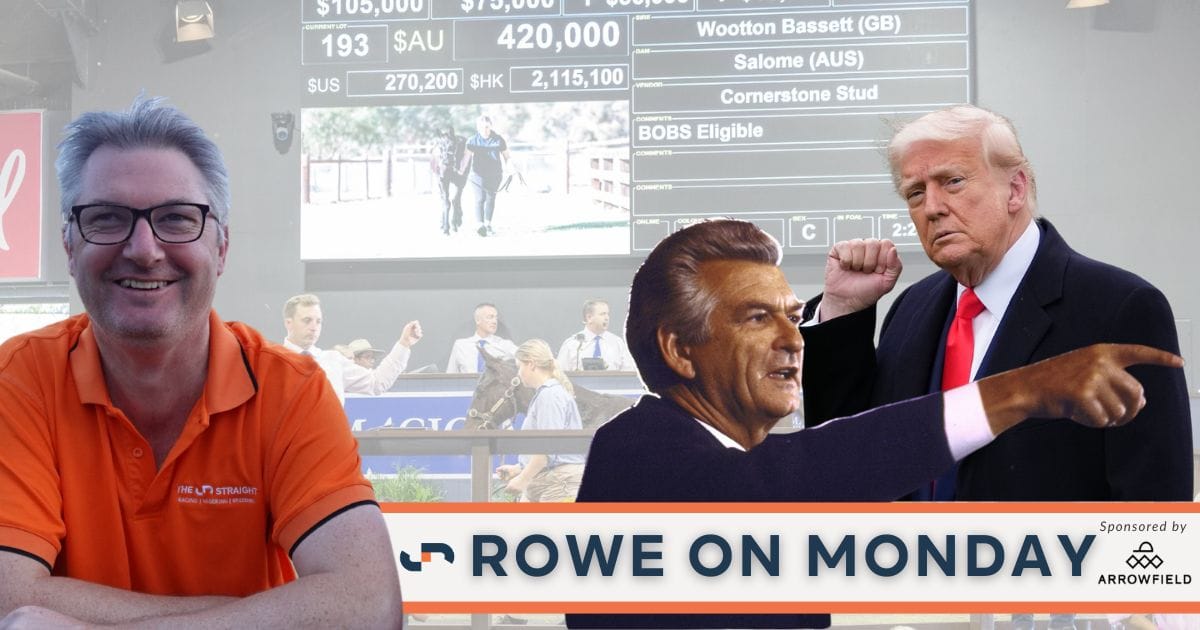
Trump’s tax breaks for thoroughbred owners
Forty years ago, the late Australian Prime Minister Bob Hawke helped drive investment in the thoroughbred industry by providing breeders with tax breaks on the purchase of breeding stock.
Championed as a Labor leader for the working class who liked a drink and a punt, Hawke in 1985 increased the allowable tax deduction on breeding stock to 50 per cent for stallions and 33 per cent for broodmares.
Those deductions were later slashed in half under then Treasurer John Dawkins in the Keating Labor government in 1992, a move condemned at the time by industry figures as potentially stymieing the market, after the significant tax breaks had been credited with helping improve the Australian thoroughbred.
By 1994, with the importation of overseas bloodlines both in terms of stallions and broodmares over the previous decade, Inglis conducted a record Easter sale. Twenty-five per cent of the investment at that year’s Easter sale came from overseas buyers.
“It was the best we have ever had,” then Inglis managing director Reg Inglis said at the time, according to the Australian Financial Review.
It was also the same year that Danehill, the breed-shaping shuttle sire who left influential sire sons such as Redoute’s Choice, Fastnet Rock and Exceed And Excel, was crowned Australia’s champion stallion for the first time.
As history shows, Danehill would go on to be Australia’s champion sire nine times.
The motivation for why and how people participate in the racing and breeding industries is varied. For some, the tax breaks make the game far more financially viable than it may seem to outsiders.
In the US, with President Donald Trump on the economic warpath, the country’s owners and breeders could be in line for the reinstatement of a tax incentive allowing the immediate and full write-down of the cost of purchasing horses such as yearlings.
Known as bonus depreciation, the 100 per cent immediate tax write-off on the purchase of bloodstock, such as yearlings, has applied in the US since 2017 but for the past three years the rate has reduced by 20 per cent annually. The allowable write-downs are currently at 40 per cent.
But in a Bill set to go before the US Senate, the bonus depreciation is likely to be increased back to 100 per cent until 2027. There is also speculation that it could be enshrined permanently.
The immediacy of the tax advantage would provide a welcome boost to the US bloodstock market, one that has experienced significant growth in recent years, agent David Ingordo says.
“I can speak for myself and my clientele, we’ve been maximising this tax strategy over the years and for it to go back up to 100 per cent is huge,” Ingordo told America’s Thoroughbred Daily News.
“I think that a lot of the clients I work with will increase their budgets because of this. A lot of people in my position will be thinking the same way, especially if you’re looking to upgrade your stock. This is a great way to take advantage of a tax law.”
Frankhuisen and Pritchard-Gordon toast big Wootton Bassett result
South Australia’s Barossa Valley is synonymous for its fine wine, but just as the soils are prime for vineyards, so too are they for raising quality racehorses.
That region northeast of Adelaide has also proven financially fertile for businessman John Frankhuisen, an entrepreneur who is credited with developing waterproof wine labels who more recently became a shareholder in Cornerstone Stud.
At Sunday’s Magic Millions Weanling Sale on the Gold Coast, a decision by Frankhuisen and his Cornerstone Stud business partner Sam Pritchard-Gordon to send a Wootton Bassett colt 2000km from home paid a $420,000 dividend.
It follows the increasingly commercial mantra undertaken by Cornerstone Stud in recent years, and solidified under Frankhuisen and Pritchard-Gordon after Sam Hayes sold out his interest in the farm in 2023.
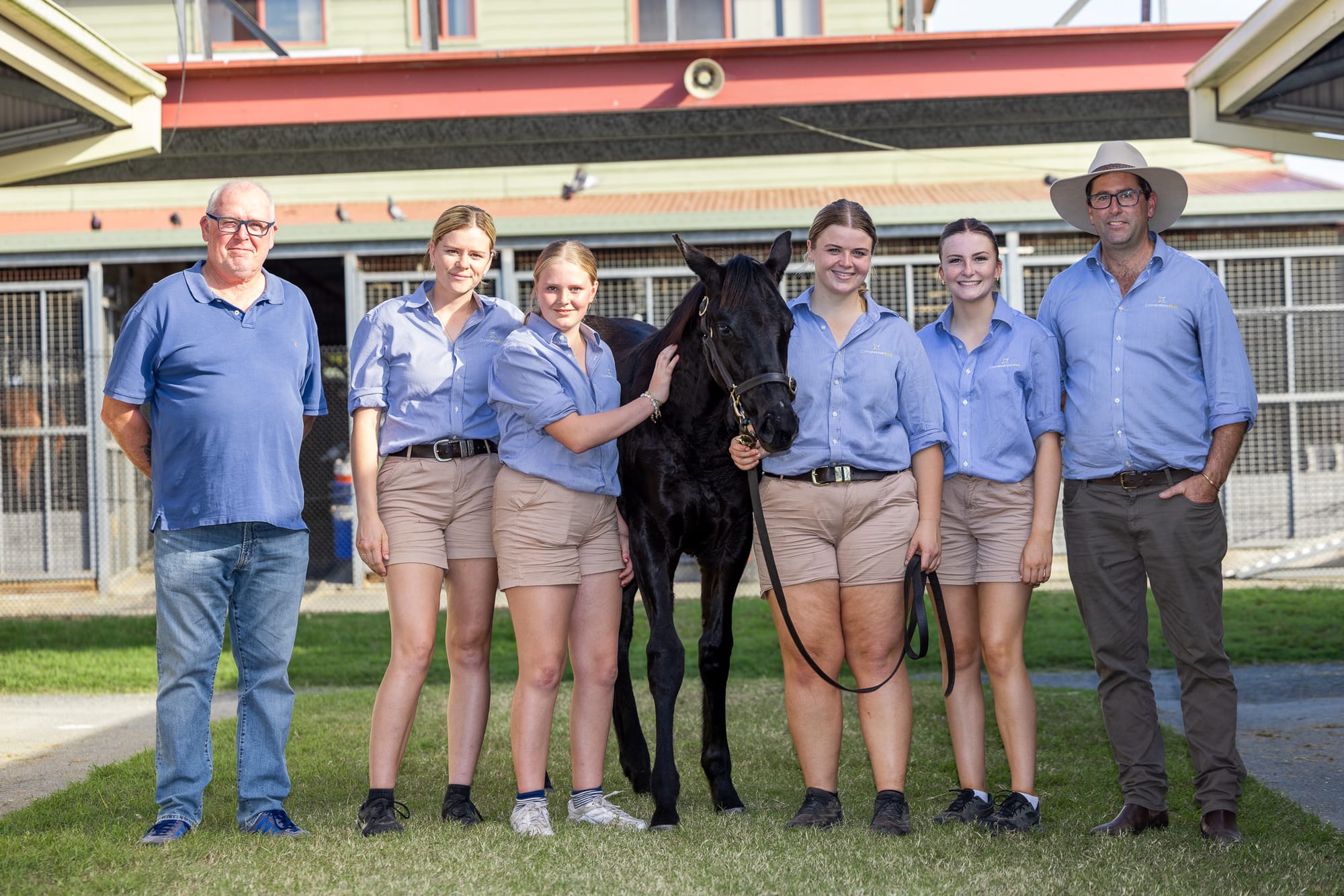
The “upswing” in Wootton Bassett’s southern hemisphere credentials – he will stand for an Australian record service fee of $385,000 (inc GST) this year – also played a role in selling the colt at the Gold Coast as a foal.
“I think it’s tough for a smaller farm to really hold their own at a premier sale,” Pritchard-Gordon reasoned.
“I think the horse would stand out at the premier sale, but it’s tough for a smaller farm to really make their presence felt, so John Frankhuisen endorsed the idea and said, ‘well, let’s take our chance and have an outstanding horse at a foal sale as opposed to making it hard work trying to get there as a yearling’.
“There was profit in him at around that $300,000 mark. In my mind, I was just trying to work out who had the confidence to try and pinhook him to bring him back through a yearling sale and beyond $350,000 was where I was coming unstuck.”
Coolmore’s Tom Magnier bought the colt, with his likely destination being next year’s Inglis Easter sale.
Grenville going for more mainland Gold
Across Bass Strait, Tasmania’s Grenville Stud father-and-son Graeme and Bart McCulloch have also been laser-focused on improving their financial bottom line when it comes to thoroughbreds.
Mixing Graeme’s old-school horsemanship and Bart’s business nous, Grenville achieved that on the Gold Coast in January last year when they sold the Wootton Bassett half-brother to The Everest winner Think About It for $900,000 and an Exceed And Excel filly for $675,000.
Therefore, reinvestment is front of mind, with the acquisition of two weanlings on Sunday by Wootton Bassett and Zoustar respectively at the Magic Millions to be grown out on their farm near Launceston before reselling back on the mainland early next year.
“It’s clear that the market’s getting stronger and stronger at the top end and you’ve got to have a really nice type by the right stallions and so we’ve been looking to add to the weanlings we’ve already got at home,” Bart said of the Wootton Bassett filly and Zoustar colt, who cost $220,000 each.
“We’ve got some really nice weanlings that we’re looking to bring to mainland sales next year and just wanted to add to those drafts a little bit and buy the right horses that are going to stand out next year at the yearling sales.
“We’re very selective with what we wanted and a lot of horses that we liked, we got blown out of the water on, but fortunately we managed to get a couple that we thought were good buying being by a couple of the hottest sires in Australia.”
Newington making its mark
The greatest advertisement for people working in the thoroughbred industry is racetrack success.
For Queensland operation Newington Farm, run by Julian and Kacy Blaxland, Friday night’s Magic Millions National 2YO Classic meeting at the nearby Gold Coast was one to remember.
Five of the eight winners were either spelled, broken-in or pre-trained at Newington’s Canungra property, including the winner of the $1 million feature race, Isti Star.
As well as Newington’s enhanced reputation, the Blaxlands also cashed in on Isti Star, part-owning the Paul Shailer-trained Better Than Ready filly who has won more than $650,000 in four starts.
To top the weekend off, Manhood also won the Listed Chief De Beers at Doomben on Saturday, another horse to spend time at the Blaxlands’ Newington Farm.
Author
Related Articles

Munz and Messara lead push for independent control of Australia’s black-type races
Australia’s most influential breeders, led by Jonathan Munz and John Messara, have formed a new industry alliance to wrest control of the nation’s black-type race Pattern from Racing Australia, backing an independent committee they say is essential to restoring international credibility.
A Toronado turnaround: Swettenham star makes stunning recovery to return to breeding barn
Toronado made an unexpected return to the Swettenham roster this year after he made a rapid recovery from a severe hock injury that had principal Adam Sangster on tenterhooks.
Bumper line-up assembled for Magic Millions Perth Yearling Sale
Magic Millions has released the catalogue for its 2026 Perth Yearling Sale, with 358 lots to be sold over two days in February.