
The Economics of standing a stallion – why Irish Champion Stakes winner didn’t make European cut
Talented William Haggas-trained Economics, a winner of the Group 1 Irish Champion Stakes, will stand at stud in India rather than in Europe. Australasian studmasters have to make similar commercial calls on potential stallions in a bid to make the numbers stack up.
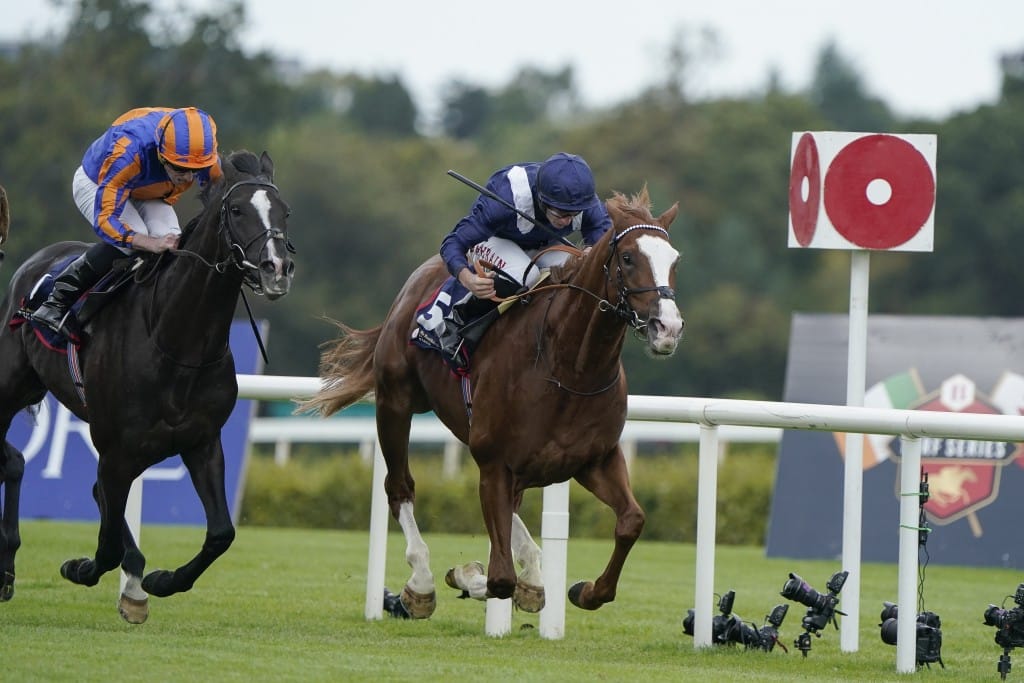
In the past 25 years, the Irish Champion Stakes honour roll includes So You Think, Sea The Stars, New Approach, Almanzor, Roaring Lion and Auguste Rodin.
Coolmore’s Delacroix won it this year as did St Mark’s Basilica in 2021 while Giant’s Causeway, Fantastic Light and High Chaparral were victorious in the Group 1 2000m race at Leopardstown.
The aforementioned have all made their mark at stud, or are expected to do so, with varying degrees of success since the turn of the century.
St Mark’s Basilica shuttles to Coolmore Australia, Auguste Rodin is completing his first southern hemisphere season at Windsor Park Stud while Almanzor has a permanent home at another New Zealand farm, Cambridge Stud.
Last week crowned as Europe’s Cartier Champion 3YO Colt, Delacroix has been retired to Coolmore where he will stand for a maiden service fee of €40,000 (A$71,500 approx).
It’s probable, being a son of Dubawi out of an American-bred six-time Group 1 winner in Tepin, that he will also shuttle to Coolmore’s Hunter Valley nursery next year.
But 2024 Irish Champion Stakes winner Economics – whose own sire Night Of Thunder will be crowned Great Britain’s champion stallion at the end of the calendar year – could not find a home at stud anywhere in Europe, nor in Australasia, despite sharing a Group 1 race alongside many of the world’s most influential sires.
Trained by William Haggas for Bahraini owner Isa Salman Al Khalifa, Economics has been sold to India’s Poonawalla Stud Farms having won four times at three, including his Group 1 triumph over Auguste Rodin.
The horse is well-named: the economics of standing a stallion in Europe – or Australia and New Zealand, for that matter – means that they have to, excuse the cliche, tick a lot of boxes.
Bleeding twice, necessitating his retirement, didn’t help his stud credentials in more mainstream racing and breeding jurisdictions despite, on face value, having a lot in his favour.
Economics’ sire Night Of Thunder has enjoyed a breakout year with 30 individual stakes winners, including the Yulong-owned Group 1 Dewhurst Stakes winner Gewan, and he has delivered his highest average return the yearling sales in 2025 with his eighth crop.
But commercially Night Of Thunder, a son of another champion sire in Dubawi, has had to do it the hard way and earn his acceptance from northern hemisphere breeders. He was shuttled by Darley for one season to Victoria in 2016 where he covered 96 mares and produced 57 foals,
Inglis Bloodstock chief executive Sebastian Hutch told the Straight Talk podcast in October that Australasian studmasters were being more open-minded about the type of stallions they are prepared to stand.
But as Cambridge Stud chief executive Henry Plumptre explained on Wednesday, investors in the stallion market still have to make the financials work otherwise it’s a large money pit to try and fill.
“What we try to do with horses here at Cambridge, particularly the horses where Brendan and Jo (Lindsay, Cambridge Stud owners) have got to put equity into, is that we try to work on an equation in the first four years which gets back the majority of the capital outlay,” Plumptre said.
“So, when you get to year four, let’s say you’ve paid $5 million for the horse, and the southern hemisphere rights for a horse, when you get to the end of year four, you’re as close to a $5 million return as you can be.
“Now, that comes in because you’d probably syndicate half of it (to other investors), which would possibly bring you in a couple of million, and then you’re selling nominations for the next four years to try and get back to $5 million.
“And if you have a shortfall, it’s generally because the horse isn’t wanted in the marketplace.”
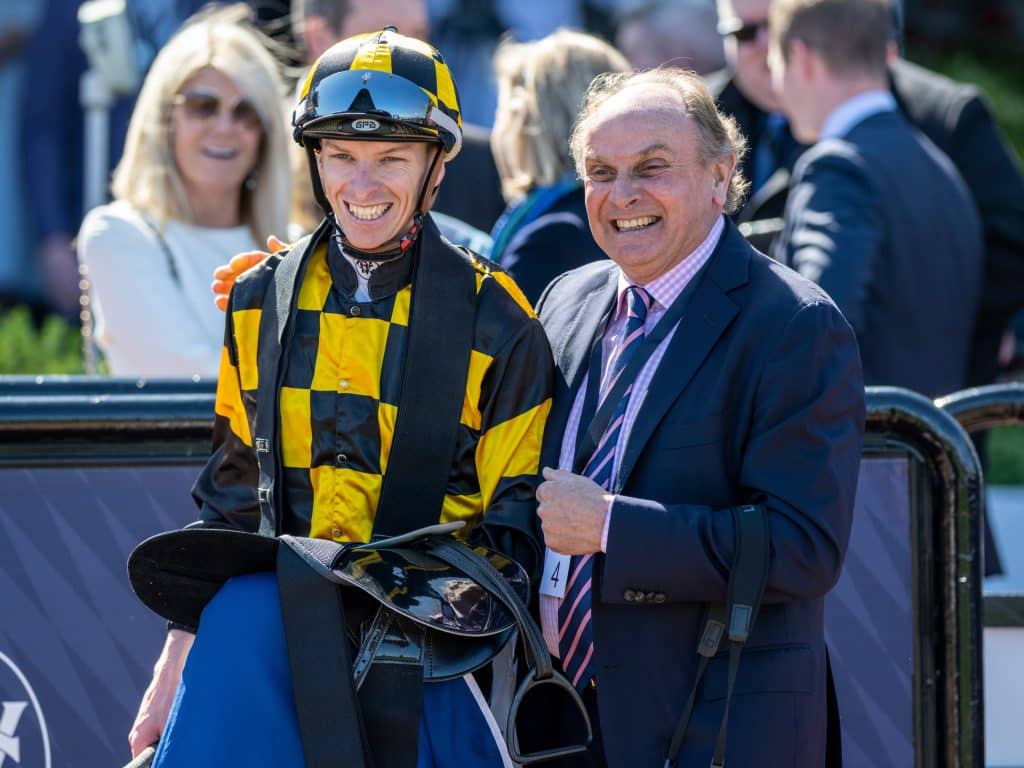
For that reason, Cambridge Stud has declined numerous potential stallions over the past seven years.
“I think something like 70 per cent of the yearlings produced across Australasia go to a sale whereas it’s the other way around in Europe where the marketplace is dominated by owner-breeders,” Plumptre said.
“So, in this part of the world, you’ve got to look at a stallion and say, ‘is he going to throw a type that they’re going to be interested in in the ring?’
“And we’ve seen … half a dozen here in New Zealand, which have been offered to us in the last seven years, that we’ve just looked at and said, ‘we couldn’t put that horse in front of the breeders’.
“Cosmetics and performance are completely separate. One doesn’t follow the other. If they’re good-looking, it doesn’t mean they’re going to run. If you look at Montjeu, when he had his first crop here, they were stringy, long, scopey, slightly mad, and difficult to train, all of those things.
“I think over a period of five or six years in Australia, he won something like five or six autumn Classics, Derbies, Oaks, that sort of thing. But it didn’t make him any more commercial.”
Despite Economics’ European rejection, that doesn’t mean he won’t have a lasting influence on Indian racing. There are no hard and fast rules.
As Poonawalla Stud Farm’s managing director Simone Poonawalla said: “Economics was a really talented three-year-old and when we saw his wins in the Dante and then the Irish Champion Stakes we found them genuinely compelling.
“We’ve been on the lookout for a stallion but it’s not easy to get horses of his racing calibre these days. So, we were very quick to jump out of the starting gates this time.”
The former Darley-owned Territories, a son of Invincible Spirit who shuttled to Darley’s Kelvinside from 2017 to 2021, is also now residing at Poonawalla Stud Farms.
He is the sire of Australian Group 2 winners Berkeley Square, Navajo Peak and Group 3 winner Live To Tell in his limited southern hemisphere exploits.
Another resident at Poonawalla is Excellent Art, whose four seasons in Australia produced four stakes winners, including the Group 1 winner Under The Louvre.
Author

Related Articles

Munz and Messara lead push for independent control of Australia’s black-type races
Australia’s most influential breeders, led by Jonathan Munz and John Messara, have formed a new industry alliance to wrest control of the nation’s black-type race Pattern from Racing Australia, backing an independent committee they say is essential to restoring international credibility.
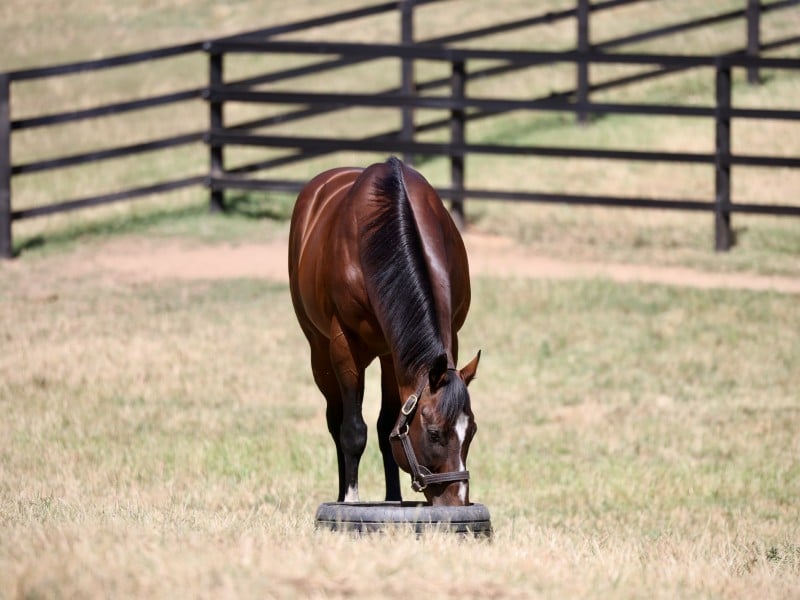
A Toronado turnaround: Swettenham star makes stunning recovery to return to breeding barn
Toronado made an unexpected return to the Swettenham roster this year after he made a rapid recovery from a severe hock injury that had principal Adam Sangster on tenterhooks.
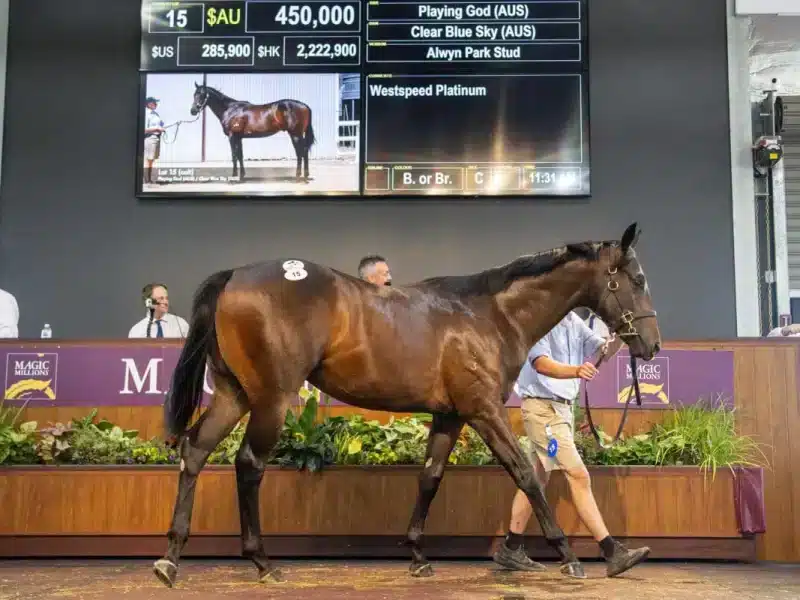
Bumper line-up assembled for Magic Millions Perth Yearling Sale
Magic Millions has released the catalogue for its 2026 Perth Yearling Sale, with 358 lots to be sold over two days in February.