
Equine flights continue despite Middle East conflict
International Racehorse Transport is managing to navigate the complexities of air travel for horses amid the Middle East conflict, with a flight booked to take Australian sprinters bound for the UK in early June.
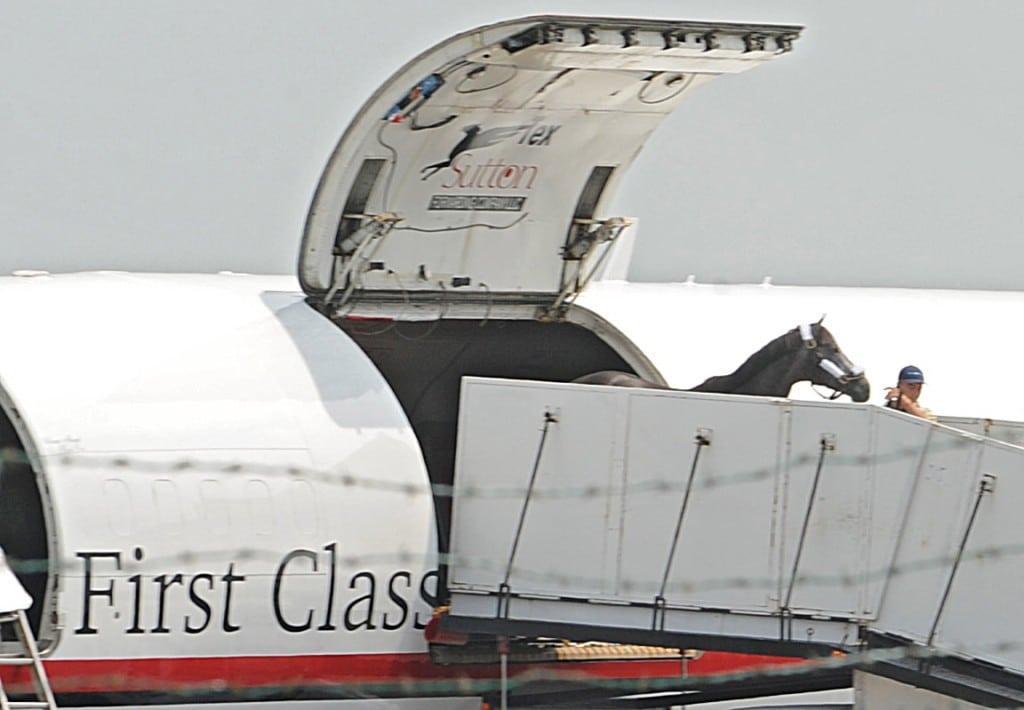
International Racehorse Transport (IRT) is continuing to move horses in and out of Australia despite instability in the Middle East, adjusting routes and schedules on an almost daily basis to keep important global shipments running.
IRT’s Australian managing director Chris Burke said the company had so far managed to maintain regular movements of horses for the recent Sydney autumn carnival and UK-bound sprinters booked to leave in about five weeks’ time.
Australian sprinters Lady Of Camelot, Overpass, Generosity, Charm Stone and Joliestar could all head to the UK at the start of June for the Royal Ascot meeting, with IRT securing a flight to Europe for the quintet.
IRT was able to bring in Dubai Honour, Barnavara, Caviar Heights and Seo Linn in from Europe for the Sydney carnival, albeit a week behind schedule.
Burke and his peers are also juggling the dual issues of airlines altering flight paths and a jet fuel shortage caused by the US and Israel attack on Iran and the blocking of the Strait of Hormuz.
“We’re still flying through. We had the horses come to the Sydney carnival. We’ve had horses arrive last week from England and Europe coming in,” Burke told The Straight.
“So, there’s still ways to do it. We’ve just got to keep an eye on everything that’s going on in the world and make adjustments when we need to.”
The conflict has forced airlines to reassess their access to Middle Eastern airspace, with some carriers diverting around the region and others continuing to operate through it, depending on the day‑to‑day risk profile.
“You can either go through or go around. It’s really just depending on the timings we want to do and how we want to do it,” Burke said.
“It depends which direction they’re going and what airlines are operating and it’s changing daily in the Middle East, but you just make it work. You find a way.”
Generosity and Charm Stone will look to clinch their spots in the plane for Royal Ascot in Saturday’s Robert Sangster Stakes in Adelaide while Lady Of Camelot is likely to resume in the Victory Stakes in Brisbane on May 2.
“We’ve got them booked to travel, so they’re travelling at the moment,” Burke said.
“(At the) start of June I think the staff have got that one set in place and we will send horses to Europe. There are horses leaving our facility in Melbourne (last night) for London.”
The geopolitical tension comes on top of years of disruption for the equine transport sector, which has had to navigate COVID‑19 restrictions, airline cancellations and fluctuating freight capacity.
“You’re constantly thrown curveballs doing what we do,” Burke said. “With COVID, you have different conflicts around the world that cause different requirements on you. You have airlines cancelling for commercial reasons at times.
“You just don’t know where the next one’s coming from, but that’s what we do I suppose. Find solutions for the people so they can keep moving their horses around.”
Jet fuel costs add another layer of pressure, with the conflict also contributing to a spike in global fuel prices.
“The price of jet fuel has almost doubled, so there’s certainly fuel surcharges that airlines are adding on,” he said.
“They’re all doing it at a slightly different rate depending on what their operating costs are and where they purchase their fuel from.
“We’re just monitoring that on each flight and passing through exactly what we’re billed by the airline.
“For each flight, every flight is different. It’s a frustration for all involved, but people are seeing that filling up their cars every week as well.”
European shuttle stallions such as Arrowfield’s Lead Artist, Coolmore’s Delacroix, Darley’s batch including Too Darn Hot and New Zealand studs’ overseas sires are expected to arrive in late winter ahead of the September 1 southern hemisphere breeding season.
“Right now we’re finding ways to do it, but who knows what’s going to happen in the Middle East in the next day, let alone the next two to three months,” Burke said.
“Everybody hopes that things settle down, but if it doesn’t, it makes it tougher. Even accessing jet fuel and all those sorts of things could become issues in four, five, six months’ time.”
The conflict could also mean that stallions such as Windsor Park’s Auguste Rodin and Cambridge Stud’s first-season shuttler Charyan as well as Chaldean may have to quarantine at IRT’s Melbourne facility rather than heading directly to New Zealand.
“The last few years we’ve been able to find a way to get them to go in directly. That was with Qatar Airways,” Burke said.
“We might do that again depending if things settle down or if not.”
Cathay Pacific, which uses Hong Kong as a stopover, and Singapore Airlines have provided IRT and other freight providers with an alternative to flying via the Middle East.
“They’re both good options with good airlines,” he said.
“You still have options of going through the Middle East as well. At the moment, where things have settled, you can get through there. You can overfly the Middle East if you have to with some airlines.
“Right now we’re finding ways to continue flying. I don’t see that changing unless things heavily escalate.”
Author

Related Articles

Two out of three ain’t bad – Churchill Downs to purchase the IP rights to the Preakness Stakes
A US$85 million deal will see the rights to one of the United States’ most important races, the Preakness Stakes, transfer to the control of Churchill Downs Inc, the same outfit that owns the Kentucky Derby.
Run The Numbers – Jigsaw’s streak a two-in-a-million chance
While one famous equine winning streak came to an end earlier this month, at the weekend, another rolled on as Jigsaw extended his run to seven straight victories. We look at Australian racing’s best current streaks.

Changing taps – Flemington switches to Asahi, ending 25-year agreement with Lion
Asahi has stepped up its pursuit of the beer-drinking habits of Australian racegoers, with a seven-year deal which gives it an on-course monopoly in Melbourne and Sydney.