
Exports and plans for breeding season continue as New Zealand industry manages strangles outbreak
Stud farms, trainers and transport operators continue to maintain tightened biosecurity measures in New Zealand as the country brings a strangles outbreak in the Waikato region under control.
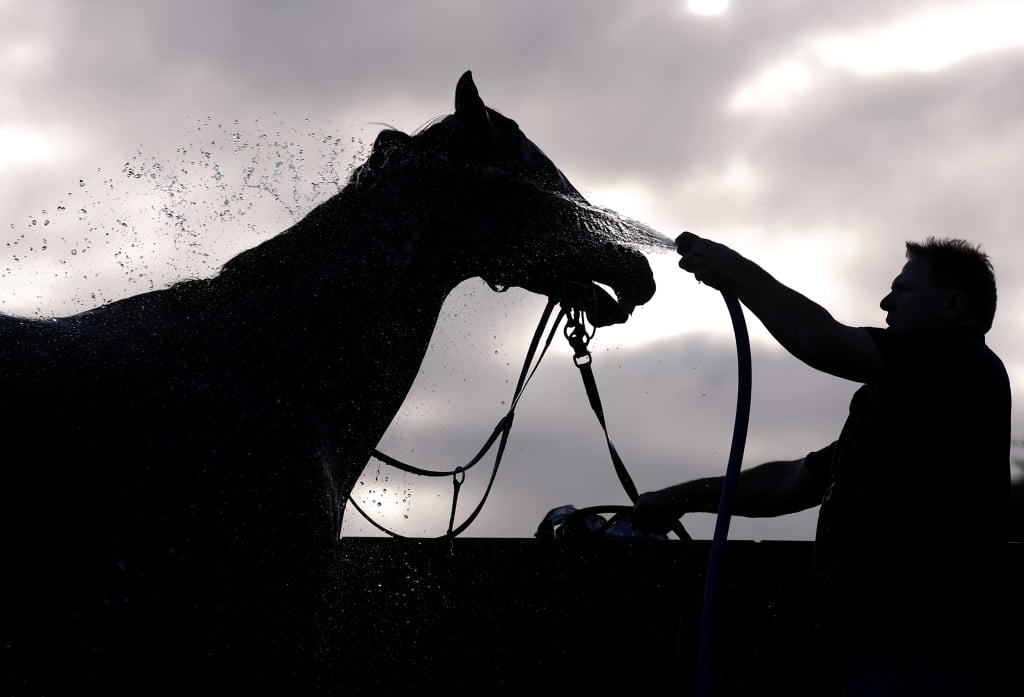
An outbreak of the highly contagious strangles disease in New Zealand’s key training and breeding region that threatened to shut down racing and heavily disrupt the breeding season appears to be contained, leaving industry participants breathing a sigh of relief.
Protocols were enacted by New Zealand Thoroughbred Racing and additional measures were put in place by stallion farms as soon as the first case was reported earlier this month, putting officials on high alert.
But the New Zealand Equine Health Association reported that there had been no new reported cases of strangles this week, suggesting that the spread of the disease had been curtailed.
The outbreak is primarily affecting training and pre-training properties, with some stud farms also affected in the Waikato region.
One confirmed case has been reported in the Auckland region.
With five weeks until the breeding season begins, the extra stud farm protocols will remain in place throughout the spring while New Zealand trainers targeting carnival races in Sydney and Melbourne will be able to travel their horses without undergoing any form of quarantine.
The exporting of horses to major Asian jurisdictions has also continued despite the threat of strangles to sections of the thoroughbred population.
Earlier this month, Waikato Stud informed clients that walk-on mares visiting its stallions this year would be required to complete a mandatory two-week quarantine period and have a negative nasal swab prior to entering normal on-farm management procedures.
“This is in place to safeguard the resident Waikato Stud population and your own stock,” Waikato Stud said in an email to breeders.
Cambridge Stud is also implementing a suite of precautionary measures to mitigate the risk of strangles infections.
“Mares that are coming into the foaling unit have got to be on the farm three weeks prior to foaling and go into a quarantine area. It’s the same with barren and maiden mares coming onto the farm,” Plumptre said.
“They’ve got to be here a fortnight before the covering starts and they’ve got to have five days of clear, normal temperatures before they travel to us. They’ve got to have a PCR test as well.”
Plumptre said thoroughbred industry participants were playing their role in helping contain the spread of the disease, with authorities appearing to be on top of the strangles outbreak.
“I think all the trainers in Cambridge and Matamata are all being pretty sensible about it. They’re notifying if they have a case,” he said.
“We were told by Rob Hitchcock, he’s the chairman of the New Zealand Vet Association and Cambridge Stud’s vet, that the numbers last week had plateaued and that they haven’t had any new notifications this week.”
New Zealand Bloodstock Airfreight manager Sharon McDowell said the transport of horses internationally had been uninterrupted with quarantine protocols already in place.
“There’s been a couple of horses delayed for precautionary reasons because they may have had possible exposure (to strangles-infected horses),” McDowell said.
“But that would be less than 1 per cent of the number of horses transported in a month. So, there’s been limited impact.”
Horses bound for Hong Kong have been required to undergo pre-quarantine strangles testing for about a decade.
“And the same goes for Malaysia. We took it upon ourselves to do a pre-quarantine strangles testing and horses going to China already have a pre-quarantine strangles test,” McDowell said.
“Australia has no (mandatory) strangles testing on the import certificate, because obviously it’s endemic in Australia as well as New Zealand.”
It means that travel plans for New Zealand-trained horses, such as Stephen Marsh’s unbeaten filly Well Written, will at this stage remain unaffected even if the strangles outbreak is ongoing.
“She can go from her stable in Cambridge to the stable at whatever racecourse she’s staying at in Australia (without quarantining),” McDowell confirmed.
“But I can’t stress enough that for just general bookings – maybe somebody bought a yearling at Karaka and it’s ready to go over – if that property has had a suspected case, they have probably spoken with the owners of these horses and saying, ‘do you mind holding off a couple of weeks before you book it because of this?’
“We’re more than happy if somebody has got a horse going to Australia to arrange a pre-travel test for them. That’s no problem at all.”
A matter-of-fact Plumptre played down the threat of strangles to the industry.
“I don’t know who named it strangles when it first happened, but it was the stupidest thing to call it, because it sounds terrible,” he said.
“But it’s a manageable thing. As long as you’ve got protocols in place on the stud farms and the racing stables … and the transport operators become the most important people.
“They’re disinfecting the floats and making sure that they’re clean. The numbers have plateaued last week and (the veterinarians) are pretty confident that probably within four to six weeks it’ll be over.”
Author

Related Articles
A chance to turn a ‘what if’ into a ‘what’s next’ for Flying Start’s Resolutely
Flying Start Syndications runner Resolutely never made it to the Golden Slipper but Cameron Bennett is hoping the form from the $5 million race can translate to spring success for his filly.
Make-or-break deadline for King Island racing return
King Island Racing Club has set a July 31 deadline for trainers to commit to a proposed 2026/27 season, warning that racing will again be abandoned if it cannot attract enough support as Tasracing concedes the future of racing on the island is uncertain.
Mander guarantees integrity standards, despite criticisms of new racing model
While conceding Kim Kelly’s departure from a key integrity role would be a loss to the Queensland industry, Racing Minister Tim Mander has backed his government’s approach to reform as both necessary and effective.
