
🔒 🔒 The Phar Lap connection that gives Russian Rock’s Victoria Derby bid extra meaning
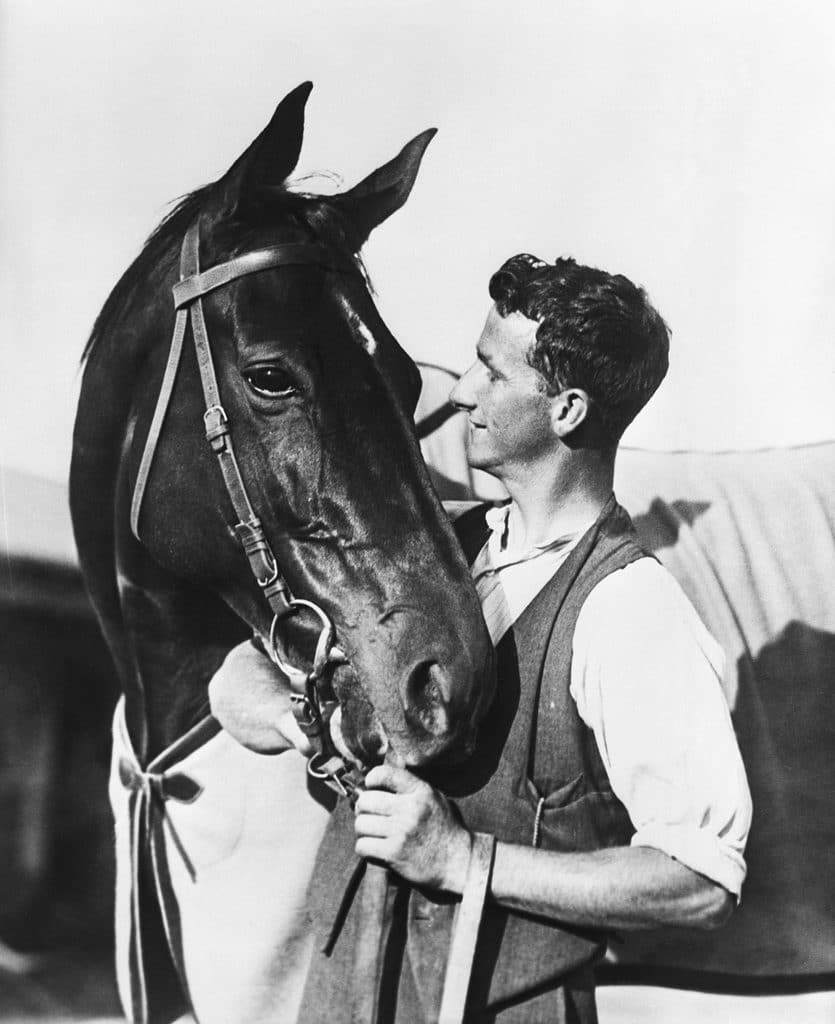
Mick Trotter’s Victoria Derby dream has an unlikely link to Phar Lap, through Tommy Woodcock, the legendary champion’s strapper who was a formative influence on the trainer’s childhood.
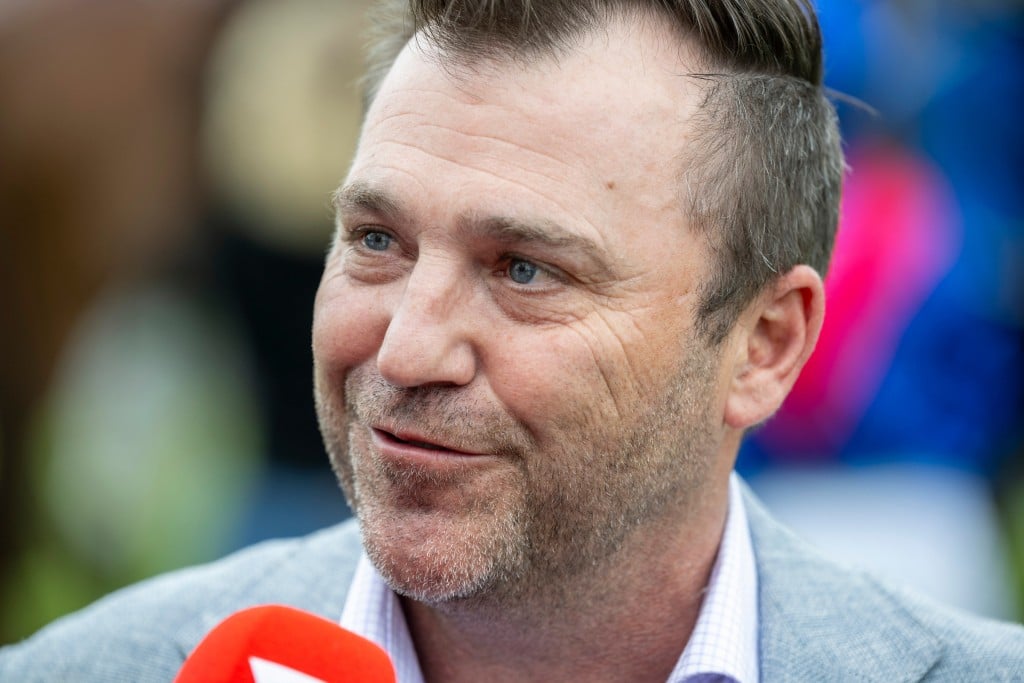
Mick Trotter has never needed much reminding of the extraordinary people who shaped Australian racing.
But the Victoria Derby will provide a timely excuse to revisit a connection that reaches back to one of the sport’s most enduring legends.
Trotter, who is daring to dream with Russian Rock in the $3 million Classic at Flemington on Saturday, grew up in the company of Tommy Woodcock, the horseman immortalised as Phar Lap’s strapper.
His father, Pat, was a prominent Melbourne jockey who rode Reckless, a popular stayer Woodcock trained in the 1970s to win the Sydney, Adelaide and Brisbane Cups and finish second in a Melbourne Cup.
It is an indirect route to this year’s Derby, a race that was first run in 1855.
Nevertheless, Trotter’s path to a stage as prestigious and traditional as the first day of the Melbourne Cup carnival confirms once more that racing has always been a sport where the past can turn up in the most unexpected places.
This year marks 100 years since Phar Lap was foaled in New Zealand, and the champion’s 1929 Victoria Derby victory remains one of the earlier defining moments of a career that would elevate him into Australian sporting folklore.
For Trotter, the connection is personal rather than a convenient piece of anniversary history.
“I’m very fortunate with Dad’s career that I have been surrounded by some amazing people,” he told The Straight.
His reverence for Woodcock and wife Emma is obvious.
“Mr and Mrs Woodcock didn’t have children of their own, so Mum and Dad were sort of like their kids and I was pretty much like their grandson,” Trotter said.
Woodcock, whose association with Phar Lap became one of racing’s great partnerships, was a familiar presence during Trotter’s childhood, long before the significance of those early encounters became apparent.
“I used to follow Mr Woodcock around as a young boy,” Trotter said. “I was like his shadow, I went everywhere with him.
“There were plenty of stories about Phar Lap. He was an amazing man. Just an absolute gem.
“It was a privilege to be a part of his life.”
The memories have endured, as have the tangible reminders of a relationship that might otherwise have dissolved into family anecdotes.
Trotter still has a wooden box the Woodcocks gave him for his first Christmas, complete with the original Christmas card.
For someone who makes his living training a small team of racehorses, the association is a rare inheritance.
Having Russian Rock take his place in the Derby offers Trotter a bond with the race’s glorious past through Woodcock, whose place in racing history was secured through his care of a horse that became a national obsession.
Phar Lap was foaled on October 4, 1926, and won the Victoria Derby three years later, before his extraordinary run of success established him as one of Australia’s greatest racehorses with a legendary aura that still transcends the turf.
Trotter’s own path into racing was less direct than his childhood ambitions might have suggested.
His father’s career made race riding seem like the obvious destination, and for years, it was all young Mick wanted to do.
But a serious fall involving Pat at Moonee Valley forced a rethink, and Trotter chose to remain at school rather than pursue an apprenticeship.
“I had to decide whether I was going to do it or not, and I decided to stay at school,” he said.
The horses eventually won him back.
After travelling overseas, working in Britain for trainer Mark Johnston, Trotter returned to establish himself as a trainer in his own right, navigating the financial uncertainty of building a small stable from scratch.
He now generally prepares a small team of between six and 12 horses, adding an extra layer of satisfaction to Russian Rock’s arrival at a point where anything is possible in a Derby of many chances.
The three-year-old’s emergence is also an opportune moment for Trotter following the retirements of Rumbled Again and Apache Song, two mares who did the heavy lifting for the stable in recent seasons.
For that, Trotter can thank Russian Rock’s owner and breeder David Barclay.
Barclay retained Russian Rock to race after the horse was passed in at auction as a weanling, and he came to Trotter through his association with Ian and Di Pankhurst and their Ballarto Lodge property near Pakenham.
Trotter took an instant shine to Russian Rock when he first saw him in the paddock and quickly came to believe he was the best horse Barclay had bred.
“From the moment he stepped into the stable, he just had that sort of look about him and gave you that sort of feel as well,” he said.
Russian Rock will be having the fourth start of a campaign that had the Derby as its primary objective and it has mostly gone to plan.
“I always thought he would make a Derby, whether it was Saturday or something later in the season,” Trotter said.
His chances will depend on whether he can see out the 2500 metres, a question that confronts every Derby hopeful, but Trotter is encouraged by the horse’s pedigree as a son of Widden Stud’s 2020 South Australian Derby winner Russian Camelot.
“If he stays the trip, we won’t be far away,” Trotter said.
“He’s bred to stay and he’s got all the attributes to suggest that’s the case.
“But as you know, there’s that invisible wall down the Flemington straight that when the Derby’s on, some horses go through it and some horses don’t.”
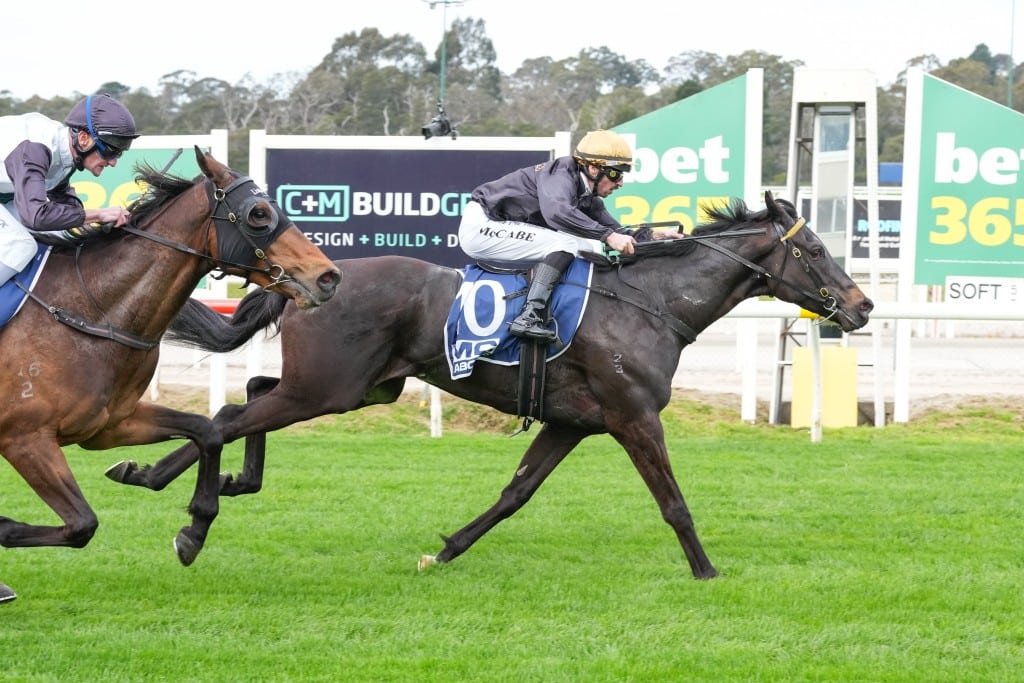
Trotter also hopes the gelding can make his mark for another reason.
The debate over the race’s future is as fervent as ever, but Trotter argues that removing the staying challenge would strip away an important part of its character.
Trotter admits he is a traditionalist who believes the Derby’s stamina test gives the race a purpose that shouldn’t be surrendered lightly.
“There’s something unique about it,” he said.
“There’s plenty of 2000-metre races of high quality, and I think this is just a nice point of difference.”
For a trainer whose childhood was moulded by Woodcock and whose father rode against some of the greats, his argument should resonate.
And while the link from Russian Rock to Phar Lap may be oblique, it also reminds us that racing history is not always confined to museums, photographs, or anniversary celebrations.
Sometimes it survives in a Christmas card kept in a wardrobe, in stories passed from father to son, and in the hopes attached to a horse walking into the Flemington mounting yard on Derby day.
Related Articles
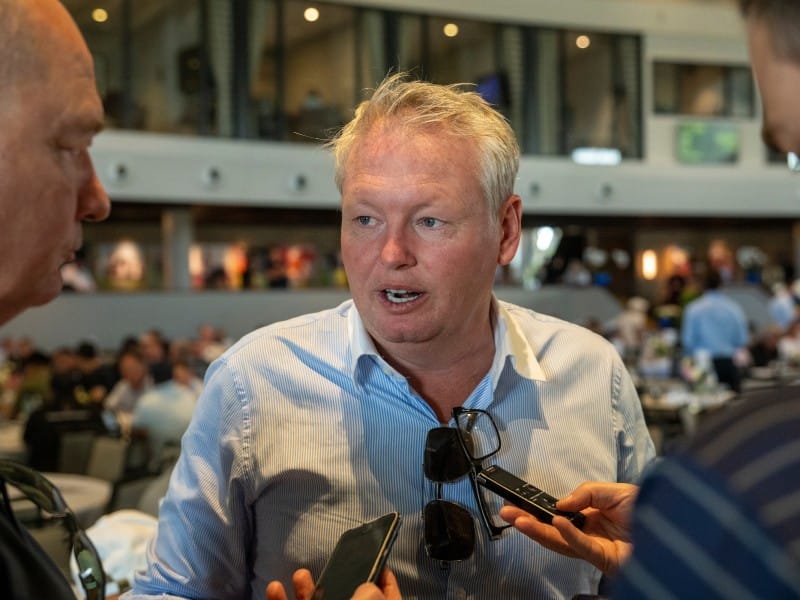
Newgate’s Henry Field reverses stance, backs 2500-metre Victoria Derby
Newgate Farm managing director Henry Field has dropped his support for a 2000-metre Victoria Derby, saying Victorian racing cannot afford to lose top three-year-olds from the Cox Plate, and he sees no case for extra prize money at the current Derby distance.
BHA warns UK machine-duty rise could cost British racing £57 million a year
The British Horseracing Authority says the UK Government’s latest lift in Machine Games Duty to 25 per cent risks closing hundreds of betting shops and stripping millions from levy and media rights, while Entain puts its own cost at £25 million.
🔒 🔒 Canberra wagering returns break four-year slide
Canberra Racing Club has lifted wagering returns by 4 per cent despite the ACT’s high wagering taxes, with securing a sustainable government funding agreement now a priority.
