
How the Japan Cup became a global racing phenomenon
Conceived as a test of Japan’s thoroughbreds against international opposition, the Japan Cup has charted the country’s rise through elite bloodlines, extraordinary wagering and decades of racing ambition.
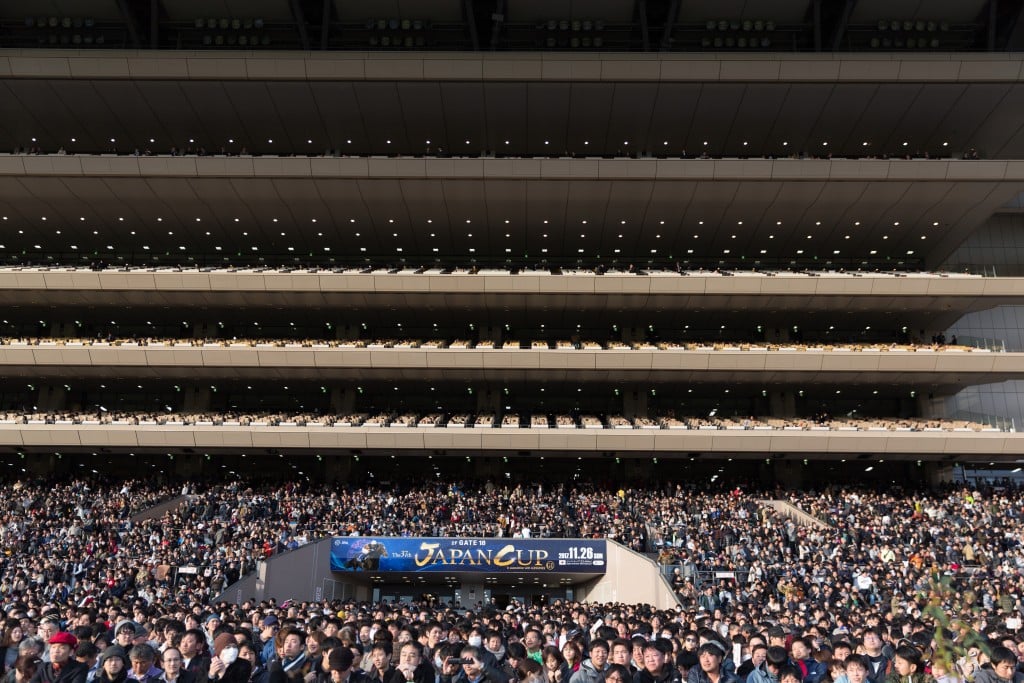
Hundreds of millions of dollars will be riding on the outcome of the Japan Cup, but the race means far more to the Japanese thoroughbred industry than the money wagered on it.
When the 46th running takes place in Tokyo, the 2400-metre race will again command the attention of a vast betting public, with tens of thousands expected through the gates and millions more following an event that has become a symbol of Japan’s emergence as a thoroughbred superpower.
The Japan Cup was inaugurated in 1981 with a clear purpose: expose Japanese horses to the world’s best and lift the standard of domestic racing and breeding.
At the time, Japanese thoroughbreds were struggling to match the quality of established international competitors, prompting the Japan Racing Association (JRA) to create an invitational contest that would bring elite horses from overseas to Tokyo.
American mare Mairzy Doates won the inaugural running, showing how far Japanese racing had to go.
Foreign-trained horses also won the next two editions, reinforcing the disparity the race was designed to address.
But the contest was only one part of a much wider ambition. During the economic expansion of the 1980s, Japanese breeders and investors began spending heavily on elite bloodstock, importing leading stallions and broodmares from Europe and North America to improve domestic pedigrees.
The arrival of Sunday Silence in 1990 proved a defining moment. The Kentucky Derby and Preakness Stakes winner became one of the most influential stallions in history; his progeny, including Deep Impact, and later generations of his descendants, helped establish Japan as a world-leading source of thoroughbreds.
The irony is that a race conceived to test Japanese horses against their international rivals has become one of the most difficult assignments for overseas visitors.
French-trained Calandagan ended a 20-year drought for overseas-trained horses in 2025, reigniting an international challenge that remains important to the race’s identity.

12 things to know about the Japan Cup
1. 1981 – The beginning
The inaugural Japan Cup was staged on November 22, 1981, at Tokyo Racecourse. American mare Mairzy Doates, ridden by Cash Asmussen, defeated Canadian-trained Frost King, with the Japanese challenge unable to match the visitors. The race was opened to horses trained in all countries in 1982, and the race received international Group 1 recognition in 1992.
2. Two consecutive Australasian victories
New Zealand-bred Horlicks won in 1989, producing a world-record 2400m time of 2:22.2 under Lance O’Sullivan. Australian champion Better Loosen Up followed in 1990, with David Hayes training the five-year-old gelding and Mick Clarke riding him to a head victory over French-trained Ode in 2:23.2.
3. Australia’s near misses
Naturalism finished second in 1992, beaten a neck by Japanese-trained Tokai Teio, while Shaftesbury Avenue took third in 1991. Other notable Australasian challengers included Rough Habit, Let’s Elope, Jeune and Danewin. The most recent Australian-trained runner was Boom Time, who finished 12th in 2017.
4. 187,524 – The Japan Cup attendance record
The biggest crowd for the race assembled in 1995, when German-trained Lando won. Tokyo Racecourse’s all-time attendance record is even higher: 196,517 for the Japanese Derby in 1990, the year Better Loosen Up won the Japan Cup.
5. $A236m – The modern betting pool
The 2025 Japan Cup generated ¥26,008,143,100 in wagering turnover on the race alone, approximately A$236 million. Total turnover across the meeting was ¥36.93b ($A336m), while attendance was 77,029.
6. ¥87.5b – Japan’s extraordinary betting record
The 1996 Arima Kinen holds the Japanese record for turnover on a single race, attracting ¥87,501,042,400. Using the historical exchange rate supplied for comparison, that equates to approximately A$1.015 billion. It is more than four times the Japan Cup’s 2025 betting pool, illustrating the extraordinary scale of Japan’s wagering market.
7. 126.25 – A world-leading rating
The 2025 Japan Cup shared the Longines World’s Best Horse Race award with Ascot’s Champion Stakes, both receiving a rating of 126.25. It was the second time the Tokyo race had topped the international assessment, following its success in 2023.
8. 20 years – The overseas drought
Calandagan’s victory in 2025 was the first by a foreign-trained horse since British-trained Alkaased won in 2005. Japanese-trained horses had won 30 of the previous 44 editions including all 19 runnings between Alkaased’s win and Calandagan’s.
9. ¥500m – The winner’s cheque
The 2026 Japan Cup offers ¥500m ($A4.55m) to the winner, with total prize money of ¥1.09b ($A9.91m).
A bonus scheme worth up to A$7.56 million for qualifying international performers can take the potential winner’s reward to approximately A$12.4 million.
10. 2400m – The international examination
Run on Tokyo’s left-handed turf course, the Japan Cup is contested over 2400m. The maximum field is 18, with three-year-olds and older horses competing under weight-for-age conditions.
11. Some of the world’s greatest winners
The honour roll includes American champion Mairzy Doates, New Zealand’s Horlicks, Better Loosen Up, British-trained Alkaased and Japanese champions Deep Impact, Gentildonna, Almond Eye and Equinox. Gentildonna and Almond Eye each won twice, while Equinox’s 2023 victory helped secure his position as the world’s highest-rated racehorse.
12. 46th – The next chapter
The 2026 edition is the 46th running of the Japan Cup. Calandagan returns seeking consecutive victories, while the home contingent will be looking to reclaim a race that has become a measure of the country’s standing in world racing.
From an exercise in international catch-up to a contest rated among the best in the world, the Japan Cup has travelled a remarkable distance in less than half a century. Its founders wanted to learn from the rest of the racing world. The numbers suggest Japan has done considerably more than that.
Related Articles

🔒 🔒 Diamonds in the rough and the syndicator with a Grand plan for everyday owners
Peter Morley has built Grand Syndicates on an affordable share platform and an eye for overlooked talent, turning modest yearling purchases into some of racing’s biggest success stories. Winterbottom Stakes runner Persian Spirit is his latest example.

Tasmanian greyhound ban bill fails but government steadfast on plans to end funding
Tasmania’s upper house rejected a bill to phase out greyhound racing, but Premier Jeremy Rockliff says the state will not fund the code after 2029.
VRC moves AGM to December 16 as members await board candidate list
The Victoria Racing Club has confirmed the revised date of its AGM but is yet to reveal the final board election field, with a closely watched contest for four director positions unfolding alongside the belated release of its full annual report.
